Alaska Decal Replacement If Lost
It's incredibly frustrating when you head out to enjoy the vast landscapes of Alaska on your ATV or UTV, only to discover that your registration decal has gone missing. Whether it peeled off somewhere on a bumpy trail, got lost during a deep river crossing, or simply vanished between seasons, a missing decal can lead to unnecessary stress and potential legal issues. This guide is here to walk you through the straightforward process of replacing a lost Alaska All-Purpose Vehicle (APV) decal, ensuring you can get back to riding legally and without worry.
The Headache of a Missing Alaska ATV Decal
That little sticky decal might seem like a small thing, but out here in Alaska, it carries a lot of weight. Losing it isn't just an inconvenience; it can genuinely disrupt your plans and even put a damper on your riding season. We've all been there, ready for an adventure, only to hit a snag with paperwork.
Why Your Decal is So Important in Alaska
Think of your Alaska APV decal as your machine's public ID card. It's the primary visual proof that your ATV or UTV is properly registered with the state, confirming you've met the legal requirements to operate it, especially on public lands. When you're out on a trail in the Knik River Public Use Area or navigating a mining road near Willow, that decal signals to wildlife troopers, park rangers, and other law enforcement that you're a responsible rider following the rules. Without it, even if you have all your other [Alaska APV Registration Requirements] in order, your machine appears unregistered at a glance, inviting questions and potential scrutiny. It's a quick visual check for enforcement officers, helping them keep track of which machines are operating legally and which might be skirting the system.
Common Ways Decals Go Missing
Alaska's rugged environment is beautiful, but it's also incredibly tough on equipment. Decals are no exception. One of the most common culprits is simply wear and tear from the elements. The constant exposure to sun, rain, snow, and extreme temperature fluctuations can degrade the adhesive over time, causing the decal to peel at the edges until it eventually detaches completely. Another major factor is the nature of our riding here. Bashing through thick brush, bouncing over rough gravel roads, or plunging through deep mud and river crossings can physically scrape or tear the decal right off your machine. Sometimes, it's just plain bad luck – maybe it got snagged on a jacket or a piece of gear while you were loading or unloading your machine. And let's be honest, sometimes they just fall off during [Winter Storage in an Unheated Shed] without us even noticing until spring. It’s a common frustration, so you’re certainly not alone if this has happened to you.
The Ramifications of Riding Without a Visible Decal
Riding your ATV or UTV on public land without a clearly visible, valid decal is akin to driving a car without a license plate—it's a definite red flag. The most immediate consequence is that you could be stopped by law enforcement. A trooper or game warden, seeing an unregistered machine, might pull you over to verify your ownership and registration status. While they might issue a warning if you can immediately produce valid registration paperwork, you could also face a citation for operating an unregistered vehicle. This can lead to fines, which no one wants on an otherwise perfect riding day. Furthermore, it might complicate things if you're involved in an incident or accident; without that clear proof of registration, it could raise questions about your compliance. It's simply not worth the risk or the potential hassle when you're trying to enjoy the wilderness. Knowing [Alaska Penalties for Riding Unregistered] can certainly motivate you to get that replacement as soon as possible.
Step-by-Step: Replacing Your Lost Alaska APV Decal
Replacing a lost decal might sound like a bureaucratic nightmare, but in Alaska, it’s a relatively straightforward process. It primarily involves a few key steps and a bit of paperwork, similar to other vehicle transactions.
Gathering the Necessary Information and Forms
The first thing you'll need is proof of your machine's registration. Ideally, this means your current registration certificate. If you don't have that handy, having your machine's VIN (Vehicle Identification Number) and some personal identification will be crucial. The primary form you'll need to complete is typically the "Application for Decal Only" form, or sometimes a general Vehicle Transaction Application (Form V1), which you can find on the Alaska DMV website or pick up at any DMV office or authorized partner office. You'll need to fill out details about your machine, its VIN, your owner information, and attest that the decal was indeed lost or destroyed. If you're using a template service like LawDepot for other legal documents, remember they also offer various forms, but for state-specific motor vehicle applications, always go straight to the Alaska DMV or their partner agencies for the correct, current official forms. Having all this information ready before you go makes the process much smoother and faster, avoiding multiple trips.
Submitting Your Replacement Request
Once you have your form filled out, you have a couple of options for submission, though the most common and often quickest for a decal replacement is in-person.
In-Person at an Alaska DMV or Partner Office
This is often the best route if you want to get your replacement decal immediately. You can visit any Alaska Division of Motor Vehicles (DMV) office or one of their authorized partner offices. These partner offices, often local title and registration services or auto dealerships, are equipped to handle many DMV transactions, including decal replacements. Bringing your completed "Application for Decal Only" form, your identification, and possibly your old registration certificate (if you still have it, even if the decal is gone) will allow the clerk to process your request right then and there. You'll typically pay a small fee for the replacement decal, which covers administrative costs. Many riders find this the most convenient way, especially if they live near an office in the Mat-Su Valley or on the Kenai Peninsula. Check out [Registering an OHV at a DMV Partner Office] for more details on these locations.
By Mail
If an in-person visit isn't feasible, you can generally mail your completed form and the applicable fee to the Alaska DMV. Make sure to clearly indicate that you're requesting a replacement decal. While this is a viable option, it will naturally take longer due to processing and mail transit times. You won't get an immediate replacement, so if you're planning a ride soon, this might not be your best bet. Always send it to the official address listed on the DMV's website for mailed applications. It’s crucial to include a check or money order for the correct fee, as they won't process incomplete applications.
What to Expect After Application
Once your application for a replacement decal is submitted and the fee paid, the process is usually quite quick.
Immediate Issuance In-Person
If you submitted your request in person, you'll typically walk out with your new decal right then. The clerk will issue it to you, along with an updated registration certificate showing the replacement. This immediate turnaround is a huge relief for many riders, allowing them to get their machine legal again without delay. It’s also a good time to double-check that all the information on the new certificate matches your machine and personal details.
Waiting for Mail Delivery
If you submitted by mail, you'll need to wait for your replacement decal and updated registration certificate to arrive in the mail. The exact turnaround time can vary based on mail volume and DMV processing times, but generally, you can expect it within a few weeks. It's always a good idea to keep a copy of your application and proof of payment until your new decal arrives, just in case you need to inquire about its status. Remember, [Alaska Has No Online OHV Registration], so mail or in-person are your only real options for transactions like this.
Understanding the New Decal
The replacement decal will look just like your original one, typically displaying the year of expiration and your unique registration number. Once you receive it, make sure to attach it securely to your machine according to [Alaska Decal Placement on the Tunnel Side] or [Alaska Decal Placement on a Side-by-Side] guidelines. Proper placement is essential to ensure it's visible and doesn't easily come off again. It's also a good practice to keep your updated registration certificate with your other important machine documents, perhaps laminated and stored in a waterproof bag on your quad, just in case you're ever asked for proof of ownership and registration by law enforcement.
| Information Needed for Decal Replacement | Where to Find It / What to Bring | Notes |
|---|---|---|
| Machine VIN (Vehicle Identification Number) | Stamped on frame, usually right side | Essential for identification |
| Owner Identification | Valid driver's license or state ID | Proof of who you are |
| Current Registration Certificate (if available) | Paper copy from previous registration | Helps speed up the process |
| "Application for Decal Only" Form | Alaska DMV website or office | Specific form for lost decal replacement |
| Payment for Replacement Fee | Cash, check, money order | Check current fee with DMV |
Preventing Future Decal Loss: Best Practices for Alaska Riders
Nobody wants to go through the hassle of replacing a decal more than once. With a little foresight and proper application techniques, you can significantly increase the lifespan of your decal and avoid future frustrations.
Optimal Decal Placement and Adhesion
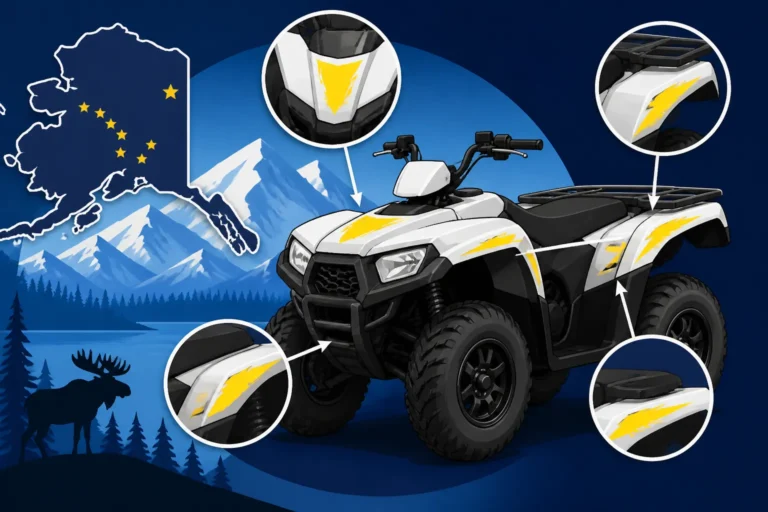
The Alaska DMV has specific guidelines for where your APV decal should be placed to ensure it's easily visible. For most ATVs, this means on the "tunnel" side, which is the flat surface under the handlebars, visible when seated. For side-by-sides, it’s typically on the left side of the vehicle, also in a clearly visible location. The key is visibility. Before applying, ensure the surface is absolutely clean, dry, and free of any grease, dirt, or old adhesive residue. Using rubbing alcohol to clean the area and letting it dry completely is a good first step. When applying the decal, press it firmly from one edge to the other, smoothing out any air bubbles as you go. Applying it in a warm environment can also help the adhesive bond more effectively. Don't rush it; a careful application can make all the difference in how long it lasts against Alaska's elements. Think of it like applying a permanent sticker – the surface prep is half the battle.
Protecting Your Decal from the Elements and Wear
Once your decal is on, consider ways to protect it. While there isn't a magical indestructible coating, some steps can help. When washing your machine, be gentle around the decal area, avoiding high-pressure sprays directly on the edges that could lift it. If you store your machine outside, even under a tarp, the constant exposure to sun and moisture will eventually take its toll. For longer-term storage, especially during the off-season, consider keeping your machine in a garage or shed. This not only protects the decal but also extends the life of many other components. When navigating tight trails, be mindful of brush that can snag or scrape the decal. Some riders even apply a clear protective film over the decal once it's on to add an extra layer of defense, especially for areas prone to rubbing or impact. Remember, LawDepot templates might help you with legal agreements, but practical solutions like these are about good old-fashioned care and maintenance specific to your machine and local environment.
Regular Checks and Proactive Measures
The best offense is a good defense, right? Get into the habit of performing a quick visual check of your decal before each ride or at the very least, before storing your machine for any extended period. Look for any signs of peeling, bubbling, or fading. If you catch a small edge starting to lift, you might be able to press it back down firmly or apply a very thin, clear, waterproof adhesive (designed for outdoor use) to reseal it before it becomes a bigger problem. Carrying a spare physical copy of your registration certificate, perhaps laminated and sealed in a waterproof bag, in your machine's storage compartment can also serve as temporary proof of registration should your decal unexpectedly disappear mid-ride. This way, if a game warden asks, you at least have the official documentation in hand, even if the decal has decided to go on its own adventure. Being proactive can save you a lot of grief and ensure your machine remains compliant for all your Alaskan explorations.
Disclaimer
This article is for general informational purposes only and does not constitute professional advice. Laws, prices and regulations vary by location and change over time. Consult a qualified professional for guidance on your specific situation.