Alaska Spark Arrester Requirements
Riding your ATV or UTV across Alaska's vast landscapes is an incredible experience, but the last thing anyone wants is to unknowingly break a rule and face a fine, or worse, cause a wildfire. Many riders get tangled up trying to understand specific equipment requirements, especially for something as seemingly small as a spark arrester. This comprehensive guide will break down exactly what Alaska requires for spark arresters on your off-highway vehicle, why these rules exist, and how to ensure your machine is always compliant before you hit the trail.
The Critical Role of a Spark Arrester on Alaskan Trails
You might think a spark arrester is just another piece of equipment, easy to overlook. But out here in Alaska, with our vast expanses of wildland and dry summers, it's actually a crucial line of defense against devastating wildfires. Imagine a beautiful summer day, the tundra dry as tinder, and a tiny spark from your exhaust system ignites the dry grass. It's a scenario no one wants to contemplate, and that's precisely why spark arresters are not just a suggestion, but a legal requirement. They're designed to trap and cool any incandescent particles — those tiny, glowing bits of carbon — that might escape your engine's exhaust, preventing them from flying out and potentially starting a blaze.
Understanding How a Spark Arrester Works
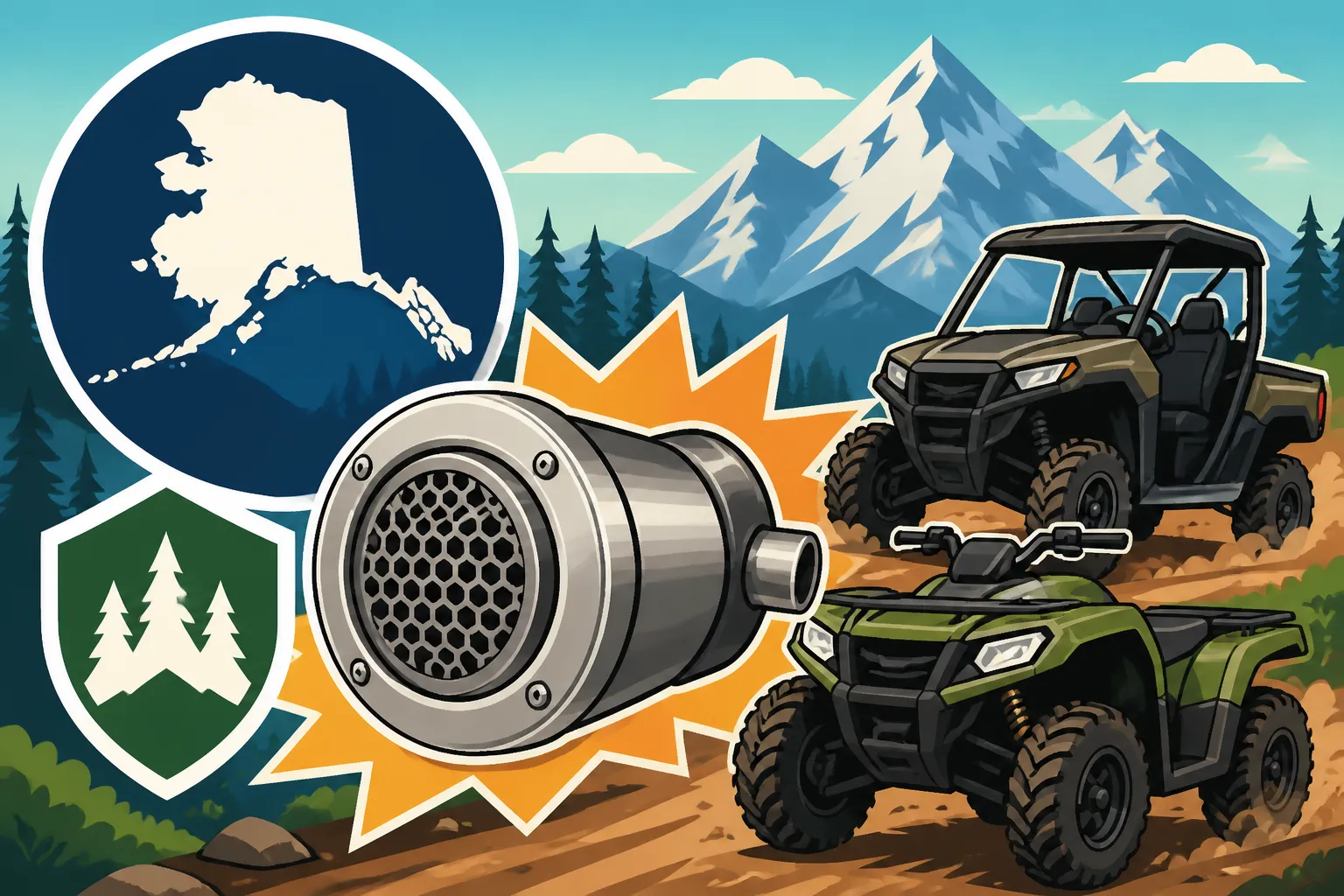
At its heart, a spark arrester is a mechanical device integrated into your ATV or UTV's muffler system. It's usually a screen, baffle, or series of chambers designed to trap or extinguish hot carbon particles before they exit the exhaust pipe. Think of it like a tiny, intricate maze for hot soot. Exhaust gases are forced through this maze, and while the gas can pass, any solid particles that are hot enough to cause a fire get caught or cooled down significantly. This prevents them from being ejected into the surrounding environment, especially critical when you're roaring through dry brush, tall grasses, or dense forests. Without one, those rogue sparks could easily land on combustible material, and in a state like Alaska, where emergency services might be hours away, a small spark can quickly become an inferno.
Why Spark Arresters Are So Important for Alaska's Environment
Alaska's environment is unique and incredibly vulnerable. We have vast stretches of boreal forest, dry tundra, and wildlands that can dry out rapidly in the warmer months. A single careless spark from an off-road vehicle could decimate thousands of acres, destroy wildlife habitats, and threaten remote cabins or even entire communities. The cost of fighting wildfires in Alaska is astronomical, not to mention the irreparable damage to ecosystems that can take decades, if not centuries, to recover. For this reason, the state, along with federal land management agencies, takes spark arrester compliance very seriously. It’s not just about avoiding a ticket; it's about being a responsible land user and protecting the breathtaking beauty and natural resources that draw us to the trails in the first place. Every rider has a role to play in fire prevention, and ensuring your machine is properly equipped is a fundamental part of that responsibility.
Alaska's Legal Framework for Spark Arrester Compliance
When you're gearing up for a ride on public lands anywhere in Alaska, understanding the regulations isn't just a good idea, it's a necessity. The state of Alaska, in alignment with federal guidelines, has clear rules regarding spark arresters on off-highway vehicles. These regulations are primarily driven by wildfire prevention and ensure that every machine operating on state or federal lands is equipped to minimize fire risk. Ignorance of the law is never an excuse, and troopers or land managers can check your equipment at any time.
State and Federal Requirements for OHVs
The state of Alaska generally adopts federal standards when it comes to spark arresters on off-highway vehicles, including ATVs and UTVs. What this means for you, the rider, is that any machine manufactured for sale in the United States and designated for off-road use should come from the factory with a U.S. Forest Service (USFS) approved spark arrester. If you own an older machine, or if you've made modifications to your exhaust system, you need to verify that your spark arrester meets these standards.
The key standard to look for is the USFS approval stamp or marking, often found directly on the spark arrester or the muffler itself. This stamp confirms that the device has been tested and meets the strict requirements for containing hot particles. The law typically states that any off-highway vehicle operated on public lands must be equipped with a spark arrester that is "maintained in effective working order" and "approved by the United States Forest Service." This isn't just about having a spark arrester; it's about having the right kind that's functioning properly. [Alaska OHV Equipment Requirements] outlines many of these provisions.
The Consequences of Riding Without a Compliant Spark Arrester
Let's be frank: riding without a compliant, functional spark arrester on public lands in Alaska can lead to some significant headaches. It's not just a minor infraction; it's a safety violation with serious potential consequences. First, you could face a citation and a fine. While specific fine amounts can vary, they are certainly enough to put a damper on your riding day and lighten your wallet. A trooper or land manager could stop you on a trail, conduct an inspection, and issue a ticket if your machine isn't up to snuff.
Beyond the immediate financial hit, there's the possibility of your machine being impounded, especially if the non-compliance is part of a larger pattern of violations or if it's deemed a significant fire hazard. Imagine being miles out in the bush, only for your ride to be cut short because your machine isn't legal. That's a hassle and an expense no one wants. But perhaps the most severe consequence, though thankfully rare, is the potential liability if your machine does start a fire. If it's determined that your non-compliant spark arrester contributed to a wildfire, you could face immense financial penalties covering fire suppression costs, property damage, and environmental restoration, which can run into the millions. It's a sobering thought, but one that underscores the critical importance of simple compliance. When considering [Alaska Fire Restrictions in a Dry Summer], this equipment becomes even more vital.
Verifying and Maintaining Your Spark Arrester
Ensuring your spark arrester is compliant and in good working order isn't a one-time check; it's an ongoing part of responsible ATV and UTV ownership, especially when you ride in Alaska. Just like you check your oil and tire pressure, inspecting your spark arrester should be part of your pre-ride routine, particularly before heading out on any public lands. It's a simple step that can save you a lot of trouble and protect our precious Alaskan wilderness.
Locating the Spark Arrester on Your Machine
For most ATVs and UTVs, the spark arrester is an integral part of the exhaust system, typically located within the muffler or at the end of the exhaust pipe. It's usually a screen-type device that's accessible for inspection and cleaning. To find it, you'll generally look at the very end of your exhaust pipe where the gases exit.
Here’s a general guide:
- Consult Your Owner’s Manual: This is always your first and best resource. Your machine's owner's manual will have diagrams and specific instructions for locating, inspecting, and maintaining the spark arrester for your exact model.
- Visually Inspect the Muffler: Look for a small cap, bolt, or a removable end-piece on the muffler. Many spark arresters are designed to be easily removed for cleaning.
- Look for the USFS Stamp: Once you've located what you believe to be the spark arrester, or the muffler where it's housed, look for a stamp or etching. This will usually say "USFS Approved" or "Forest Service Approved," often with a specific number. This is your proof of compliance.
If you have an aftermarket exhaust system, you'll need to check the manufacturer's documentation to confirm it includes a USFS-approved spark arrester. Not all aftermarket exhausts come with one, or the one they do have might not be USFS-compliant, which could leave you in violation. Many reputable brands like SuperATV offer exhaust systems with integrated spark arresters, so it's always worth checking product specifications carefully if you're upgrading.
Essential Maintenance Tips for Longevity
A spark arrester doesn't just need to be present; it needs to be functional. Over time, carbon and soot can build up on the screen or within the baffles, reducing its effectiveness and potentially even affecting your engine's performance.
Here are some maintenance tips to keep it in top shape:
- Regular Cleaning: This is the most crucial step. Carbon deposits can clog the screen, reducing exhaust flow and rendering the arrester ineffective. Depending on how much you ride and the type of fuel you use, you should remove and clean your spark arrester periodically. This might involve brushing off carbon, or in some cases, soaking it in a solvent designed for carbon removal.
- Inspect for Damage: Before each ride, especially if you've had a rough outing, visually inspect the spark arrester screen. Look for any holes, tears, or significant corrosion. A damaged screen can allow sparks to escape, making the device useless. If you find damage, it needs to be replaced immediately.
- Check for Tightness: Ensure all bolts or fasteners holding the spark arrester in place are tight. Vibrations from riding can loosen components, and a loose spark arrester might not function correctly or could even fall off.
- Consider Replacement: Spark arresters don't last forever. If yours is consistently clogging, difficult to clean, or shows signs of wear and tear, it might be time for a replacement. A new spark arrester is a small investment compared to a fine or the devastating cost of a wildfire.
By making these checks and maintenance a regular part of your routine, you ensure your machine is always trail-ready and compliant with Alaska's regulations.
Common Spark Arrester Questions and Misconceptions
When it comes to equipment rules, there's always a bit of confusion, and spark arresters are no exception. Riders often have questions about what's truly required, especially with so many aftermarket options available. It's important to separate fact from fiction to avoid any unpleasant surprises out on the trail or during an inspection. Let's tackle some of the most common queries and clear up those misconceptions.
Do All Aftermarket Exhausts Come with a Spark Arrester?
This is a big one, and the answer is a resounding no. While many reputable aftermarket exhaust manufacturers do include a USFS-approved spark arrester in their designs, or offer one as an optional add-on, it is by no means universal. Some performance-oriented exhausts might focus solely on increasing horsepower and sound, neglecting spark arresting capabilities.
Here’s why this matters:
- Performance vs. Compliance: Some riders mistakenly believe that if an exhaust is designed for off-road use, it automatically meets all legal requirements. This isn't true. An exhaust system can be perfectly functional for racing or private land use but entirely illegal on public trails if it lacks a compliant spark arrester.
- Read the Fine Print: Always, always read the product description carefully when purchasing an aftermarket exhaust. Look for explicit mention of "USFS approved spark arrester included" or "spark arrester compatible." If it's not mentioned, assume it doesn't have one, or the one it has is not compliant.
- Buyer Beware: If you're buying a used machine with an aftermarket exhaust, do your due diligence. Don't just take the seller's word for it. Physically inspect the muffler for the USFS stamp or be prepared to purchase and install a compliant spark arrester yourself. This is where brands like SuperATV can be a good resource for finding compliant replacement parts or full exhaust systems that meet regulations.
What About Homemade or Modified Spark Arresters?
Attempting to fashion your own spark arrester or significantly modifying an existing one is a definite no-go for riding on public lands in Alaska. While your intentions might be good, a homemade device, no matter how clever, will almost certainly not meet the strict USFS approval standards. These standards involve rigorous testing to ensure effective spark containment without unduly restricting exhaust flow.
Why this approach is problematic:
- No Certification: A homemade spark arrester lacks the crucial USFS stamp, meaning it cannot be legally recognized as compliant by law enforcement or land managers. Even if you believe it works perfectly, it won't pass an inspection.
- Safety Risk: More importantly, an uncertified, homemade device might not actually be effective. It could still allow sparks to escape, putting you and the environment at risk of wildfire. It might also negatively impact your machine's performance or even create unsafe back-pressure.
- Legal Ramifications: If caught with a homemade or non-compliant modified spark arrester on public land, you'll still face the same fines and potential penalties as someone with no spark arrester at all. It's simply not worth the risk.
Stick to factory-installed spark arresters or commercially available, USFS-approved aftermarket options to ensure you're always riding legally and safely in Alaska.
Where to Find Compliant Spark Arresters and Replacements
So, you've checked your machine, or maybe you've installed an aftermarket exhaust, and you realize your spark arrester isn't compliant, or it's damaged. Don't panic! Finding a compliant spark arrester or a replacement isn't as difficult as it might seem. The key is knowing where to look and what to look for to ensure you're getting a quality, approved product. Being proactive about this can save you a lot of grief on the trail and help protect Alaska's wild spaces.
Sourcing OEM and Aftermarket Options
When you need a new spark arrester, you essentially have two main routes: going with Original Equipment Manufacturer (OEM) parts or choosing an aftermarket option. Both can be perfectly valid choices, depending on your machine and your needs.
- OEM Parts: Your local ATV/UTV dealership is the primary source for OEM spark arresters. These parts are specifically designed for your make and model and are guaranteed to meet all original specifications, including USFS approval. While they might sometimes be a bit pricier, you get the peace of mind knowing it's an exact fit and fully compliant. This is often the simplest route, especially if you want to restore your machine to factory specifications or if you have a newer model.
- Aftermarket Options: The aftermarket is vast, offering a range of spark arresters that can be universal or specific to certain exhaust systems. Many reputable aftermarket companies, including well-known brands like SuperATV, produce USFS-approved spark arresters. When going this route, it's absolutely crucial to:
- Verify USFS Approval: Look for the "USFS Approved" stamp or explicit mention in the product description. Don't settle for anything less.
- Check Compatibility: Ensure the spark arrester you choose is compatible with your existing muffler or exhaust system. Some are designed as direct replacements, while others might require minor modifications or adaptations.
- Read Reviews: Customer reviews can offer insights into the ease of installation, durability, and actual performance of aftermarket spark arresters.
Installation Tips and Best Practices
Once you have your new spark arrester in hand, installation is usually a straightforward process. However, a few best practices can ensure it's done correctly and securely.
- Read the Instructions: Whether it's an OEM part or aftermarket, always follow the manufacturer's installation instructions precisely. They know their product best.
- Ensure a Tight Fit: The spark arrester needs to be securely fastened to prevent it from vibrating loose or allowing exhaust gases to bypass it. Use the appropriate tools and apply the correct torque if specified.
- Check for Leaks: After installation, start your machine and listen for any exhaust leaks around the spark arrester or muffler connections. Leaks can not only reduce the arrester's effectiveness but also indicate a poor seal.
- Confirm USFS Marking is Visible: For inspection purposes, it's helpful if the USFS approval stamp or marking remains visible after installation. This makes it easier for a land manager or trooper to verify compliance during a spot check.
By taking these steps, you'll not only equip your machine with a legally compliant spark arrester but also ensure it's installed correctly and ready to protect Alaska's wildlands for many adventures to come.
Ensuring Your Machine is Trail-Ready for Alaska
Getting out on the trails in Alaska is an incredible privilege, offering access to some of the most stunning and untouched wilderness anywhere. But with that privilege comes the responsibility of being a safe, respectful, and compliant rider. Making sure your spark arrester is up to snuff is just one piece of the puzzle, but it's a critical one that directly impacts fire safety and your legal standing on public lands. Don't let a simple oversight turn your adventure into a headache.
The Bigger Picture: Equipment and Regulations
While spark arresters are a specific focus, they're part of a larger set of equipment requirements designed to ensure the safety of riders and the protection of the environment. Alaska's regulations cover everything from headlights and taillights to brakes, mufflers, and even mud flaps. [Alaska Muffler and Noise Rules] also goes hand in hand with spark arrester requirements, as they both pertain to your exhaust system.
Here's a quick overview of other equipment considerations:
| Equipment Type | Alaskan Requirement | Why It Matters |
|---|---|---|
| Brakes | Must be capable of stopping the vehicle within a reasonable distance. | Rider safety, collision prevention. |
| Headlights | Required for night riding, visible from at least 100 feet. | Visibility for rider and others, especially in low light or fog. |
| Taillights | Required for night riding, visible from at least 1,000 feet to the rear. | Rear visibility, preventing rear-end collisions. |
| Muffler | Must be in good working order, preventing excessive noise. Exhaust cutouts or bypasses are generally prohibited. | Noise pollution, respecting other users and wildlife. |
| Reflectors | Required on the sides and rear for enhanced visibility, especially at night. | Passive safety, making your machine more visible from various angles. |
| Self-Closing Throttle | Must have a throttle that automatically returns to idle when released. | Preventing runaway vehicles, emergency control. |
| Mud and Snow Flaps | Required if your machine propels debris rearward. | Protecting other riders or vehicles from flung rocks, mud, or snow. |
| Functional Equipment | All equipment must be in effective working order. | Overall safety, preventing citations for broken lights, etc. |
Taking the time to review your machine before each ride, checking all these components, and ensuring they meet current standards is a sign of a responsible rider. [Alaska Lighting Rules on a Machine] provides further detail on your machine's illumination requirements.
A Mindset of Responsibility and Preparedness
Ultimately, riding an ATV or UTV in Alaska is about embracing adventure responsibly. It's about respecting the land, other users, and yourself. A compliant spark arrester is just one aspect of that.
- Pre-Ride Checks: Make it a habit. Check your spark arrester, lights, brakes, and fluid levels before you even load up your machine.
- Know the Rules: Familiarize yourself with all state and local regulations for where you plan to ride. Rules can vary by land ownership (state, federal, borough, private).
- Be Prepared: Always carry essential tools, a first-aid kit, and emergency supplies. Tell someone where you're going and when you expect to return. [Alaska Rules Riders Get Wrong] is a good read to catch up on common mistakes.
- Leave No Trace: Pack out everything you pack in. Stay on designated trails to prevent environmental damage.
By adopting this mindset of thoroughness and responsibility, you're not only ensuring your own safety and avoiding legal trouble, but you're also doing your part to preserve Alaska's incredible riding opportunities for generations to come. Happy trails, and ride safe!
Disclaimer
This article is for general informational purposes only and does not constitute professional advice. Laws, prices and regulations vary by location and change over time. Consult a qualified professional for guidance on your specific situation.