Who Pays When a Rider Hits a Homestead Gate
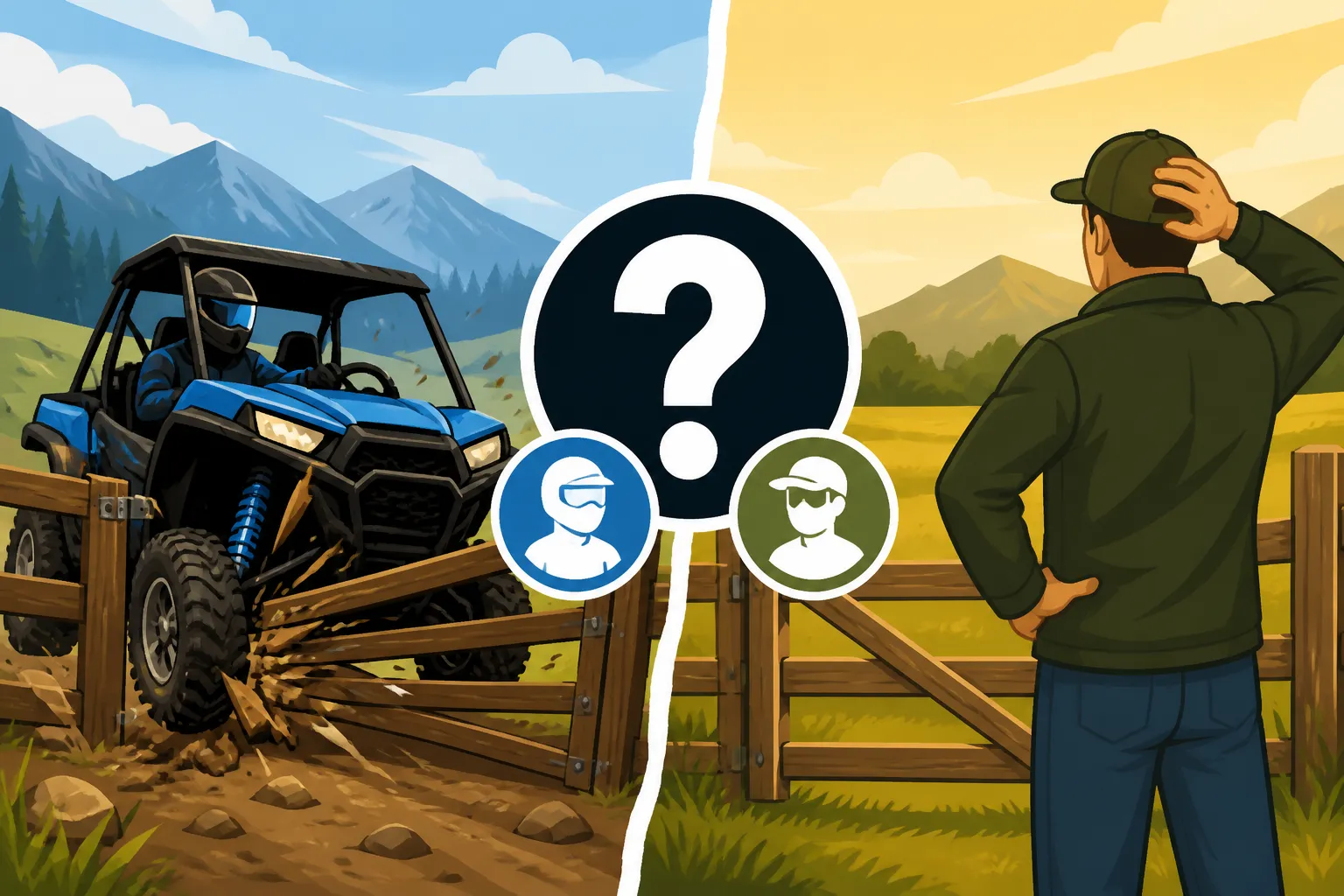
A rider clips a homestead gate on an Alaska trail, bends a hinge, and suddenly there’s a question of who pays. The answer usually depends on who was riding, whether they had permission to be there, how the collision happened, and what insurance covers. This guide explains the practical steps to take and the details that can affect responsibility.
Who may be responsible for damage to a homestead gate
There isn’t one automatic answer for every gate collision. The rider may be responsible if careless riding caused the damage, but the circumstances matter. Permission to cross, visibility, gate condition, land ownership, and the rider’s relationship to the machine can all affect how responsibility is assessed.
A damaged gate can also create an immediate safety and access problem. A gate that no longer closes may allow livestock to wander, leave a property exposed, or block a neighbor’s access. Treat the incident as more than a repair bill: stop, check for injuries, and make sure the gate and the area are safe.
The rider who was operating the machine
If a rider loses control, misjudges a turn, or drives into a closed gate, the rider may be asked to pay for reasonable repairs. That does not mean every collision automatically proves fault. For example, a gate might be difficult to see at dusk, damaged before the incident, or located across a route the rider had been explicitly told was open. Those details may matter when the parties discuss what happened or an insurer reviews a claim.
A rider’s account should be specific rather than defensive. Explain where the machine was traveling, what the rider could see, whether the gate was open or closed, and what happened immediately before impact. Avoid guessing about the cost of repairs or promising a particular payment before the damage is documented. A straightforward report of the facts is more useful than arguing on the spot about who is to blame.
Permission is an important part of the picture, but it does not necessarily settle every question about damage. Someone may have permission to travel across a property and still be expected to use reasonable care. Conversely, a rider who mistakenly enters private land may face a separate access or trespass issue in addition to any property-damage claim. For background on access questions, see [Alaska Trespass Law for Riders] and [Asking Before You Ride Through].
Other people or organizations connected to the ride
The person holding the handlebars is not always the only person whose role needs to be considered. A parent, employer, tour operator, rental business, or machine owner may be involved, depending on who arranged the ride, who supplied the vehicle, and what happened. The exact relationship matters; simply owning an ATV or UTV does not, by itself, explain who will ultimately pay.
For instance, imagine an employee is using a company side-by-side to travel between work areas and strikes a gate. The employer may need to notify its insurer, while the rider may still need to provide an accurate account. In another situation, a guest borrows a family member’s quad for a personal ride. The owner and rider should check the policy rather than assume the owner’s coverage automatically applies to every driver and every type of use.
If the machine was rented or used on a guided trip, review the rental agreement or tour paperwork. Those documents may explain reporting procedures, damage responsibilities, and insurance exclusions, but they do not replace the facts of the collision or determine every legal issue. The rider should promptly tell the rental business or guide what happened and follow its instructions for documenting the incident.
The gate owner’s circumstances can also matter
The condition and visibility of the gate may be relevant, especially when the rider says it could not be seen or that the route appeared to be open. A damaged, unmarked, or partly obscured gate can raise questions about what each person could reasonably observe. That does not automatically make the landowner responsible, and it does not automatically excuse a rider. It means the physical scene should be documented before anyone repairs or moves things, when doing so is safe.
Access arrangements can be especially complicated in Alaska, where a route may cross land with different owners or managers. A trail that appears continuous on the ground may cross private parcels, Native corporation land, or land managed by an agency. If the ride involved land access, check [Alaska Land Ownership and Who to Ask] and [Checking a Land Status Map]. Riders using Native corporation land should also confirm that their permission covers the particular route and activity; [Alaska Native Land Access Permits] explains that access should not be assumed just because a trail is visible.
What to do immediately after hitting a gate
The first few minutes can make a difference to people’s safety and to how clearly the incident can be understood later. Avoid leaving without making a reasonable effort to notify the property owner or another responsible person. If you cannot find anyone, record the location and make a prompt effort to contact them through an appropriate, reliable channel.
Make the scene safe and check for injuries
Stop the machine and check yourself, passengers, and anyone nearby for injuries. If someone may be hurt or there is an immediate danger, seek emergency help. Do not try to force a damaged gate open or closed if doing so could cause it to fall, pinch someone, or damage a fence. If livestock or other animals are near the opening, tell the property owner promptly and avoid chasing them unless there is an urgent safety need and you can help without creating another hazard.
Think about the machine as well. A bent rack, cracked steering component, damaged tire, or fluid leak may make it unsafe to ride. Do not continue simply because the ATV or UTV still starts. Take photographs of visible damage and move the machine only if it is safe and necessary to prevent additional danger or obstruction.
If the gate controls access to a home, working area, or livestock enclosure, let the owner know whether it can still close and latch. Where the owner is unavailable, consider whether a temporary warning or other safe measure is needed, but do not enter further onto private property or make repairs without permission. The gate’s importance may extend beyond its replacement cost.
Notify the owner and document what happened
Share your name and contact information with the owner or the person responsible for the property. Give a clear description of the location and time, the machine involved, and whether anyone was injured. If the owner is not present, use a reasonable way to reach them rather than leaving only an anonymous note that could be lost or damaged.
Take photos from several angles. Useful details include the gate, hinges, latch, fence line, nearby trail or track, visibility from the direction of travel, and damage to the machine. Photograph the wider area as well as close-ups. A close-up can show a broken hinge, but a wider image may help explain whether brush, snow, terrain, or lighting affected what the rider could see.
Write down what you remember while it is fresh. Include the direction of travel, approximate speed if you know it, weather and light conditions, whether the gate was open or closed, and any conversation about permission. Keep messages, incident forms, and repair estimates together. If there were witnesses, ask for their names and contact details; do not pressure them to take sides.
If an ATV crash caused an injury or other reportable event, follow the applicable reporting requirements and contact the appropriate authorities when necessary. The right steps depend on what happened, where it occurred, and whether anyone was hurt. See [Alaska Accident Reporting for an ATV Crash] for related reporting considerations. If an officer or trooper responds, be factual and cooperative; [What a Trooper Can Ask to See] covers the kinds of documents or information that may come up during an encounter.
Avoid making the situation harder to resolve
Do not leave the scene without taking reasonable steps to notify the owner. Do not alter the gate or remove broken parts just to make the incident look better. If a temporary safety measure is necessary, document the original condition first if it is safe, and explain what you did to the owner.
It is also wise not to make a rushed statement such as “I’ll pay for anything” before the damage is assessed. You can express concern, exchange contact information, and cooperate without agreeing to an unverified repair amount or accepting responsibility for facts you do not know. If the owner asks for payment, request an itemized estimate or invoice and keep a record of the discussion.
How insurance and repair costs may be handled
Insurance can help, but coverage depends on the policy, the machine, the rider, and where and how the incident occurred. A policy that covers one kind of use may not cover another. Do not assume that automobile insurance, a homeowner policy, a rental waiver, or an ATV policy applies to a gate collision without checking the actual terms.
| Situation | What to check | Practical next step |
|---|---|---|
| The rider owns the ATV or UTV | Whether the policy covers property damage to another person’s property and the specific type of riding | Contact the insurer and describe the incident accurately |
| The machine belongs to someone else | Who is insured, whether the rider had permission, and whether other operators are covered | Notify the owner and ask them to check their policy |
| The machine is rented or part of a tour | The rental or tour agreement, reporting instructions, and exclusions | Tell the rental business or guide promptly |
| The ride crossed private or managed land | Permission, land status, and any access conditions | Record where the machine traveled and who granted access |
| The owner requests payment directly | The cause and extent of damage, repair estimate, and any insurance claim | Keep written records and avoid paying an unsupported amount |
Don’t assume ATV insurance works like car insurance
A policy may treat public-road riding, trail riding, private-property use, racing, business use, or rental use differently. It may also have conditions about who can operate the machine. Read the policy or call the insurer and explain the situation plainly: identify the machine, rider, location, purpose of the ride, and type of property damage.
Alaska’s rules for APVs can involve insurance requirements in certain road-use contexts, but that does not mean every policy covers every off-road collision. For a broader overview, see [Alaska Insurance Requirements for an APV] and [Proof of Insurance on a Quad]. Those topics can help frame the questions to ask, but the policy itself determines what coverage may apply to a specific claim.
If the machine has aftermarket accessories or modifications, include that information when describing the vehicle, particularly if the insurer asks about its condition or configuration. For example, some owners fit accessories from companies such as SuperATV. The relevant point after a collision is not the brand name; it is whether any change affected the machine’s width, visibility, handling, or damage. Do not remove or alter parts before photographing the vehicle and checking with the insurer.
Work out the repair claim carefully
Ask the owner to document the damage and provide a written estimate or invoice. A gate may need more than a new latch: a collision can bend a post, pull fence wire, damage a hinge, or affect a section of adjoining fence. The estimate should make clear what work is needed and whether it is a repair or replacement.
Compare the estimate with the visible damage, but do so respectfully. If the amount seems to include work unrelated to the incident, ask the owner or contractor to explain the items. An insurer may want photographs, a statement, an inspection, or other records before deciding whether coverage applies. Keep copies of everything you submit.
Avoid paying cash without a written record. If you and the owner agree on a direct payment, document what the payment covers, how it was calculated, and whether it resolves only the gate repair or other related damage as well. If there is a dispute about fault, a substantial repair claim, or possible injury, get advice from a qualified professional before signing a release or making a final settlement.
A damaged gate may also expose the property owner to further loss if animals escape or access is left unsecured. Tell the insurer about any follow-on damage or urgent temporary work, and preserve receipts and photographs. The longer the scene remains undocumented, the harder it may be to separate collision damage from later damage or pre-existing wear.
Preventing another gate collision
The best way to avoid a payment dispute is to reduce the chance of striking a gate in the first place. Before a ride, confirm where you are allowed to travel, look for gates and posted signs, and slow down where trails meet driveways, fence lines, or working areas. A familiar trail can change after snow, storm damage, or seasonal maintenance.
Confirm permission and respect gates
Ask the landowner or land manager which route is permitted and how to handle gates. A gate may mark a property boundary, keep livestock contained, or protect an area temporarily closed to vehicles. Never assume that an open gate means permission to ride through, or that a closed gate can be opened just because tracks pass on the other side.
If you are explicitly told to open a gate, ask whether it should be left open or closed behind you. Close it securely if instructed, and check that the latch has caught. Do not drive around a gate through brush or across a fence line; that may cause additional damage and can create a new access problem.
Permission can be route-specific. A property owner may allow travel on one track but not on a nearby spur that leads to a home or livestock area. When several parcels or land managers are involved, confirm each section rather than relying on what another rider said. The guidance in [Alaska Rules for Riding Native Corporation Land] is especially relevant when a route crosses land where permission must be established directly.
Ride at a speed that lets you stop
Approach gates slowly enough to stop within the clear distance you can see. That matters in low light, rain, blowing snow, dust, deep ruts, or when vegetation blocks the view around a bend. A rider moving at a speed that feels manageable on an open trail may have little time to react when a gate, cable, vehicle, or person appears around a blind corner.
A passenger can help watch the route, but should not distract the driver or lean out in a way that risks injury. On a side-by-side, make sure the driver has a clear view through the windshield and around added equipment. If you have fitted an aftermarket windshield, mirror, rack, or other accessory from a company such as SuperATV, inspect the sightlines from the driver’s seat before riding. Mud, glare, scratches, and accessory placement can affect visibility regardless of brand.
Before each ride, check the brakes, steering, tires, lights, and throttle. A machine that pulls to one side or has a sticking throttle may be harder to control near a narrow gate opening. Keep a safe following distance too: a second rider who is close behind may not have enough room to stop when the lead machine brakes.
Keep the machine and route in mind
A UTV with a wide stance or added accessories needs more clearance than a narrow quad. Do not judge a gap by the front wheels alone; consider the full width of the machine, mirrors, racks, and anything being towed. If the opening looks tight, stop and assess it rather than attempting to squeeze through at speed.
After a collision, inspect the machine and any accessories before using it again. A bent guard, cracked mounting point, or shifted component can affect clearance or control on the next ride. Owners who use accessories from brands such as SuperATV should include those parts in a routine inspection, just as they would check stock components. The useful habit is to look for damage and confirm safe operation—not to assume a particular accessory will prevent a collision.
A gate incident can be stressful, especially when you were trying to follow a route you believed was open. Stay calm, check for injuries, contact the owner, document the scene, and notify the appropriate insurer or rental provider. Clear communication and careful records won’t resolve every disagreement, but they give everyone a more reliable basis for deciding what happened and how the damage should be handled.
Disclaimer
This article is for general informational purposes only and does not constitute professional advice. Laws, prices and regulations vary by location and change over time. Consult a qualified professional for guidance on your specific situation.