Alaska Campgrounds Near a Trailhead
Finding an Alaska campground close to an ATV or UTV trailhead can save a long morning drive, but “near the trail” does not always mean you can ride straight from your campsite. Access, land ownership, campground rules, and seasonal conditions all matter. This guide explains how to choose a practical base, plan your route, and avoid arriving with a trailer and no legal place to ride.
Choose a campground by the ride you can legally reach
Start with the trailhead, not the campground listing
A campground may look close to a riding area on a map and still leave you with a complicated day. The route between the campsite and the trailhead might use a public road where ATVs are restricted, cross private or Native corporation land, or require you to load the machine onto a trailer. Before booking, identify the actual place where you can unload and begin riding legally.
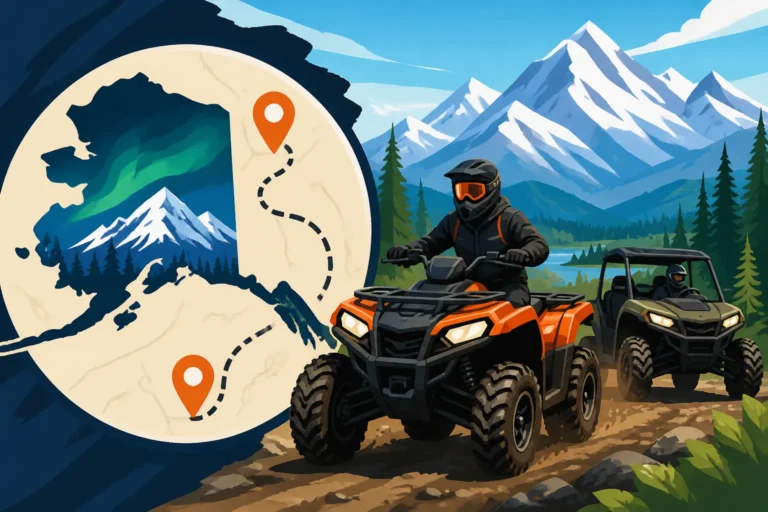
For the Mat-Su Valley, the Knik River Public Use Area and Jim Creek are familiar reference points for riders planning an outing near Anchorage. But “camping near Knik River” can describe several different locations, and not every campsite is an authorized staging area. Check where the campground boundary ends, where the riding area begins, and whether a road or trail connects them. [Alaska ATV Trails: Where to Ride] can help you think through the riding-area side of that plan.
Also confirm what kind of vehicle the route is meant for. A trail that works for a dirt bike or hiking may not be open to a wide side-by-side. Width restrictions, seasonal closures, soft ground, and stream crossings can turn an apparently short ride into a poor fit for a large machine. For broader access questions, see [Alaska Trails That Allow Side-by-Sides].
Treat camping permission and riding permission as separate questions
A campsite reservation or public campground does not automatically give you permission to ride from the site. A campground may allow trailers and machines to be parked while requiring riders to transport their vehicles to an approved staging area. Likewise, permission to ride on nearby land does not necessarily allow camping there.
This distinction matters especially around Alaska’s mixed land ownership. State land, state parks, federal land, municipal land, private property, and Native corporation land can sit close together. The statewide general permit has limits, and a trailhead parking pass is not a land-use permit. Review [Alaska Land Ownership and Who to Ask] and [Alaska's General Permit Covers State Land] before treating a map line as permission to ride.
A practical planning method is to write down three locations: where you sleep, where you park or unload, and where riding is allowed to start. Use an official land manager’s information for access rules, then use a navigation tool such as onX Offroad to help visualize the route and nearby land boundaries. A map is a planning aid, not a substitute for confirming current closures or asking the land manager when ownership or access is unclear.
Alaska areas to consider for a riding-and-camping base
Knik River and Jim Creek in the Mat-Su Valley
For riders coming from Anchorage or the Mat-Su Valley, the Knik River area is one of the most recognizable places to research. Jim Creek offers a managed campground and day-use setting associated with nearby riding, which can make it a convenient base for a trip built around the area. Check the campground’s current rules, fees, availability, and vehicle restrictions before you head out; conditions and operating details can change.
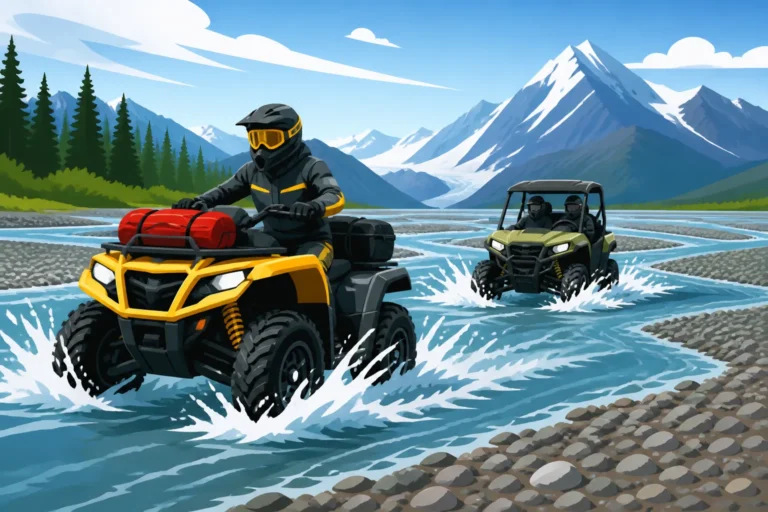
Do not assume that every campsite has direct trail access or that every route shown on a consumer map is suitable for your machine. The Knik River landscape includes braided channels and terrain that can change quickly. A route that looks straightforward in the morning may become more difficult as water levels shift or surfaces soften. Read [Knik River Public Use Area in Alaska] and [Alaska Braided Glacial River Crossings] before planning a ride that depends on crossing water.
If Jim Creek is your base, treat the campground as a place to camp and stage thoughtfully rather than as permission to ride anywhere you can see. Observe posted speed limits, stay on permitted routes, and keep machines out of campground areas where riding is prohibited. The campground’s rules matter just as much as trail access; see [Alaska OHV Camping With Trail Access] for more on matching a campsite to a riding plan.
Denali Highway and more remote riding trips
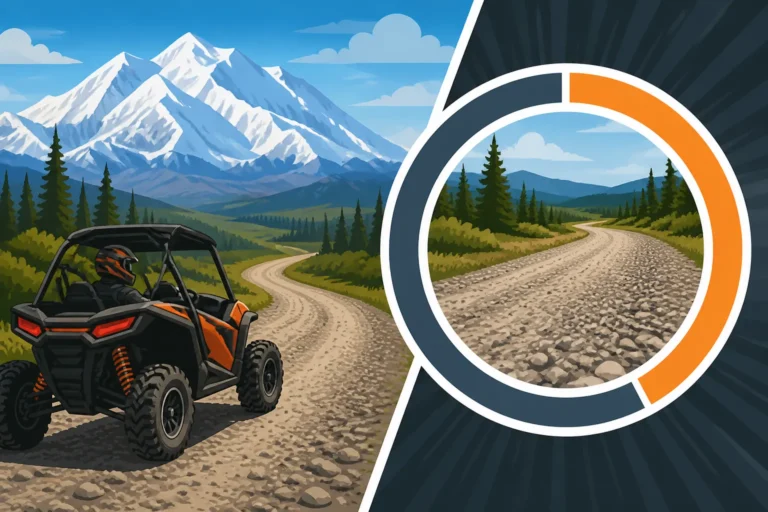
The Denali Highway is a scenic, largely gravel corridor between the Paxson and Cantwell areas, and it can be part of a longer trip for riders exploring Interior Alaska. It is not a single, continuous ATV trail. Nearby riding opportunities, camping choices, and land access can vary along the highway, so plan around a specific location rather than assuming you can unload anywhere beside the road and ride off.
Remote travel also changes what “near a trailhead” means. A campground may be many miles from fuel, services, or a reliable way to get help. Check road and campground conditions, identify the responsible land manager, and make sure the route is appropriate for your machine and experience. [Denali Highway Riding in Alaska] and [Alaska Riding Areas With Camping] are useful starting points for researching that kind of trip.
For a remote base, consider whether your group can manage without cell service and whether you have enough fuel for the planned ride and the return. Store food securely, carry recovery and repair supplies, and tell someone outside the group where you expect to travel and when you plan to check in. A campground can make the trip more comfortable, but it does not make a remote route low-risk.
| Area to research | Why it may suit a riding trip | What to confirm before booking |
|---|---|---|
| Jim Creek and the Knik River area | Managed camping options and access to a well-known Mat-Su riding area | Campground rules, site availability, machine access, route conditions, and river hazards |
| Denali Highway corridor | A possible base for a longer, remote Interior trip | Exact riding access, land status, road conditions, fuel range, and services |
| A private campground near a riding area | May offer amenities such as hookups or a defined place to park a trailer | Whether machines can be parked, whether riding from the property is allowed, and how to reach an authorized staging area |
| A public campground near a trailhead | Can keep a group close to a planned riding location | Whether the trail is open to your vehicle type and whether a separate permit or pass applies |
Plan the campsite-to-trailhead connection
Decide whether to ride from camp or trailer to the staging area
The simplest arrangement is a campground where the operator explicitly permits machine parking and where an authorized riding route begins nearby. When that is not available, a trailer can be the safer and more straightforward choice. You can drive to a legal staging area, unload there, and avoid riding on roads or private land simply because they appear to connect camp with the trail.
Before leaving home, confirm that the staging area has room for your truck and trailer. A narrow roadside pullout that looks fine on a phone screen may be difficult to use with a long trailer, especially when other riders arrive. Look for posted parking rules, pass requirements, and any limits on overnight parking. For Mat-Su trailheads, [Alaska Borough Trailhead Passes] explains why a parking pass may be a separate consideration from land access.
Use onX Offroad or another reliable mapping tool to study the route from camp to the trailhead, but compare what you see with land-manager information and posted signs. Pay particular attention to roads, parcel boundaries, gates, and places where the mapped route changes surface or ownership. When those details do not line up, do not guess; contact the campground or the agency responsible for the area.
Match the campsite to your machine and group
A tent site that is comfortable for two people may not work well for a family with a side-by-side, a utility trailer, and wet riding gear. Check whether the campground can accommodate your vehicle combination, whether there is room to maneuver, and how far you will need to carry equipment. If you are bringing a wide UTV, ask about access roads and site layout rather than relying on a generic “RV friendly” description.
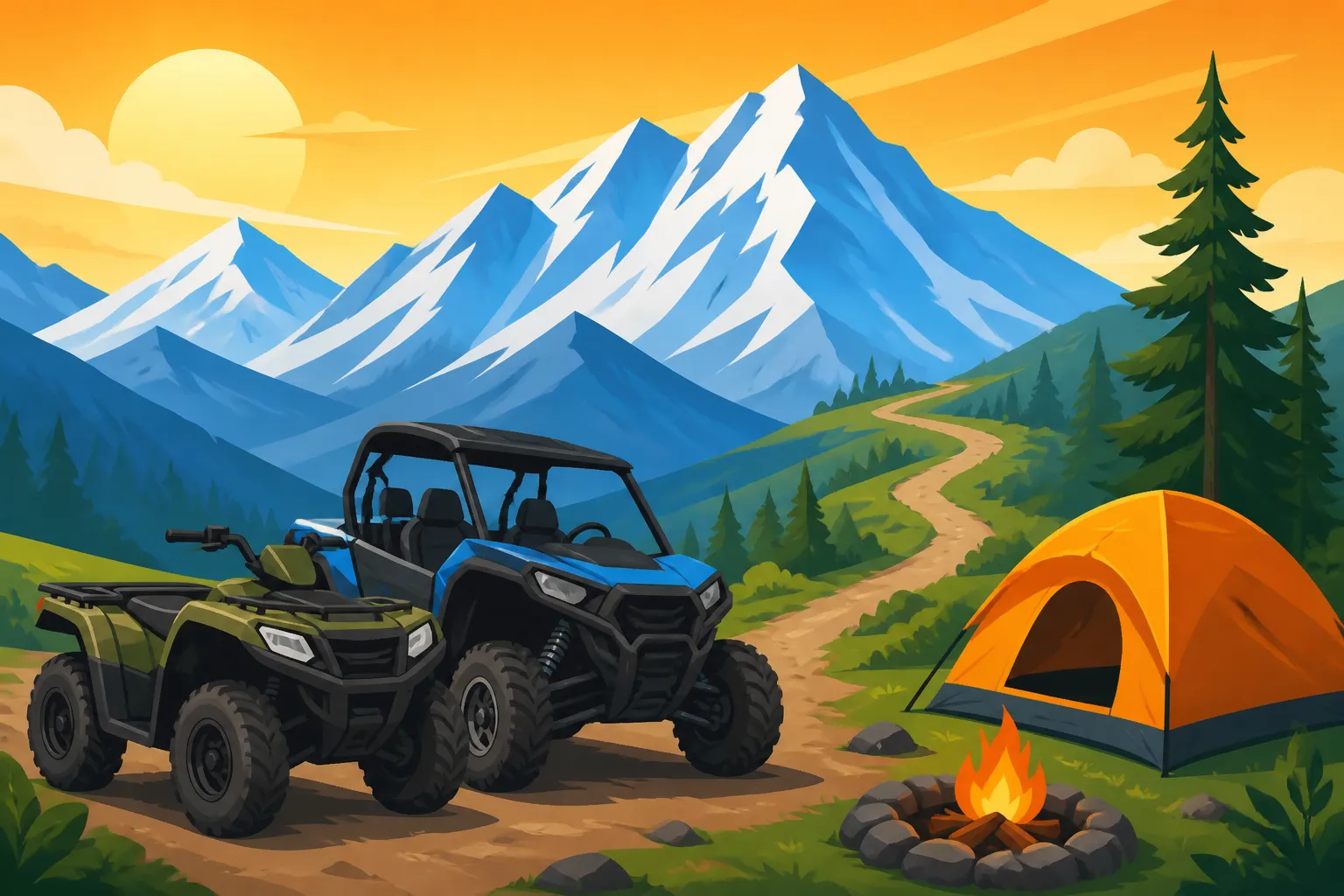
Think about the less glamorous details, too: somewhere to dry rain gear, a place to secure helmets, space to keep food away from wildlife, and enough room to inspect or clean a machine without disturbing neighboring campers. Mud and glacial silt can travel far beyond the tires. A small brush, absorbent rags, and a bin for dirty gear can keep the tent or vehicle from becoming a soggy mess.
For a group, agree on the plan before arriving. Decide who is towing, who is carrying fuel, where everyone will meet if a machine has a problem, and whether anyone needs a quieter or more accessible campsite. If you are riding with children or less experienced drivers, choose a base that shortens the day’s logistics and leaves time for a careful orientation rather than a rushed departure.
Prepare for weather, access changes, and a smooth return to camp
Check conditions shortly before departure
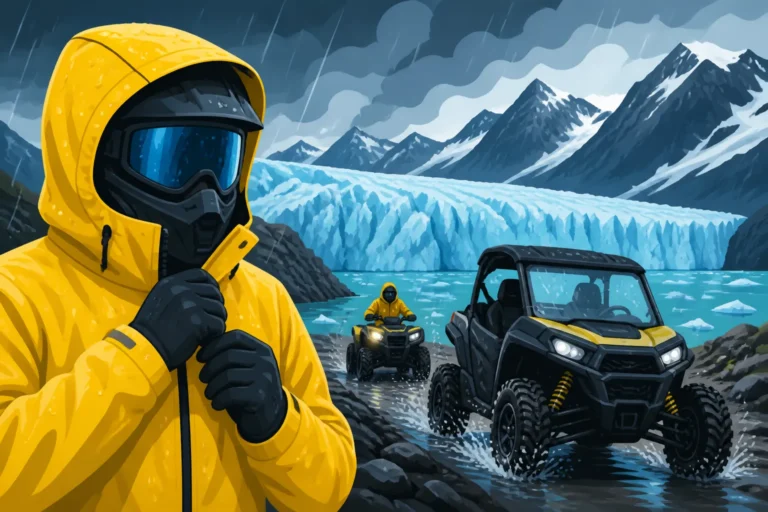
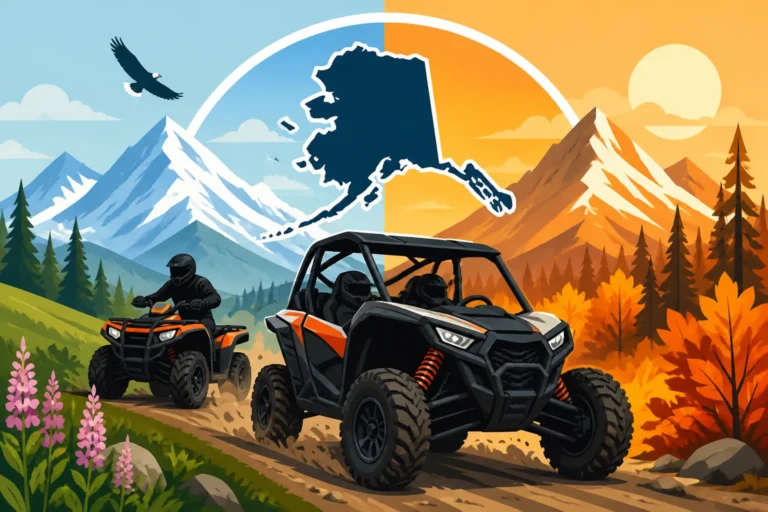
Alaska’s riding conditions can shift with rain, snowmelt, freeze-up, and seasonal closures. A trail that was passable on a previous trip may now have soft ground, standing water, a blocked crossing, or a closure sign. This is especially important on remote routes and around glacial rivers, where conditions can change over a short period. Plan a turnaround point before you leave, and treat it as a real decision point rather than a suggestion.
Check with the campground, land manager, or local recreation office for current access information. Revisit the route on your map before you set out, download the information you need for offline use, and keep a paper backup of important directions. onX Offroad can help you prepare a route and understand the surrounding area, but posted restrictions and the land manager’s instructions take priority.
Build flexibility into the schedule. If weather closes a trail or a crossing looks unsafe, having another legal activity or a second riding area in mind can save the day. It is frustrating to rearrange a trip after towing a machine a long way, but pushing into questionable conditions can put your group, machine, and campground return plan at risk. Read [Alaska Riding Seasons and Breakup] when planning around seasonal ground conditions.
Make camp rules and responsible riding part of the itinerary
Before unloading, read the campground’s rules about quiet hours, generators, fires, vehicle movement, pets, and waste. Some properties restrict engine use or prohibit riding within the campground, even when the surrounding area is known for OHV use. Keep machines slow near tents and occupied sites, and avoid unnecessary idling. A considerate arrival makes life easier for everyone sharing a small campground.
Protect the ground as well as the campsite. Stay on routes that are open to your machine, avoid widening muddy trails, and do not create a bypass around a puddle or obstacle. On Alaska’s tundra and wetlands, damage may last far longer than the ride. If you discover a closure, a washed-out trail, or a route that appears to cross land you cannot identify, stop and check rather than riding through. [Alaska Tundra and Wetland Conditions] offers more context on why surface conditions matter.
On the final day, leave time to secure the machine and trailer before dark or poor weather. Check that tie-downs are tight, remove mud and debris where the campground requires it, pack out trash, and make sure no fuel or food is left behind. If the campground is also your staging point, follow the property’s instructions for loading and departure so the next group can use the site without dealing with your cleanup.
Disclaimer
This article is for general informational purposes only and does not constitute professional advice. Laws, prices and regulations vary by location and change over time. Consult a qualified professional for guidance on your specific situation.