Filming With a Drone Over State Land
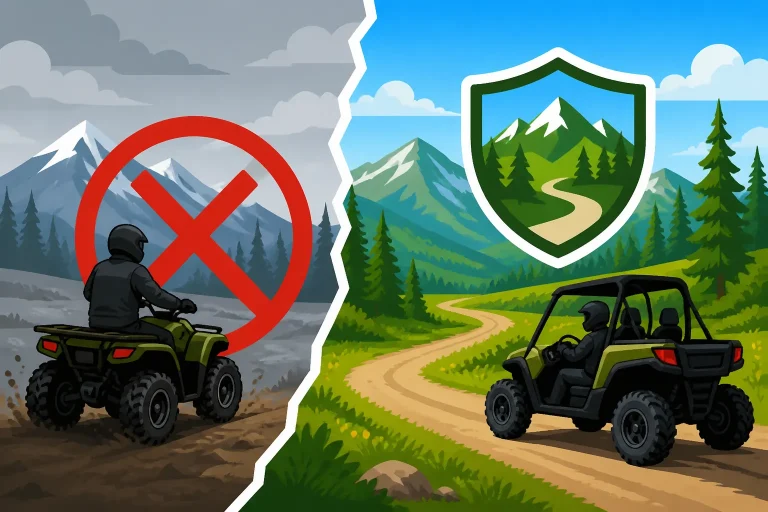
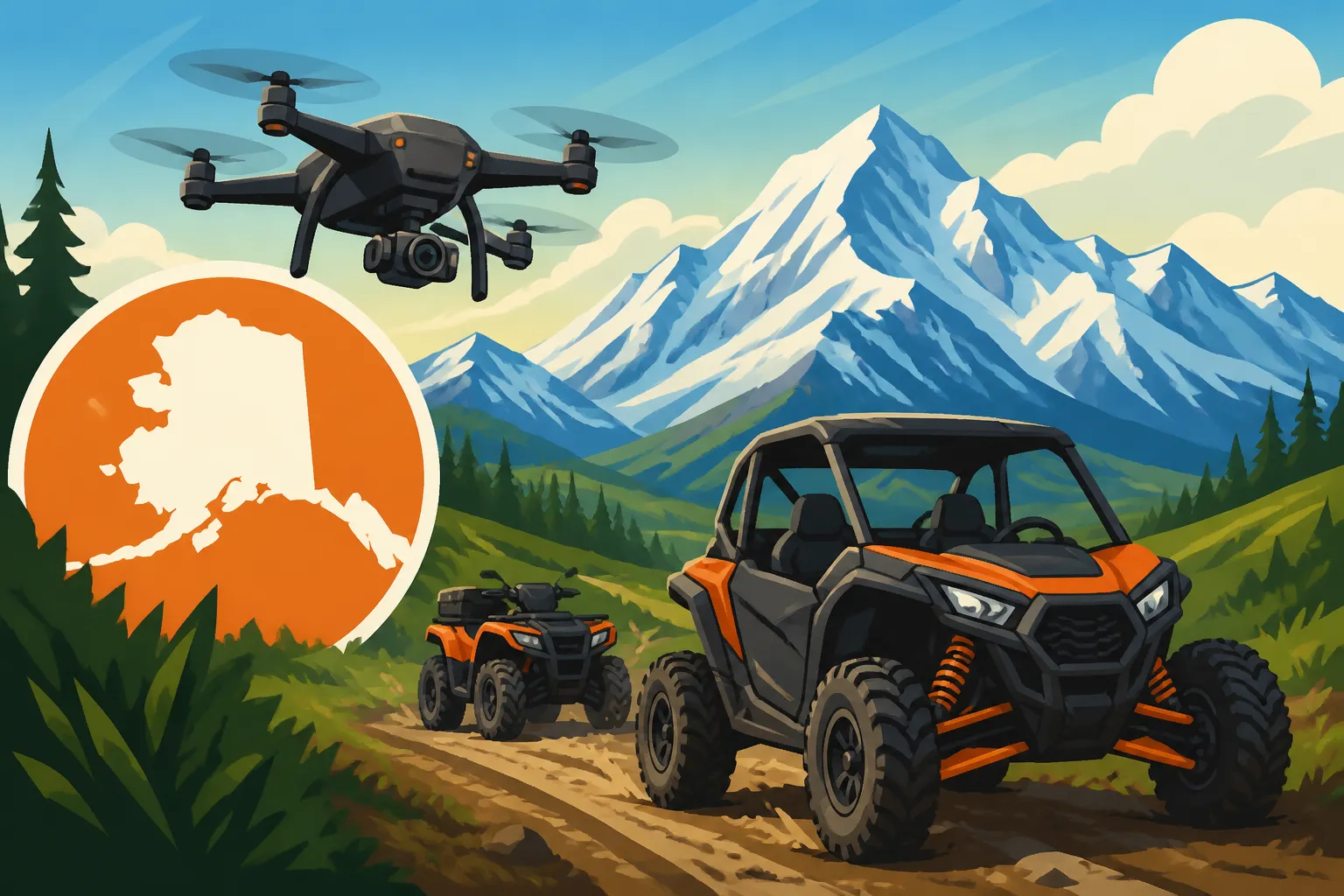
Filming with a drone over Alaska state land can seem straightforward: bring the ATV, launch from a trail, and capture the ride. The complication is that permission to ride, permission to use a particular piece of land, and permission to operate a drone are separate questions. Here’s how to check each one before filming, especially if the footage is for a business or organized project.
Start by confirming who manages the ground
“State land” is not a catch-all for every open-looking place in Alaska. A riding area can include state parcels, private inholdings, federal land, Native corporation land, or land managed under different rules. Boundaries may be hard to recognize from a trail, and a map showing public access does not necessarily settle whether a drone can launch there or filming is allowed for your purpose.
Start by identifying the exact launch and landing area, not just the general destination. If you plan to take off from a trailhead, campsite, pullout, or other developed recreation site, check who manages that location and whether the site has its own conditions. Then check the land beneath the planned flight path. A drone can cross a boundary even when the pilot stays in one place.
Alaska’s statewide general permit relates to use of certain state land by all-purpose vehicles, but it is not a blanket permission for every activity or every parcel. It does not replace permission required from another landowner or manager, and some areas are outside its coverage. Read What Alaska’s Statewide General Permit Actually Authorizes and Alaska’s Permit Excludes Designated Areas to understand the limits of that permission. A trailhead pass is also different from a land-use permit; A Trailhead Pass Is Not a Land Permit explains why paying a recreation fee does not resolve every access question.
Use land-status information as a starting point, then verify the result with the agency or landowner responsible for the specific site. Alaska Land Status Maps and Alaska Land Ownership Lookups can help you identify who to contact. If a parcel is managed by an agency other than the state, or sits within a boundary that has its own restrictions, ask that manager directly rather than assuming the statewide permit applies.
A useful way to frame the question is: “May I launch and land a drone here for this kind of filming, and may I travel to the site by ATV?” Ask about both activities. Permission to reach a place on a machine does not necessarily include permission to operate a drone there.
Separate ATV access from drone and filming permission
Plan for three distinct layers: access to the land, permission to operate the aircraft, and permission for the purpose of the filming. One approval does not automatically cover the others.
| Question | What to check | Why it matters |
|---|---|---|
| Can you ride to the site? | Land ownership, vehicle access rules, closures, and any required permit or pass | A route may cross land with different rules or be closed to machines |
| Can you launch and land there? | The land manager’s rules for the exact launch and recovery area | A location open to riders may still have restrictions on launching or staging equipment |
| Can you fly the drone? | Current FAA requirements, airspace limits, and applicable operating rules | Federal aviation requirements apply regardless of land access |
| Can you film for your intended use? | Any land-manager conditions for commercial, organized, or other special-use filming | The purpose and scale of a shoot can affect whether additional authorization is needed |
| Can you capture wildlife or other visitors? | Wildlife protections, privacy concerns, and site-specific conditions | A flight can disturb animals or create conflicts even when the pilot follows flight rules |
For the riding portion, check the land rules that apply to the route and destination. The statewide permit is not a substitute for checking access to state parks, private property, federal land, or designated areas. Why State Parks Sit Outside Alaska’s General Permit and Riding Onto Another Agency’s Land in Alaska cover common boundary complications. If the route crosses Native corporation or village land, confirm access with the relevant owner or authority; a state permit cannot grant access to land it does not cover.
For the drone portion, follow the Federal Aviation Administration’s current requirements for your operation. Those requirements can differ depending on whether you are flying recreationally or as part of a business or other non-recreational activity. Check the current rules for pilot qualification, airspace, visual line of sight, aircraft identification, and any required authorizations. Do not assume that an open trail or remote location means the airspace is unrestricted.
The intended use of the footage matters. A personal video of a family ride is different from footage made for a client, a tourism business, a paid production, or a promotional campaign. Do not rely on the word “recreational” as a shortcut if the footage is being created as part of work or a commercial project. Describe the actual use when asking the land manager and confirm what authorization, if any, is required.
The right answer may depend on the site and the project. A manager may have different conditions for a small personal flight, a crew with several vehicles, repeated filming, or a production that occupies a trailhead. If you cannot get a clear answer before the trip, choose a location where the rules are confirmed rather than treating silence as permission.
Plan for wildlife, weather, and other trail users
A legal flight can still be a poor choice if it disturbs wildlife, blocks a narrow route, or creates risk for people on the ground. Alaska’s outdoor areas can be remote, but they are not empty. Riders, hikers, hunters, workers, and animals may be out of sight until they are close.
Wildlife is a particular concern. Do not use a drone to chase, crowd, or repeatedly approach animals for a shot. Avoid launching near wildlife, and be ready to land or change course if animals react or people need the area. Ask the land manager whether there are seasonal or location-specific restrictions where you plan to film. A flight that unsettles animals can create harm even if the aircraft never touches them.
Keep the drone and ATV operation from interfering with each other. A pilot focused on a screen may miss traffic, a changing trail, or a machine moving nearby. Do not launch from a spot where the aircraft, pilot, or equipment blocks the trail or vehicle access. Agree on a safe stopping and landing area before anyone starts riding, and make sure the rider and pilot know when a flight is active.
Weather can shift quickly, and conditions that are manageable on the ground may be unsuitable for a small aircraft. Wind, precipitation, cold, low visibility, and changing light can affect control and battery performance. Check the aircraft manufacturer’s operating guidance and the forecast for the actual area, not only the nearest town. Set a conservative return point and keep enough battery for an orderly landing rather than trying to stretch a shot.
Plan for communications and recovery. A remote launch point may not have cell service, and a lost aircraft can be difficult to retrieve without creating more impact. Avoid flying over terrain where a recovery would require leaving an approved route, entering sensitive ground, or crossing land where you lack permission. If the drone goes down, do not assume that the shortest path to it is an authorized route.
Respect people’s privacy and give others room to decline being filmed. Avoid hovering over campsites, homes, or people who are not part of the project. If other riders approach, land or move to a safe position rather than expecting them to stop for the shoot. These practical choices help keep filming from disrupting the recreation experience that brought people to the area.
A practical pre-flight check for Alaska state land
Use this sequence before loading the drone and ATV. It creates a record of what you checked and helps reveal problems while you still have time to change the plan.
-
Mark the exact site and route. Note the launch area, intended flight area, landing area, ATV route, and any alternate route. Include likely boundary crossings rather than mapping only the destination.
-
Identify the land manager. Check land-status information and contact the manager for the launch site and filming area. If more than one owner or agency is involved, check with each one. For Native corporation or private land, seek permission from the appropriate owner or authority.
-
Describe the project plainly. Explain whether the flight is personal, part of paid work, promotional, organized, or connected to a larger production. Include the crew size, number of machines, expected timing, and whether you plan to return for multiple sessions.
-
Ask about ground and filming conditions. Confirm whether you may travel to the location by ATV, launch and land there, and film for your stated purpose. Ask whether there are closures, wildlife concerns, seasonal limits, staging restrictions, or additional authorization requirements.
-
Check current FAA requirements. Review the rules that apply to your operation, including airspace and any required pilot credentials or authorizations. An answer from a land manager does not replace aviation compliance, and aviation compliance does not grant access to the land.
-
Set a low-impact flight plan. Choose a launch site that does not obstruct other users, establish a safe landing area, and avoid routes that would put people or wildlife under unnecessary pressure. Decide in advance when the pilot will land or abandon a shot.
-
Carry confirmation and essential documents. Keep any relevant permission, permit information, and contact details accessible, along with the documents required for the ATV ride. In wet or remote conditions, store them where they can be read and protected.
-
Recheck conditions on arrival. A site may look different than it did on a map. Look for signs, gates, temporary closures, nearby wildlife, and other users. If the situation has changed or the launch area is not clearly permitted, do not launch until you can confirm what applies.
If a land manager cannot confirm permission for the planned filming, change the location, keep the flight within a clearly authorized area, or postpone the shoot. When the project is commercial, organized, or likely to affect other users, ask early rather than waiting until the crew and machines are at the trailhead. [Questions Worth Asking a Land Manager] can help you prepare a focused inquiry.
The safest assumption is that riding permission, launch permission, and drone-operation requirements are separate checks. Confirm each one for the specific place and purpose, then keep the flight conservative enough to protect wildlife, other riders, and the ground you came to film.
Disclaimer
This article is for general informational purposes only and does not constitute professional advice. Laws, prices and regulations vary by location and change over time. Consult a qualified professional for guidance on your specific situation.