Alaska Titles for an Old Machine
It's a familiar scenario for many Alaskans: you've got a fantastic old ATV or UTV, maybe passed down through the family, picked up at a garage sale in the Mat-Su Valley, or salvaged from a remote cabin. It runs like a champ, but when you go to register it, you realize you don't have a formal title. This guide will walk you through the unique challenges and solutions for getting a legal title for your cherished old machine in Alaska, ensuring you're road-ready and worry-free.
The Unique Challenge of Old Machines in Alaska
Owning an old ATV or UTV in Alaska is a rite of passage for many, a testament to durability and a nod to a simpler time. However, these machines, while robust, often come with a particular quirk: a lack of traditional ownership paperwork, especially a formal title. This can be a source of frustration and confusion for riders who just want to do things by the book.
Why Old Machines Often Lack Traditional Titles
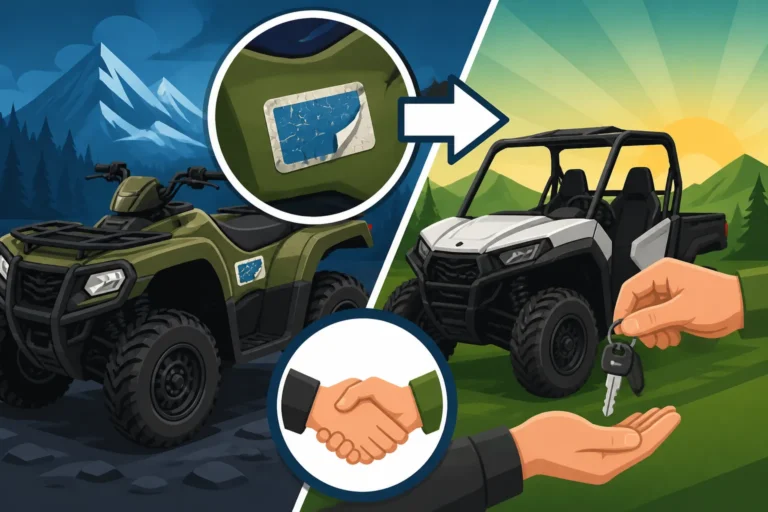
It's not uncommon for an older all-terrain vehicle (ATV) or utility terrain vehicle (UTV) in Alaska to come without a title, and it's rarely a red flag in itself. For many years, Alaska didn't require titles for these types of machines. They were often treated more like equipment than titled vehicles, especially if they were primarily used off the road system or on private property. The paperwork might have been a simple bill of sale, a handwritten receipt, or even just a handshake deal that's long since been forgotten or misplaced.
The landscape shifted significantly when [Alaska APV Titling Required Since 2022]. This change meant that while newly purchased machines would now come with titles, a vast number of older machines already out in the wild suddenly found themselves in a titling gray area. For a machine that's been rattling around the Interior for two decades, a formal title might never have existed, or the original documents were simply never retained after the initial purchase and registration (if it was even registered). Owners might have moved, documents might have been lost in a fire, or the machine changed hands multiple times with only rudimentary notes as proof.
The Importance of a Title, Even for an Old Machine
While your old quad might run perfectly without a title, having one is crucial for several reasons, and it provides a significant layer of peace of mind. First and foremost, a title serves as irrefutable proof of legal ownership. This becomes incredibly important if you ever decide to [Selling a Registered Machine in Alaska], if the machine is [A Machine Left in an Alaska Estate], or if there's any dispute over who rightfully owns it. Without a title, selling can be a much more complicated affair, potentially scaring off buyers who are hesitant about a machine with unclear provenance.
Beyond sales, a title can simplify interactions with law enforcement, especially if you're riding on public lands and need to prove the machine belongs to you. It also can be a key document for [Alaska Insurance Requirements for an APV]. While many insurers will cover a registered machine, a clear title provides an extra layer of official documentation that can streamline claims or other administrative processes, such as after an [Alaska Accident Reporting for an ATV Crash]. Essentially, a title transforms your informal ownership into a fully recognized legal status, protecting your investment and simplifying future transactions.
Understanding Alaska's "No Title Issued" NTI Registration Process
If you're an Alaskan with an old ATV or UTV that lacks a formal title, the good news is that the state has a specific pathway designed for you. It's called the "No Title Issued" or NTI registration process, and it's the primary way to get your machine into the official system when traditional title paperwork is missing.
What is a No Title Issued NTI Registration?
The NTI process is Alaska's solution for establishing legal ownership and eventually a title for vehicles where no previous title exists in the state's records, or where all traditional proof of ownership has been lost. It’s particularly common for older ATVs and UTVs because, as we discussed, titling wasn't always a requirement. When you apply for an NTI, you're essentially asking the state to acknowledge your claim of ownership and to start a process that will, after a waiting period, result in a formal title being issued in your name. This is a critical step for anyone who wants to ensure their old machine is fully legal and documented. For many vintage quad owners, the NTI path is the only practical way forward to get that all-important piece of paper. You can read more about it here: [Alaska No Title Issued Registrations].
The Two-Year Waiting Period and Its Purpose
One of the most significant aspects of the NTI process is the mandatory two-year waiting period. This isn't just a bureaucratic delay; it serves a crucial legal purpose. The state uses this time to provide a window during which any prior owners, lienholders, or other interested parties can come forward and contest your claim of ownership. It's a safeguard against fraud and ensures that the state isn't inadvertently issuing a title to someone who isn't the rightful owner.
During these two years, your machine will be legally registered, and you'll receive a decal to place on it, just like any other registered APV. However, the actual title will not be issued until the two-year period has passed without any successful challenges to your ownership. This means you need to be patient and keep all your registration documents safe. While you can ride your machine, it's important to understand that the title status is still pending. You'll find a more in-depth explanation of this specific waiting period here: [Alaska's Two-Year NTI Waiting Period].
Required Documents for an NTI Application
When you head to the Alaska DMV or a partner office to begin your NTI application, you'll need a specific set of documents. Even if you don't have a formal title, you'll still need to provide as much evidence of ownership as you possibly can. The cornerstone of the application will be the Vehicle Transaction Application, often referred to as Form V1. This is the universal form for most vehicle-related transactions in Alaska. You can find a detailed breakdown of how to fill it out in this guide: [The Vehicle Transaction Application Every OHV Owner Files].
In addition to the V1 form, you'll need to provide proof of your identity, typically a valid Alaska driver's license or state ID. Most importantly, you'll need documents that support your claim of ownership, even if they're informal. This could be a bill of sale, a previous registration from another state (if applicable), or even a notarized affidavit from the person who sold it to you. The more documentation you can provide, the stronger your case will be. If you're creating an affidavit or bill of sale from scratch, resources like LawDepot can provide templates to ensure you cover all the necessary legal points.
Step-by-Step: Applying for an NTI and Securing Your Title
Navigating the process of titling an old machine in Alaska can feel like a trek through unknown territory, but breaking it down into manageable steps makes it much less daunting. The key is to be thorough, patient, and prepared.
Preparing Your Ownership Documentation
This is perhaps the most critical step when dealing with an old machine that lacks a clear title. The DMV needs to see something that indicates you are the rightful owner, even if it's not a formal title. Here are common scenarios and what you can use:
- Bill of Sale: If you purchased the machine from a private seller, even a handwritten [Alaska Bills of Sale for a Used Machine] is incredibly valuable. It should include the machine's year, make, model, VIN, purchase price, date of sale, and the signatures, printed names, and addresses of both the buyer and seller. The more detail, the better.
- Affidavit Naming Seller: What if you bought the machine years ago and the bill of sale is long gone, or the seller never provided one? An affidavit can come to your rescue. This is a sworn statement, ideally notarized, from the person who sold you the machine, attesting to the sale. If the original seller is unreachable or deceased, you might need an affidavit from someone who can credibly vouch for your ownership. Websites like LawDepot offer templates for affidavits, which can be immensely helpful in ensuring you include all the necessary information. This document effectively fills the gap when a formal bill of sale is absent, as detailed in [Alaska Affidavits Naming a Seller].
- Warranty Card: For machines that were purchased new but perhaps never titled because of older regulations, an original warranty card can serve as proof of first ownership. [Using a Warranty Card as Proof of Ownership] outlines how this document can be used in your application.
- No Paperwork at All: This is the toughest situation, but not insurmountable. If you genuinely have [Alaska Machines With No Paperwork] and no way to contact a previous owner, you will rely heavily on the NTI process itself, along with a detailed explanation of how you came into possession of the machine. The state understands that sometimes, machines simply appear in your life without a paper trail. In such cases, the VIN becomes absolutely critical. Make sure to [Photographing a VIN Before Winter] and have it clearly visible and legible for verification.
Gather everything you have, organize it, and be ready to explain any gaps. Even if you feel your proof is flimsy, present it. The NTI process is specifically designed for these types of situations.
Navigating the DMV or Partner Office
Once you have your ownership documentation in hand, it's time to visit the DMV. You can go to any full-service DMV location or one of the many [Alaska Partner Offices That Register OHVs] found across the state. These partner offices can often process registrations and initial NTI applications, making the process more accessible, especially in rural areas.
When you arrive, you'll present your filled-out Vehicle Transaction Application (Form V1), your proof of identity, and all your gathered ownership documents. Be prepared for the clerk to ask questions about your machine's history and how you acquired it. They are trying to ensure the NTI process is being used appropriately. Don't be shy about asking questions yourself; the clerks are there to help guide you through the process, and understanding [Alaska Registration Questions Clerks Hear] can help you anticipate common inquiries. You'll pay the applicable registration fee, which covers the initial two-year NTI registration period.
The Waiting Period and What Comes Next
After you submit your NTI application and it's approved, you won't walk out with a title that day. Instead, you'll receive your vehicle registration and a decal that confirms your machine is legally registered in Alaska. This decal will need to be properly placed on your machine, as described in [Alaska Issues a Decal, Not a Plate]. This officially starts the two-year waiting period.
During these two years, the state's system keeps your ownership claim on file, allowing time for any previous owners or lienholders to come forward. It's rare for an old machine to have a contested ownership, but the safeguard is there. Once the two years have passed without incident, it is your responsibility to contact the DMV again and request the formal title be issued to you. They won't automatically send it. This final step is crucial for completing the process and achieving true, titled ownership. The specific actions you need to take after the waiting period are outlined in [Alaska NTI Title Steps].
Potential Roadblocks and How to Overcome Them
While the NTI process is designed to be helpful, you might encounter a few hiccups along the way:
- Contested Ownership: In the rare event that someone else claims your machine during the two-year waiting period, the DMV will investigate. This is why having strong documentation, even an affidavit, is so important. If the claim is legitimate, you could lose possession. This scenario is detailed further in [What If Someone Else Claims Your Registered Quad?].
- Existing Liens: Older machines might have forgotten liens attached to them. If the DMV's search reveals an outstanding lien from a previous owner, your NTI application will be put on hold until that lien is cleared. This can be a tricky situation, as discussed in [Alaska Security Interests and NTI Titles]. You might need to contact the lienholder (if they still exist) or seek legal advice.
- Missing or Illegible VIN: The Vehicle Identification Number (VIN) is paramount for tracking and proving a machine's identity. If your machine's [Alaska Registration When the VIN Is Gone] or is unreadable, you'll need to work with the DMV to get an assigned VIN. This often involves a physical inspection by law enforcement or a certified VIN inspector to verify the machine is not stolen and to assign a new, trackable number.
Patience and persistence are your best tools when facing these roadblocks. Don't get discouraged; most issues have a resolution, even if it requires extra steps.
Important Considerations for Owners of Old Alaska Machines
Getting a title for an old machine in Alaska is a significant step, but it's also important to remember that not every machine will qualify, and there are other factors to keep in mind once you have your title (or are working towards one).
Machine Exclusions and What Won't Qualify
Even with the NTI process, Alaska has specific rules about what constitutes an All-Purpose Vehicle (APV) and what types of machines are simply not eligible for registration under that class, regardless of age or ownership proof. It's vital to check these exclusions before you invest time and effort into the titling process. You can find a comprehensive list of these machines here: [Machines Alaska Will Not Register as an APV].
For instance, Alaska specifically [Alaska Excludes Homemade ATVs] from APV registration, meaning if you built your quad from scratch, it won't be titled as such. Similarly, [Alaska Excludes Three-Wheelers] and [Alaska Excludes Snowmobiles From APV] (snowmachines have their own distinct registration class, so they are not registered as APVs, though they are titled if new enough). [Alaska Excludes Tracked Vehicles] are also typically not registered as APVs unless they are purpose-built APVs that happen to have track conversions that still meet APV definition criteria. Knowing these rules upfront can save you a lot of headache and ensure you're pursuing the correct path for your specific machine.
When a Title Becomes Truly Essential
While registration allows you to ride legally on public lands, a clear title solidifies your ownership in a way registration alone cannot. The importance of a title becomes most apparent in these situations:
- Selling Your Machine: A clean title makes [Selling a Registered Machine in Alaska] much smoother and often increases the resale value. Buyers are far more confident purchasing a machine with a verifiable title than one with only a registration. It removes doubt and reduces the risk for both parties.
- Inheritance and Estates: If your old machine is part of an estate, having a title streamlines the transfer of ownership to heirs. Without it, the process can become bogged down in legal complexities, as noted in situations involving [A Machine Left in an Alaska Estate]. A title provides clear documentation for probate and ensures a smooth transition to the next generation of riders.
- Financing or Collateral: While less common for very old machines, a title is absolutely essential if you ever consider using your ATV/UTV as collateral for a loan. Banks and credit unions require a title to establish a lien against the vehicle.
Proving Ownership for Insurance or Accident Reporting
Even if your old machine is still in the two-year NTI waiting period and doesn't yet have a title, your current registration serves as important proof of ownership. This is crucial for obtaining [Alaska Insurance Requirements for an APV]. Most insurance companies will accept a valid registration as sufficient documentation to issue a policy, protecting you from liability and covering damage to your machine.
Furthermore, if you're ever involved in an accident, having your machine legally registered simplifies the [Alaska Accident Reporting for an ATV Crash] process. Law enforcement can easily verify your ownership through the registration database, which is vital for accident reports and any subsequent insurance claims. While a title is the ultimate proof, a current registration provides a strong, interim layer of legal standing.
Here's a quick look at the types of documents that help with an NTI application:
| Document Type | When It's Useful for NTI | Where to Get It |
|---|---|---|
| Bill of Sale | Private sale, some existing paperwork | Buyer/Seller (can be handwritten) |
| Affidavit Naming Seller | Lost bill of sale, no title, prior owner available | Notary Public, legal forms (e.g., LawDepot template) |
| Warranty Card | New machine, no title issued at time of original purchase | Original Dealer (if retained) |
| DMV Form V1 | Required for all NTI applications | Alaska DMV office or website |
| Valid Identification (ID) | Required for all applications | Alaska DMV (Driver's License or State ID) |
| VIN Verification | Essential for all NTI applications, especially with no paperwork | Self-photographed, or by authorized personnel if needed |
Getting a title for an old machine in Alaska might seem like a long and winding trail, but the state's NTI process provides a clear path forward. By understanding the requirements, diligently gathering your documentation, and patiently working through the waiting period, you can achieve full, legal ownership of your vintage ATV or UTV. The peace of mind and enhanced resale value are well worth the effort, ensuring your machine can continue to be a source of adventure for years to come.
Disclaimer
This article is for general informational purposes only and does not constitute professional advice. Laws, prices and regulations vary by location and change over time. Consult a qualified professional for guidance on your specific situation.