Alaska Registration for a Second Machine
So, you’ve enjoyed your first Alaskan quad or side-by-side enough to know you need another one in your life. Maybe you’re adding a utility UTV to your fleet, or perhaps a sportier ATV for those weekend thrills. Whatever the reason, you're likely wondering if registering a second machine in Alaska is the same song and dance you went through the first time, or if there are special considerations for multiple vehicles. This guide is here to walk you through the specifics of registering that second, third, or even fourth All-Purpose Vehicle (APV) in the Last Frontier, ensuring you're ready for the trails without any unexpected snags.
The Basics Don't Change: Core Requirements for Every Machine
When you registered your first ATV or UTV in Alaska, you probably learned a lot about the process. The good news is that the foundational rules and requirements for registering an APV in Alaska remain incredibly consistent. Whether it's your first machine or your tenth, the Division of Motor Vehicles (DMV) treats each vehicle's registration as a distinct transaction, even if the owner is the same. This means you’ll be repeating many of the steps, but with the confidence of having done it before.
Every machine, regardless of how many you already own, needs to meet the same eligibility criteria and have the correct paperwork in order. There isn't a special "multi-vehicle" discount on paperwork or a shortcut for subsequent registrations. Think of each registration as starting a fresh record for that specific vehicle – unique VIN, unique decal, unique expiration date.
Understanding this fundamental approach helps set expectations. While you, the owner, might already be in the system, the machine is new to the system, and it requires its own complete application package. This consistency actually simplifies things in a way, as you don't have to learn a whole new set of rules just for your latest acquisition.
Proof of Ownership is Paramount Again
Just like your first machine, proving you legally own your second ATV or UTV is absolutely non-negotiable for registration in Alaska. The DMV needs to establish a clear chain of ownership for every single vehicle. This isn’t just a formality; it’s a critical step to prevent theft and ensure that the person registering the machine has the legal right to do so. Without proper documentation, your application will simply not move forward.
The type of proof you need will depend on how and where you acquired your new machine. If you bought it brand new from a dealership, a [Alaska Warranty Cards for a New Machine] or a Manufacturer's Certificate of Origin (MCO) is usually what’s required. These documents come directly from the manufacturer and certify the vehicle's first retail sale. Ensure you get these originals or certified copies from your dealer.
For a used machine, especially if you bought it from a private seller, a well-documented [Alaska Bills of Sale for a Used Machine] is essential. This document should clearly state the buyer and seller's information, the vehicle's make, model, year, and VIN, and the purchase price. Sometimes, if the original title is missing or if the machine is older and wasn't previously titled, you might need an [Alaska Affidavits Naming a Seller] to attest to the sale. Services like LawDepot can be incredibly helpful for drafting legally sound bills of sale or affidavits, ensuring all necessary details are included and recognized. If the previous owner already had a title, then a properly signed-over title certificate or a [Alaska Transferred MCO Copies] will be needed. Always double-check that all signatures are present and clear.
The All-Purpose Vehicle Class and Your Machine
Alaska defines "All-Purpose Vehicles" quite specifically, and your second machine must also fit into this classification to be registered. This isn't a "one-and-done" check when you get your first ATV; it's a vehicle-specific determination for every machine you wish to register. Generally, this class includes vehicles like ATVs, UTVs (side-by-sides), and some six-wheelers. They are designed for off-highway travel and usually have specific features that distinguish them from regular road vehicles or even other types of recreational machines.
It's important to remember that not all off-road vehicles qualify as APVs under Alaska's definition. For instance, [Machines Alaska Will Not Register as an APV] include snowmobiles, even though they're common in Alaska's backcountry. Tracked vehicles that aren't specifically designed as UTVs with tracks, and certain older vehicles like three-wheelers, are also typically excluded from APV registration. This distinction is critical because trying to register a non-qualifying vehicle as an APV will lead to a rejected application, regardless of how many other APVs you already own.
So, before you fall in love with that vintage three-wheeler or a specialized tracked machine for your second purchase, make sure it aligns with Alaska's APV definition. A quick check of the vehicle's type and features against the state's criteria can save you a lot of time and potential heartache. If your first machine was a typical quad, and your second is a modern side-by-side, you're likely in good shape, but it's always worth a quick verification for any new type of machine.
The Same Application Form for Each
Don't expect a special "returning customer" or "multi-vehicle owner" form when you go to register your second machine. Every new APV registration, even if you already have one or more registered in your name, requires you to complete [The Vehicle Transaction Application Every OHV Owner Files]. This form is comprehensive and ensures all the necessary details about the specific vehicle and its owner are captured for a new, independent registration record.
Think of it this way: each machine gets its own file cabinet at the DMV. While your name might appear on multiple cabinet labels, each cabinet contains only the documents and history pertinent to that single vehicle. This means filling out all sections of the application form, just as you did the first time. You’ll need the VIN, make, model, year, and other descriptive information unique to your new acquisition.
Even if you’re registering two machines on the same day, you’ll be filling out two separate Vehicle Transaction Applications. This meticulous approach ensures that each machine has a distinct record, which is vital for things like decal issuance, ownership transfers, and tracking compliance. It might feel a bit repetitive, but it’s the standard procedure for maintaining accurate vehicle records across the state.
Personalizing the Registration: Owner Information and Address
While each machine gets its own separate registration, your personal information as the owner connects all of them. The DMV system will link multiple registered APVs to a single individual or entity. This makes sense from an administrative perspective, as it ties all your machines back to you for communication, renewals, and any potential legal matters.
However, this doesn't mean your registrations are merged. They remain distinct records, each with its own unique identifier and expiration date. The key is ensuring that your owner information is consistent and accurate across all your registrations, which helps the DMV manage your records efficiently and ensures you receive all important notices for each of your machines.
Keeping your details up-to-date, especially your mailing address, is crucial. If you move, you’ll need to ensure that the address is updated for all your registered vehicles, not just your newest one. This continuity is vital for receiving renewal notices and other important correspondence for every single APV you own.
Your Information on Multiple Records
When you register a second machine, your personal details – your full legal name, current mailing address, and potentially your driver's license number – will be recorded again, this time linked to the VIN of your new APV. The DMV database will recognize you as the owner of multiple vehicles, but it maintains separate registration entries for each. This allows them to track each machine individually for purposes like decal issuance and expiration dates.
It's not uncommon for folks to have different legal names or addresses on various documents over time. However, for consistency and ease of administration, it's best to use the exact same name and address on all your APV registration applications. Any discrepancies, even minor ones, could flag your application for review and potentially delay the process. If you've recently experienced a name change due to marriage or other circumstances, be prepared to provide supporting documentation for each machine you register, ensuring all records reflect the current, correct information.
This separate-but-linked approach is beneficial. It means if there's an issue with one machine's registration (e.g., a lien is recorded, or there's an ownership dispute), it doesn't automatically affect your other registered machines. Each one stands on its own administrative record, though all under your umbrella of ownership.
Proof of Residency for Each Application
While the primary focus for subsequent registrations is on the machine itself and proof of its ownership, it's always wise to have proof of residency handy, especially if there have been any changes since your last registration. If you're a [Alaska Registration for a New Resident] who just registered their first machine, and now you’re getting a second, you've likely already presented this. However, if your address has changed, you'll need to provide updated proof of residency, and this change should be applied to all your existing APV registrations as well.
The DMV needs to verify that the address you provide on the application is indeed your current physical residence in Alaska. This helps ensure that decals and other important documents are mailed to the correct location. Acceptable proofs often include a valid Alaska driver's license or state ID, utility bills, a rental agreement, or a property deed. Even if your address hasn't changed, carrying an Alaska driver's license that reflects your current address can suffice as proof.
Keeping your address current on all your vehicle records is more than just a bureaucratic formality; it's practical. Imagine missing a renewal notice for one of your machines because it went to an old address. That could lead to an expired registration, and potentially a citation if you're caught riding an unregistered APV. So, while you might not have to present a stack of residency documents every time, be prepared to ensure your [Alaska Registration Address Change] is properly noted across all your accounts.
Consistency Across Registrations
The absolute key to a smooth process when registering multiple machines is consistency. Imagine the DMV clerk trying to match your application for a new side-by-side to your existing records if your name is spelled slightly differently, or if you use a PO box for one machine and a physical address for another. This can cause unnecessary delays and confusion. Make sure the name, address, and any other identifying information you provide on the new application exactly match what's on file for your previously registered APVs.
This consistency extends to the very structure of your name. If you always use your full legal name (First, Middle, Last) on official documents, continue to do so. Avoid using nicknames or abbreviations that aren't on your official ID. For businesses, ensure the registered business name is identical across all applications. This might seem like a small detail, but in the world of official records, precision is paramount.
If you discover a discrepancy in your existing registration records, it's a good idea to address it proactively rather than waiting for it to cause a problem with your new registration. This might involve updating your information at the DMV. By maintaining uniformity across all your registrations, you streamline the process for yourself and for the DMV, ensuring that all your machines are properly linked to you in their system.
Practicalities of Multi-Machine Registration
Owning multiple ATVs or UTVs in Alaska brings with it some distinct practical considerations that you might not have encountered with just a single machine. While the core process is the same, managing multiple registrations, decals, and expiration dates requires a bit more organization. Each machine will operate on its own timeline and have its own physical identifier, making it crucial to keep track of each one individually.
From decal placement to understanding the financial implications of multiple registrations, these practicalities are what truly distinguish registering a second machine from the first. It’s not just about repeating the initial steps; it’s about managing an expanded fleet, even if that fleet consists of only two vehicles.
These considerations extend beyond the initial registration too, touching on renewals, potential sales, and even how you display your decals. Being prepared for these aspects will make multi-machine ownership in Alaska a much smoother experience.
Each Machine Gets Its Own Decal and Term
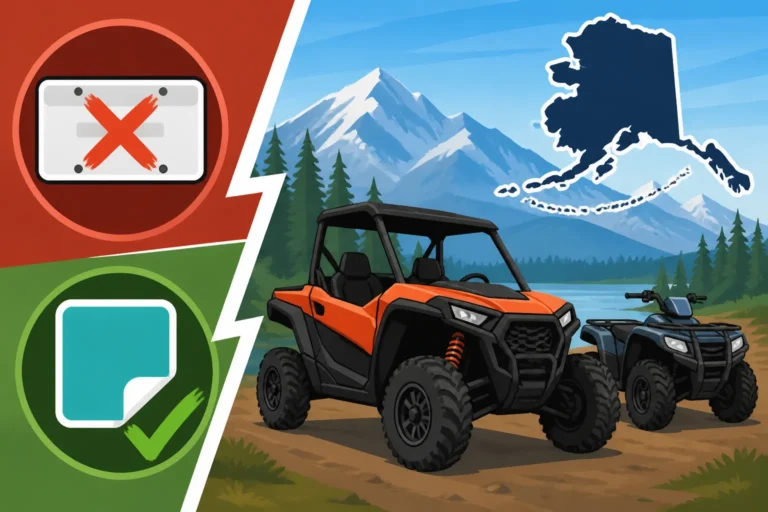
This is perhaps one of the most important practical distinctions: each of your registered APVs will receive its own unique decal. Alaska does not issue traditional license plates for these machines; instead, you get a clearly visible decal that serves as your proof of registration. [Alaska Issues a Decal, Not a Plate], and this applies to every single machine you register. Each decal will have a unique number and an expiration date specific to that machine's registration term.
You also have the flexibility to choose the registration term for each individual machine. Alaska offers [Alaska Registration Terms of Two, Four or Six Years]. This means you could register your first quad for a two-year term, and your new side-by-side for a six-year term. The terms do not have to coincide, nor do they have to expire on the same date (though all terms end on September 30, regardless of when you register). This allows you to manage your budget and convenience as you see fit for each vehicle. The ability to pick [Two, Four or Six Years at a Time] for each machine provides significant flexibility.
Proper placement of these decals is also crucial. For ATVs, the decal typically goes on the left tunnel side of the machine, as detailed in [Alaska Decal Placement on the Tunnel Side]. For side-by-sides, there are specific guidelines for where the decal must be visible, often on a flat surface like a fender or door panel, as outlined in [Alaska Decal Placement on a Side-by-Side]. Make sure each machine’s decal is affixed correctly and remains visible to enforcement officers.
Separate Costs and Payment
While you might be the proud owner of multiple machines, the registration fees are assessed per vehicle, not per owner. There’s no bulk discount for registering a second or third APV. Each registration is a separate financial transaction, and you'll pay the applicable fee for each machine based on the term you select. For instance, [Alaska Charges $10 for Two Years] for one machine. If you register two machines for two years each, you’ll pay $20 total.
This individual pricing applies across all available terms:
- [Alaska Charges $10 for Two Years]
- [Alaska Charges $20 for Four Years]
- [Alaska Charges $30 for Six Years]
When you go to register your new machine, be prepared to pay the full fee for that specific vehicle. If you’re registering multiple machines in one trip to the DMV, the total cost will be the sum of each individual machine’s registration fee. It's a good idea to budget for these separate costs upfront to avoid any surprises.
Here's a simple breakdown of costs for different terms and numbers of machines:
| Number of Machines | Term Length | Cost Per Machine | Total Cost |
|---|---|---|---|
| 1 | 2 Years | $10 | $10 |
| 1 | 4 Years | $20 | $20 |
| 1 | 6 Years | $30 | $30 |
| 2 | 2 Years | $10 | $20 |
| 2 | 4 Years | $20 | $40 |
| 2 | 6 Years | $30 | $60 |
| 1 (2 Years) & 1 (4 Years) | N/A | $10 & $20 | $30 |
This table clearly illustrates that each registration is an independent financial commitment. Always confirm current fees with the DMV, as these figures are subject to change.
Processing Time and Location
The processing time for your second machine's registration will generally follow the same timelines as your first. [Alaska Registration Processing Time] can vary depending on whether you apply in person or by mail, and how busy the DMV or partner office is. Each application is processed individually, so while you might submit two applications at once, they will go through the same internal steps.
Remember, Alaska does not currently offer online registration for OHVs, so [Alaska Has No Online OHV Registration]. This means you’ll typically be registering [Registering in Person at a Counter] at an Alaska DMV office or one of their certified partner offices. These partner offices can be a great alternative if a full DMV branch is inconvenient. If you mail in your application, expect a longer turnaround time as it must be received, processed, and then the decal mailed back to you.
If you’re registering both your first and second machine on the same day, say because you just purchased them, you can handle both transactions during the same visit. The clerk will likely process them as two distinct applications. Just make sure you have all the required paperwork for each machine meticulously organized to ensure a smooth and efficient visit. A little preparation goes a long way, especially when dealing with multiple transactions.
Common Questions and Scenarios for Multiple Owners
Owning more than one ATV or UTV can lead to some specific questions that single-machine owners might not encounter. These scenarios often involve navigating different legal requirements that might apply to one of your machines but not another, or handling the sale of one machine while retaining others. Understanding these nuances is crucial for seamless multi-machine ownership in Alaska.
From title requirements to insurance implications, the administrative landscape can shift slightly when you have a mini-fleet. It’s not just about managing multiple decals; it’s about being aware of how each machine’s history and purpose might differentiate its legal standing, even under the same owner.
These situations highlight the importance of meticulous record-keeping and a proactive approach to understanding the evolving regulations, ensuring that all your machines remain compliant and ready for the trail.
When One Machine Needs a Title and Another Doesn't
A common scenario for multi-machine owners in Alaska involves having one APV that requires a title and another that does not. This is primarily due to the state's titling requirements, which became mandatory for APVs purchased or transferred on or after January 1, 2022. If your first machine was purchased before this date, it might fall under the older regulations where a title wasn't necessarily issued or required for registration. Thus, you might have an older machine without a title and a newer one that absolutely needs one. [Alaska APV Titling Required Since 2022] has introduced this distinction.
For older machines, especially those bought well before 2022, you might have registered it through the [Alaska No Title Issued Registrations] process. This often involved providing robust proof of ownership without a formal title certificate. If you relied on an affidavit or a bill of sale, and the machine was registered for two years without any competing claims, you could eventually apply for a "No Title Issued" (NTI) title, following [Alaska's Two-Year NTI Waiting Period]. This process is quite specific and applies only to certain circumstances.
However, any machine you purchase or transfer after January 1, 2022, will generally require a title to be issued in your name as part of the registration process. This means you could legitimately own two machines: one older, perhaps NTI-registered, and a newer one with a standard title. It's essential to understand the status of each machine you own and ensure you have the appropriate documentation for each. Don't assume that because one machine doesn't have a title, your new one won't need one either.
Selling One Machine While Keeping Another
If you decide to sell one of your registered APVs, perhaps to upgrade or downsize your fleet, the process of [Selling a Registered Machine in Alaska] is straightforward and does not impact the registration status of your other machines. Each machine's registration is independent. When you sell one, you are transferring ownership of that specific vehicle, and its registration record will be updated to reflect the new owner. Your remaining machines will continue to be registered in your name without interruption.
The critical step in selling a machine is to provide the buyer with proper documentation. This typically involves signing over the title (if one exists) or providing a comprehensive bill of sale. For a solid bill of sale, especially when dealing with a private sale, resources like LawDepot can provide customizable templates that ensure all legal aspects are covered, protecting both you and the buyer. Make sure the VIN, purchase price, and all parties' details are accurately recorded.
It's your responsibility as the seller to ensure the ownership transfer is properly documented. While the DMV may not directly track your personal sales, having the correct paperwork protects you from future liability related to the machine. Once the sale is complete and the buyer takes possession, it’s a good idea for you to retain a copy of the transfer documents. The buyer will then be responsible for registering the machine in their name, using the documents you provided.
Insurance Considerations for Multiple ATVs/UTVs
When you own multiple ATVs or UTVs, insurance becomes an important consideration. [Alaska Requires Liability Insurance for an APV] when riding on public roads or trails where vehicles are allowed. While liability is the minimum, many owners opt for additional coverage like comprehensive and collision, especially for expensive machines. When you add a second machine, you'll need to ensure it's also properly covered.
Many insurance providers offer multi-vehicle discounts, so it's worth speaking with your agent about your entire fleet. They might be able to add your second machine to an existing policy, potentially at a reduced rate compared to insuring it on a brand-new, standalone policy. This can simplify your insurance management and potentially save you money. Be prepared to provide details about each machine, including make, model, year, and VIN, as well as how often and where you intend to ride them.
Remember, insurance coverage is tied to the specific machine, not just to you as the owner. So, if one of your machines is involved in an incident, its insurance coverage will apply individually. It’s always best to have current proof of insurance for each machine readily accessible when you’re out riding, as a trooper might ask for it, especially if you're riding on roads where APV use is permitted.
Disclaimer
This article is for general informational purposes only and does not constitute professional advice. Laws, prices and regulations vary by location and change over time. Consult a qualified professional for guidance on your specific situation.