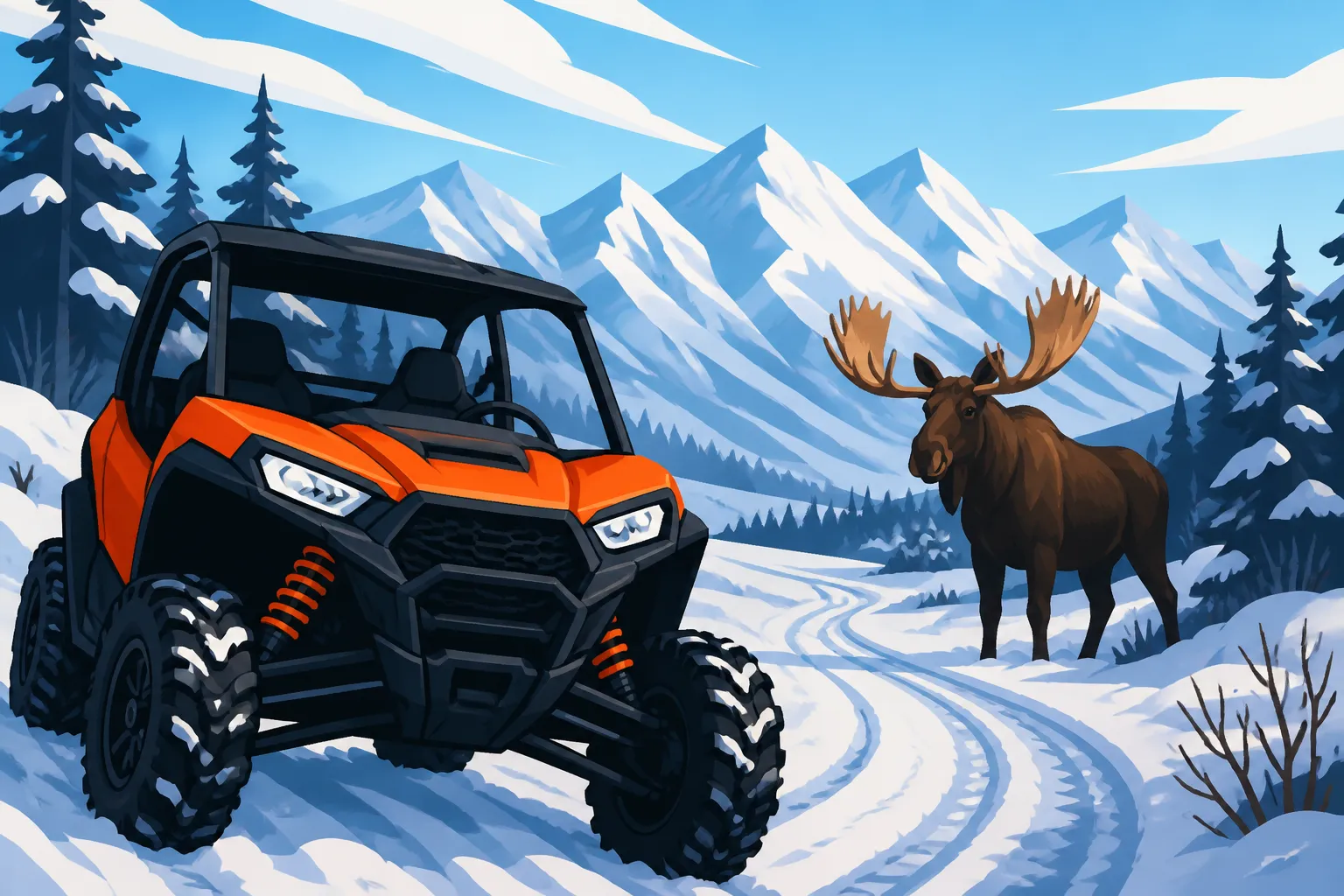
Moose on a Winter Trail
You’re out on your ATV or UTV, the crisp Alaska air biting at your cheeks, snow muffling the world, and suddenly, there it is – a massive moose, right on the trail ahead. It’s a breathtaking moment, but also one that can instantly spike your adrenaline. Encountering moose on winter trails is a quintessential Alaskan experience, but it also carries real risks if you’re not prepared. This guide is all about navigating those thrilling, sometimes daunting, encounters safely, ensuring both your well-being and the peace of mind of our incredible wildlife.
Why Moose Are on Winter Trails in Alaska
Alaska's winters are stunningly beautiful, but they present immense challenges for wildlife, especially our iconic moose. As you're exploring the snowy backcountry on your ATV or UTV, you might wonder why these magnificent animals seem to be congregating on the very trails you're using. It's not just a coincidence; moose are incredibly resourceful, and they've learned to adapt their behavior to conserve precious energy during the leanest months of the year. Understanding their motivations is the first step in sharing the trail safely and respectfully.
Seeking Easier Travel Routes
When the snow gets deep, every step for a moose becomes a monumental effort, burning calories they can't afford to lose. Imagine trying to walk through waist-deep snow all day – that's what much of the Alaskan wilderness looks like to a moose. This is precisely why they gravitate towards packed trails, whether they're established snowmachine corridors, logging roads, or even the paths created by ATVs and UTVs. These trails offer a firm surface, making travel significantly easier and less energetically costly. It’s simply the path of least resistance for them, allowing them to move between feeding areas, escape predators, or find shelter without expending unnecessary energy.
This behavior is particularly pronounced after a fresh snowfall or during periods of exceptionally deep snow. A packed trail can be the difference between life and death for a moose in a harsh winter. They often use these corridors like highways, traveling for miles along them. Because of this, riders need to be constantly vigilant, especially around blind corners, rises, or in areas where the trail is narrow and offers limited escape for either party. Always assume there could be a moose around the next bend.
It’s not uncommon to come across a single moose, or even a cow with her calf, slowly making their way down a well-used trail. They see these paths as their own, and from their perspective, they were there first. This shared usage of trails highlights the importance of responsible riding. Knowing that the trails are critical travel routes for moose reinforces the need to ride at appropriate speeds and to scan ahead for any signs of wildlife.
Accessing Food Sources
Winter is a time of scarcity, and moose spend a significant portion of their day foraging for food. Their diet primarily consists of woody browse – twigs and branches of willows, birch, and aspen. Many of these preferred food sources can be found along river bottoms, in clearings, or on the edges of forests, which are often connected by the same trail systems we use for recreation. A packed trail can provide easier access to these crucial feeding grounds, allowing them to conserve energy while traveling to and from their "dinner table."
Sometimes, a moose might not just be traveling on the trail but actively feeding right alongside it. They'll strip bark or browse on accessible branches, often standing quite still and camouflaged against the winter landscape. Your machine's engine noise might alert them, but they may not move far if they are deeply engrossed in feeding or if the snow off-trail is too deep to easily navigate. It’s a delicate balance for them between finding food and avoiding perceived threats.
When you see a moose feeding near the trail, it’s a clear sign that they are trying to survive. Disturbing them unnecessarily can disrupt their feeding time, which could have serious consequences for their health and energy reserves. If you can, give them a wide berth and observe from a distance. If you must pass, do so slowly and quietly, giving them every opportunity to move off the trail on their own terms.
Energy Conservation in Winter
For a moose, winter is a continuous struggle for survival, a race against the clock to maintain enough body fat to endure until spring. Every movement, every step, every attempt to escape deep snow, costs precious energy. The concept of "energy conservation" is paramount to their survival strategy. Packed trails are a critical component of this, providing an efficient means of travel that reduces the physical exertion required. This is a common theme for [Alaska Rules for Riding in Winter].
Beyond just travel, moose will also seek out areas of less snow or denser cover to bed down and rest, further conserving energy. These areas might also be close to or accessible via the same trails. When you encounter a moose that seems reluctant to move, it's often because moving into deeper snow would require a significant energy expenditure they simply cannot afford. This can make them seem stubborn or aggressive, when in reality, they are simply trying to survive.
Riders in Alaska have a responsibility to recognize this fundamental survival instinct. Speeding past a moose, honking your horn, or trying to force it off the trail is not only dangerous for you but can be incredibly detrimental to the animal's well-being. Think about the cumulative effect of many riders disturbing a moose throughout the day – it adds up to a serious drain on their energy. This is a key part of [Alaska Trail Etiquette Locals Expect].
Preparing for a Moose Encounter on the Trail
While moose encounters can be awe-inspiring, they also require a proactive approach to safety. Being prepared doesn't just mean having a well-maintained machine; it also involves understanding the environment, recognizing wildlife cues, and equipping yourself for effective communication and visibility. Just as you’d check your machine for [Alaska Equipment Checks by Troopers] before a ride, preparing for wildlife is equally crucial.
Gearing Up for Visibility and Communication
In Alaska's winter, daylight hours are short, and visibility can be reduced by snow, fog, or shadows. Ensuring your ATV or UTV is highly visible is paramount. Brightly colored gear for yourself and your machine can make a big difference, helping you stand out against the white landscape. Furthermore, functional headlights, taillights, and reflectors are non-negotiable, especially since many trails might also be used at dusk or dawn, or even at night. This ties into [Alaska Night Riding Equipment Rules], ensuring your lights are strong enough to spot obstacles and wildlife far ahead.
Beyond visibility, consider how you might communicate your presence without startling wildlife. A gentle tap of the horn can be a soft warning, rather than a blaring blast that could trigger a panicked reaction. Some riders carry whistles, though the effectiveness against a large animal like a moose is debatable. A more practical approach is to have a reliable satellite messenger, which can be invaluable for emergency communication if an encounter goes awry, especially in areas with [No Cell Coverage Off the Road System]. Carrying one is a smart move for any remote Alaskan ride, as detailed in [Carrying a Satellite Messenger for a Backcountry Ride].
Equipping your machine with durable, reliable components can also contribute to safe wildlife encounters. For instance, robust winches, like those offered by SuperATV, can be a lifesaver if you get stuck and need to extricate your machine quickly and quietly away from a lingering moose. Their durable skid plates and heavy-duty bumpers, also from SuperATV, can offer an extra layer of protection if you need to maneuver off-trail through rough snow to give a moose its space, minimizing potential damage to your machine. Enhanced lighting kits, also available from SuperATV, can improve visibility, allowing you to spot moose from a greater distance, especially during shorter winter days or at dusk/dawn.
Understanding Moose Behavior Cues
Moose, despite their size, are generally not aggressive unless provoked or feeling threatened. However, an agitated moose is a formidable opponent. Learning to read their body language is a critical safety skill. Look for signs of stress or agitation: ears laid back, hair standing up on the hump of their back, head lowered, or licking their lips frequently. If a moose begins to stomp its feet or make short charges, it's a clear warning that you are too close and need to retreat immediately.
Cows with calves are particularly protective. Even if a calf is not immediately visible, assume one might be nearby if you encounter a cow moose, especially in early winter. They will defend their young fiercely. During the rut (fall) or late winter when they are most energy-deprived, moose can also be more unpredictable or irritable. Respecting their space and understanding these subtle cues can prevent a potentially dangerous situation. This applies to all [Alaska Wildlife on the Trail].
Never approach a moose, no matter how calm it appears. What might seem like a docile animal can turn in an instant if it perceives you as a threat. Pay attention to how the moose is looking at you – direct, prolonged eye contact can be interpreted as a challenge. It's best to maintain a respectful distance and observe, giving them ample room to feel comfortable and move on their own.
Planning Your Route and Timing
Strategic route planning can significantly reduce the likelihood of startling a moose. If you know certain areas are prime moose habitat, consider riding at times when they are less active, or choose alternative trails if possible. Moose are often most active at dawn and dusk when they are feeding, so riding midday might slightly reduce your chances of a direct encounter. However, the [Alaska Riding Season Month by Month] shows that winter travel means they're using trails all the time, so vigilance is constant.
Familiarize yourself with the terrain you plan to ride. Are there narrow sections where it would be difficult for both you and a moose to pass? Are there areas with thick brush that could obscure your view until you're right on top of an animal? Knowing these characteristics can help you anticipate potential encounter spots and adjust your speed accordingly. Slowing down around blind corners and through dense vegetation gives you more time to react.
It's also wise to check for any recent [Alaska Trail Closures After a Storm] or other conditions that might force moose onto specific routes. Sometimes, heavy snow might funnel wildlife into particular drainages or onto plowed access roads. Being informed about current conditions can help you make safer decisions about where and when to ride. Remember, sharing the Alaskan wilderness is a privilege that comes with the responsibility of being prepared.
What to Do During a Moose Encounter
So, you’ve done all your preparation, you’re riding responsibly, and then it happens: you see a moose directly on your trail. This is the moment where your actions truly matter. Panicking or acting impulsively can escalate a situation quickly. The goal is always to de-escalate, give the moose space, and ensure everyone's safety, including your own.
Keeping Your Distance and Observing
The absolute first thing to do when you spot a moose on the trail is to slow down, stop your machine, and ideally, turn off your engine. The noise of your ATV or UTV can be startling and stressful for the animal. By turning off the engine, you create a quieter environment, allowing both you and the moose to better assess the situation. This also allows you to hear any subtle cues from the moose you might otherwise miss.
Once stopped, maintain a safe and respectful distance. Experts often recommend at least 50 feet, but more is always better, especially with cows and calves. If you can, slowly back away from the moose, increasing the distance between you and the animal. Observe its behavior carefully. Is it looking at you? Are its ears perked, or laid back? Is it flicking its tongue or lowering its head? These are all important clues to its mood. If it appears calm, it might eventually move off the trail on its own.
Patience is your best friend here. Do not try to rush the moose. It will move when it is ready. If it seems agitated or simply refuses to move, it's up to you to find an alternative. This might mean turning around and taking another route, or waiting a significant amount of time for the moose to decide the trail is clear. Remember, you are a visitor in their habitat.
Safe Evasion and Retreat Strategies
If the moose shows any signs of agitation, or if it simply won't move, your safest bet is to retreat. Slowly and quietly back your ATV or UTV away from the animal. If you have enough room and a safe place to turn around, do so cautiously, keeping your eyes on the moose. Sometimes, merely reversing your direction for a hundred yards or so is enough for the moose to feel less threatened and move off.
If turning around isn't feasible and the moose isn't moving, you might need to find an alternative way around, if the terrain allows and you can do so safely and without disturbing its habitat excessively. This is rarely ideal, as going off-trail, especially in deep snow, can be difficult and can damage delicate tundra or vegetation. This is particularly true if you are riding near [Alaska Rules for Riding a Frozen River] or other sensitive areas. However, in an emergency, it might be necessary. Be mindful of [Alaska Wetland Travel Restrictions Explained] and [Alaska Tundra Damage and Riding] if you're considering going off the packed trail.
In situations where you cannot retreat or go around, and the moose remains on the trail, you are simply stuck waiting. Do not approach the moose or try to "herd" it. This can lead to a dangerous charge. Use this time to observe the magnificent animal from a distance and appreciate the raw Alaskan wilderness you're a part of. Sometimes, a moose will simply settle down to chew its cud or even lay down, only to get up and move along later.
When a Moose Charges
While rare, a moose charge is a serious event. If a moose does charge, your primary goal is to get something solid between you and the animal. Your ATV or UTV might offer some protection, but getting off the machine and using it as a barrier is often the best strategy. If you can, duck behind a large tree or a boulder. Moose charges are often bluffs, but they can be incredibly dangerous, especially from a cow defending a calf, or a bull in the rut. This is a critical difference from a typical [Alaska Bear Encounters While Riding].
If you are knocked down, curl into a ball, protecting your head and vital organs with your arms and hands. Try to remain still. Moose typically stop attacking once they perceive the threat is neutralized. However, a moose attack can cause severe injuries, including broken bones, internal bleeding, and head trauma. This is why prevention and early de-escalation are so critical.
Should an encounter escalate to injury, having communication tools like a satellite messenger is vital for calling for help, especially in remote areas where cell service is often nonexistent. Remember, safety always comes first. If you are involved in a collision or an attack by a moose, you should report the incident to Alaska Wildlife Troopers, similar to how you would for [Alaska Accident Reporting for an ATV Crash].
| Moose Behavior Cue | What It Might Mean | Recommended Human Action |
|---|---|---|
| Ears relaxed, head up, grazing | Calm, unaware, or indifferent | Stop, observe from distance, turn off engine, wait patiently |
| Ears swiveling, looking at you | Aware of your presence, assessing | Maintain distance, avoid direct eye contact, prepare to retreat |
| Head lowered, hair raised | Agitated, feeling threatened | IMMEDIATELY retreat slowly, increase distance |
| Stomping feet, short charges | Warning, imminent attack | Retreat rapidly if safe, use machine/tree as barrier, protect self |
| Licking lips repeatedly | Often a sign of stress or agitation | Increase distance, watch closely, prepare to retreat |
Minimizing Impact and Promoting Coexistence
Riding ATVs and UTVs in Alaska’s breathtaking winter landscape is an incredible privilege, and with that privilege comes the responsibility to minimize our impact on the environment and its wildlife. Moose are an integral part of Alaska's ecosystem, and ensuring their well-being is part of being a good steward of the land. Our actions on the trail can directly influence their ability to survive the harsh winter.
Respecting Wildlife and Their Habitat
At the heart of responsible riding is a deep respect for wildlife and their habitat. This means recognizing that winter trails are not just for our recreation; they are essential survival corridors for moose. Giving them the right-of-way, slowing down, and stopping for encounters are not just rules of thumb, but ethical imperatives. It's about prioritizing the animal's needs over your desire to maintain speed or schedule. While not specifically about moose, general rules such as the [Alaska Helmet Law for Riders Under 16] also demonstrate a commitment to safety for all involved in trail usage.
Avoid unnecessary noise and disturbances. Revving your engine, honking excessively, or chasing wildlife are all actions that cause undue stress and can deplete a moose’s vital energy reserves. Remember, every calorie they burn fleeing from a perceived threat is a calorie they can't use to stay warm or find food. The more we disturb them, the more difficult their winter survival becomes.
Adhering to trail rules and staying on designated routes is another critical aspect of habitat protection. Going off-trail can damage vegetation, break through snow crusts that moose rely on, or disturb sensitive resting areas. This is especially true for [Alaska Rules for Riding Tundra] or in wetland areas during freeze-up. By sticking to the established path, you help preserve the integrity of their habitat and minimize stress on the animals.
Reporting Aggressive or Injured Moose
Sometimes, you might encounter a moose that seems unusually aggressive, even without provocation, or one that appears injured or sick. In such cases, it's important to report your observations to the appropriate authorities, such as the Alaska Wildlife Troopers or the Alaska Department of Fish and Game. They are equipped to assess the situation and intervene if necessary, ensuring public safety and the welfare of the animal.
When reporting, be as specific as possible about the location, the animal's condition, and its behavior. Descriptions of limping, unusual lethargy, excessive drooling, or consistent aggression are all helpful. Providing a precise location, perhaps using GPS coordinates from your machine, will allow responders to find the animal quickly. This helps game wardens monitor the health of the moose population and address any potential risks to other trail users.
Conversely, if you observe a moose that has been hit by a vehicle or is clearly distressed for other reasons, reporting it is crucial. Do not attempt to approach an injured moose yourself, as a wounded animal can be extremely dangerous. Maintain a safe distance and wait for professionals to arrive. Your responsible actions in both avoiding conflict and reporting issues contribute significantly to the overall safety and health of Alaska’s winter trail systems for everyone – human and moose alike.
Disclaimer
This article is for general informational purposes only and does not constitute professional advice. Laws, prices and regulations vary by location and change over time. Consult a qualified professional for guidance on your specific situation.