Alaska Moose Encounters While Riding
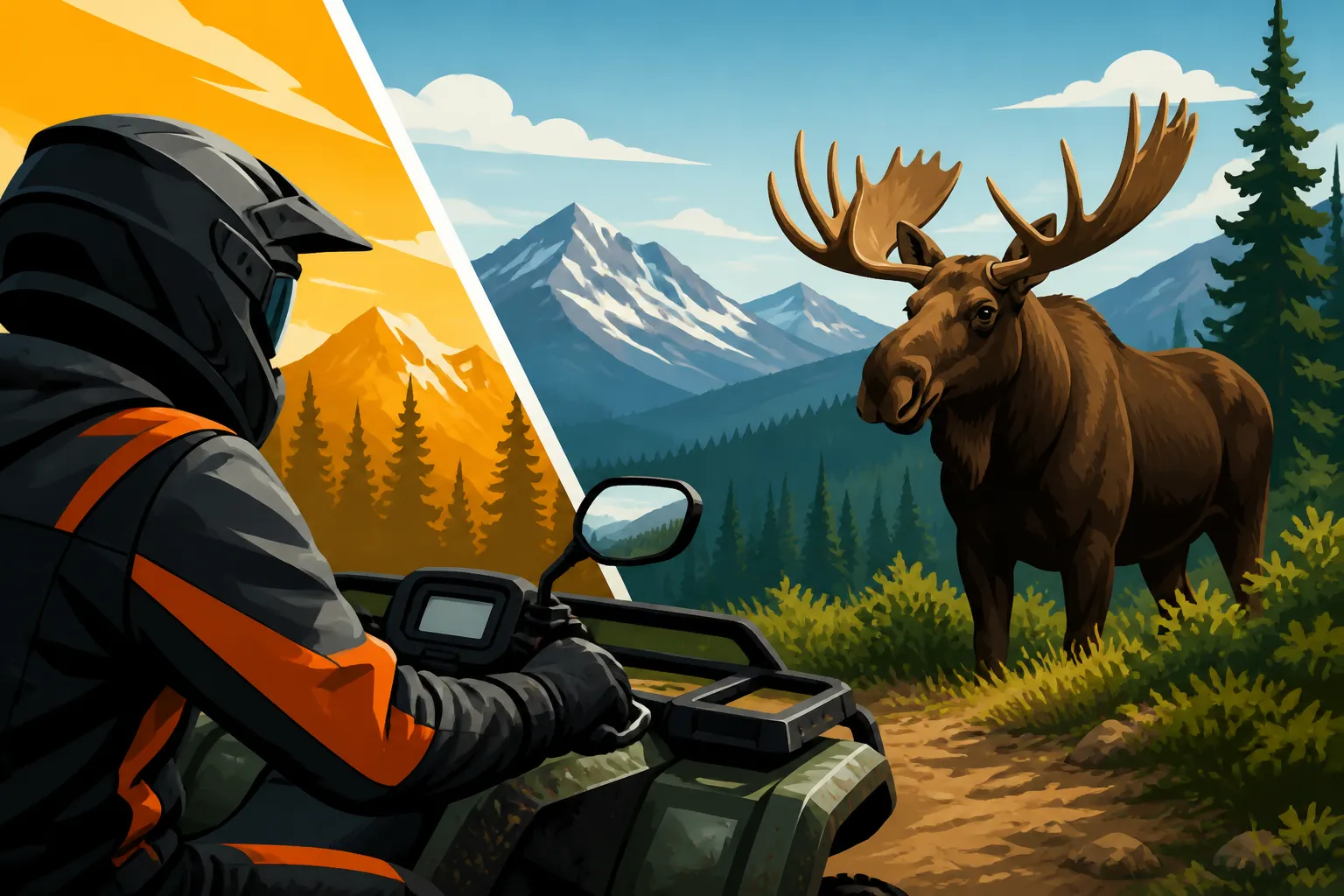
A moose stepping onto an Alaska trail can turn a relaxed ride into a tense few minutes, especially when trees, mud, or a blind bend limit your view. The safest response is usually to stop, give the animal a clear escape route, and wait or turn back. This guide explains how to recognize risk, respond calmly, and plan rides with moose in mind.
Why moose encounters can become dangerous
A moose may react before you realize it is nearby
Moose often use the same brushy edges, wetlands, river corridors, and wooded trails that riders travel through. You might see one at a distance in an open area, but dense alder or spruce can hide an animal until you round a bend. A moose that seems calm can also become defensive when startled, crowded, or unable to move away.
A moose’s body language matters more than whether it is looking directly at you. Watch for raised hair along its neck or hump, ears laid back, lip licking, and head lowered. These signs can indicate agitation. The animal may also walk toward you, circle, or stop in a way that blocks your route. Don’t wait for a dramatic charge to take the situation seriously.
A machine can add to the stress. Its engine, tires, and movement may startle an animal, while the trail itself may leave little room to pass. Even if you ride slowly, a moose may feel trapped between your ATV or UTV and a steep bank, thick brush, or another machine. Leave space and avoid pressing forward just because the animal has not moved yet.
Planning with wildlife in mind is part of responsible trail riding. Guides such as [Alaska Wildlife on the Trail] and [Alaska Trail Etiquette Locals Expect] can help riders think beyond the machine and consider how their choices affect animals and other trail users.
Cows with calves and winter moose need extra space
A cow moose may become especially protective when a calf is nearby. The calf might be tucked into brush, walking behind its mother, or lying still where it is difficult to spot. If you see a cow, assume a calf could be close and do not ride between them. A cow that appears to be moving away may be trying to lead you away from her calf, so don’t follow her.
Winter encounters call for particular care. Deep snow can make travel exhausting for moose, and an animal may have less ability to move quickly through it than a machine does. Don’t use an ATV or snow machine to pursue, crowd, or repeatedly flush a moose. If you see one struggling through snow or behaving unusually, give it room and avoid turning the encounter into a chase.
The same patience applies during warmer months. A moose may be feeding, resting, or moving through an area rather than “blocking” the trail intentionally. Waiting quietly or choosing another route is frustrating when you have a destination in mind, but it is safer than trying to make the animal move.
What to do when you see a moose on the trail
Stop, stay together, and leave an escape route
As soon as you spot a moose, slow down and stop at a distance. Keep the machine pointed in a direction that lets you retreat without having to make a tight turn near the animal. If you are riding with others, signal them to stop too. A line of machines creeping forward can feel like pressure from several directions.
Give the moose a clear path to leave. Don’t block the trail on one side while another rider approaches from the other, and don’t try to pass between the animal and cover it may be heading toward. Keep voices low and movements deliberate. Avoid revving, honking, or racing the engine to “encourage” the moose to move.
If the animal stays near the route, wait at a safe distance or turn around and use another trail. It may take longer, but it prevents a risky pass in a narrow corridor. Before setting out, review [Alaska Trail Difficulty Ratings] and [Alaska Riding Seasons and Breakup] to help choose routes and conditions that leave your group more options if you need to turn back.
Know how to respond if the moose approaches
If a moose begins walking toward you, don’t assume it is friendly or simply curious. Back away slowly if you have room, keeping the animal in view without approaching it. If there is a substantial tree, large rock, or other sturdy barrier nearby, put that barrier between you and the moose. Avoid sudden movements that could startle it.
If the moose charges, get behind a solid obstacle as quickly as you safely can. A tree, vehicle, or large boulder may provide protection. If you are knocked down and cannot reach cover, curl up, protect your head and neck, and remain still until the animal moves away. Getting back up too soon can trigger another attack.
A machine is not a dependable shield if you are close enough for the moose to reach you. Don’t try to ride directly past or around an agitated animal. If you can safely retreat, do so; if not, focus on creating distance and getting behind cover. Once the moose has left, wait before continuing, because it may still be nearby or may return to the trail.
| What you see | Safer response |
|---|---|
| Moose far ahead with open space around it | Stop well back and let it choose where to go |
| Cow with a calf or a calf near the trail | Do not pass between them; turn around or wait well away |
| Ears back, raised hair, lowered head, or an approach | Retreat slowly and look for a sturdy barrier |
| Moose charging | Get behind a solid object; if knocked down, protect your head and neck and stay still |
| Moose remains on a narrow trail | Do not squeeze past; wait or choose another route |
Plan a ride that leaves room for wildlife
Choose routes and pace with visibility in mind
Slow down before blind corners, narrow sections, and places where tall brush crowds the trail. These are spots where a moose can appear suddenly and where you may have little room to stop or turn. Keep enough distance between machines that the rider in front has time to brake without the next machine closing in.
Route planning can help you avoid feeling committed to a risky passage. Use an up-to-date map to understand nearby trail options and potential turnarounds, then confirm access and closures with the relevant land manager. onX Offroad can be one tool for reviewing routes and terrain, but a map app is not a substitute for current local information or careful decisions on the ground. In unfamiliar areas, make a plan for what your group will do if wildlife blocks the route.
Keep the group’s pace comfortable for the least experienced rider, not just the person leading. A rushed group is more likely to bunch up, startle wildlife, or make a poor decision because everyone wants to stay on schedule. For rides outside reliable service, [Filing a Trip Plan With Someone] and [No Cell Coverage Off the Road System] are useful planning topics. Tell someone where you are going and when you expect to return.
onX Offroad may also help you check a planned route before leaving, particularly when you are comparing alternatives or trying to understand where a trail connects. Still, don’t assume a mapped line is open, safe, or authorized for every machine. Check land access, seasonal conditions, and local rules separately; [Alaska Land Ownership and Who to Ask] is a helpful starting point for thinking through access questions.
Prepare the group before the first encounter
Talk through a simple wildlife plan before you ride. Agree that the first person to spot a moose will signal the group to stop, that nobody will ride ahead to get a closer look, and that the group will turn back if the animal appears agitated or has nowhere to go. A shared plan is especially helpful when people have different experience levels or are riding unfamiliar machines.
Keep children and passengers on the machine or close to the group while you assess the situation. Don’t send someone on foot toward the animal to take a photo, and don’t allow a dog to chase or bark at it. A dog may return to its owner with a defensive moose following, putting everyone nearby at risk.
Carry basic emergency supplies and know how your group will communicate if riders become separated. onX Offroad can support route awareness, but it should sit alongside ordinary preparation: a charged phone where service is available, a backup communication plan where it is not, and enough time and fuel to turn back rather than push through a difficult encounter. If your route includes riding after dark, review [Alaska Rules for Riding After Dark] and avoid assuming that headlights will give you enough time to react to wildlife on a trail.
After an encounter
Give the area time before continuing
Once a moose leaves, don’t immediately accelerate after it or follow its direction of travel. Wait and listen. The animal may have moved only a short distance into brush, and continuing too quickly can startle it again. If the trail remains blocked or the moose’s location is unclear, turn back and take another route.
If you witnessed an injured animal, an aggressive encounter, or a situation that appears to require help, contact the appropriate local wildlife or emergency authorities when it is safe to do so. Share a clear location and description without approaching the animal to get a better look. Avoid posting precise location details publicly if doing so could attract people to a sensitive area.
A close call can be a useful reason to revisit your group’s plan. Consider whether the trail was too fast for visibility, whether riders were following too closely, or whether you felt pressured to continue. onX Offroad or another mapping tool can help you review a different route for the next outing, but the most important adjustment may simply be choosing a slower pace and a wider margin for turning around. For related wildlife precautions, see [Alaska Bear Encounters While Riding].
Disclaimer
This article is for general informational purposes only and does not constitute professional advice. Laws, prices and regulations vary by location and change over time. Consult a qualified professional for guidance on your specific situation.