Jim Creek Annual Pass Cost for One Rider
Jim Creek is a popular Mat-Su riding destination, but figuring out what an annual pass costs—and whether it covers one rider, a whole machine, or other fees—can be confusing. This guide explains how to check the current one-rider pass price, compare it with day-use costs, and avoid arriving at the Sullivan Road trailhead with the wrong payment or assumptions.
What the Jim Creek annual pass covers
One rider does not automatically mean one machine
The phrase “annual pass for one rider” describes who the pass may cover, but it does not tell you every condition attached to it. A pass could be tied to an individual rider rather than a particular ATV or UTV, for example. The distinction matters when you ride with a friend, take turns operating a machine, or bring several machines to the same area.
Before buying, confirm the pass terms with the managing agency or the official fee information for Jim Creek. Check whether the pass is issued to a named person, whether it must be carried or displayed, and whether it applies to all eligible riding days during its validity period. If you usually ride with family or a group, ask how each additional rider is handled rather than assuming one pass covers everyone in the party.
It is also worth separating a riding pass from other charges. An annual riding or day-use pass may not include a campsite, camping fees, or charges at another recreation site. If your plan includes staying overnight, check the campground rules and fees separately. The details for Alaska Day Use Fees at Jim Creek and Alaska Campground Fees for Riders are useful starting points when you are planning more than a quick ride.
Check the current cost before you leave
Fees can change, and an old number copied into a forum post or riding group chat may no longer match the posted schedule. For the current Jim Creek annual pass cost for one rider, check the official information from the agency responsible for the area before heading out. If the online information is unclear, contact the managing office and ask specifically for the annual pass price, who it covers, when it expires, and how it can be purchased.
That simple check can prevent a frustrating trailhead surprise. Imagine driving from Wasilla with a loaded trailer, only to discover that the pass you bought online applies to a different site, or that another rider in your group also needs to pay. Confirming the fee and terms before departure is much easier than sorting it out beside the machine while everyone else is ready to ride.
The same caution applies when you see a pass described as “annual.” Ask when its validity begins and ends. “Annual” does not always mean one full year from the purchase date. The area’s posted rules should explain the actual period. For a broader overview of how Jim Creek payments work, see Paying at a Kiosk in the Valley and Jim Creek Day Use Fee Per Person.
Passes and trailhead fees are not interchangeable everywhere
A pass connected with Jim Creek should not be assumed to work at every Mat-Su trailhead. Nearby riding areas can have different managers, access arrangements, and fee systems. A pass for one place may not cover parking, day use, or other charges at another.
This is especially easy to mix up if you are putting together a weekend ride with multiple stops. A pass that makes sense for Jim Creek may not replace a separate trailhead pass elsewhere. Check each planned stop independently, including whether the fee applies to the rider, the vehicle, or the parking area. Which Mat-Su Trailheads Need a Parking Pass offers helpful context for sorting out those separate requirements.
| Question to confirm | Why it matters |
|---|---|
| What is the current annual pass price for one rider? | Fees may change, so use the current official schedule. |
| Does the pass cover a named individual or a machine? | This affects riding with another operator or switching machines. |
| When does the pass expire? | Annual validity may follow a set season or calendar period. |
| How can the pass be purchased? | Some options may be available at a kiosk or through an official online channel. |
| Are camping or other site charges separate? | A riding or day-use pass may not cover an overnight stay. |
| Does the pass apply at other trailheads? | Do not assume one area’s pass covers another location. |
How to find and buy the right pass
Verify the managing agency and fee information
Start with the official information for Jim Creek and confirm that it refers to the specific area you intend to visit. The name “Jim Creek” can appear in ride reports and local conversations without much detail, so make sure the fee page or office is discussing the recreation area and access point you plan to use.
If you are unsure, ask a direct question rather than relying on a vague search result: “What is the current annual pass cost for one rider at Jim Creek, and what exactly does that pass cover?” Then ask whether the pass is available online, at a kiosk, or through another approved method. The process may differ depending on the type of pass and the managing agency.
Keep a note of the source and the date you checked. That is useful if a companion asks what the group owes, and it helps you remember to recheck the information before a later trip. For local access context, Jim Creek’s Trailhead on Sullivan Road in Alaska and What You Find at the End of Sullivan Road can help orient you to the destination, but current fee terms should still come from the official source.
Compare the annual pass with day-use payment
An annual pass can be convenient if you ride at Jim Creek regularly. But whether it saves money depends on the current pass price, the day-use charge, and how often you personally expect to visit. The simplest comparison is to divide the annual pass price by the per-visit cost for the same rider, then consider how many visits you realistically expect—not how many you hope to fit in during a perfect summer.
For example, a person who lives nearby and makes frequent short rides may value the convenience even if the savings are modest. Someone visiting once during a road trip may find that paying for a single day is simpler. A group should do the comparison per rider, because a one-person pass may not reduce the total cost for everyone traveling together.
Do not forget to compare like with like. If the annual pass covers one rider but your day-use payment is also assessed per person, compare those two rider-level amounts. If a fee is charged another way, ask how it applies before doing the math. For guidance on payment logistics, Day Passes Only at a Kiosk and Annual Passes Only Online are relevant topics, but confirm that the purchasing options described apply to the pass you need.
Keep proof of payment accessible
After purchasing a pass, save the receipt or confirmation and follow the instructions for carrying or displaying it. A confirmation email is easier to find when it is saved offline, especially because cell coverage can be unreliable once you leave the main road system. If the pass is physical, keep it somewhere protected from rain, mud, and gear changes.
Before departing, make sure every rider who needs coverage understands whose pass it is and what it permits. A common source of confusion is one person buying a pass and the rest of the group assuming it covers the party. If the rules say the pass belongs to an individual, the other riders may need their own payment or pass.
The same habit helps with other ride documents. Store your pass proof, any required permit information, and relevant contact details together in a sealed pouch or another weather-resistant place. Carrying Documents in the Rain explains why keeping paperwork protected is more than just a convenience on an Alaska ride.
Plan the trip beyond the pass
Treat the pass as only one part of access planning
A paid pass does not automatically answer every question about where you can ride. You still need to understand the boundaries of the riding area, current closures, trail conditions, and any land-use restrictions. Check whether your intended route remains within the area open to riding, and do not assume that a visible track is an authorized trail.
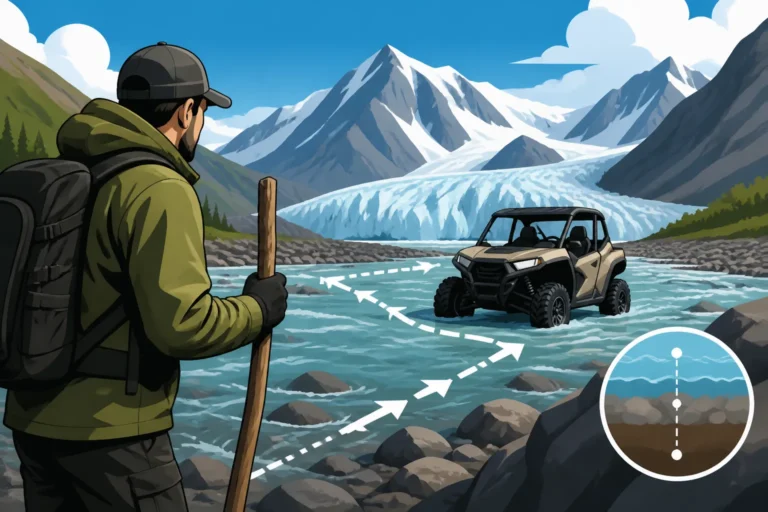
Jim Creek includes changing terrain, and conditions can shift after rain or as water levels change. A pass is not a guarantee that every route will be suitable for your machine or experience. For a closer look at riding conditions and route decisions, read Alaska’s Technical Loops at Jim Creek and Alaska Braided Glacial River Crossings. If a crossing looks deeper or faster than expected, turning around is a sensible choice, not a failed ride.
A navigation tool such as onX Offroad can help you review route information and keep track of where you are, especially when you are planning a route before leaving home. Use it as a planning aid, not as proof that a route is open or that you have permission to ride there. Confirm current access rules with the relevant land manager, and pay attention to signs and closures on the ground.
Check conditions, parking, and group logistics
Before leaving, think through the practical parts of the day: where the group will unload, whether everyone knows the route, how much fuel the machines need, and what you will do if weather turns. A rider who arrives prepared is less likely to rush through the rules or overlook a fee because the group is already waiting.
If several trailers are traveling together, agree on a meeting point and a backup plan in case someone is delayed. Make sure riders know the pass arrangement before they leave home, rather than sorting out separate payments at the entrance. For groups unfamiliar with the area, decide in advance who is carrying navigation and who has the route downloaded for offline use. onX Offroad may help with pre-ride route planning, but it should complement—not replace—official land and access information.
Conditions can also affect how long a ride takes. Glacial rivers and braided channels may change, and a route that looked manageable in the morning can be different later in the day. Give yourself time to turn around, regroup, or choose a safer route. Reading a Glacial River Before You Cross and Turning Back at a Deep Channel are useful reminders to make the decision based on conditions in front of you.
Common mistakes to avoid
Assuming one pass covers everyone
The biggest avoidable misunderstanding is treating a one-rider pass like a group pass. If you are riding with a partner or family, confirm whether each person needs separate coverage. This is particularly important when several people share a vehicle or take turns driving: ask whether the rules are based on the named rider, the operator, the machine, or another definition.
Do not rely on a friend’s recollection of what happened on a previous visit. The pass type, fee schedule, or purchase method may differ, and a rider may have been covered under a different arrangement. Verify the terms for the pass you are buying.
Confusing the riding pass with camping or other fees
A pass for riding or day use may not pay for an overnight site. If your plan is to camp, check the campground’s rules and charges independently, including any stay limits or check-in requirements. Likewise, do not assume that paying at one facility covers a second site or a separate recreation area.
This distinction matters when building a trip budget. Add together the costs that actually apply to your plan: riding or day-use access, camping if applicable, and any other required fees. Jim Creek Campground’s Rates in Alaska can help you think through the camping side of the visit, while the official fee information should settle the current amounts.
Treating a map as permission
A mapped route can be helpful, but a line on a map does not establish that riding is allowed there. onX Offroad can support route planning and help you understand your surroundings, yet land status and access can be more complicated than a single trail line suggests. Confirm who manages the ground and whether the route is open before riding it.
If your group is unfamiliar with the area, make one person responsible for checking access information and another for carrying offline navigation. Use signs, posted notices, and current agency guidance to resolve conflicts. When a route is unclear or appears closed, stop and verify rather than assuming the pass authorizes access.
Disclaimer
This article is for general informational purposes only and does not constitute professional advice. Laws, prices and regulations vary by location and change over time. Consult a qualified professional for guidance on your specific situation.