Tires for Glacial Silt
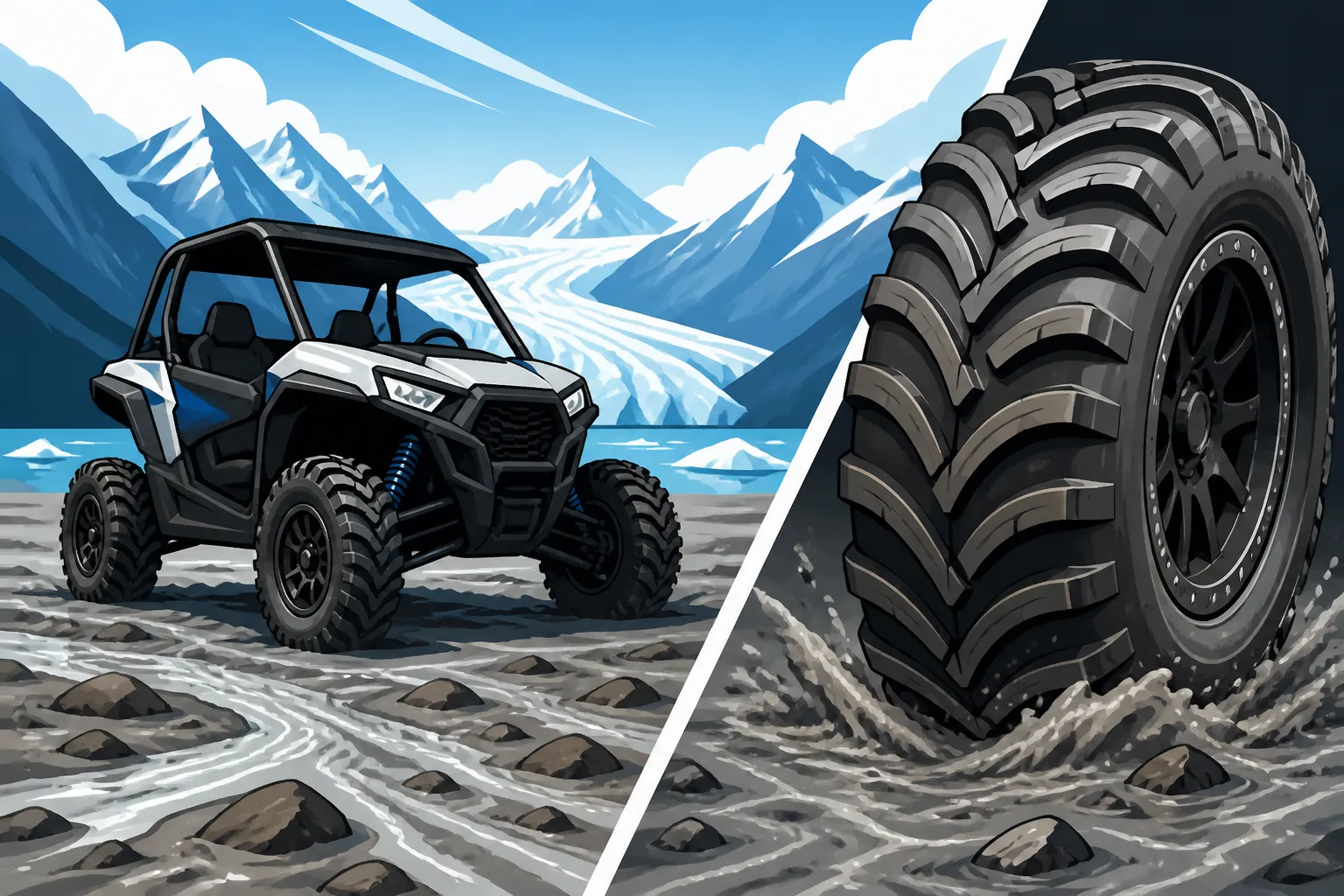
Glacial silt can turn a familiar Alaska trail into a slippery, dusty mess: it coats the tread, hides rocks, and makes it hard to tell whether the ground underneath is firm or soft. Choosing tires for glacial silt is less about finding one perfect tread and more about balancing traction, flotation, durability, and control for the conditions you actually ride.
Why glacial silt is hard on ATV and UTV tires
Fine grit behaves differently from ordinary trail dirt
Glacial silt is made of extremely fine particles produced as glaciers grind rock. On a dry trail, it can rise in clouds and cling to tires, axles, and suspension parts. In damp conditions, it may feel slick and paste-like. A trail that looks solid from the seat can conceal loose material, ruts, or stones underneath.
That mix creates an awkward traction problem. A tire may spin on top of loose silt instead of biting into firmer ground, especially when you accelerate hard or turn sharply. If the surface is wet, the fine material can coat the tread and reduce the grip you expected from its lugs. Meanwhile, a tire with widely spaced, aggressive knobs may dig down but also make the machine feel twitchy on firmer gravel or rock.
Conditions can change within a short ride. Around the Knik River Public Use Area, for example, a route may include dusty stretches, loose gravel, damp ground, and rocky sections. Don’t assume that a tire that works well in one patch will feel the same at the next. For route-planning context, see Knik River Public Use Area in Alaska and Alaska’s Knik Glacier Trail.
The biggest tire problems are often traction and control
When a tire loses grip, the instinct is often to add throttle. That can make the tire dig a deeper hole, throw silt into the air, or pull the machine sideways. On a side-by-side, sudden wheelspin can also make steering feel less predictable. On a quad, a spinning rear tire can step out while you’re trying to climb or turn.
Silt also hides hazards. It may cover sharp rocks, ruts, or soft edges, so a tire that seems to roll smoothly can suddenly drop or strike an obstacle. A suitable tread helps, but it cannot make a concealed hazard safe. Reduce speed when visibility or the surface changes, keep a comfortable following distance, and avoid abrupt braking or steering where the ground is loose.
Treat deep, wet, or uncertain silt as a reason to reassess the route rather than simply power through. Conditions around braided glacial channels can shift, and tire choice does not make a crossing safe. Before approaching water or a soft river margin, review Alaska Braided Glacial River Crossings and Reading a Glacial River Before You Cross.
What to look for in tires for glacial silt
Choose a tread that balances bite and predictable steering
For mixed Alaska riding, look for a trail-oriented tread with enough lug depth and spacing to clear loose material, but not so much void between knobs that the machine feels unstable on hardpack. A broad, consistent tread pattern can offer a useful middle ground when your route includes silt, gravel, and rock. The best match depends on your machine, its load, and how much of the ride is actually in loose ground.
Very aggressive mud tires can provide strong forward bite in soft conditions, but they can also make a machine wander or feel harsh on firmer surfaces. More closely spaced all-terrain lugs may steer more calmly on hard ground, though they may not clear sticky silt as readily. Neither style is automatically right for every rider. Think about the full route, not just the deepest or softest patch you hope to tackle.
| Tire feature | Potential benefit in silt | Trade-off to consider |
|---|---|---|
| Moderate lug depth | Provides bite without an extremely aggressive feel | May be less effective in deep, sticky material |
| Open tread spacing | Helps shed loose or packed material | Can feel less settled on firm ground |
| Broad contact area | Can help spread the machine’s load | Does not prevent sinking in very soft ground |
| Reinforced sidewalls | Adds protection on rocky sections | May increase weight or stiffness |
| All-terrain tread | Balances several surface types | May be a compromise rather than the best choice for one surface |
A tire label alone won’t tell you how it will behave on a particular Alaska trail. Compare the tread shape, construction, and size with your machine’s owner’s manual and the kinds of surfaces you regularly encounter. If a route includes exposed rock, consider the tire alongside underbody protection; Skid Plates for River Rock covers another part of that preparation.
Tire size and construction need to fit the machine
A larger tire may provide more clearance, but it can also change gearing, steering effort, acceleration, and the load placed on drivetrain components. That matters when you’re trying to maintain controlled momentum through loose ground. Before changing tire size, check the machine manufacturer’s recommendations and consider how the change affects the whole setup, not just clearance.
Construction also involves trade-offs. A stiffer tire or sidewall can feel more resistant to impacts, while a more compliant setup may ride differently over uneven terrain. How those characteristics feel depends on the vehicle, tire, load, and pressure. A tire that works well on a lightly loaded quad may not behave the same way on a two-seat UTV carrying passengers and gear.
Don’t choose a tire solely because another rider says it works at Jim Creek or on a Knik-area route. Their machine, payload, riding pace, and preferred trails may be very different from yours. Use local recommendations as a starting point, then confirm fitment and operating guidance for your own machine.
Tire pressure is not a one-size-fits-all shortcut
Lowering pressure can increase the tire’s contact area, but going too low can create new problems, including a greater chance of tire damage or the tire shifting on the rim. Higher pressure may offer a firmer feel but reduce the tire’s ability to conform to uneven surfaces. There is no universal pressure that is right for every ATV or UTV on glacial silt.
Start with the vehicle and tire manufacturers’ recommendations. Account for passenger and cargo weight, the tire’s load rating, and the kind of terrain you expect. If you are considering a pressure adjustment for off-road use, make it within the manufacturer’s guidance and check the tires regularly. A pressure that seems acceptable on a short, unloaded ride may not be appropriate when the machine is carrying extra fuel or equipment.
Bring a reliable gauge and a way to reinflate tires if your plan involves changing pressure. Don’t rely on how a tire looks by eye, particularly when the machine has been parked on soft or uneven ground. And don’t use low pressure as a substitute for turning around when the trail is too soft, steep, or hazardous.
How to ride and prepare for silt-covered trails
Adjust your riding technique before changing equipment
Smooth inputs usually help more than extra throttle. Accelerate gradually, keep your steering corrections gentle, and avoid sudden braking on loose material. If the machine begins to slide, making a large, abrupt correction can worsen the loss of control. Give yourself room to slow down and choose a line before entering a section where the surface changes.
Keep a steady pace that suits visibility and traction, but don’t treat “momentum” as a reason to charge through uncertain ground. A fast approach can turn a small rut or buried rock into a hard impact. On a hill, assess the climb and the exit first. If you cannot see a safe route through the silt, stop somewhere stable and inspect it rather than committing to a blind line.
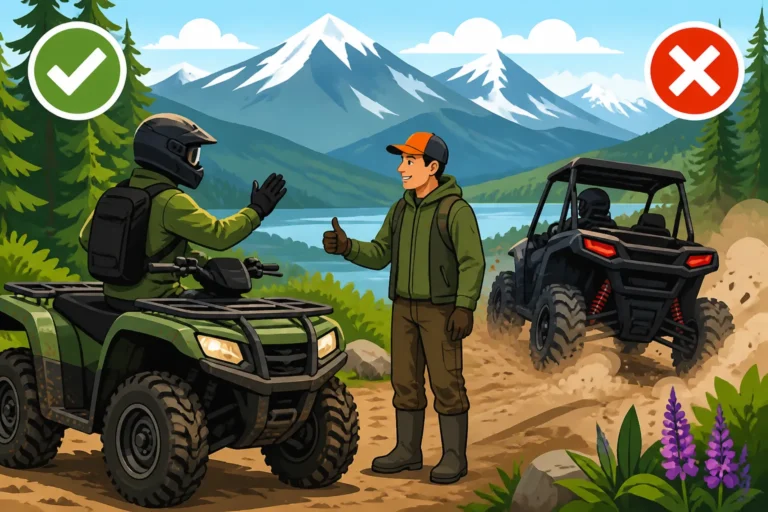
On a group ride, leave enough space that the person behind you isn’t riding in a cloud of dust. If visibility drops, pause somewhere safe and let the silt settle. Route resources such as Alaska Trail Difficulty Ratings can help set expectations, but trail conditions may still vary with weather and use.
Prepare for the route, not just the tire choice
Before you leave, check the route, land access, and any closures. A mapping app such as onX Offroad can help you review planned routes and nearby trail information, but confirm land status and access requirements with the relevant manager when needed. A mapped line is not a guarantee that a route is open, passable, or appropriate for your vehicle.
For a changing area such as Knik River, consider how recent rain, water levels, and surface conditions might affect the ride. onX Offroad may be useful for reviewing your planned route before departure, while a paper backup or downloaded map can help if you lose cell service. Tell someone where you plan to ride and when you expect to return, especially if you are leaving the developed road system.
Carry basic recovery and repair gear appropriate to your machine and route. A tire repair kit, inflation equipment, and a way to recover a stuck vehicle can be more useful than an aggressive tire upgrade when conditions turn poor. A winch is not a reason to enter a questionable crossing; review Winches for a Stuck Machine and make a separate plan for water hazards. If you are considering equipment for deep water, Snorkels for Deep Crossings explains why that modification does not remove the risks of a crossing.
Inspect and clean tires after the ride
Fine grit can work into tread grooves and collect around suspension and drivetrain components. After riding, inspect the tread for lodged stones, cuts, missing lugs, and damage to the sidewalls. Check that the tires still hold pressure and look for anything that may have been hidden beneath a coating of silt.
Clean the machine thoughtfully. A heavy blast of water directed at seals, bearings, electrical connections, or other sensitive areas can create avoidable problems. Follow your owner’s manual for cleaning and maintenance, and use a careful inspection rather than assuming a quick rinse removed every trace of grit.
If you ride the same area often, note how the tires behave in dry silt, wet silt, and firmer ground. onX Offroad can help you keep track of planned routes, while your own ride notes can record what the surface was like, what load you carried, and where traction changed. Those details are more useful for choosing your next tire than a vague memory of one unusually muddy afternoon.
Choosing a setup for your riding style
Match the compromise to your usual terrain
If most of your riding is on mixed trail, a balanced all-terrain tread may be more practical than a tire designed mainly for deep mud. If you regularly encounter soft, loose sections, a tread with stronger bite and room to clear material may be worth considering, provided it remains manageable on the harder surfaces you also ride. For frequent rocky terrain, puncture protection and careful line choice matter alongside tread pattern.
Riders who carry passengers, tools, or hunting gear should evaluate the tire’s load rating and the machine’s recommended limits. A heavily loaded UTV will not behave like an empty quad, even with the same type of tread. The extra weight can affect how the tires sink, how the machine turns, and how much control you have when braking.
There is no tire that makes every glacial-silt route easy. A sensible setup gives you useful traction while keeping the vehicle controllable across the rest of the ride. If the route requires conditions or equipment you do not have, choosing a different trail is often the safer decision.
Use a simple pre-ride decision check
Before committing to a silt-heavy route, ask yourself a few practical questions:
- Is the route open, and do I have permission to ride there?
- Do I know whether the trail includes soft ground, steep sections, water, or exposed rock?
- Are my tires in good condition and suitable for my machine and load?
- Do I have the tools and communication plan needed for a delay or breakdown?
- Can I turn around safely if the trail is worse than expected?
If you cannot answer those questions confidently, pause before leaving or choose a route with conditions you can manage. Check the forecast and recent local information where available; Alaska Riding After Heavy Rain is a useful reminder that moisture can change how loose ground behaves.
The most dependable approach is to pair a suitable, properly maintained tire with conservative riding and a realistic route plan. Glacial silt can be unpredictable, but paying attention to the surface, keeping your inputs smooth, and turning back when conditions exceed your comfort level can help prevent a tire problem from becoming a recovery problem.
Disclaimer
This article is for general informational purposes only and does not constitute professional advice. Laws, prices and regulations vary by location and change over time. Consult a qualified professional for guidance on your specific situation.