Sharing the Eklutna Lake Trail With Cyclists
The Eklutna Lake corridor is a beautiful place to ride, but it can feel narrow and busy when ATVs, side-by-sides, cyclists, and hikers share the same route. This guide explains how to prepare, pass safely, manage dust and speed, and check that your machine and intended route are allowed before you leave the trailhead.
Know the route before you unload
Understand what “shared trail” means at Eklutna Lake
Eklutna Lake sits in Chugach State Park, northeast of Anchorage. The lakeside route is popular with people on foot, bicycles, and off-highway vehicles, so a ride can shift quickly from open travel to a slow, careful pass around a cyclist or hiker. Don’t assume every path or spur in the area is open to motorized use simply because the main corridor is busy with vehicles.
Before heading out, confirm which route is open to your machine and check for signs or temporary closures at the trailhead. Park boundaries, drainage crossings, and side routes can have different rules. Alaska State Park Riding Rules is a useful place to start, and Alaska Trails That Allow Side-by-Sides can help frame what to check if you’re taking a UTV rather than a quad.
It’s also worth checking conditions close to your departure. A route that was passable on a dry day may be muddy, rutted, or affected by maintenance after heavy rain. Look for current information from the managing agency and follow signs on site; an app such as onX Offroad can help you orient yourself and plan around mapped routes, but it should not replace posted rules or land-manager updates.
Plan for the whole ride, not just the trailhead
A relaxed trip begins with a realistic route plan. Decide how far you’re going, where you’ll turn around, and how much daylight and fuel you have for the return. Cyclists and hikers may travel at very different speeds, and stopping to pass safely can make a shared route take longer than you expected.
Tell someone your plan, especially if you’re riding beyond the busiest part of the corridor. Cell service can be unreliable in mountain terrain, so don’t build your safety plan around being able to call from the trail. Carry essentials such as water, warm and waterproof layers, a basic first-aid kit, and a way to communicate if your phone loses signal. For broader route-planning ideas, see Alaska Riding Near Anchorage and Alaska Trail Etiquette Locals Expect.
| Before you leave | What to check |
|---|---|
| Route access | Confirm that motorized riding is allowed on your intended route and that there are no closures |
| Machine | Check tires, brakes, lights, throttle, fuel, and any required equipment |
| Conditions | Look for mud, standing water, storm damage, and areas where the trail may be narrowing |
| Group plan | Set a pace, choose a turnaround point, and agree on how the group will stop for other users |
| Communication | Tell someone your route and return plan; carry a backup communication option if appropriate |
Share the trail with patience and control
Slow down early when you see a cyclist or hiker
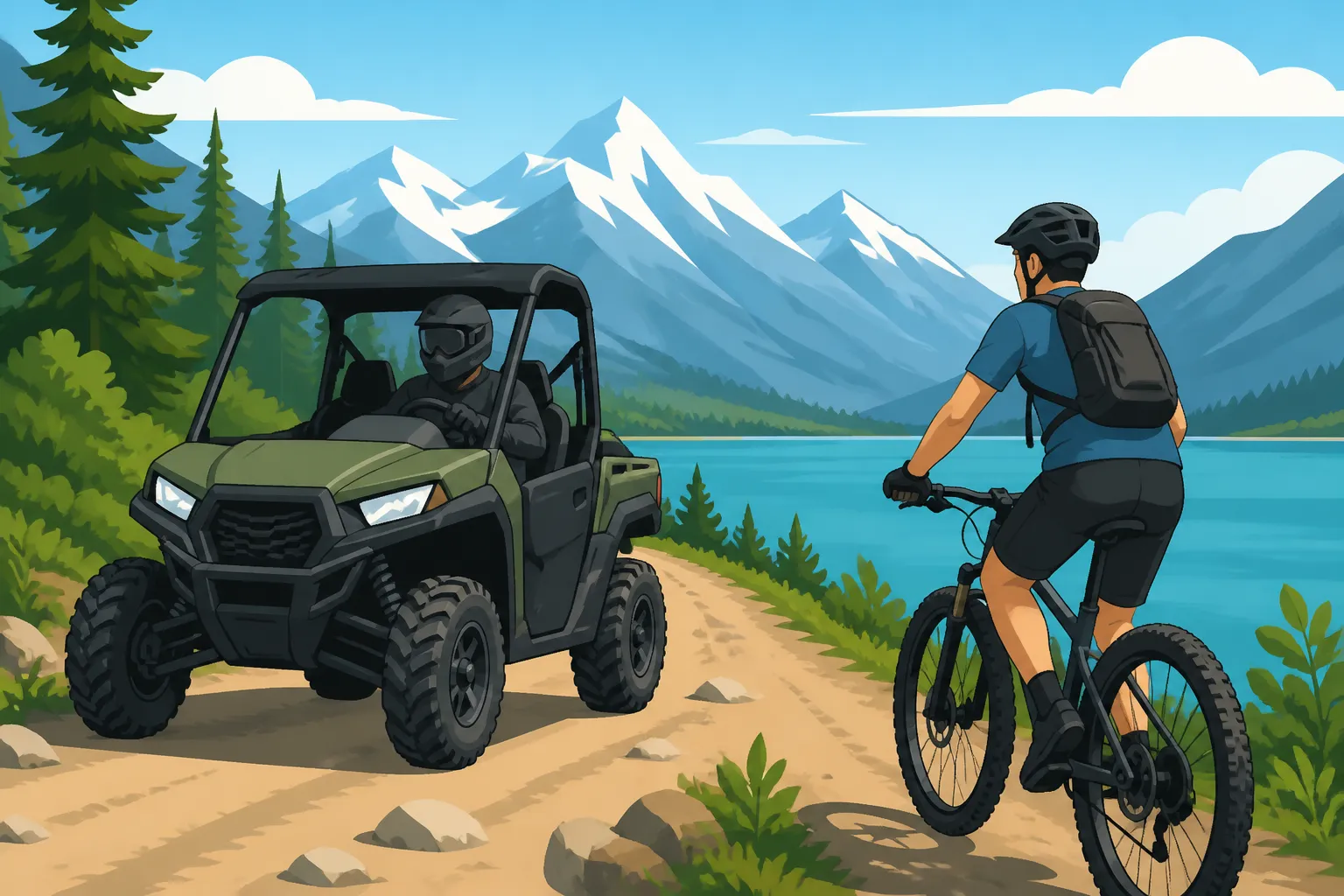
The safest pass is one that doesn’t surprise anyone. When you spot another trail user, ease off the throttle early rather than rushing toward them and braking at the last second. Slow down enough to keep control on the surface, then give the other person time to notice you and find a comfortable place to pass.
A friendly wave or brief, calm call-out can help, but don’t assume that someone has heard you. Helmets, wind, and the sound of your machine can make conversation difficult. If the trail is narrow, rocky, or bordered by a steep bank, wait at a wider spot instead of squeezing past. A cyclist may need room to put a foot down, while a hiker with a dog or child may need extra space to move safely.
Courtesy matters even when a rider is in a hurry to reach a viewpoint or turnaround. If a cyclist is climbing a narrow section, for example, stopping in a stable, visible place may be less stressful than asking them to pull off on loose gravel. Think of a safe pass as a short pause in your ride, not an inconvenience to push through.
Keep dust and noise from becoming someone else’s problem
Dust can reduce visibility for cyclists and other vehicle operators, particularly during dry spells. Leave room between machines in your own group, and avoid accelerating hard just before or while passing someone. If a cloud of dust is already hanging over the trail, slow down and allow it to settle rather than riding into a situation where you can’t see the surface clearly.
Noise can also make a shared corridor feel more tense. Keep your machine in good condition, avoid unnecessary revving, and be considerate near people who are stopped to enjoy the lake or take a break. A quieter, measured approach makes it easier for other users to hear what’s happening around them—and helps everyone feel less rushed.
Your speed should match the conditions, not just the machine’s capability. Loose gravel, potholes, washouts, blind corners, and muddy patches all call for a slower pace. If you can’t stop safely within the distance you can see, you’re moving too fast for that section.
Give groups space and avoid blocking the route
When you ride with friends or family, try not to bunch up around people who are passing. Leave room for a cyclist to move through and avoid stopping in a narrow spot where other trail users have no easy way around. If your group needs to regroup, choose a broad, stable place off the main travel line, and make sure every machine is parked where it can’t roll into someone’s path.
On a side-by-side, passengers should stay seated and belted according to the vehicle’s instructions while the driver concentrates on the trail. On a quad, keep your attention on steering and braking during a pass; don’t turn around to talk to people behind you. If your group gets separated, agree in advance that riders will wait at a safe, visible stopping point rather than speeding up to catch the others.
Ride thoughtfully around Eklutna Lake conditions
Expect the trail surface to change
Mountain weather and water can change trail conditions quickly. One section may be firm and easy-going, while another has soft gravel, puddles, ruts, or loose material that shifts under your tires. Reduce speed before reaching an unfamiliar patch so you have time to choose a stable line. Avoid sudden steering or braking, especially if a cyclist is nearby or another machine is following close behind.
After heavy rain, be alert for soft shoulders, drainage damage, and sections where standing water hides holes. Don’t widen the route by driving around a muddy section onto vegetation. That can damage the ground and create a broader, rougher area for everyone who follows. If a stretch looks unsafe or badly damaged, turn around rather than trying to force a crossing. For more on planning around changing surfaces and closures, see Alaska Trail Closures After a Storm and Alaska Tundra and Wetland Conditions.
Maps can support your planning, but they cannot tell you whether a particular stretch is open today or whether the surface is safe to cross. Use an app such as onX Offroad to help follow your intended route and stay oriented, then use signs and current local guidance to confirm what’s actually allowed. A mapped line is a navigation aid, not permission to ride.
Make safe choices at blind spots and narrow sections
Before entering a blind corner, crest, or tight stretch, slow down enough to stop if you meet someone coming the other way. Stay to the right where the route allows, but don’t hug an unstable edge simply to make room. On a narrow section beside a slope or drainage, it may be safer to stop in a wider area and let the other user pass there.
If you meet a cyclist approaching downhill, avoid forcing them to brake suddenly on loose ground. Find a stable place to wait, communicate clearly, and let them choose a safe line through. The same patience applies when you encounter hikers, children, dogs, or a group that needs time to move aside. A few moments spent reading the situation can prevent a collision or a frightening near miss.
Use particular care near trail junctions and places where people may stop to take in the lake or check their route. Riders who are looking at a map or talking with companions may not notice an approaching machine right away. Keep your speed low, look ahead for movement, and be prepared to stop fully.
Prepare your machine and group for a safer ride
Do a simple pre-ride check
A quick check in the parking area can catch problems before they become breakdowns on the trail. Make sure the brakes respond properly, tires look sound, lights work, and the throttle returns as it should. Check for loose cargo and secure anything that could shift when you cross uneven ground. If your machine has been stored through winter, give it extra attention before taking it onto a shared route.
Carry only what you need, but don’t leave behind basics that matter if the ride takes longer than expected. Water, food, a first-aid kit, weather-appropriate clothing, and a charged phone are sensible starting points. If the route or your group’s experience makes it appropriate, consider carrying a satellite messenger or other backup communication device. More ideas for matching a route to your experience level are in Alaska Trail Difficulty Ratings.
If you’re towing a small trailer or carrying equipment, remember that the machine may need more space and distance to stop. Keep the load secure, ride conservatively, and avoid passing other users in places where you cannot leave a comfortable margin. A heavy or wide setup can make a narrow trail feel tighter than it looks.
Set expectations before the group starts moving
A short conversation at the trailhead can prevent confusion later. Agree on a pace that the least experienced rider can manage, establish where you’ll stop, and make sure everyone knows what to do if the group gets separated. Ask riders to leave generous space between machines and to slow down when visibility drops or other trail users appear.
If children or new riders are along, keep them within a range where you can supervise them safely. Choose a route and pace suited to their experience, and explain that stopping for cyclists and hikers is part of the ride. The goal is not to make the day feel like a lesson; it’s to help everyone feel comfortable enough to enjoy the scenery without being hurried into decisions.
Finally, be willing to change your plan. A crowded trail, poor visibility, unexpected damage, or a route that feels beyond the group’s ability are all good reasons to pause or turn back. Eklutna Lake is worth visiting at a slower pace. With a little preparation, a considerate attitude, and clear awareness of access rules, motorized riders and cyclists can share the corridor more safely and enjoy the same remarkable setting.
Disclaimer
This article is for general informational purposes only and does not constitute professional advice. Laws, prices and regulations vary by location and change over time. Consult a qualified professional for guidance on your specific situation.