Alaska Excludes Snowmobiles From APV
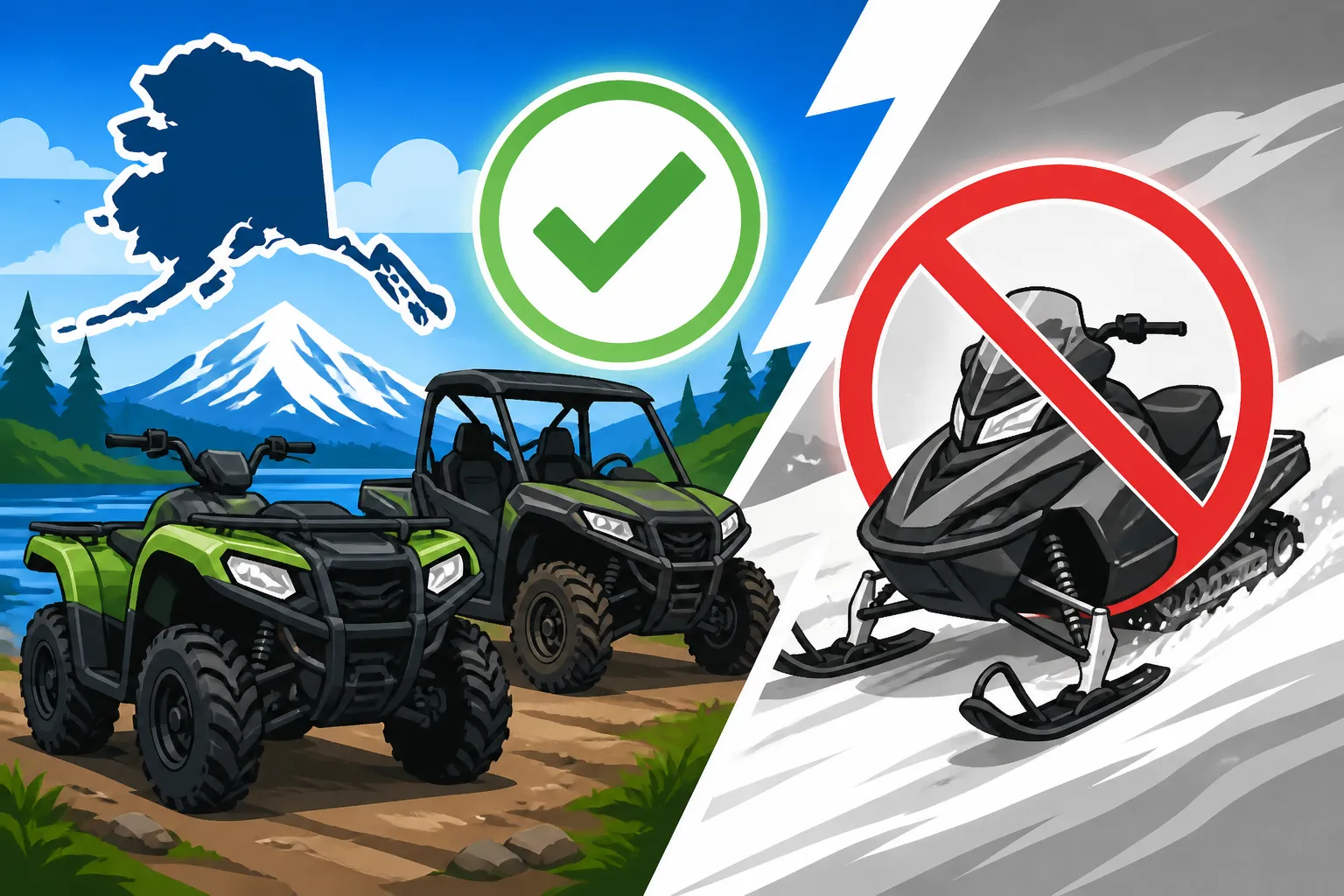
Navigating the world of off-highway vehicle (OHV) registration in Alaska can feel like trying to find your way through a thick fog without a compass, especially when the state uses specific terms like "All-Purpose Vehicle" or "APV." Many folks assume all their fun machines — whether they're roaring through summer trails on a quad or carving fresh powder on a snowmobile — fall under the same umbrella for registration. This couldn't be further from the truth, and a common point of confusion is the explicit exclusion of snowmobiles from Alaska's APV classification. This guide aims to clear up that confusion, explaining precisely why your snowmachine isn't an APV and what that means for how you register and ride it.
Understanding Alaska's All-Purpose Vehicle APV Class
Alaska has a very specific definition for what constitutes an All-Purpose Vehicle (APV), and it's this definition that dictates registration, titling, and how you can legally operate your machine on public lands and certain roads. It's not just a fancy name; it's a legal classification that impacts everything from the decal you receive to the rules you must follow. When you're dealing with the Department of Motor Vehicles (DMV) or state troopers, knowing this distinction is crucial to avoiding headaches and potential fines.
What Qualifies as an APV?
At its core, an APV in Alaska is designed for off-road use, but the legal description goes beyond just that. Generally, it refers to machines like ATVs (all-terrain vehicles), UTVs (utility terrain vehicles, often called side-by-sides), and some specialized off-road motorcycles (dirt bikes). The key characteristics usually include having three or more tires, being steered by a handlebar or a steering wheel, and often, specific dimensions regarding width and weight. These are the machines you typically see tearing up trails in the Knik River Public Use Area or hauling gear to a remote cabin during the summer months.
Think of your standard quad, with its four knobby tires, handlebar steering, and seating for one or two. Or consider a side-by-side, which has a steering wheel, bucket seats, and often a small bed for cargo. These machines are designed to navigate rough terrain on wheels, and that wheeled design is paramount to their APV classification. This is the category that triggers the need for an Alaska APV Titling Required Since 2022 and specific registration requirements, ensuring these machines are accounted for on Alaska's vast network of trails and public lands.
Why the APV Classification Matters
The distinction of being an APV isn't just bureaucratic jargon; it carries significant legal and operational weight. If your machine is classified as an APV, it means you must follow the specific rules set forth for APVs regarding registration, decals, and potential road use. For instance, APVs generally require an Alaska Issues a Decal, Not a Plate that must be displayed in a specific manner, typically on the tunnel side or where it's Alaska Decals Visible When Seated. Furthermore, there are specific Alaska APV Road Rules Explained that govern where and how these machines can be operated on or near public roadways, including things like helmet laws and insurance requirements.
Without proper registration as an APV, you could face penalties for riding unregistered, particularly on public lands. This classification also plays a role in how insurance companies view your machine and what kind of coverage you might need, such as Alaska Requires Liability Insurance for an APV. It's a foundational piece of information for any Alaskan who owns and operates these types of off-highway vehicles, influencing everything from your annual riding plans to your legal responsibilities.
The Explicit Exclusion of Snowmobiles (Snowmachines)
This is where much of the confusion arises for many Alaskan residents. While both snowmobiles and ATVs are considered Off-Highway Vehicles (OHVs) and are used for recreation, hunting, and subsistence, their fundamental design differences mean they are categorized and regulated entirely separately under Alaska law. Simply put, a snowmobile is not an APV, and understanding this distinction is key to avoiding registration errors.
Defining a Snowmobile in Alaska Law
A snowmobile, or snowmachine as it's more commonly called here in Alaska, is legally defined by its unique propulsion system. Instead of tires, a snowmobile utilizes an endless belt-type track located at the rear for propulsion and one or more skis at the front for steering. This design is purpose-built for travel over snow and ice, making it incredibly effective in Alaska's long winter months. The law is very clear on this: if it has tracks and skis, it's a snowmobile.
This definition sets snowmachines apart from the wheeled APVs. Whether you're riding a nimble two-stroke for mountain climbing or a long-track utility machine for hauling firewood, if it fits this description, it's a snowmobile in the eyes of the state. This distinct classification means that while you still need to register it, you'll be doing so under the specific snowmobile registration category, not as an APV. It's crucial not to try to force a snowmobile into the APV box on your paperwork, as this will lead to rejection and delays.
The Fundamental Difference: Tracks vs. Tires
The most fundamental and defining difference between an APV and a snowmobile, from a legal and practical standpoint, is their mode of traction: tires versus tracks and skis. An APV, by definition, must have tires. This is explicitly stated or heavily implied in the regulatory language describing an APV. A snowmobile, on the other hand, operates on a track system with skis for steering. This isn't just a minor design variation; it dictates how the machine interacts with the ground, the types of terrain it can traverse, and consequently, the specific environmental and safety regulations that apply to it.
This clear distinction means that any machine fitting the description of a snowmobile is automatically excluded from the APV classification. It doesn't matter if it's a powerful four-stroke touring machine or a lightweight mountain sled; its tracked and skied design means it cannot be registered as an APV. This is a common point of misunderstanding, especially for new residents or those new to owning multiple types of recreational vehicles. The rules for [Alaska Excludes Tracked Vehicles] are very distinct from those for wheeled machines.
Separate Registration and Rules for Snowmobiles
Because snowmobiles are not APVs, they fall under their own distinct set of registration requirements and operating rules. This separate framework is designed to address the unique characteristics and operational environments of snowmachines, which are primarily used during winter conditions. It means that owning both an ATV and a snowmobile necessitates understanding two different sets of regulations, even though both are OHVs.
Snowmobile Registration Requirements
Just like APVs, snowmachines in Alaska must be registered if you plan to operate them on public land, trails, or waterways open to public use. However, the process, the forms, and the resulting decals are specific to snowmobiles. You'll typically use a standard Vehicle Transaction Application (Form V1), but you'll indicate that you're registering a snowmobile, not an APV. The cost and term lengths for snowmobile registration are similar to APVs, often available for two, four, or six years, such as [Alaska Charges $10 for Two Years] or [Alaska Charges $20 for Four Years]. The key is to select the correct vehicle type on the application.
Proof of ownership is just as important for a snowmobile as it is for an APV. This could be a bill of sale if you bought it used, like those you can find templates for on LawDepot, or a manufacturer's statement of origin (MCO) for a new machine. Having all your paperwork in order, whether it's an Alaska Bills of Sale for a Used Machine or an Alaska Warranty Cards for a New Machine, is essential to a smooth registration process. While there's no online snowmobile registration, you can register in person at a DMV office or through one of the Alaska Partner Offices That Register OHVs.
Unique Operating Regulations for Snowmobiles
Beyond registration, snowmobiles also have specific operating regulations that differ from APVs. For instance, while APVs have limited road-use provisions in some communities, snowmobiles are generally prohibited from operating on paved public roadways, except for very specific crossings or during emergencies. Their primary domain is snow-covered ground, designated snowmobile trails, and frozen waterways. There are also specific rules about mufflers, headlights, and taillights that might have subtle differences compared to APV requirements, ensuring safe operation in low light and adverse weather conditions.
Additionally, regulations concerning environmental impact, such as restrictions on travel over tundra during certain times of the year, can apply differently or with greater emphasis to snowmobiles due to their wider track footprint compared to wheeled vehicles. It's not uncommon for specific areas or trails to have separate rules or opening dates for snowmobiles versus wheeled APVs. Always check local ordinances and land management regulations for the specific area you plan to ride. Understanding [Alaska Rules for Riding a Frozen River] or [Alaska Rules for Riding Sea Ice] is often more relevant to snowmachine riders than APV owners.
Common Confusion and Misconceptions
Given the array of recreational vehicles in Alaska and the nuances of state regulations, it's easy to see why confusion about APV and snowmobile classifications persists. Many Alaskans use these machines interchangeably in conversation, but legally, they are distinct. Clearing up these common misconceptions is crucial for compliance.
The "Off-Highway Vehicle" Umbrella
One major source of confusion is that both ATVs/UTVs and snowmobiles fall under the broader category of "Off-Highway Vehicles" (OHVs). This umbrella term refers to any motorized vehicle primarily designed for off-road use. Because they share this general designation, many assume they share all the same rules and classifications. However, just like cars and trucks are both "motor vehicles" but have different rules, OHVs are further broken down into specific classes like APVs and snowmobiles.
So, while your snowmachine is an OHV, it is not an APV. This distinction is what leads to separate registration categories and differing sets of operating rules. Understanding that "OHV" is a general descriptive term, while "APV" and "Snowmobile" are specific legal classifications, is key. When dealing with official paperwork or authorities, always refer to your machine by its specific legal classification, not just the general OHV term. [Machines Alaska Will Not Register as an APV] is a clear example of this specificity.
Impact on Multi-Season Riders
For Alaskans who embrace all four seasons, owning both an ATV/UTV for summer adventures and a snowmobile for winter excursions is quite common. This group of multi-season riders often finds themselves juggling two different sets of registration decals, two different sets of operating rules, and sometimes, two different mindsets when it comes to planning their trips. It can be easy to conflate the regulations, especially if you're used to applying a similar set of common-sense rules to all your machines.
For example, a rider might remember the APV registration term length of [Alaska Registration Terms of Two, Four or Six Years] and assume the same process for their snowmobile, which is largely true in terms of duration. However, they must still use the correct vehicle type designation on the form. It also means carrying two separate proofs of registration if you own both types and might encounter a trooper asking to see your documents for the specific machine you're operating at the time. Keeping your paperwork, perhaps organized in a folder with help from templates found on LawDepot for tracking machine info, is a good habit for these riders.
Practical Advice for Machine Owners
Understanding the legal definitions is one thing, but knowing how to apply that knowledge in your day-to-day life as an Alaskan machine owner is another. It's about ensuring you're compliant, protected, and ready for whatever the Alaskan wilderness throws your way.
Verifying Your Machine's Classification
If you're unsure whether your machine is considered an APV or a snowmobile, the easiest way to verify is to look at its primary mode of propulsion:
- Does it have tires? If yes, and it fits the general description of a quad, side-by-side, or dirt bike, it's likely an APV.
- Does it have tracks and skis? If yes, it's a snowmobile.
This visual check is usually sufficient. When you go to register, the DMV clerk will also guide you based on your description and any proof of ownership you provide. For instance, the Manufacturer's Statement of Origin (MCO) or the prior registration will clearly state the type of vehicle. Don't be afraid to ask questions at the DMV counter; the staff are there to help clarify these distinctions. You might also want to review the exact wording in Alaska's statutes (AS 28.30.011 for APV definition, and AS 28.30.013 for snowmobile definition) if you really want to dive into the legal specifics.
Ensuring Proper Registration and Compliance
Once you've correctly identified your machine's classification, the next step is to ensure it's properly registered. Here's a quick checklist:
- Gather Proof of Ownership: This could be a bill of sale (consider using a reliable template from LawDepot for private sales), an MCO, or a previous registration document.
- Complete the Vehicle Transaction Application (Form V1): Make sure you clearly mark whether you are registering an "All-Purpose Vehicle" or a "Snowmobile" in the appropriate section.
- Choose Your Term: Decide whether you want a two, four, or six-year registration term. Remember, regardless of the term, [Every OHV Registration Term Expires on September 30].
- Pay the Fee: The registration fees are modest and are set based on the term length.
- Display Your Decal: Once you receive your decal, ensure it's placed correctly on your machine as specified by regulations, typically [Alaska Decal Placement on the Tunnel Side] for many APVs, ensuring it's always visible.
Beyond registration, make sure you understand the specific operating rules for your type of machine. If it's an APV, familiarize yourself with [Alaska APV Road Rules Explained] and any local ordinances. If it's a snowmobile, know the trail etiquette, frozen waterway rules, and any local restrictions. Staying informed and compliant ensures you can enjoy Alaska's incredible riding opportunities without unnecessary legal hassles.
Here's a quick comparison of key aspects between APVs and Snowmobiles in Alaska:
| Feature | All-Purpose Vehicle (APV) | Snowmobile (Snowmachine) |
|---|---|---|
| Propulsion Type | Tires (3 or more) | Track(s) and Ski(s) |
| Primary Use Season | Spring, Summer, Fall | Winter (snow & ice) |
| Road Use (Limited) | Permitted in some areas under strict rules | Generally prohibited on paved roads, specific crossings only |
| Registration Category | APV registration | Snowmobile registration |
| Decal Placement | Side/tunnel, visible when seated | Often on hood or tunnel, clearly visible |
| Titling | Required since 2022 | Not always required, check DMV |
| Helmet Law | Under 16 requires helmet | Under 16 requires helmet |
| Insurance | Liability required for road use | Not explicitly required statewide, but highly recommended |
| Environmental Concerns | Tundra damage, wetland restrictions | Tundra damage, overflow, ice thickness |
Disclaimer
This article is for general informational purposes only and does not constitute professional advice. Laws, prices and regulations vary by location and change over time. Consult a qualified professional for guidance on your specific situation.