Alaska Rules for a Side-by-Side Driver
It's an exciting day when you bring a shiny new side-by-side home, or maybe you've just moved to Alaska with your trusty UTV, dreaming of hitting trails and perhaps even using it to run quick errands. But then reality sets in: the rules for driving these powerful machines on public roads in the Last Frontier aren't always clear, and misunderstanding them can quickly lead to a ticket or worse. This guide is here to untangle the complexities of Alaska's regulations for side-by-side drivers, ensuring you know exactly where you can and can't ride, and what your machine needs to be compliant for any limited road use.
The Core Question: Can a Side-by-Side Be "Street Legal" in Alaska?
This is often the first, and most confusing, question every side-by-side owner asks. The term "street legal" can conjure images of driving your UTV to the grocery store or commuting to work on the main highway. In Alaska, it's not quite that simple. The state has specific classifications and rules that allow for limited road use, but a blanket "street legal" status like a regular car isn't really how it works for side-by-sides.
Understanding Alaska's All-Purpose Vehicle (APV) Class
Alaska groups side-by-sides, along with ATVs and other similar machines, under its "All-Purpose Vehicle" (APV) classification. This is a crucial distinction. When you register your side-by-side, you're not registering it as a car or a truck; you're registering it as an APV. This classification acknowledges their off-road design and purpose while providing a framework for how they can interact with public infrastructure. It's a recognition that these machines serve a vital role for transportation, recreation, and subsistence in many parts of the state, but also that they don't quite fit the mold of conventional motor vehicles. The APV class is designed to be inclusive of a wide range of machines that are primarily intended for off-road environments but might, under specific conditions, need to use roads.
The Difference Between Registration and Road Use
Here's where many people get tripped up: simply registering your side-by-side with the state and getting your decal does not automatically grant you the right to drive it on every public road. Think of it this way: you register your boat, but you can't drive your boat down Main Street. Registration is about ownership, identification, and contributing to the state's efforts to manage and maintain public riding areas. Road use, however, comes with an entirely separate set of criteria and restrictions designed for public safety and traffic flow. You might have your machine properly registered, with an up-to-date decal, but if it doesn't meet specific equipment requirements or if you're on a prohibited road, you could still face penalties. It's a two-tiered system: first, register your machine, and second, understand the specific [Alaska APV Road Rules Explained] that dictate where and how you can ride on public ways.
Equipment Requirements for Limited Road Use
Before your side-by-side can legally touch even the most rural public road in Alaska, it needs to be equipped to meet certain safety standards. These aren't suggestions; they are requirements that a state trooper or local law enforcement officer can and will check if they pull you over. Don't assume that because your machine is new, it automatically has all the necessary components. Many manufacturers design UTVs primarily for off-road use, and some of the "street legal" accessories are optional add-ons or aftermarket modifications.
What Your Side-by-Side Needs to Even Qualify
To use your side-by-side on public roads (where allowed), Alaska requires it to have the following [Alaska OHV Equipment Requirements]:
- Headlights: Your UTV must have at least one headlight capable of illuminating objects at least 100 feet ahead. In reality, most side-by-sides come with excellent dual headlights, but ensure they are working properly and not obscured by mud or accessories.
- Taillights: You need at least one taillight, visible from at least 1,000 feet to the rear. Again, most modern UTVs have these, but check for functionality and visibility.
- Brakes: A working braking system, effective on all wheels, is non-negotiable. This is fundamental for safety on any roadway.
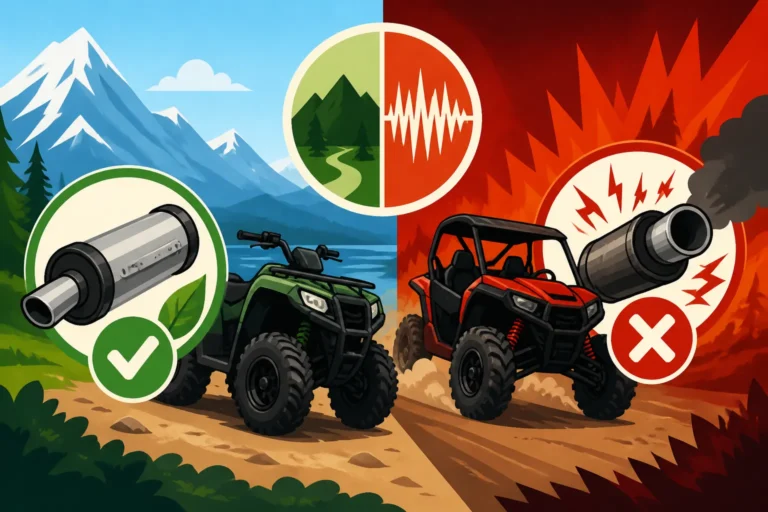
- Muffler and Emission Controls: Your machine needs a muffler to keep noise levels reasonable and working emission controls. Loud aftermarket exhausts that bypass these can get you in trouble.
- Spark Arrester: This device prevents hot carbon particles from escaping the exhaust, a critical fire prevention measure, especially in dry conditions. Many stock machines come with these, but it's worth verifying.
- Reflectors: At least two red reflectors must be visible from the rear, from 100 to 600 feet away. These are passive safety devices that make your machine more visible to other drivers, even when your taillights aren't on.
- Mud and Snow Flaps: These are often overlooked but are required. They must be behind the rearmost tires and extend to the center of the axle or within eight inches of the ground. This prevents rocks and debris from being thrown up at other vehicles. If your UTV's stock fenders don't provide adequate coverage, you might need to look at aftermarket solutions. Many Alaskans find their UTVs don't come stock with every single piece of gear needed for limited road use, and that's where aftermarket solutions from companies like SuperATV can be a real lifesaver, offering robust mud flap kits designed for various UTV models.
- Self-Closing Throttle: The throttle must automatically return to the idle position when released. This is a basic safety feature to prevent runaway machines.
- Intact Body Panels: Your side-by-side must have all original or equivalent body panels in place. This isn't just for aesthetics; it helps contain moving parts and protects riders.
Why These Requirements Matter on the Road
Each of these requirements is rooted in safety, both for the side-by-side driver and for other road users. Functioning lights ensure you're seen, day or night, reducing the risk of collisions. Effective brakes are paramount for stopping safely, especially given the varying terrain and conditions you might encounter on Alaskan roads. Spark arresters prevent wildfires, which are a very serious concern in our often-dry summers. Mud and snow flaps protect windshields and paint jobs of vehicles traveling behind you, preventing potentially dangerous situations caused by flying debris. Imagine a large rock launched at high speed from a tire—it could cause a serious accident. Companies like SuperATV offer a range of accessories that not only enhance your machine's capabilities off-road but can also help you meet these critical road-use requirements, from full windshields to proper lighting kits.
Here's a quick reference table for the main equipment requirements:
| Equipment Item | Purpose | Visibility/Functionality Requirement |
|---|---|---|
| Headlight(s) | Illuminate path and be seen by others | Visible 100 ft ahead |
| Taillight(s) | Be seen from behind | Visible 1,000 ft from rear |
| Brakes | Safely stop the vehicle | Effective on all wheels |
| Muffler & Emissions | Noise reduction, pollution control | Stock or equivalent, no excessive noise |
| Spark Arrester | Prevent wildfires | Functional and intact |
| Rear Reflectors | Passive visibility from behind | Two red reflectors, visible 100-600 ft |
| Mud & Snow Flaps | Prevent debris from being thrown | Behind rearmost tires, to center of axle or 8" from ground |
| Self-Closing Throttle | Prevent runaway machine | Returns to idle when released |
| Intact Body Panels | Rider protection, contain moving parts | All original or equivalent panels in place |
Where You Can (and Can't) Ride Your Side-by-Side on Alaskan Roads
This is perhaps the most critical section for any side-by-side driver contemplating road use. Alaska's rules are not uniform across the entire state. What's allowed in one community might be strictly prohibited just a few miles down the road. It's vital to do your homework for the specific areas you plan to ride.
The "45 mph or Lower" Rule and Exceptions
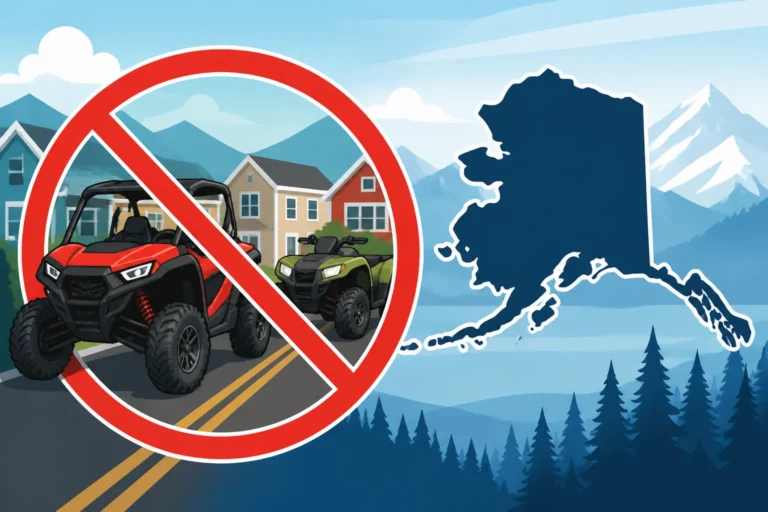
The golden rule for APV road use in Alaska is that you can generally only operate your side-by-side on roads with a posted speed limit of 45 mph or lower. This [Alaska's 45 mph Road Limit for APVs] usually means secondary roads, gravel roads, and village streets, but it specifically excludes paved highways with higher speed limits. The intent here is to keep slower-moving APVs off faster, higher-volume roads where they could pose a safety hazard. However, this isn't a carte blanche for all roads under 45 mph. There are significant exceptions. You must always check local ordinances, as many communities have opted out of this general rule and banned APV road use entirely. Even if the speed limit is 35 mph, the local borough or city might still prohibit your UTV from being on that road.
Community-Specific Bans and Ordinances
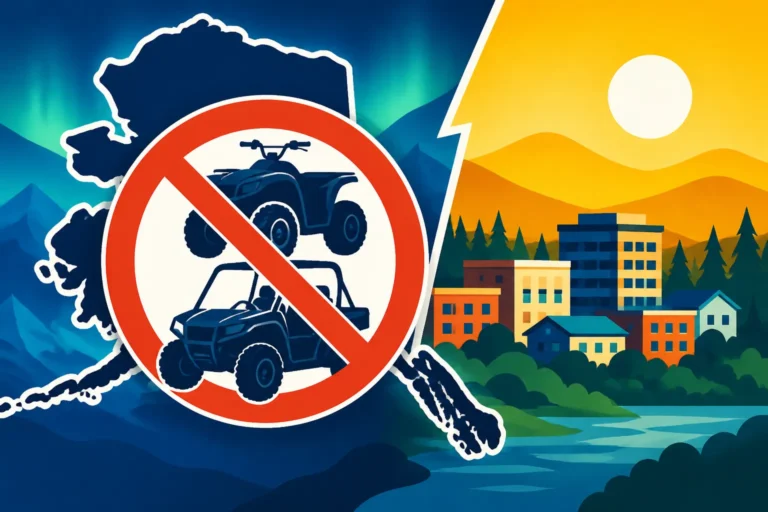
This is where things get tricky and hyper-local knowledge is absolutely essential. Many of Alaska's more populated cities and boroughs have enacted their own ordinances that outright ban APVs from their roads, regardless of the state's 45 mph rule. You cannot, for example, ride your side-by-side on the roads of Anchorage. The same goes for Fairbanks, Juneau, Wasilla, Palmer, Kenai, Soldotna, and Homer. These bans are put in place due to concerns about safety, noise, and traffic congestion in more urbanized areas. It’s incredibly important to know the local laws for wherever you are riding. Before you even think about putting a tire on a paved road, check the specific [Alaska Municipal ATV Ordinances] for that city or borough. A quick call to the local police department or borough office can save you a hefty ticket and a lot of frustration. If you're heading out to explore, for instance, the trails around the Mat-Su Valley, ensure you understand the local regulations before you ride through any towns. You might find that while the trails are open and welcoming, town roads themselves are off-limits.
Crossing Highways and Shoulders
While operating your side-by-side on a high-speed highway is generally prohibited, Alaska law does allow for limited crossing and shoulder use under specific conditions. You can cross a highway at a right angle if it's the safest way to get from one legal riding area to another, or to access a business or residence. This means going straight across, not riding down the middle for miles. Additionally, you may use the shoulder of a highway, again, to access a legal riding area or destination, but you must operate at the far edge of the shoulder and for the shortest distance possible. This isn't an invitation to ride the shoulder as a bypass for traffic. It's strictly for transitional access. Always prioritize safety, yielding to conventional vehicles, and making your intentions clear.
Driver and Passenger Rules for Side-by-Sides on Roads
Beyond the machine itself and the roads you can use, there are crucial rules that apply to you as the driver and to any passengers riding along. Ignoring these can lead to serious legal consequences, just like driving a car without the proper credentials.
Driver's License and Insurance
When you're operating your side-by-side on a public road in Alaska, you are considered a motor vehicle operator, and you must hold a valid Class D driver's license. This is the same standard driver's license required to operate a car or light truck. You cannot use a learner's permit or simply be an experienced off-road rider; you need a fully valid license. Additionally, your side-by-side must be covered by liability insurance. Just like a car, if you're involved in an accident on a public road, you need to have proof of financial responsibility. [Alaska Requires Liability Insurance for an APV] is not an optional extra; it's a legal requirement for road use. Carry your proof of insurance and your driver's license with you every time you ride, just as you would in your truck.
Helmet and Passenger Rules
Alaska's helmet law for APVs specifically mandates helmets for riders under the age of 16. So, if you have a child passenger in your side-by-side who is under 16, they absolutely must wear a helmet that meets federal safety standards. For adult drivers and passengers in a side-by-side, the helmet law does not apply in the same way it does for open-air ATVs. However, this doesn't mean helmets are a bad idea. Side-by-sides offer more protection with roll cages and seatbelts, but accidents can still happen. Many experienced riders choose to wear helmets regardless for added safety. Always ensure your passengers are seated properly, wearing seatbelts, and that the machine's capacity isn't exceeded. Check out [Alaska Helmet Law for Riders Under 16] for more details on age-specific requirements.
Consequences of Non-Compliance
The penalties for operating your side-by-side illegally on Alaska's roads can range from fines to impoundment of your machine, depending on the severity and frequency of the offense. Riding an unregistered machine, driving on prohibited roads, or lacking the required equipment can all result in citations. Furthermore, if you're involved in an accident while operating illegally, your insurance might not cover damages, leaving you personally liable for significant costs. A state trooper has the authority to issue tickets and, in some cases, order you to remove your machine from the road immediately. It's far better to invest the time in understanding and complying with the rules than to face the expensive and inconvenient consequences of a violation.
Disclaimer
This article is for general informational purposes only and does not constitute professional advice. Laws, prices and regulations vary by location and change over time. Consult a qualified professional for guidance on your specific situation.