Alaska Trails for Kids
Taking kids on an Alaska ATV or UTV ride can feel like a puzzle: a route that looks easy on a map may have deep mud, river crossings, changing weather, or rules that make it a poor choice for young riders. This guide explains how to choose a family-friendly trail, prepare your child and machine, and check access before you go.
How to choose Alaska trails for kids
Match the route to your child, not just the machine
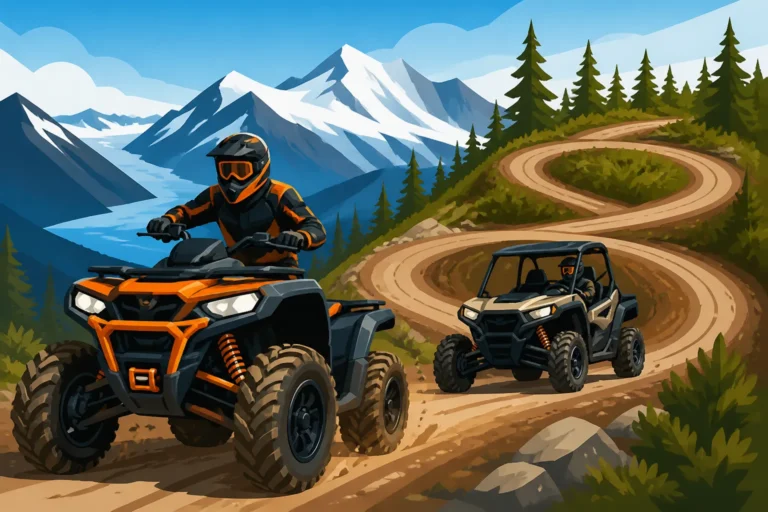
A trail described as “easy” may still be tiring or intimidating for a child. Think about how long your child can comfortably sit, how they handle bumps and noise, and whether they have ridden before. A short outing with a clear turnaround point is often a better first experience than a long ride to a dramatic destination.
Consider the least experienced person in your group when choosing a route. If a child is nervous about steep ground, a narrow trail, or being a passenger, don’t count on them warming up once you are far from the trailhead. Start with terrain that lets everyone ride at a relaxed pace and stop without pressure.
Before leaving, set expectations: children should know to keep their hands and feet where the driver or manufacturer’s guidance requires, stay seated, and speak up if they feel uncomfortable. A child who is cold, scared, or overwhelmed may not say so right away. Check in regularly rather than waiting for them to ask to turn around.
Think about terrain and trail conditions
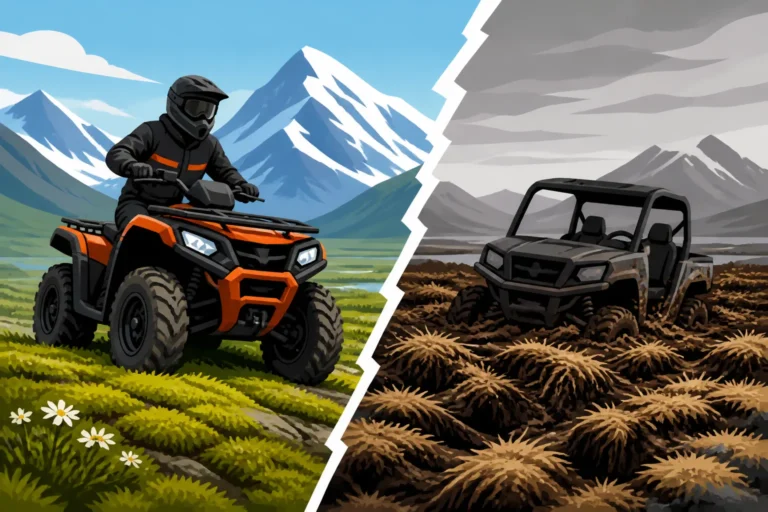
In Alaska, trail conditions can change with rain, thaw, runoff, and seasonal closures. A smooth route one day may become rutted or slippery after a storm. Glacial silt, loose rock, standing water, and soft ground can all make a ride harder than its distance suggests. For children, predictable footing and a straightforward route matter more than a high-mileage adventure.
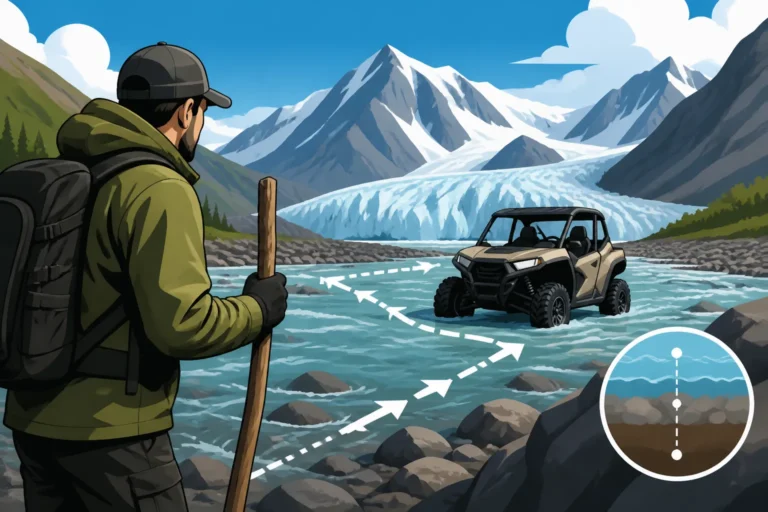
Look for routes that let you avoid difficult obstacles rather than forcing a group to cross them. A river crossing that seems manageable from a distance can be deeper or faster-moving than expected, and water levels may change during the day. If the route depends on a crossing you can’t confidently assess, turn around. You can read more about evaluating that hazard in [Reading a Glacial River Before You Cross].
A useful planning habit is to choose a route with more than one reasonable stopping point. If a child is tired or the weather changes, you can shorten the ride without needing to push on to a distant destination. For more ideas on assessing routes and experience levels, see [Alaska Trail Difficulty Ratings] and [Best Alaska ATV Trails for Beginners].
Compare possible family riding areas carefully
There isn’t one “best” Alaska trail for every family. A route that suits a confident teenager may be a poor match for a young passenger or a first-time rider. Use the area name as a starting point, then check current access, conditions, trail length, and the specific machine restrictions before loading up.
| Riding area or route type | Why families may consider it | What to check before taking kids |
|---|---|---|
| Jim Creek near the Knik River | Offers an established recreation area and options for planning a shorter outing | Route conditions, river hazards, access rules, fees, and whether your chosen route is suitable for your machine |
| Knik River Public Use Area | A large riding area can offer route choices and room to adjust plans | Land boundaries, changing channels, weather, and how far your family would be from the trailhead |
| Denali Highway area | A scenic destination for families planning a broader trip | Seasonal access, surface conditions, distance from services, and whether the planned ride is appropriate for children |
| A local trail near home | Makes it easier to keep a first ride short and familiar | Local restrictions, trail closures, parking, and permission to ride on the land |
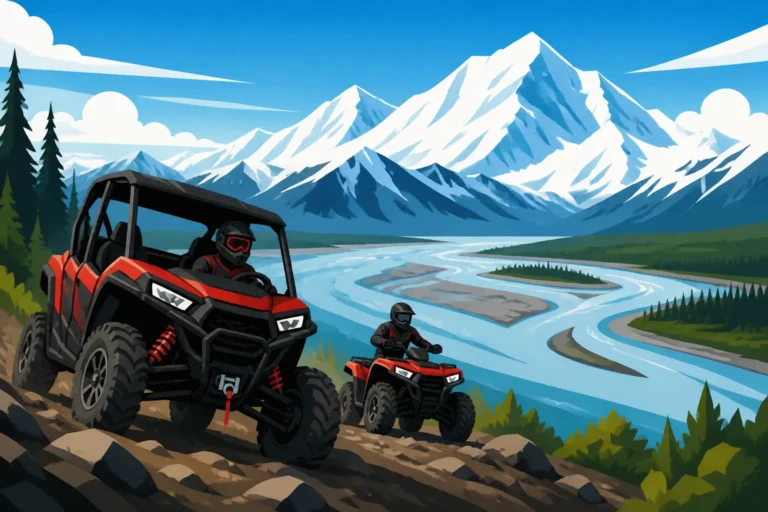
Jim Creek and the Knik River area can involve challenging conditions, so don’t assume that a popular riding destination is automatically child-friendly. Review [Alaska's Technical Loops at Jim Creek] and [Alaska Braided Glacial River Crossings] before deciding whether a route fits your group. For families considering a longer trip, [Denali Highway's 135 Miles in Alaska] can help with route planning, but the highway’s overall distance is not a measure of how much of it a child should ride.
Prepare children and machines for the ride
Choose a suitable role for each child
A child riding as a passenger has different needs from a child operating a machine. Follow the vehicle manufacturer’s guidance for seating, passenger limits, and rider age and size. A child should not be squeezed onto a seat that was not designed for them or expected to hold on in a way they cannot manage. If a machine is not designed for a passenger, don’t carry one.
For a child who will operate an ATV or UTV, consider their maturity, ability to understand instructions, and comfort with the controls—not just their age. Practice in a controlled, permitted area before attempting a trail. They should know how to stop, steer, and respond to basic directions, and an adult should be close enough to intervene. The article [Alaska Rules for a Ten-Year-Old Rider] may help you identify issues to check, while [Alaska Rules for a Fourteen-Year-Old Rider] covers a different age group. Confirm the rules and manufacturer guidance that apply to your child and machine.
A UTV may provide a more enclosed seating position than an ATV, but that does not make every UTV route appropriate for children. The vehicle still needs to match the terrain, passenger needs, and trail rules. A larger machine can also be harder to maneuver in tight or uneven areas. Choose for control and comfort, not simply capacity.
Make protective gear part of the plan
A properly fitted helmet is essential to a family riding plan. It should be suitable for the child and worn correctly throughout the ride. Also consider eye protection, gloves, sturdy footwear, and clothing that protects against weather, brush, and flying debris. Loose scarves, dangling straps, and other items that could catch on equipment should be avoided.
Alaska weather can feel different at the trailhead than it does farther along a route. Pack warm layers and rain protection even when the day begins pleasantly. Children can get cold faster than adults, especially when they are sitting still as passengers. A quick stop to add a layer can prevent discomfort from turning into a miserable ride.
Check local requirements for helmets and equipment before heading out, particularly if a young person will ride on or operate an APV. [Alaska Rules for Young Riders] and [Choosing a CPSC Helmet for a Young Rider] are useful starting points. Do not treat a helmet as a substitute for a properly sized machine, active adult supervision, or a route suited to the child.
Set the machine up for a child-friendly ride
Before departing, inspect the machine and confirm that its brakes, lights, throttle, tires, and other essential parts are working as intended. For an ATV, make sure the child can reach and operate the controls comfortably if they will be driving. For a UTV, check the seating position and safety features for every passenger. Never assume a child can compensate for controls or seating that do not fit.
Pack for minor delays. Bring water, snacks, basic first-aid supplies, a way to communicate, and clothing for a change in conditions. Let someone know where you plan to ride and when you expect to return. In areas without reliable cell coverage, consider what backup communication is appropriate for the route.
It can help to use onX Offroad while planning a ride to review mapped routes and orient your group. Still, a map app is a planning aid—not proof that a trail is open, legal, safe, or suitable for children. Cross-check access and closures with the relevant land manager, and use [Alaska Land Status Maps] and [Checking a Land Status Map] to think through who manages the ground you plan to cross.
Check access, rules, and conditions before you leave
Confirm who manages the land
A route may cross land managed by more than one agency, or pass near private property or Native corporation land. A trail shown on a map does not necessarily mean you have permission to ride it. Check the land status and the rules for each part of the planned route, including any access restrictions or seasonal closures.
Alaska’s statewide general permit does not cover every type of land. State parks, private property, and land managed by other agencies may have separate rules or require permission. Read [What Alaska's Statewide General Permit Actually Authorizes] and [Alaska Native Corporation Land Permissions] before assuming that a permit or trail map covers your entire ride.
onX Offroad can help you visualize a route and notice where land boundaries may matter, but confirm important access questions through the appropriate land manager or landowner. If a boundary is unclear, don’t use uncertainty as permission to continue. A family ride is easier and safer when the route is settled before you unload the machines.
Check local riding rules and machine requirements
Rules can differ by community and by the type of road, trail, or land you are using. A route that is open for off-highway riding may not allow the same machine on a nearby street. Before using a road to connect trails or reach a destination, check local ordinances and the requirements that apply to your machine and rider. [Alaska APV Rules by Community] provides a starting point for understanding why a route’s location matters.
Make sure the vehicle is appropriate for the planned route and that the person operating it meets applicable requirements. Don’t assume that a machine’s registration, a land-use permit, or a trailhead pass serves the same purpose as the others. These documents and permissions address different issues, so check each one that applies to your outing.
If you are unsure about a rule, contact the relevant land manager or local office before setting out. That extra step is much less stressful than discovering at a trailhead—or midway through a ride—that a route is closed or your planned access is not allowed.
Plan for weather, daylight, and a quick turnaround
Alaska conditions can shift quickly, and a family outing should have a conservative return plan. Check the forecast, trail notices, and expected conditions for the specific area, not just the nearest town. Rain, thaw, or rising water can change a route during the day. Leave enough flexibility to shorten the ride if the trail is rougher than expected or a child is becoming tired.
Agree on a turnaround point before you start. For example, the family might decide to turn around at a particular junction, after a set amount of riding time, or whenever the group encounters a condition that feels beyond its comfort level. The rule should be simple enough for everyone to remember: no destination is worth pushing a child through fear, cold, or fatigue.
Use onX Offroad or another map tool to support route planning, but keep a backup plan and don’t rely on a phone alone. Save or carry the information you need for the route, tell someone where you are going, and understand that coverage can be limited away from the road system. When conditions or confidence change, turning back is a sound decision—not a failed trip.
Make the first family ride a good experience
A successful ride with kids is not measured by distance or by how far the group gets from the trailhead. It is a ride where children feel secure, adults have enough time to supervise, and everyone can stop before discomfort turns into a problem. Start small, build confidence gradually, and choose a route that gives your family room to adjust.
After the ride, ask what felt fun and what felt difficult. A child may love the scenery but dislike a long stretch of bumps, or enjoy operating the machine in an open area but feel uneasy as a passenger. Use those details to make the next outing more comfortable. If you keep routes flexible and check access before you go, Alaska’s riding areas can offer memorable family adventures without treating every trip like an endurance test.
Disclaimer
This article is for general informational purposes only and does not constitute professional advice. Laws, prices and regulations vary by location and change over time. Consult a qualified professional for guidance on your specific situation.