Calling Recreation Services to Ask
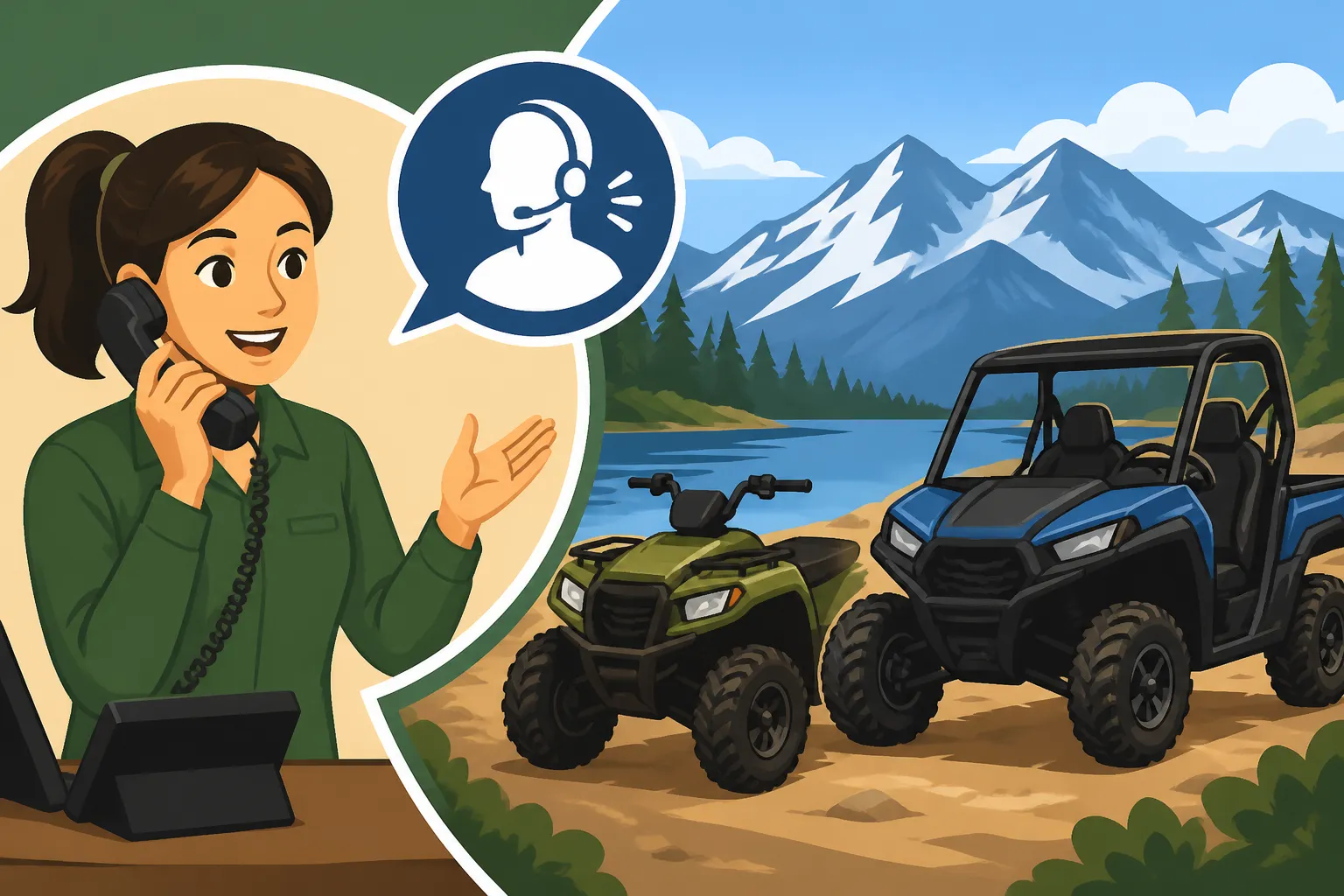
Calling Recreation Services before an Alaska ATV ride can save you a wasted drive, an unexpected fee, or a trip to a closed trailhead. The tricky part is knowing which office to call and what to ask: a parking pass, land-use permission, trail conditions, and machine access are separate questions. This guide helps you make a useful call and confirm the details that matter.
Start With the Right Recreation Office
Match the question to the land manager
“Recreation Services” can mean different things depending on where you plan to ride. A Mat-Su Borough trailhead, an Alaska state land route, a state park, and a federal recreation area may have different managers and separate rules. Before calling, identify the trailhead or riding area as precisely as you can. “Near Palmer” is a starting point; a named trailhead or access road is much more useful.
For example, if you are planning a ride at Government Peak, Crevasse Moraine, or Lazy Mountain, your question may concern a Mat-Su trailhead parking pass. That is different from asking whether an ATV can travel across the land beyond the parking area. Similarly, a ride near Eklutna Lake or Hatcher Pass may involve land managers and access rules that are not the same as those at a borough trailhead.
If you are unsure who manages the area, ask the office you reach where to direct the question. Recreation staff may be able to point you toward the appropriate agency or explain which part of the question they can answer. For background on the different roles, see Alaska Agencies That Share the Area and Alaska Land Ownership and Who to Ask.
Separate parking, land access, and trail conditions
A common source of confusion is treating a trailhead pass as permission to ride everywhere nearby. A pass may cover parking or day-use access at a particular facility; it does not automatically establish that every adjoining route is open to ATVs or that you can cross private or Native corporation land. Ask about each issue separately rather than relying on a general “Is it open?” answer.
Try wording your questions this way: “Is this trailhead open to ATV users?” “Is a day-use or annual parking pass required here?” “Does that pass cover the parking area only, or something else?” Then ask who manages the route you intend to ride and whether any restrictions apply. The distinction is explained further in A Trailhead Pass Is Not a Land Permit and Which Permit Covers Riding in an Alaska State Park?.
Trail status can change with weather, seasonal conditions, maintenance, or a closure. A trail that was accessible on a previous visit may not be appropriate or permitted today. Ask whether the office has information about current closures or conditions, and whether another agency posts updates for the route. For broader context on seasonal access, see Alaska Riding Seasons and Breakup.
Prepare Before You Call
Gather details about your ride
A little preparation makes it much easier for staff to give you a useful answer. Write down the riding area, the trailhead or access road, your planned date, and the kind of machine you will bring. A full-size side-by-side may be treated differently from a small quad on a narrow route, and the rules for a trailhead do not necessarily answer whether your particular machine is allowed farther along the route.
It also helps to know whether you are asking about a day visit, an overnight stay, or a multi-day trip. If you plan to camp, tow a trailer, or bring a group, mention that early. Those details can affect parking availability, site rules, fees, or whether you need to contact another office. If the route crosses more than one management area, name the segments you expect to travel rather than describing the trip only by its destination.
An offline map can help you identify a trailhead and describe your intended route, especially when cell service is unreliable. Tools such as onX Offroad can be useful for planning and locating route features, but treat a map as a planning aid rather than final confirmation of access. Confirm land status, permissions, and closures with the relevant land manager. The same caution applies to downloaded maps: they may help you navigate without service, but they cannot replace current instructions from the agency responsible for the area.
Keep a short question list in front of you
It is easy to remember the main question and forget a detail once someone answers. Before dialing, make a short checklist. You can use the questions below as a starting point:
- Is the named trailhead or riding area open on my planned date?
- Is a trailhead parking pass or day-use fee required?
- Where can I buy the pass, and what payment methods are accepted?
- Does the pass apply to this specific location and vehicle?
- Are ATVs, UTVs, or side-by-sides allowed on the route I described?
- Are there seasonal closures, vehicle-size limits, or restricted areas?
- Who manages the route beyond the trailhead?
- Is camping allowed, and are there separate rules for overnight stays?
- Where should I check for updates before driving out?
A question like “Can I ride there?” is often too broad to get a clear answer. Instead, describe the location and the activity: “I’m bringing a two-seat side-by-side to the named trailhead and plan to use the marked route toward the riding area. Are there access restrictions I should know about?” If the person cannot confirm the route, ask which office or land manager can.
| What you need to confirm | Useful question to ask | Why it matters |
|---|---|---|
| Trailhead access | Is this specific trailhead open on my planned date? | Access can vary by site and season |
| Parking pass | Is a day or annual pass required here? | Pass rules may be location-specific |
| Vehicle access | Are ATVs or side-by-sides allowed on this route? | A trailhead being open does not mean every machine can use every route |
| Land ownership | Who manages the land beyond the trailhead? | Different agencies and owners may have different rules |
| Seasonal conditions | Are there closures or conditions that could affect access? | Breakup, weather, or maintenance can change plans |
| Camping | Are overnight stays allowed, and are there separate limits? | Parking access does not automatically answer camping rules |
| Payment and purchase | Where can I get the pass, and how can I pay? | Some locations may use a kiosk or a separate sales method |
Make the Call and Record the Answer
Be clear about the location and machine
When you reach someone, begin with the exact area and planned date. Then give the machine type and ask one question at a time. If you are riding a side-by-side with a trailer, say so; a parking answer that applies to a passenger vehicle may not settle whether there is suitable space for a trailer. If you are organizing a group, mention the group size because a large gathering can raise different questions from a single-machine visit.
If staff use a local place name you do not recognize, ask them to spell it or connect it to a road, trailhead, or map feature. That small step can prevent you from confusing two similarly named access points. You can also repeat the answer back: “So the pass is for parking at this trailhead, and I still need to check with the land manager about the route—is that right?” This is especially helpful when several rules overlap.
For route planning, onX Offroad may help you locate trail names or compare your intended route with a map. Use it to make the conversation more specific, not to assume that a mapped line is legal or currently open. When staff give you a closure boundary, an alternate access point, or a route name, note it down and compare it with your map before leaving home.
Write down what you were told
Record the date of the call, the office or department, the name of the staff member if offered, and the details of the answer. Note any website, phone extension, or other agency they refer you to. If the answer depends on conditions close to your ride date, ask when to check again and where updates are posted.
Be especially careful to distinguish a definite rule from a general suggestion. “This trailhead usually has space” is not a guarantee that parking will be available on a busy weekend. “The route has been open” is not confirmation that it will remain open after a storm or during breakup. If anything is unclear, politely ask for the exact location or policy that applies to your situation.
For added confidence, verify important details through the managing agency’s own information before you depart. A digital map such as onX Offroad can help you plan the approach and keep track of route names, but current closure notices and land-manager instructions should guide your final decision. If you find conflicting information, contact the agency responsible for the specific site rather than assuming that a general map or old trip report is up to date.
Avoid Common Call and Trip-Planning Mistakes
Do not assume one answer covers every part of the ride
A staff member may be able to confirm a parking pass but not authorize travel across a separate parcel. Likewise, an office that manages a trailhead may not manage the trail beyond it. Keep the questions distinct: parking, machine access, land permission, camping, and current conditions can each have a different answer. If a route crosses multiple ownership boundaries, ask where the office’s responsibility ends.
This is particularly important in Alaska, where public land, private property, Native corporation land, and land managed by different agencies can sit close together. Do not treat a visible trail, existing tire tracks, or a route shown in an app as proof of permission. For help understanding the boundary question, see Checking a Land Status Map and Alaska Native Land Access Permits.
If the trip includes a state park, do not assume a general statewide permit or a trailhead pass covers it. Ask the park manager about its own machine rules and permitted areas. Likewise, if you are heading to a federal or locally managed area, check with that manager rather than relying on an answer that applies only to nearby state land.
Call again when timing or conditions matter
A call made well in advance is helpful for planning, but it may not resolve questions about a trail’s condition on the day you ride. Heavy rain, snowmelt, flooding, maintenance work, or a temporary closure can change access. When your trip is close, check the managing agency’s latest notices and call again if the answer depends on current conditions.
This matters on routes where river crossings or soft ground are part of the plan. A mapped route may look straightforward while water levels or surface conditions make it unsafe or impassable. Do not treat a pass or an open trail status as a guarantee that every crossing is safe. Ask whether there are known restrictions, and be prepared to turn around if conditions on the ground are worse than expected. Reading a Glacial River Before You Cross offers more context for thinking through a changing crossing.
Finally, keep your plan flexible. If the office confirms that a trailhead is open but cannot confirm access to a route farther out, choose a different ride or wait until you have a clear answer from the responsible land manager. A short clarification call is much less frustrating than towing your machine to a trailhead and discovering that the route you intended to ride is not available.
Disclaimer
This article is for general informational purposes only and does not constitute professional advice. Laws, prices and regulations vary by location and change over time. Consult a qualified professional for guidance on your specific situation.