Machines Alaska Will Not Register as an APV
Navigating the world of Alaska's off-highway vehicles can feel like deciphering a complex wilderness map, especially when you're trying to figure out what machines the state will actually allow you to register as an All-Purpose Vehicle (APV). It's incredibly frustrating to spend your hard-earned money on a rig, only to find out it doesn't fit the mold for public land use, leaving you stranded on private property. This comprehensive guide is here to untangle the confusion, helping you understand precisely which machines Alaska will not register as an APV and why, so you can make informed decisions and hit the trails without a hitch.
Understanding Alaska's All-Purpose Vehicle APV Definition
Before we dive into what doesn't qualify, it's really helpful to get a solid grasp on what Alaska does consider an All-Purpose Vehicle, or APV. This term isn't just bureaucratic jargon; it's the key to understanding your machine's legal standing for registration and public land use throughout the state. Without meeting this specific definition, your beloved off-road companion might be sidelined from vast stretches of Alaska's incredible backcountry.
What Exactly Counts as an APV in Alaska?
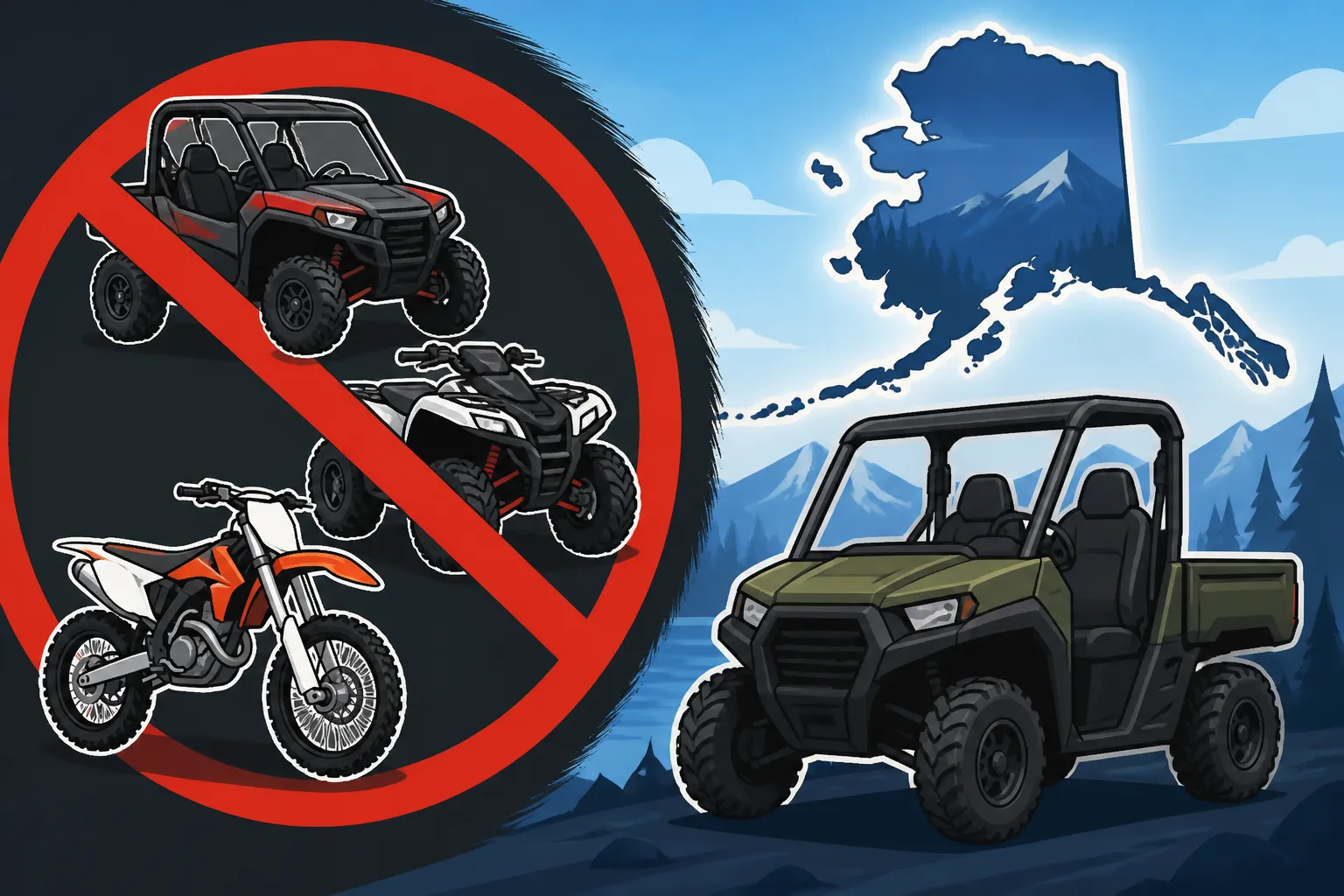
When the state talks about an APV, they're generally referring to a motorized vehicle that's specifically designed for off-road use. Think about the machines you commonly see tearing up the trails or hauling gear across rough terrain. The primary characteristics involve a non-straddle seating position, four or more tires that are in contact with the ground, and a manufacturer's design for operation on unpaved surfaces. This umbrella term covers your typical four-wheeled ATVs (All-Terrain Vehicles) that you straddle like a motorcycle, as well as side-by-sides (UTVs – Utility Task Vehicles) where you sit in seats much like a car, often with a steering wheel and roll cage. These are the workhorses and recreation machines that are built from the ground up to tackle the demanding conditions of Alaska's diverse landscape, from muddy trails to rocky climbs. They are engineered with suspensions and powertrains optimized for off-highway travel, distinguishing them from vehicles designed primarily for paved roads. [Registering an ATV Under Alaska's All-Purpose Vehicle Class] provides more detail on the process for these machines.
This definition is crucial because it sets the baseline. If your machine fundamentally aligns with these characteristics – four or more wheels, built for off-road, specific seating – then you're likely starting on the right foot for APV registration. It’s all about the manufacturer's original intent and design specifications. Many riders mistakenly assume that "off-road vehicle" is a catch-all term, but Alaska has a very specific set of criteria that your machine must meet to be legally classified and registered as an APV. This classification isn't just for fun; it dictates where and how you can operate your vehicle, particularly when it comes to public lands and crossing certain roads.
Why the Definition Matters for Registration
The APV definition isn't just an academic exercise; it directly impacts whether you can get that all-important decal on your machine. Alaska requires APV registration for operation on public lands, and without it, you're essentially limited to private property where you have explicit permission. Think of it as a gatekeeper to adventure. If your machine doesn't fit the state's APV criteria, the Alaska DMV (or their partner offices) simply won't process your registration application. This can be a huge headache, especially if you've recently purchased a machine with the intention of exploring Alaska's vast trail systems or using it for hunting, fishing, or subsistence activities in areas accessible only by off-road vehicles.
Moreover, the definition influences what kind of ownership documentation you need and how transfers are handled. For example, if your machine does qualify as an APV, you'll need the proper title or ownership documents. But if it falls outside the definition, the standard APV registration process simply isn't an option. This differentiation can save you a lot of time and frustration at the DMV counter, avoiding that sinking feeling when a clerk tells you your machine isn't what you thought it was. It's about ensuring legal compliance and access, which in Alaska, where off-road travel is a way of life for many, is a pretty big deal. Understanding [Alaska APV Registration Requirements] is your first step to a successful registration.
Common Machines Explicitly Excluded from APV Registration
Alaska's off-road vehicle landscape is diverse, but not everything that travels off-pavement falls under the APV umbrella. There are several categories of machines that, while definitely off-road capable, are specifically excluded from APV registration by state law. This often surprises new residents or those unfamiliar with Alaska's unique vehicle classifications. These exclusions are not arbitrary; they often relate to historical definitions, safety concerns, or the creation of separate, distinct registration categories for certain types of recreation or transportation.
Snowmobiles: A Separate Category Entirely
Perhaps the most common misconception is that a snowmobile, or "snow machine" as we often call them here, can be registered as an APV. This is absolutely not the case. Snowmobiles are governed by their own distinct set of regulations and have a separate registration process. While both APVs and snowmobiles are designed for off-highway use and thrive in Alaska's rugged conditions, the state views them as fundamentally different vehicle types. A snowmobile operates on skis and a track, whereas an APV primarily uses tires. This difference in propulsion and terrain suitability is the key.
You will need to register your snow machine, but you'll do so under the specific snowmobile registration guidelines, not as an APV. This separate classification means different fees, different decals, and sometimes different rules of operation on public lands, especially concerning season-specific access. So, if you're planning on carving through fresh powder this winter, remember that your snow machine is a different beast entirely from your summer quad, at least in the eyes of the Alaska DMV. For more on this, check out [Alaska Excludes Snowmobiles From APV].
Tracked Vehicles That Don't Fit the Bill
Beyond snowmobiles, other tracked vehicles are also excluded from APV registration. This can include a range of specialized machinery, from small personal tracked utility vehicles that might look like a mini bulldozer to larger, more industrial-style tracked carriers. The common thread here is the use of tracks instead of wheels for propulsion. While incredibly capable in mud, snow, or tundra, these vehicles simply do not fit the wheeled definition of an APV. The state's APV definition is quite specific about having "two or more tires in contact with the ground," and tracks don't meet that criterion.
This exclusion is often tied to the unique environmental impact and operational characteristics of tracked vehicles. They can exert different pressures on the ground and may be subject to different regulations regarding sensitive habitats, particularly tundra or wetlands. So, if your off-road machine rolls on tracks rather than tires, don't expect to slap an APV decal on it. You'll need to research specific regulations for that particular type of tracked vehicle, which might not involve state registration at all, depending on its primary use and ownership. Understanding [Alaska Excludes Tracked Vehicles] can save you a trip to the DMV.
Three-Wheelers: A Blast from the Past, Not an APV
For those of us who remember the early days of off-road riding, three-wheelers (often called "trikes") hold a nostalgic place. However, they are definitively not registrable as APVs in Alaska. The APV definition explicitly calls for "four or more tires," which immediately disqualifies any machine with only three wheels. This exclusion is largely due to safety concerns that became apparent over the years. Three-wheelers, particularly older models, are widely considered to be less stable than their four-wheeled counterparts, especially on uneven terrain or during turns.
Many jurisdictions, including Alaska, have effectively legislated them out of common public use by not offering a clear registration path. While you might still encounter an old trike tucked away in someone's garage or being used strictly on private land, attempting to register one for public land access in Alaska will be a non-starter. If you happen to own one of these vintage machines, be aware that your riding options will be extremely limited to private property where you have permission, as you won't be able to get an APV decal for it. It's a key distinction that sometimes catches people off guard when they inherit or acquire an older machine. See [Alaska Excludes Three-Wheelers] for more insight.
The "Homemade" Conundrum: Building Your Own Machine
Alaska has a strong DIY culture, and it's not uncommon for folks to build custom rigs for specific tasks or just for the sheer challenge. From modified mud buggies to highly specialized utility vehicles, Alaskans are incredibly ingenious. However, when it comes to registering these unique, owner-fabricated machines as APVs, you're likely to hit a roadblock. The state's registration process is heavily reliant on manufacturer-issued identification and certified documentation, which simply doesn't exist for a homemade vehicle.
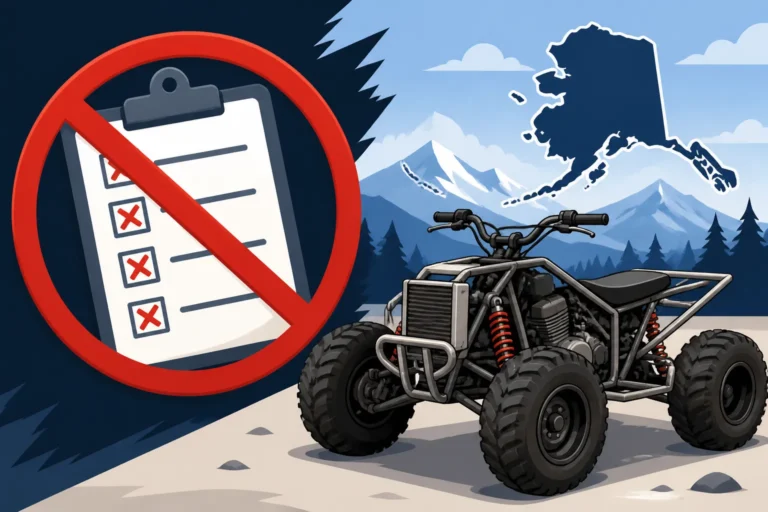
Why Alaska Won't Register a Homemade Quad
The core reason Alaska won't register a homemade quad or similar off-road vehicle as an APV comes down to identification and safety standards. Every registrable APV needs a Vehicle Identification Number (VIN) issued by the original manufacturer. This VIN is a unique identifier, like a fingerprint, that allows the state to track ownership, deter theft, and ensure the vehicle meets certain manufacturing standards. A homemade machine, by its very nature, lacks this manufacturer-assigned VIN. While you might weld on a custom serial number, it won't carry the same weight or recognition as a factory-issued VIN.
Without a verifiable VIN and supporting manufacturer documentation (like a Manufacturer's Certificate of Origin, or MCO), the state has no way to properly identify the vehicle for its records. Furthermore, homemade vehicles haven't undergone any standardized safety testing or certification process, which is a key component of why certain vehicles are approved for registration. The state isn't equipped to inspect and certify individual homemade machines for roadworthiness or safety compliance, which is a liability they simply can't assume. So, while your custom creation might be a marvel of engineering, it won't be hitting public trails with an Alaska APV decal. For a deeper dive, read [Why Alaska Will Not Register a Homemade Quad].
What to Do If You've Built a Custom Rig
If you've poured your sweat and ingenuity into building a custom off-road rig, don't despair entirely, but be realistic about its limitations. Your primary option for operating such a machine will be on private land where you have explicit permission. This includes your own property, a friend's land, or any other private parcel where the owner has given you the green light. You'll need to be hyper-aware of trespass laws, as your unregistered, homemade machine will not grant you any access to state or federal public lands.
For proving ownership of your custom rig, even for private use or eventual sale (to another private land user), it's wise to maintain meticulous records of your build. Keep receipts for all parts purchased, document the construction process with photos, and perhaps even create a detailed affidavit of ownership. This can be helpful if you ever need to demonstrate that the machine is indeed yours. For creating formal documents like an affidavit or a bill of sale if you decide to part with it, reputable online legal document services like LawDepot can provide templates that help formalize your records, even without a traditional VIN. This way, you have a paper trail, however informal for state registration purposes, for your unique creation.
Vehicles with Missing or Altered VINs and Paperwork Issues
One of the biggest hurdles to registering any vehicle in Alaska, especially an APV, revolves around proper identification and verifiable ownership. In the world of off-road machines, it's unfortunately common to encounter vehicles with obscured, missing, or even altered Vehicle Identification Numbers (VINs), or incomplete ownership paperwork. These issues can turn what seems like a great deal on a used quad into a bureaucratic nightmare, instantly disqualifying it from APV registration.
The Importance of a Verifiable VIN
The VIN is the bedrock of vehicle identification. It's a unique 17-character code that tells the story of your machine: who manufactured it, where it was built, its model year, and other crucial details. For Alaska to register your APV, that VIN must be clearly visible, untampered, and match the ownership documents you provide. If the VIN is difficult to read due to rust, damage, or wear and tear from years of hard riding, you could face significant delays or even outright denial of registration. Clerks at the DMV or partner offices need to be able to verify this number against their systems and against your title or bill of sale.
Even worse is an altered VIN, which is a serious red flag for potential theft. If the VIN appears to have been ground off, re-stamped, or otherwise tampered with, the state will almost certainly refuse registration and may even impound the vehicle for investigation. It's a critical measure to prevent the trafficking of stolen property. When buying a used machine, always make checking the VIN one of your absolute top priorities. Compare it to any paperwork offered, and if anything looks suspicious or unclear, walk away. You can’t register a machine if its identity is compromised. See [Registering a Quad When the Paperwork Is Lost] for what to do in those situations.
Lost or Incomplete Ownership Documents
Just as crucial as a clean VIN are the accompanying ownership documents. For new machines, this usually means a Manufacturer's Certificate of Origin (MCO) and a bill of sale from the dealer. For used machines, you'll need a properly endorsed title (if titled) or a bill of sale and sometimes an affidavit of ownership if a title was never issued or has been lost. If you show up to register your APV without these critical pieces of paper, you'll be turned away. Common problems include titles that were never transferred correctly, bills of sale that are incomplete or not notarized when required, or simply a complete lack of any ownership proof whatsoever.
Imagine buying a great deal on a quad from a private seller, only to realize later they only provided a handwritten note that doesn't meet the state's requirements. This happens more often than you'd think. Without proper documentation proving you are the rightful owner, Alaska cannot legally issue you a registration and decal. This is where services like LawDepot can be incredibly useful. If you're in a situation where you need to create a [What an Affidavit Naming the Seller Must Include] or a comprehensive [Alaska Bills of Sale for a Used Machine] to establish a clear chain of ownership, especially for an older machine where original paperwork might be scarce, these platforms offer templates that can help you draft legally sound documents. While they don't replace an original title, they can be part of the solution for [Alaska Registration Without a Bill of Sale] if specific conditions are met, allowing you to establish a strong claim to ownership. Always prioritize getting solid, complete paperwork when acquiring an APV, new or used.
Highway-Legal Vehicles and Modified Machines
It might seem obvious, but standard highway-legal vehicles – cars, trucks, SUVs – are absolutely not registrable as APVs in Alaska. Their entire design, purpose, and regulatory framework are completely separate. However, the line can get a little blurry when people start modifying highway vehicles for extreme off-road use, or conversely, when they try to make an APV "street legal." Understanding these distinctions is key to avoiding registration headaches.
Why a Car or Truck Isn't an APV
A car or truck is designed, built, and certified for highway use. They have specific safety features, emission controls, and identification standards (like their own distinct titling and registration processes) that are entirely different from an APV. The definition of an APV explicitly refers to vehicles "not designed for use on public highways," which immediately excludes any standard passenger vehicle. Even if you've extensively modified a pickup truck into an overland beast, complete with massive tires, lifted suspension, and winches, it still retains its fundamental classification as a highway vehicle and must be registered as such.
Trying to register a standard truck as an APV would be like trying to register a bicycle as a boat – it just doesn't fit the category. The state has distinct registration systems for these different types of vehicles, each with its own set of rules, fees, and operational allowances. An APV decal grants you access to specific off-road trails and allows for limited road crossings, but it absolutely does not convert your highway-legal truck into an APV for registration purposes. You'll still need your standard vehicle registration, license plates, and insurance for your truck.
When Modifications Take a Machine Out of APV Class
This is where things can get a bit tricky for some riders. While standard modifications like bigger tires, winches, or aftermarket suspensions generally don't change an APV's classification, certain extensive alterations could potentially push a machine out of what Alaska considers a registrable APV. For example, if you take a standard ATV and somehow modify it to such an extent that it no longer resembles or functions as a typical quad – perhaps adding components that drastically change its seating, steering, or primary mode of operation – you might inadvertently disqualify it.
The spirit of the law focuses on the manufacturer's original design. While customizing your ride is part of the fun, if those customizations fundamentally alter the vehicle's original APV characteristics, you might run into issues. This is especially true if modifications introduce elements that make it resemble a homemade vehicle (lacking original VIN clarity) or if they raise significant safety questions that deviate too far from an accepted APV standard. Always consider how major modifications might be perceived by the registration authorities, and if in doubt, it’s always best to contact the DMV for clarification before investing heavily in an extreme custom build that might not be registrable for public land use.
What to Do If Your Machine Isn't Registrable as an APV
Finding out your off-road machine isn't registrable as an APV in Alaska can be a real letdown, especially if you had plans for exploring state lands. But it doesn't always mean your vehicle is completely useless. Depending on the reason for its exclusion, you might still have options for its use or for properly handling its sale. It's about understanding the limitations and exploring alternative paths.
Private Land Use Only: The Exemption You Might Qualify For
For many machines that don't meet Alaska's APV registration requirements – whether it's a homemade rig, a three-wheeler, or a tracked vehicle – the primary (and often only) legal avenue for operation is on private land. This is a crucial distinction: Alaska's APV registration is primarily for machines operating on public lands or crossing certain public roads. If your machine is only ever going to be used on private property where you have the owner's explicit permission, then state APV registration is not required. This is often referred to as the [Alaska Private Land Registration Exemption].
This means if you have a large property, access to private recreational land, or a friendly neighbor with acreage, your unregistrable machine can still serve a purpose. Many rural Alaskans use various types of unregistrable vehicles exclusively on their homesteads, for chores, or for accessing remote cabins on private parcels. However, you must be absolutely certain that you are operating solely on private land. Straying onto public land, even accidentally, with an unregistered machine can lead to fines and other legal consequences. Always know your boundaries and respect property lines.
Exploring Other Registration Avenues
In some specific cases, a machine that isn't registrable as an APV might fall into another distinct registration category. The most prominent example here is the snowmobile, which, as we discussed, has its own dedicated registration system. If you have a snow machine, even though it's not an APV, it still needs to be registered if you plan to use it on public snowmobile trails or state lands during winter. This involves a separate application process and yields a different type of decal.
For other excluded vehicles, such as certain specialized industrial or agricultural tracked vehicles, they might not require public recreational vehicle registration at all, instead being covered under different commercial or private use regulations. However, this is specific to the type of vehicle and its intended purpose. If your machine is truly unique or falls into a gray area, your best bet is to contact the Alaska DMV directly, explain your situation, and ask if there's any other category under which your vehicle might be permitted for registration or legal operation. Don't assume; always ask the experts.
Selling an Unregistrable Machine
If you find yourself with an off-road machine that you can't register as an APV and it doesn't fit your needs for private land use, selling it might be your best option. However, it's absolutely critical to be transparent with any potential buyer about its registration status. You must clearly disclose that the machine cannot be registered as an Alaska APV for public land use. Failing to do so could lead to legal issues down the road.
When selling, you'll still need to provide proof of ownership. This might be a bill of sale, or in the case of a very old machine without official paperwork, an affidavit of ownership. For creating legally sound documents to facilitate the sale, even for an unregistered machine, using a service like LawDepot can be very beneficial. They offer templates for bills of sale and affidavits that can help you document the transfer of ownership clearly and professionally. This protects both you and the buyer by establishing a clear paper trail, even without state registration. Remember, even if the machine isn't registrable as an APV, you still need to prove you have the right to sell it.
The Nuances of APV Registration and Exceptions
While we've covered what machines won't register as APVs, it's also important to touch upon the nuances of APV registration itself, and some common exceptions that lead people to believe their machine is unregistrable when it actually is, or vice-versa. Alaska's rules are specific, but they do have certain built-in allowances that are vital to understand.
When Registration Isn't Required at All
Believe it or not, there are situations where even a perfectly good, standard APV doesn't need to be registered with the state. The primary exemption applies when an APV is used exclusively on private land. If your quad or side-by-side never touches a public trail, never crosses a public road, and is always operated on property that you own or have explicit permission to be on, then you are not legally required to have an Alaska APV registration. This is the essence of [Alaska Private Land Registration Exemption].
For example, if you have a large remote cabin accessed solely by private trails on your own land, and your quad stays entirely within those boundaries, you wouldn't need a state decal. The same applies if you only ride in an enclosed, privately owned park or racing facility. The trigger for registration is public access. This distinction is really important for many Alaskans who might use their machines for hunting, fishing, or subsistence activities on their own land, or land where they have established private access. Understanding this exception can save you time and money, but always be absolutely sure of the land ownership status before you forgo registration.
The Role of Titling vs. Registration
Another area of frequent confusion is the difference between titling and registration. They are related but distinct processes. Registration, as we've discussed, involves getting a decal that allows you to operate your APV on public lands. Titling, on the other hand, is the legal document that proves ownership of your vehicle. Historically, Alaska did not require titles for APVs, but this changed recently. Since 2022, [Alaska APV Titling Required Since 2022].
This means that even if your machine qualifies as an APV, and you plan to register it, you'll likely also need to ensure it has a proper title. The title is essential for establishing legal ownership, particularly when buying or selling the machine, or if you need to prove ownership for other legal purposes. Without a title, transferring ownership can become significantly more complicated, and in some cases, it can create a waiting period before you can even register the machine. So, while an APV decal gets you on the trail, a title solidifies your legal claim to the machine itself.
Conclusion
Navigating Alaska's APV registration rules can certainly feel like a journey through thick brush, but understanding which machines are excluded is a critical first step to avoiding frustration and ensuring you're compliant. Whether it's the specific definition of an APV, the explicit exclusion of snowmobiles and three-wheelers, the challenges of homemade rigs, or the strict requirements for verifiable VINs and complete paperwork, each of these factors plays a pivotal role in whether your off-road machine can legally hit the public trails. Remember, while some machines might not qualify for APV registration, they can still serve a purpose on private land, and there are resources like LawDepot to help you document ownership properly. By staying informed and doing your homework, you can ensure your Alaska adventures are spent on the trail, not tangled in paperwork.
Disclaimer
This article is for general informational purposes only and does not constitute professional advice. Laws, prices and regulations vary by location and change over time. Consult a qualified professional for guidance on your specific situation.