Does Alaska’s State Permit Cover Federal Land?
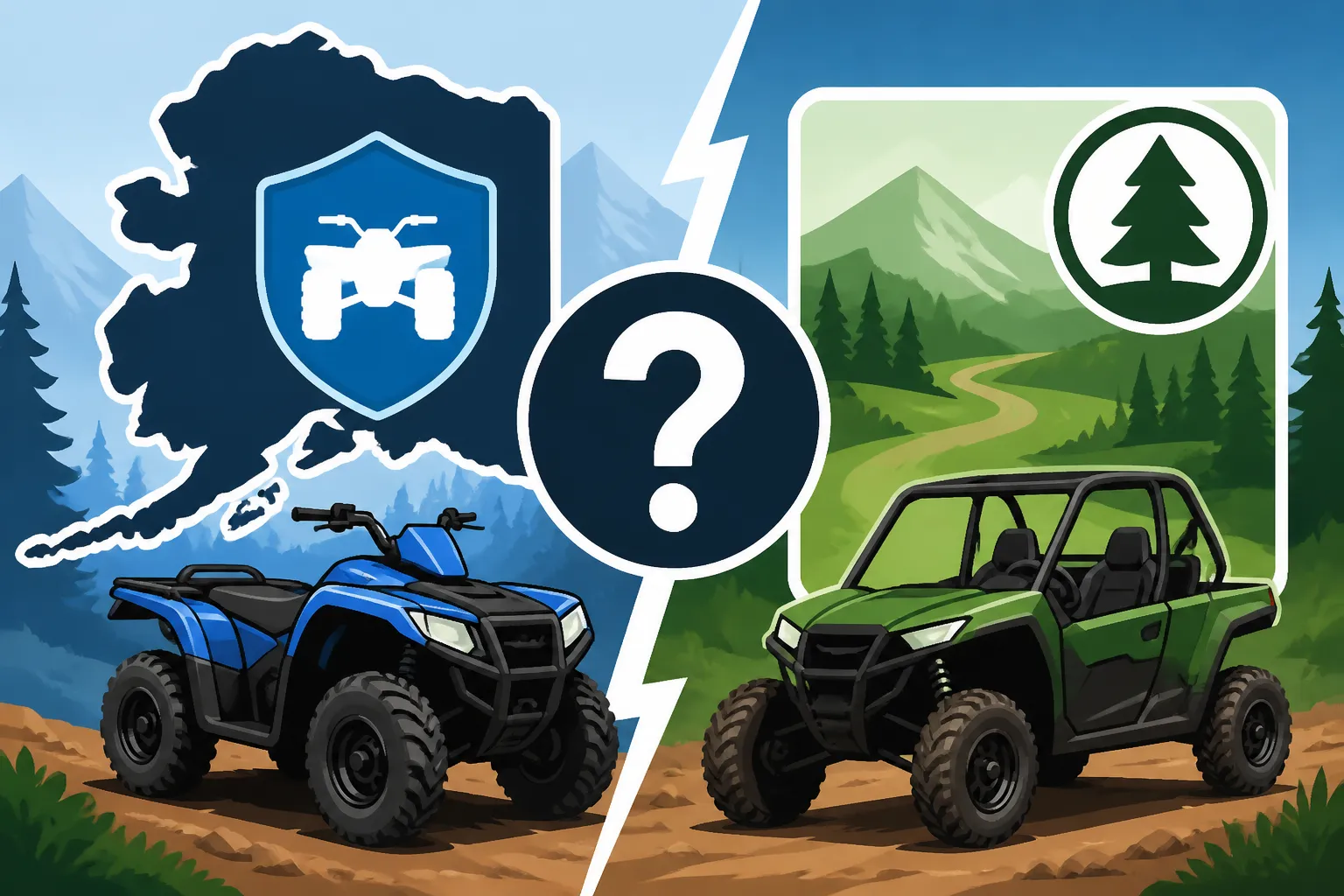
Alaska’s statewide permit for off-highway vehicles can make riding on eligible state land simpler, but it does not give riders permission to cross onto federal land. Because ownership can change along a single route, the key is checking who manages the ground and what access rules apply before you ride.
What Alaska’s State Permit Does—and Does Not—Cover
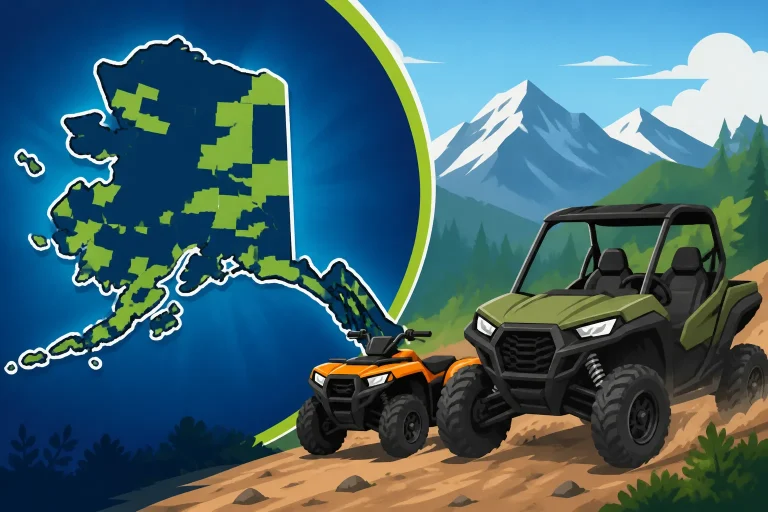
Alaska’s statewide general permit is an authorization for certain off-highway vehicle use on eligible state land, subject to its conditions. It is not a blanket permit for every trail, parcel, or public-looking area in the state. Most importantly, it does not extend the State of Alaska’s authority onto land managed by a federal agency.
That distinction matters because a route may pass through several kinds of land in a short distance. A rider might start on state land, cross a federal parcel, approach private property, and then return to state land. Having the state permit does not make every part of that trip lawful. Each land manager’s rules apply to the ground under its control.
The permit also has boundaries within state land. State parks and certain designated areas are not automatically covered by the statewide permit, and land owned by someone else is not covered simply because it lies inside a larger state-land area. For a closer look at its scope, see Alaska’s Statewide General Permit for ATV Use and Alaska’s Permit Excludes State Parks.
A permit is only one part of preparing for a ride. It does not establish that a particular route is open, guarantee permission to cross a parcel, or replace applicable vehicle registration and riding rules. It is also separate from a trailhead parking pass or day-use fee. As explained in A Trailhead Pass Is Not a Land Permit, paying to park at a trailhead does not by itself authorize travel across every parcel beyond it.
| Land or access situation | Does the statewide permit authorize riding there? | What to check |
|---|---|---|
| Eligible state land covered by the permit | It may, if the route and riding meet the permit conditions | Current permit terms, land status, and closures |
| Federal land | No | The federal agency’s rules for the parcel, route, and vehicle |
| State park or excluded designated area | Not through the statewide permit alone | The park or area’s specific rules and permissions |
| Private land | No | Permission from the landowner |
| Alaska Native corporation or village corporation land | No | The corporation’s access requirements and permission |
| Road, trail, or facility crossing several parcels | Not for the whole route automatically | Ownership and rules for every segment |
The word federal does not mean open to all vehicle use. Federal lands include areas managed for different purposes, with different vehicle rules and access arrangements. Some places may have designated routes open to certain vehicles; others may restrict or prohibit motorized access. A federal map showing public land is not, by itself, proof that a specific ATV or UTV route is allowed.
Why the Federal Land Manager Matters
There is no single federal ATV permit that covers every federal parcel in Alaska. Federal agencies manage different lands under different rules, and a rider needs to identify the manager for the specific area and activity.
Federal land may be managed by agencies such as the Bureau of Land Management, the U.S. Forest Service, the U.S. Fish and Wildlife Service, or the National Park Service. The relevant agency depends on the location. Within one broad region, nearby parcels may have different managers, boundaries, designations, or rules. The State of Alaska’s permit does not replace those agencies’ requirements.
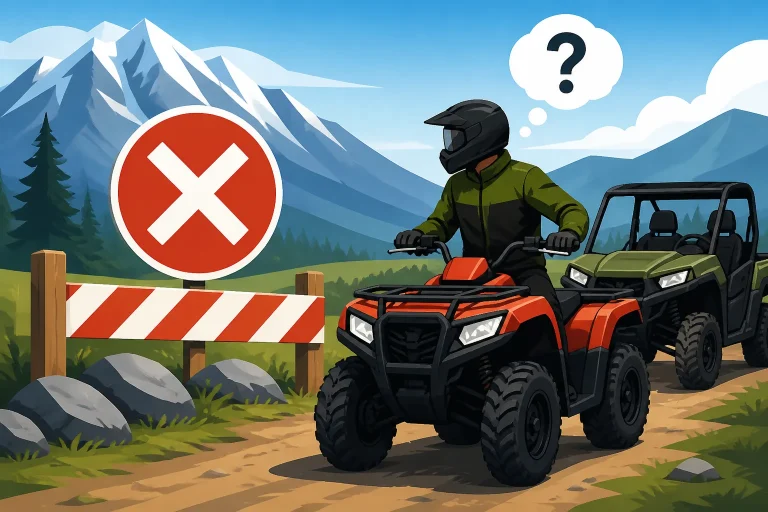
Even within one agency’s jurisdiction, rules can vary by area. A motorized route may be open only in a particular season, limited to designated trails, or restricted by vehicle type or other conditions. A closure, temporary restriction, or area-specific rule can also affect access. Do not assume that a road or trail is available to an ATV just because it appears on a general map or has tire tracks.
The distinction is especially important around national parks, wildlife refuges, and other managed areas. Those lands can have protections or access policies that differ substantially from nearby state land. Consult the manager’s current maps and rules before planning a route; the overview in Alaska National Park Machine Rules explains why a state permit should not be treated as park authorization.
A few practical points help clarify the difference:
- A state permit applies only within its stated scope. It does not grant rights on federal land.
- A federal agency’s authorization, if one is needed, applies only to the activity and location described by that agency.
- Access permission is not the same as vehicle registration, a parking pass, or permission to cross private property.
- A route that is open to one kind of vehicle may not be open to every ATV or UTV.
- A trail can cross land managed by more than one agency, so checking only the starting point is not enough.
The relevant authority is the agency managing the ground, not simply the agency whose name appears most prominently on a nearby trailhead or map. For agency-specific starting points, see Alaska BLM Land Riding Rules and Alaska Forest Service Land Riding Rules. Their titles point to separate rule sets because federal land access cannot be determined from the state permit alone.
How to Check a Route Before Riding
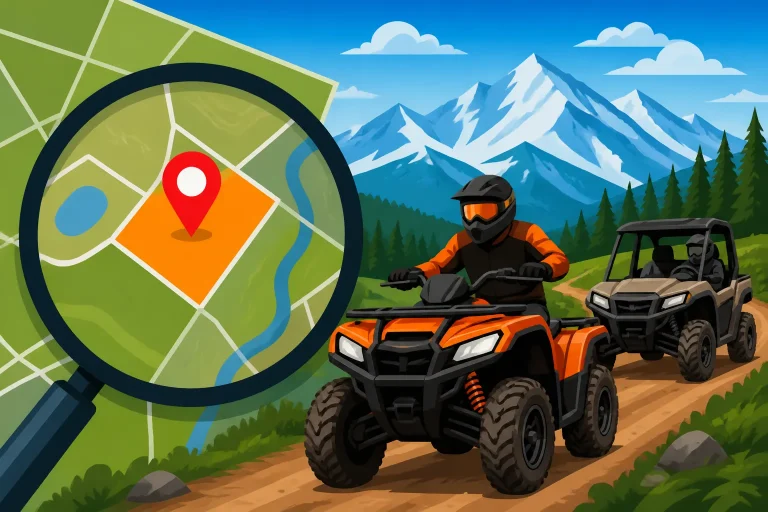
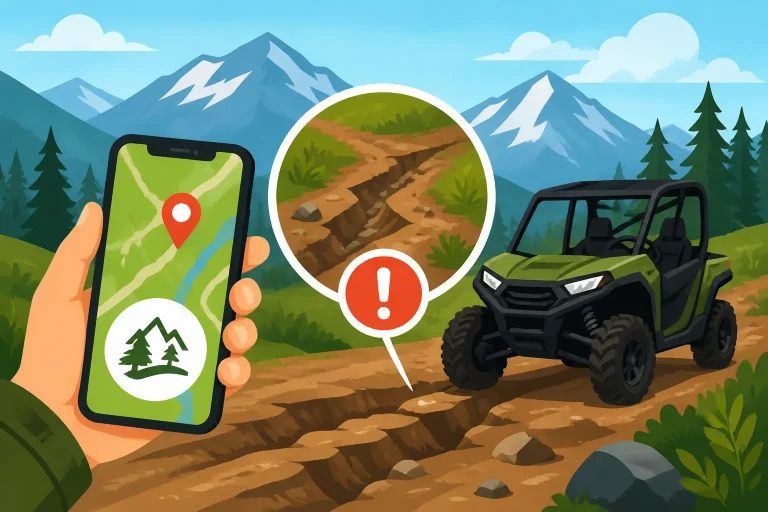
The safest approach is to trace the whole planned route, identify the land manager for each segment, and confirm that your vehicle and intended use are permitted there. A broad map can help you spot potential boundaries, but it should be treated as a starting point rather than final permission.
- Mark the complete route. Include the access road, trail, intended turnaround point, and any alternate route. Don’t stop the check at the trailhead.
- Identify land ownership and management. Use reliable land-status information to determine whether each segment is state, federal, private, or corporation land. The state’s map tools can help; see Alaska Land Status Maps and Checking a Land Status Map.
- Identify the agency for each federal segment. If the route crosses federal land, determine which agency manages that particular parcel. Different federal agencies—and different units within an agency—can have different rules.
- Check the current access rules. Look for the official route map, area-specific regulations, seasonal restrictions, closures, and vehicle limits. If a map or written rule is unclear, contact the managing office before leaving.
- Confirm that the route fits your vehicle. Check whether the access rule covers your machine’s type and intended use. A route designation for one class of vehicle should not be assumed to include every ATV or UTV.
- Check every boundary and crossing. A permitted stretch does not confer permission on the next parcel. Confirm any crossing, connector trail, or shortcut separately.
- Carry useful documentation. Keep relevant permits, permissions, and access information available in a form you can consult if conditions change. Do not rely on an assumption that a trail will be open when you arrive.
The land-status check is often the step riders are most tempted to skip. In Alaska, a route may appear continuous on the ground while its ownership is not. A trail can pass between public and nonpublic parcels without a visible gate or sign at every boundary. Seeing other riders, tire tracks, or a worn path does not establish current legal access.
When digital maps disagree or leave a boundary unclear, avoid treating the most permissive interpretation as settled. Contact the land manager or landowner and ask about the specific route and vehicle. Give a location, map reference, or route description rather than asking generally whether ATVs are allowed in the area. A precise question is more likely to produce a useful answer.
Federal Access Is Different From State-Land Access
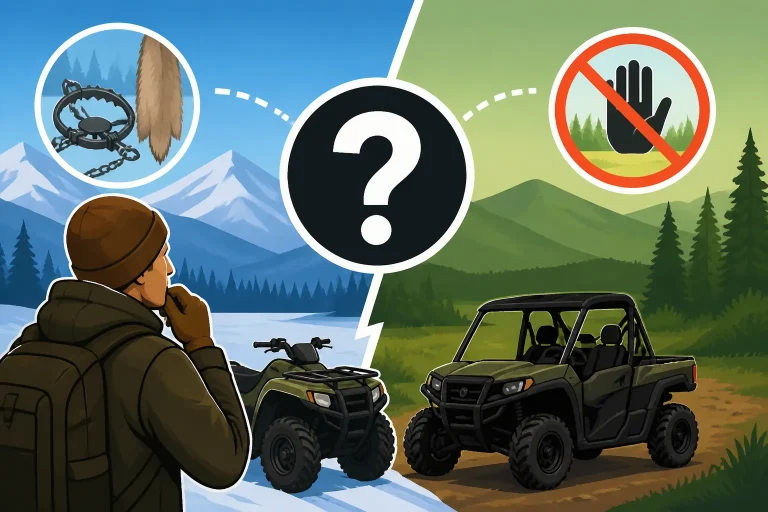
A common source of confusion is that several different permissions may matter on the same ride. The statewide permit addresses eligible state land under its terms. Federal rules address federal land. Private owners and corporations control access to their own property. Trailhead operators may charge or require a separate parking pass. None of these automatically substitutes for the others.
For example, suppose a rider uses a state-land trail to reach a federal boundary. The state permit may apply to the eligible state-land portion, but the rider must still follow the federal manager’s rules after crossing that boundary. If the route also crosses a private parcel, the rider may need the owner’s permission for that segment. A public trailhead or an apparently established route does not erase those separate requirements.
This is why “public land” is not a complete answer to the question “Can I ride here?” The term may describe land that is publicly owned or managed, but the rules for motorized travel still depend on the owner, managing agency, land designation, route, vehicle, and current conditions. Public ownership does not necessarily mean open cross-country travel.
It is also important not to confuse federal ownership with Alaska Native corporation ownership. Native corporation land is not federal land merely because it is within Alaska or near a federal parcel. Access requirements can differ, and permission may be required. See Alaska Native Corporation Land Permits for more on that separate issue.
A similar distinction applies to hunting, subsistence, work, or other reasons for traveling. A purpose that may be allowed under one set of rules does not automatically grant vehicle access across every parcel on the route. Check the rules that apply to the land and activity, and confirm whether motorized travel is permitted. A right to be in an area for one reason should not be treated as blanket permission to ride anywhere.
Permission, route access, and vehicle rules are separate questions
Before you set out, answer these questions independently:
- Who controls the land? Identify the owner or managing agency for each part of the route.
- Is motorized access allowed there? Confirm that the area or route is open to the type of travel you plan.
- Does the rule include your machine? Check vehicle definitions or limits rather than assuming your ATV or UTV qualifies.
- Are there conditions? Look for seasonal access, designated-route requirements, closures, or other restrictions.
- Do you need another authorization? Confirm whether the agency requires a permit or permission for your specific use.
- Is the crossing itself authorized? Verify any segment that connects otherwise accessible parcels.
Treat each answer as its own check. A yes to one question does not settle the others. For instance, a parcel may be publicly managed, but its motorized routes may be restricted. Or a route may be open, while access to reach it crosses land where you need separate permission.
Common Mistakes and What to Do Instead
Riders often get into trouble not because they ignored the state permit, but because they assumed it covered more than it does. These are some of the most common mistakes and the practical alternatives.
Assuming a state permit works everywhere
The statewide permit is not a universal Alaska riding pass. It does not authorize federal land access, private-land access, or travel in areas excluded from its scope. Instead, treat it as one part of the route check and verify every non-state segment with its manager.
Reading a map as proof of permission
Maps are useful for planning, but they may show ownership without showing every current access condition. A mapped trail might be closed, restricted to certain vehicles, or affected by seasonal rules. Check both the land status and the current official access information.
Following tracks without checking the route
Tracks tell you that someone traveled there at some point. They do not show whether that person had permission or whether the route remains open. Find the official designation or confirm access with the manager.
Assuming neighboring public parcels have the same rules
A trail that crosses a boundary can enter land managed by a different agency. Rules may change at that line even if there is no obvious sign. Verify the route segment by segment and turn back if you cannot confirm that access is allowed.
Treating parking access as riding permission
A fee, parking pass, or open trailhead may provide access to a parking area, not permission to ride across every parcel beyond it. Confirm what the pass covers and where its authorization ends.
Confusing a permit with machine registration
Land-access permission and vehicle registration are separate. A properly registered machine is not automatically allowed on every route, and a land permit does not replace any registration or decal requirement that applies to the machine. Check each obligation independently.
If you discover an uncertain boundary while riding, do not assume that the route is open because turning around is inconvenient. Stop before entering the questionable parcel, check the available information, and contact the relevant manager if possible. Plan a legal alternate route in advance, especially if a closure or access restriction could leave you far from your starting point.
A Practical Pre-Ride Checklist
Before using Alaska’s state permit as part of a trip plan, make a quick written or digital checklist for the route:
- Confirm the current terms and coverage of the state permit.
- Mark state land and any areas excluded from that permit.
- Identify all federal parcels and the agency managing each one.
- Check official maps and current motorized-access rules for every federal segment.
- Confirm permissions for private or corporation land.
- Check seasonal conditions, closures, and vehicle limitations.
- Verify separate trailhead or parking requirements.
- Keep the route information and any needed permissions accessible during the ride.
- Have a turnaround point and an alternate route if access is closed or uncertain.
This takes more work than relying on a single permit, but it prevents an avoidable mistake: treating a state authorization as if it followed you across ownership boundaries. In Alaska, routes can span multiple land managers, and the rider is responsible for confirming access on each part of the trip.
If a trip crosses federal ground, contact the agency responsible for the specific area rather than asking only whether Alaska’s state permit is valid. The useful question is not simply “Does my permit cover this land?” but “Is this route open to my machine, under what conditions, and what authorization—if any—do I need from the land manager?”
Frequently Asked Questions
Does Alaska’s state permit cover federal land?
No. Alaska’s statewide permit applies only within its stated scope on eligible state land. Federal land is governed by its managing agency’s rules.
Is all federal land in Alaska open to ATVs?
No. Motorized access depends on the agency, area, route, vehicle, and any applicable restrictions or closures. Check the managing agency’s current information before riding.
Does a federal trail map mean I can ride there?
Not necessarily. A map may identify land or routes without establishing that your vehicle and planned use are allowed. Confirm access with the agency managing the area.
Do I need permission to cross private or corporation land?
You may need permission. State or federal access permission does not authorize crossing property controlled by a private owner or corporation.
Does a trailhead pass authorize the whole ride?
Not by itself. A trailhead pass or parking payment may cover parking or a specific facility, not land access along the entire route.
Disclaimer
This article is for general informational purposes only and does not constitute professional advice. Laws, prices and regulations vary by location and change over time. Consult a qualified professional for guidance on your specific situation.