Which Alaska Native Corporations Sell Land Use Permits
Which Alaska Native Corporations Sell Land Use Permits
Planning an Alaska ATV or UTV ride can get complicated when a route crosses Alaska Native corporation land. There is no single statewide permit that opens every parcel, and not every corporation offers access permits to non-shareholders. The practical answer is to identify who owns the ground, then ask that corporation whether it allows your particular ride and how permission works.
Why there is no single statewide list
Alaska Native corporation land is not one continuous public riding area. Under the Alaska Native Claims Settlement Act, land was conveyed to regional and village corporations. Those corporations are separate landowners, and they make their own decisions about access to the parcels they own.
That means there is no one permit desk or universal permit that covers all Native corporation land. A corporation might allow a certain kind of access in one area, limit it to shareholders, or close a parcel to outside recreation. Another corporation may have different policies. Even within one corporation’s holdings, rules can vary by parcel, season, route, or activity.
So the most useful answer to “Which corporations sell land use permits?” is: the corporation that owns the specific land may offer a permit, but you have to confirm access with that landowner. Do not assume that a corporation sells permits simply because it owns land near a popular trail, or that a permit issued for one area applies elsewhere.
A permit may also be described as an access permit, recreation permit, land-use authorization, or another term. The name alone does not tell you what it allows. Read the conditions and confirm that they cover your machine, route, dates, and intended activity.
This is different from riding on state land under Alaska’s statewide general permit. That permit does not grant access to privately owned Native corporation land. For a broader explanation of the state permit’s scope, see What Alaska’s Statewide General Permit Actually Authorizes. A useful starting point for sorting out the different landowners is Alaska Land Ownership and Who to Ask.
Shareholder access is not necessarily public access
A corporation may have policies or programs for its shareholders that do not apply to the general public. Conversely, a corporation may provide a process for non-shareholders to request access. Neither possibility should be taken for granted.
If you are a shareholder, ask whether a shareholder benefit or access policy applies to your trip and whether you need to register, obtain permission, or follow specific conditions. If you are not a shareholder, ask directly whether non-shareholder recreational access is available. Do not treat a shareholder’s permission, a friend’s invitation, or an informal local custom as authorization from the landowner unless the corporation confirms that it is sufficient.
A route can cross more than one owner’s land
A trail may pass through a patchwork of state, federal, municipal, Native corporation, and individual private holdings. Permission for one segment does not authorize travel across the next parcel. A route can also skirt a boundary closely enough that a small navigation error puts riders on land with different rules.
For this reason, checking only the trail name or the nearest community is not enough. Confirm the ownership of the actual route and any staging, parking, camping, or access areas you plan to use. Alaska Land Ownership Lookups and Checking a Land Status Map can help explain the research process, but maps should be treated as a starting point rather than a substitute for the owner’s confirmation.
How to find the corporation that controls access
The first step is to identify the parcel or route you want to ride. Then determine whether it is regional corporation land, village corporation land, or land held by a different owner. The corporation to contact is the one with authority over the specific parcel, not necessarily the one whose name is most familiar in the region.
Start with the route, not the corporation name
Write down the trail, road, river corridor, staging area, and intended destination. If you are planning a longer ride, divide the route into sections and check each one. Include places where you might leave the trail, such as a campsite, viewpoint, fuel cache, or turnaround area. A permit for transit may not include camping or off-route travel.
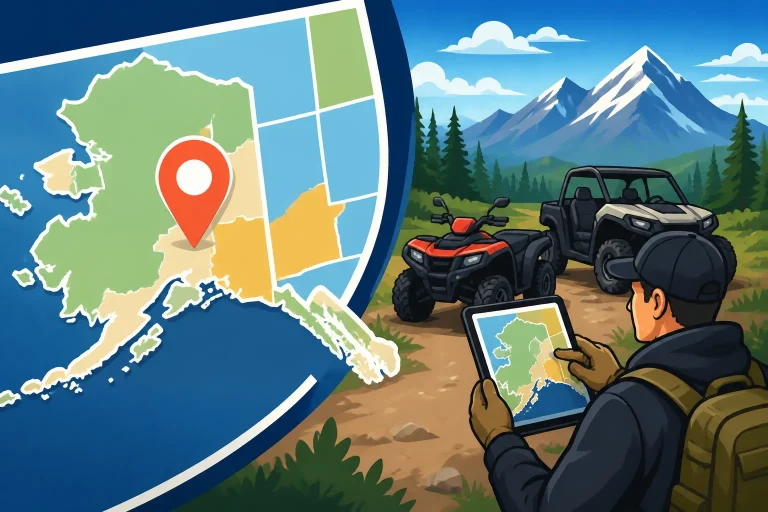
Look up the land status along the route using available land-status maps or parcel information. Pay attention to boundaries and ownership changes, especially near villages, trailheads, river crossings, and well-used access corridors. If the map is unclear or does not show the detail you need, do not guess. Ask a land manager or the corporation to help identify the parcel.
The overview Looking Up Who Owns a Parcel Before You Ride can help you think through that check. If the ride is in a village area, Alaska Village Corporation Land Rules may also help explain why a village corporation’s land rules can differ from regional-corporation policies.
Identify the right office or contact
Once you have a likely owner, look for its official land, lands, natural resources, or access contact. A corporation’s main office may be able to direct you to the right staff member if it does not handle recreational access itself. Use official contact information and ask whether the corporation manages the parcel or whether another entity controls access.
A regional corporation and a village corporation are not interchangeable. The regional corporation may own one parcel while a village corporation owns another nearby. Both may have land in the same general area, and a route can cross more than one corporation’s holdings. If ownership is uncertain, ask the corporation to confirm the parcel rather than requesting a permit based on a broad location name.
The process described in Buying a Land Use Permit From a Native Corporation is a useful companion when you have identified the landowner and need to ask about an application or permit. For the distinction between these owner types, see Alaska Regional Corporation Land Rules.
Ask for confirmation in writing
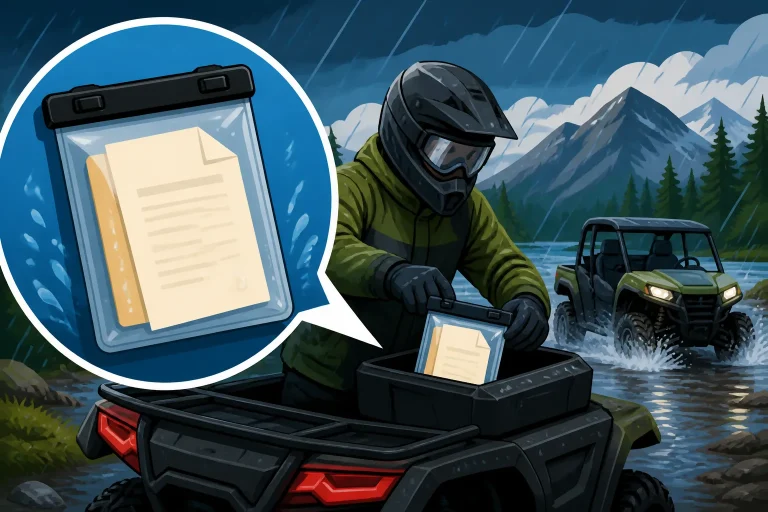
A phone conversation can help you find the right process, but written confirmation is easier to carry and refer to later. If the corporation issues a permit, keep a copy of the permit and its conditions. If it grants permission without a formal permit, ask whether it can confirm the authorization in writing and explain what proof riders should have with them.
Make sure the confirmation identifies the relevant area and dates, and says what kind of access is allowed. A general response such as “that area is usually open” may not answer whether your planned route and activity are permitted. Ask follow-up questions until the authorization is specific enough to guide the trip.
What to ask before you pay or ride
A permit is useful only if it covers the way you intend to use the land. Before applying or paying, confirm the terms and any limits. The questions below help prevent a common planning mistake: obtaining permission for one kind of access and assuming it covers everything else.
| Question | Why it matters |
|---|---|
| Does the corporation own or manage the exact parcel? | A nearby corporation may not control the route you plan to use. |
| Is access available to non-shareholders? | Shareholder access and public access may have different rules. |
| Are ATVs and UTVs allowed? | Permission for general recreation may not automatically include motorized travel. |
| Which route or area does permission cover? | An authorization may apply only to a named corridor or parcel. |
| What dates or season are allowed? | Access may be limited by season, conditions, or temporary closures. |
| Is camping, parking, hunting, or off-route travel included? | These activities may require separate approval or be prohibited. |
| What documents must riders carry? | You may need a permit copy, identification, or other proof of authorization. |
| Are there vehicle, group-size, or conduct restrictions? | Conditions may address machine type, number of riders, speed, or route behavior. |
| What happens if the land is closed or conditions change? | You need to know how notices, cancellations, or refunds are handled. |
Confirm the machine and the activity
Tell the landowner whether you plan to ride an ATV, a side-by-side, or another off-highway machine. Describe the number of machines and riders, whether children will be riding, and whether the group intends to camp, hunt, fish, or carry equipment. Do not assume that a recreational access permit authorizes every activity that might occur during the trip.
If hunting is part of the plan, check hunting rules separately. A land-use permit does not replace a hunting license, tag, or other required authorization. Likewise, permission to cross a parcel does not automatically mean you can camp there, retrieve game, or travel off the approved route. The landowner and the relevant land-management or wildlife rules may both apply.
Read the conditions, not just the approval
Look for the permitted dates, geographic limits, vehicle restrictions, group limits, and any requirements for staying on a designated route. Check whether the permit has rules about fires, trash, wildlife, gates, or sensitive ground. If the permit uses a map, confirm you understand its boundaries and how they relate to the route you plan to ride.
Ask what to do if the route is blocked, a gate is closed, or the authorized corridor becomes unsafe. A permit is not a reason to push through a closure or go around an obstacle onto a different parcel. If conditions do not match the authorization, stop and contact the landowner or choose another route.
Understand the cost and duration
If a corporation offers a permit for a fee, ask how payment works and what the fee covers. Do not assume that the price includes parking, camping, vehicle recovery, or access to nearby land. For named companies or products, current prices and terms can change; confirm all figures directly with the permit provider.
Find out whether the authorization applies to one rider, one machine, a group, or a set of dates. Ask whether it can be transferred to another person and what happens if plans change. Keep the receipt or confirmation with the permit if the provider supplies one.
What a corporation permit does not replace
A Native corporation land permit addresses access to land controlled by that corporation. It does not automatically settle other legal or practical requirements for an Alaska ATV or UTV trip.
First, it does not replace permissions for other parcels on the route. If the trip crosses state land, federal land, a state park, municipal property, or another private owner’s land, separate rules may apply. The statewide general permit covers only the land and activities within its scope; it does not open private land. See Alaska’s Permit Excludes Private Land for that distinction.
Second, a land-use permit does not by itself make an ATV or UTV street legal, satisfy registration requirements, or waive local road restrictions. Check the applicable machine, registration, equipment, and road-use rules separately. A route that includes a public road can have requirements that do not apply on a private trail.
Third, a permit is not a guarantee that a route will be passable or safe. Alaska conditions can change quickly. A trail may be flooded, muddy, snow-covered, damaged, or closed. A permission document does not override a current closure, and it does not make a hazardous crossing safe. Check conditions and have a turnaround plan.
Finally, a permit does not necessarily grant access to land simply because the land lies within a mapped boundary or near a public route. Land ownership and public access are separate questions. For a more detailed explanation of what happens when a route meets another owner’s land, see Land Owned by Someone Else Entirely.
A practical request and trip-planning checklist
A clear request makes it easier for the corporation to answer and helps avoid confusion over the area or activity. Keep the request concise, but include enough detail to identify the land and trip.
- Map the route. Mark the intended trail, entry point, destination, and any planned stopping or camping locations.
- Check likely ownership. Use land-status information to identify possible owners, then confirm the parcel with the corporation or land manager.
- Describe the trip. State the dates, number of riders and machines, vehicle types, route, and planned activities.
- Ask whether non-shareholder access is available. If you are a shareholder, ask which shareholder rules apply instead.
- Request the actual terms. Ask for the application, map, restrictions, payment instructions, and any required proof to carry.
- Confirm adjacent parcels. Determine whether the route leaves the corporation’s land or crosses another owner’s land.
- Save the authorization. Carry a copy in a protected format and make sure each rider understands the boundaries and conditions.
- Recheck before departure. Confirm that the authorization remains valid and that there are no closures or access changes.
A useful message to the land office might say: “We are planning an ATV/UTV trip on these dates, with this number of machines and riders, using this mapped route. Does the corporation own or manage this parcel, and is access available for this use? If so, what application, fee, conditions, and proof of permission are required?” Attach a map if the office accepts one.
Keep the tone practical and allow time for a response. The corporation may need to check ownership, route details, or current land conditions before answering. If no permit program is available, ask whether there is another authorized access option or whether the route is closed to outside riding. A non-response is not permission.
If you cannot confirm access, change the route. Look for an alternative on land where the responsible agency or owner clearly allows the planned use. Do not rely on tracks in an online map, tire marks, or the fact that other riders have used a route. Those clues do not establish permission.
Frequently Asked Questions
Do all Alaska Native corporations sell land-use permits?
No. Access policies differ by corporation and parcel. Some may offer a permit or permission process for certain uses, while others may restrict access or have no public permit program. Contact the owner of the specific land.
Does Alaska’s statewide general permit cover Native corporation land?
No. Alaska’s statewide general permit does not grant permission to ride on privately owned Native corporation land. You must confirm access with the landowner.
Can a shareholder bring non-shareholders onto corporation land?
Do not assume so. Ask the corporation whether a shareholder may bring guests and whether guests need separate permission or must follow additional conditions.
Is a permit for an ATV automatically valid for a UTV?
Not necessarily. Ask the corporation to confirm that the specific machine type and intended route are covered by the authorization.
What should I do if I cannot tell who owns the trail?
Pause the plan and check the parcel ownership with a land-status resource, land manager, or likely corporation. Do not treat a trail map or the presence of existing tracks as proof that the route is open.
Disclaimer
This article is for general informational purposes only and does not constitute professional advice. Laws, prices and regulations vary by location and change over time. Consult a qualified professional for guidance on your specific situation.