Alaska Parent Riding With a Child
Taking a child out on an Alaska ATV ride involves more than choosing an easy trail. Parents need to check who can operate the machine, what land-use rules apply, whether the child has proper protective gear, and whether the ATV is designed for a passenger. Here’s how to prepare for a ride that is legal, suitable for the child, and easier to manage if conditions change.
Check the rules before choosing a riding area
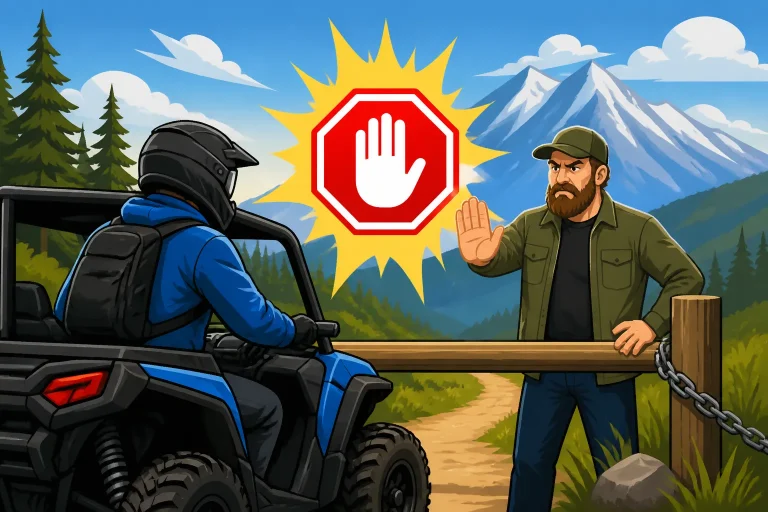
Start by finding out who manages the ground you plan to ride. An ATV route may cross state land, private property, land owned by an Alaska Native corporation, or property managed by another agency. Rules can change at a boundary, so a route that looks continuous on a map may not have continuous permission for riding.
Alaska’s statewide general permit covers some recreational OHV use on state land, but it is not permission to ride everywhere. State parks and other excluded areas can have separate rules, and the permit does not grant access to private land. Check the terms for your route and the land manager’s current restrictions before taking a child along. Alaska’s Statewide General Permit for ATV Use explains the permit’s general scope, while Alaska State Land Riding Explained gives more context on where state-land rules fit.
A land-use permit is also different from vehicle registration and a trailhead pass. Depending on the machine and where it will be used, you may need to consider more than one requirement. A parking or trailhead pass pays for access or facilities at a particular place; it does not necessarily authorize riding across the land beyond the trailhead. A Trailhead Pass Is Not a Land Permit explains this distinction.
Before the trip, confirm:
- Who manages the riding area and each section of the route.
- Whether an OHV permit is needed for the land and the riders.
- Whether the trail or area is open to your type of machine.
- Whether local rules restrict ATV use, passengers, or access.
- Whether the machine needs Alaska registration for the planned use.
- Whether the route is suitable for a child’s age, skill, and equipment.
Do not assume that a parent’s permit or permission automatically covers a child who is operating a separate machine. Permit conditions can specify who must hold or carry authorization. Check whether a young rider needs their own permit, or whether the permit holder must be an adult supervising the ride. Do Alaska Kids Need a Permit? is a useful starting point, but confirm the current terms with the land manager for the specific area.
| Before the ride | What to check | Why it matters |
|---|---|---|
| Land access | Owner or managing agency, boundaries, closures, and permission | A legal route can cross land with different rules |
| Permit | Whether the parent, child, or both need authorization | Permit requirements can depend on who is operating |
| Machine | Passenger seating, controls, size, and condition | A child’s safety depends on a suitable vehicle, not just an easy trail |
| Protective gear | Correct helmet, eye protection, clothing, and footwear | Falls, branches, weather, and debris are real trail hazards |
| Route | Distance, surface, water crossings, and turnaround options | Children may tire or become cold before adults do |
A familiar road or trail is not automatically safe or open to ATVs. Check current closures and restrictions, and do not treat a route shown on a map as proof that riding is allowed. If the route crosses corporation land or other privately managed land, seek the required permission before entering. Alaska Land Ownership and Who to Ask and Asking Who Owns the Ground First can help you plan that check.
Decide whether the child will operate or ride as a passenger
A child driving their own ATV and a child riding as a passenger are different situations. The machine, supervision, protective gear, and legal questions are not the same.
For a child operating an ATV, start with the manufacturer’s age and size guidance for that exact model. A child needs to reach and use the controls comfortably, understand how to stop, and have enough strength and judgment to respond to changing ground. A small adult-sized ATV is not automatically appropriate just because the child can sit on it. Use the machine’s manual, not engine size alone, to judge fit. Manufacturer Age Guidance for Alaska Families and Matching Engine Size to a Young Rider’s Age offer more detail.
The parent’s presence matters, but it does not make an unsuitable machine suitable. Keep a young rider within close sight and hearing, and choose terrain where they can stop or turn around without pressure. Avoid leading a child onto a route that requires adult-level speed, water-crossing judgment, or recovery skills. A second machine also means planning how the group will stay together if the child gets stuck, stalls, or needs help.
Before allowing a child to operate, consider whether they can:
- Reach and operate the throttle, brakes, and other controls as intended.
- Start, stop, turn, and maintain a controlled pace on the surface they will encounter.
- Follow directions consistently, including stopping when asked.
- Recognize when they are tired, frightened, or losing control.
- Ride without being distracted by a passenger or by keeping pace with adults.
A child riding as a passenger should be on a machine designed and equipped for passengers. Do not carry a child on a single-seat quad or in a position where they cannot hold on securely and keep their feet in the intended footrests. Do not assume that an adult can hold a child safely in front of them. Check the manufacturer’s passenger instructions and the applicable local rules before setting out. Alaska Rules for a Child Passenger and Alaska Rules for Passengers on a Quad cover related considerations.
| Riding arrangement | Main safety check | A reason to change the plan |
|---|---|---|
| Child operates a youth ATV | Fit, controls, supervision, terrain, and manufacturer guidance | The child cannot stop confidently or follow directions |
| Child rides as a passenger | A passenger seat and handholds designed for that purpose | The machine is a single-seat quad or the child cannot sit securely |
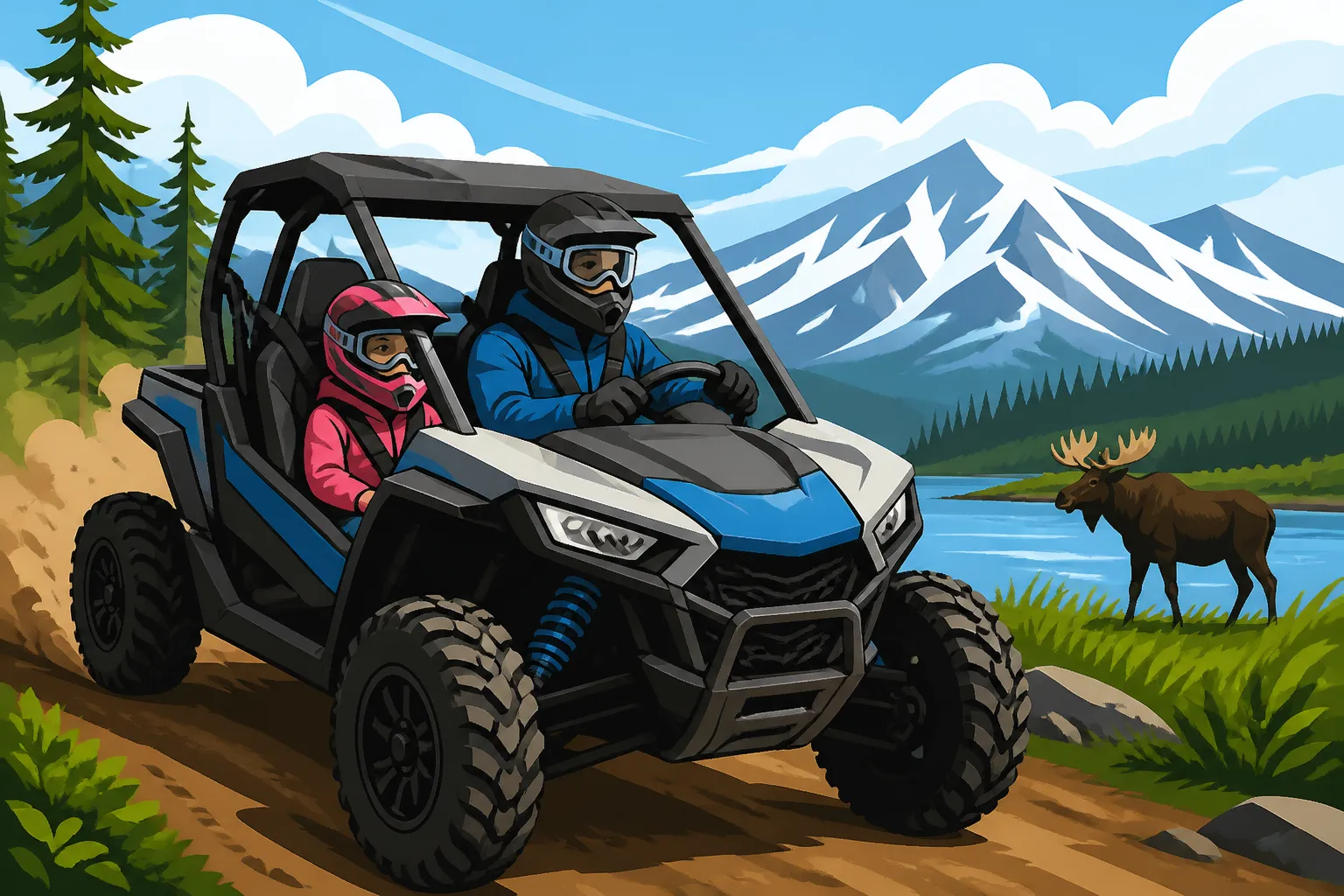
| Child rides in a side-by-side | Seat, seat belt, doors or restraints, and passenger instructions | The restraint does not fit the child or the child cannot remain secured |
| Child travels in a towed sled | Whether this setup is permitted and safe for the route and conditions | Poor visibility, rough terrain, or no reliable way to protect the child |
A family may be tempted to choose a two-up ride to keep the child close. That only works when the vehicle is designed for two people and the child can use the passenger position correctly. A passenger who slides, cannot reach a handhold, or cannot stay seated can shift the machine’s balance. If the child is too small to fit the passenger seat and restraints, postpone the ride or choose a different activity rather than improvising.
For a child operating an ATV, riding directly beside them is not always the safest arrangement. On a narrow trail, two machines abreast can be difficult to control and may leave no room for other trail users. Keep a manageable distance, use clear stop signals, and choose a pace that lets the child ride independently without being hurried. Riding Beside a Child on Alaska State Land offers more on that approach.
Prepare the child, machine, and gear
A parent’s preparation should match the child’s role. An operator needs practice with the controls; a passenger needs to know how to stay seated, use the handholds, and avoid leaning unexpectedly. Explain the plan before starting the engine, when the group can hear one another.
For a child who will operate, practice in a controlled, permitted area before attempting a trail ride. Start with basic stops and turns at a low speed. Make sure the child knows a simple instruction to stop immediately and understands not to follow the parent into an obstacle or crossing without direct guidance. A child who is unsure should not be pressured to continue.
For a passenger, explain where to hold on and how to sit through turns and bumps. The child should not put hands or feet near wheels, belts, hot exhaust parts, or other moving components. Use the machine’s approved seating and restraint system. Check that the child can be secured as directed by the manufacturer before leaving the staging area.
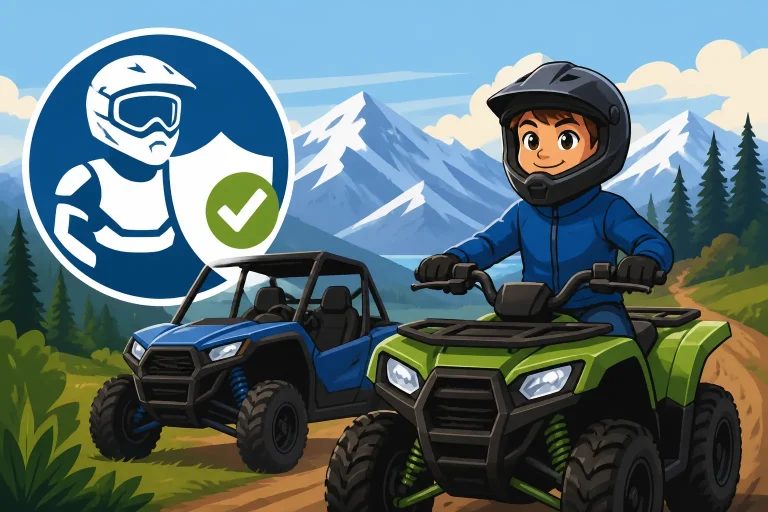
Protective equipment should fit the child, not merely be available in a suitable size range. A properly fitted helmet is essential; Alaska’s rules include helmet requirements for young riders, so review Alaska ATV Helmet Law Age and any rules that apply to the child’s role. Select a helmet that meets the applicable standard and stays secure without obstructing vision. If shopping through Amazon or another retailer, verify the exact model’s certification, size, condition, and return policy rather than relying on a listing title or product photo.
A practical child’s gear check includes:
- A correctly fitted helmet that meets the applicable standard.
- Eye protection that stays in place and allows clear vision.
- Gloves that let the child operate controls or hold on securely.
- Long sleeves, durable pants, and sturdy footwear.
- Weather-appropriate layers and rain protection.
- A bright outer layer that helps the child remain visible to the group.
Alaska conditions can change quickly. A child may become cold or wet sooner than an adult, particularly when sitting still as a passenger. Pack extra layers and a way to keep them dry. Plan breaks before the child is exhausted, and remember that a route’s distance on a map does not show how long a rough surface, mud, or a slow crossing may take.
Check the machine before leaving. Confirm that the brakes, tires, steering, lights if needed, and controls work properly. Make sure passenger restraints and handholds are secure. Carry basic repair and recovery equipment appropriate to the route, but do not plan on a child helping with a recovery or crossing beyond their ability. An adult should remain responsible for decisions about hazards and turning back.
For a first family ride, make the route short and familiar, with a clear exit or turnaround point. Avoid combining a child’s first ride with a long remote trip, unpredictable water crossings, or difficult weather. Give another responsible person the route and expected return time, especially when riding outside reliable cell coverage.
Ride at the child’s pace and be ready to turn back
A child’s comfort and focus can change during a ride. They may handle a few minutes of practice well and then become tired, cold, or overwhelmed by noise and rough ground. Check in regularly rather than waiting until the child asks to stop. A pause is useful even when everything seems fine: it gives everyone a chance to adjust gear, drink water, and reassess the route.
Set simple rules before departure:
- The child stops when the parent gives the agreed signal.
- Nobody rides ahead out of sight.
- The child does not enter a crossing or obstacle until the parent says it is safe.
- The group stops if a machine has a problem or a rider becomes uncomfortable.
- Turning back is always acceptable.
Avoid making the child keep up with adult riders. Leave enough space for the child to brake without being crowded, and avoid sudden acceleration or close following. On a shared trail, slow down for hikers, cyclists, animals, and other riders. If the child is operating a machine, an adult should stay close enough to respond without taking away the child’s room to control it.
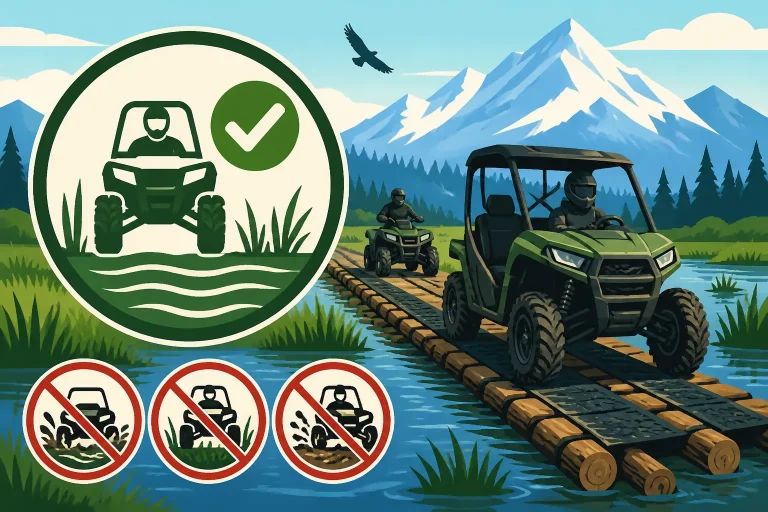
Water, mud, loose gravel, steep slopes, and changing trail conditions require particular caution. A parent’s experience on a route does not guarantee that a child can safely manage it. Assess each crossing and obstacle from the child’s perspective. If you cannot see the full route across a channel, the ground is changing, or the child is uncertain, choose a safer route or turn around. Reading a Glacial River Before You Cross explains why conditions at Alaska river crossings deserve careful attention.
Do not treat the parent’s supervision as a substitute for the rules that apply to the machine, location, or rider. Local ordinances may restrict road use even when a nearby trail is open. Separate requirements may apply to public roads, state land, a state park, or private property. For land access questions, Which Alaska State Land the General Permit Covers and Why State Parks Sit Outside Alaska’s General Permit help clarify common boundaries.
The best family ride is not necessarily the longest one. It is the one where the child can use a properly fitted machine or passenger seat, follow the rules, and finish before fatigue turns manageable terrain into a risk. If the child is cold, frightened, losing focus, or struggling to control the machine, stop and reassess. A calm early turnaround is better than pushing on because the trail is almost finished.
Disclaimer
This article is for general informational purposes only and does not constitute professional advice. Laws, prices and regulations vary by location and change over time. Consult a qualified professional for guidance on your specific situation.