Alaska Rules for a Fourteen-Year-Old Rider
A fourteen-year-old may be able to ride an ATV or UTV off-road in Alaska, but the answer depends on where the machine will go and who is operating it. Public roads have different requirements from trails and private land, and a land-use permit does not replace road rules. Here’s how to sort out the key restrictions before a teen rides.
Where a fourteen-year-old can ride
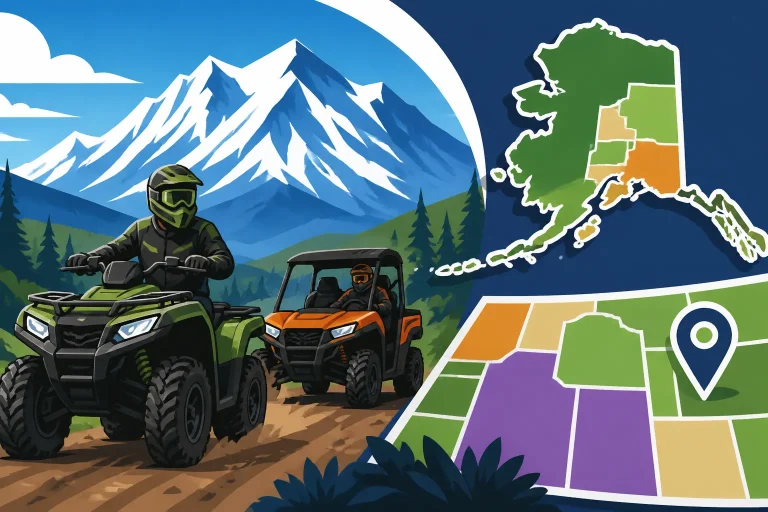
Start with the route, not the rider’s age alone. Alaska does not treat every place outside a town as an open riding area. A trail might cross state land, private property, a state park, or land managed by another agency, and each can have different access rules. Permission to ride on one section does not automatically carry over to the next.
Public roads are the clearest limit. Alaska requires a Class D driver’s license to operate an APV on public roads where that requirement applies. A fourteen-year-old does not qualify for a Class D license, so should not operate an APV on those roads. A parent riding alongside does not substitute for the young operator’s required license. Review Alaska Requires a Class D License and Alaska APV License and Insurance Rules before planning any route that uses a road.
A trail, shoulder, or road crossing may also be subject to local rules. A short connection between two trails is not automatically legal just because it is brief. Check the road’s posted limit, the community’s ordinances, and the exact route. Some Alaska communities restrict or prohibit APV road use, and rules can differ even between nearby places. Alaska Communities That Ban APV Road Use explains why checking local requirements matters.
| Where the teen would ride | What to check first | Practical starting point |
|---|---|---|
| Public road | Operator license, road access rules, and local restrictions | Do not have a fourteen-year-old operate on a road requiring a Class D license |
| State land away from a road | Whether motorized use is allowed and whether a permit applies | Check the land status and permit conditions |
| State park | Park-specific vehicle rules and allowed routes | Do not assume the statewide permit covers the park |
| Private land | Owner permission and any access conditions | Get permission before entering |
| Native corporation or village land | Landowner or local access requirements | Ask the corporation or village who controls access |
| Trail crossing a mix of land | Rules and permission for every segment | Confirm the entire route, not only the starting point |
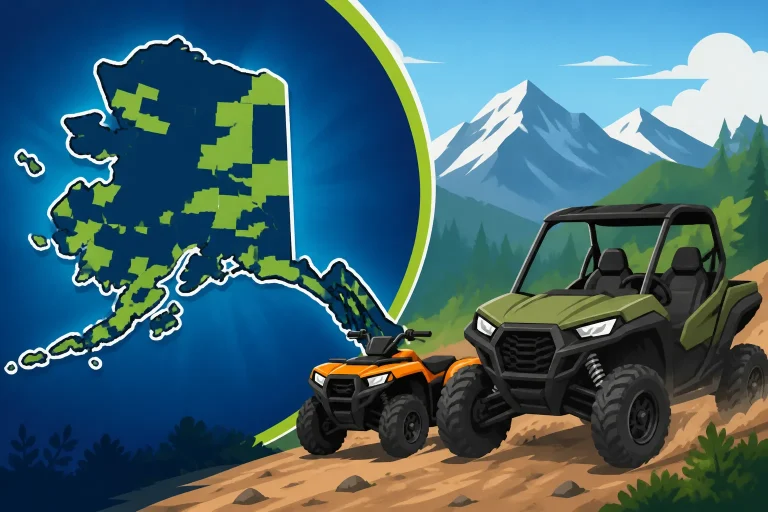
For off-road riding on state land, check whether the statewide general permit applies and what its conditions require. It is not a pass for every parcel or trail in Alaska. The permit excludes some areas, including state parks, and it cannot grant permission to ride on land the state does not manage. See Alaska’s Statewide General Permit for ATV Use and Alaska Land Ownership and Who to Ask.
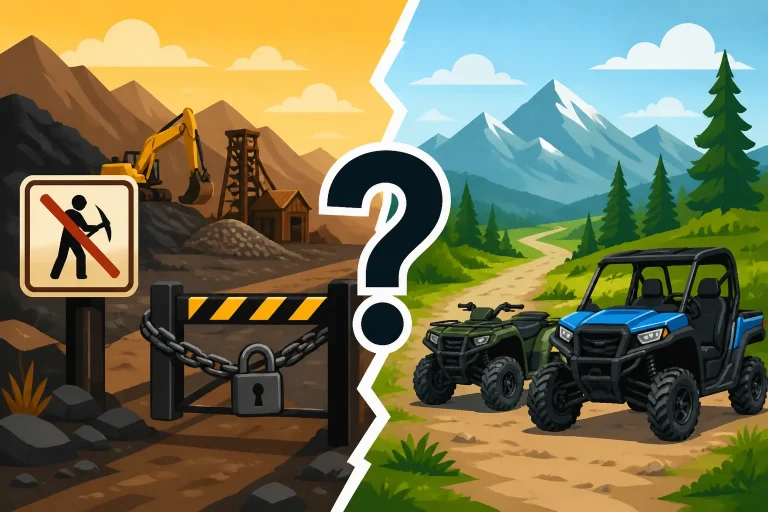
A fourteen-year-old also needs to stay within the conditions for the specific land and route. A family’s familiarity with a trail does not establish that it remains open, that the same agency still manages it, or that motorized use is allowed there. Closures, seasonal conditions, and land boundaries can change what is permitted.
Private property is a separate case. The owner’s permission matters, and it should cover the planned route and type of use. Do not assume that a trail across private ground is public just because it is visible or commonly used. For a more complete route check, see Asking Who Owns the Ground First.
Permits, registration, and rules that still apply off-road
A young rider’s age does not by itself answer whether the machine needs registration or a land-use permit. Those questions depend on the machine, where it will be operated, and the applicable rules. Keep the requirements separate: registration identifies the machine under a relevant program, a land permit addresses access to certain land, and a driver’s license is a road-operation requirement. One does not replace another.
For example, having an Alaska registration decal does not authorize riding across private land, and a statewide land permit does not make a road legal for a rider who lacks the required license. Likewise, permission from a landowner does not cancel safety or equipment rules that apply to the machine or route.
Before the ride, check:
- The land manager and boundaries. Confirm whether the route is on state land, a state park, private property, Native corporation land, or land managed by another agency.
- Permit conditions. Check whether a permit is required, who it applies to, and whether the planned route and type of machine are covered.
- Machine registration. Confirm whether the ATV or UTV needs Alaska registration for its intended use. Do not treat a decal as proof that every route is open.
- Local restrictions. Check community ordinances and signs, especially if the route approaches or crosses a road.
- Seasonal closures and conditions. A route may be unsuitable or closed during breakup, wet conditions, fire restrictions, or other periods.
The rules for young riders are not the same as a universal safety-certificate requirement. Alaska does not have a general statewide safety-certificate rule for every young ATV rider, but a specific land manager, program, event, rental operator, or military installation may impose its own conditions. Check the requirements for the actual place and activity rather than assuming that a course is either always required or never required. See Alaska Rules for Young Riders and Alaska Safety Course Options.
If the teen is riding an out-of-state machine, do not assume its home-state decal alone resolves Alaska requirements. Confirm the rules for the machine and the place of use before the trip. [Alaska Rules for an Out-of-State Decal] is a useful starting point for that situation.
Helmets, machine fit, and adult supervision
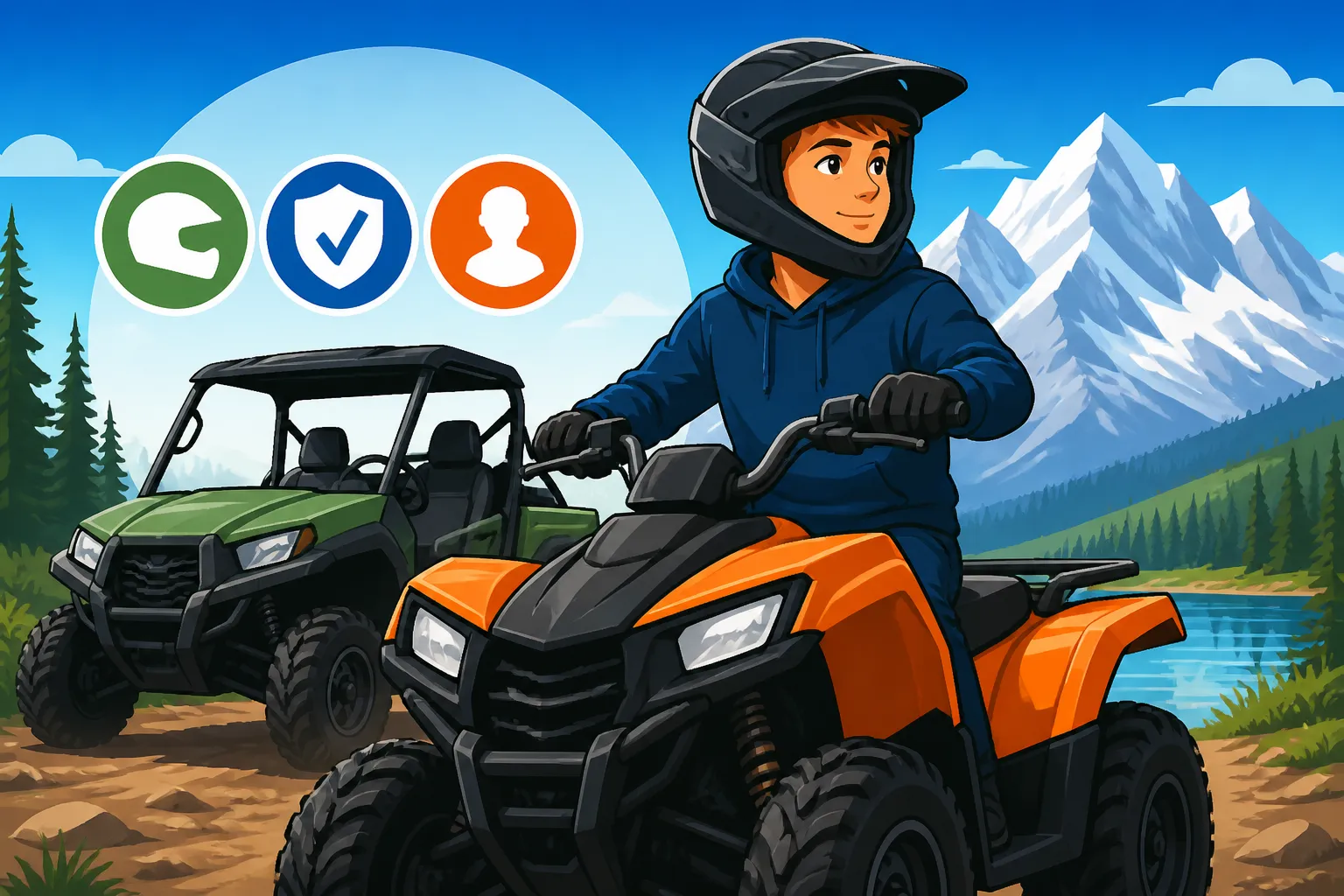
A fourteen-year-old should ride with a properly fitted helmet and suitable protective gear. Alaska has helmet rules relevant to young riders, and the exact legal requirements can depend on the type of vehicle and where it is operated. Do not treat a ride as exempt simply because it is on a trail rather than a road. Check Alaska ATV Helmet Law Age and the current rules for the planned location.
A helmet should fit the teen’s head securely, stay in place when the chin strap is fastened, and be intended for the kind of riding involved. A helmet that is too large can shift or come off; one that is damaged or not designed for off-road use may not provide appropriate protection. Retail listings, including those on Amazon, can help compare available sizes and features, but confirm the product’s safety labeling and fit rather than relying on a listing title or age range alone.
Protective gear should suit the conditions and machine. Closed-toe boots, gloves, eye protection, long sleeves, and durable pants help reduce exposure to impacts, brush, dust, and weather. On a UTV, use the installed occupant restraints and follow the manufacturer’s directions. A helmet is not a substitute for a seat belt, and a seat belt is not a substitute for a helmet when one is required.
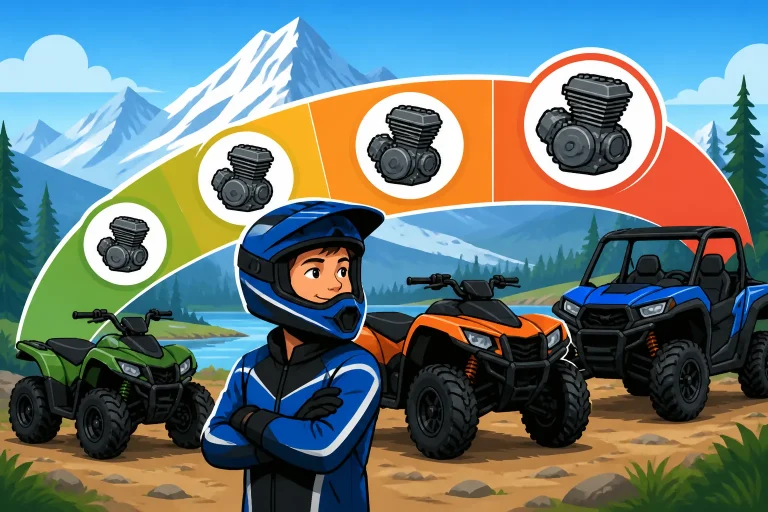
The machine itself has to fit the rider’s ability, not just their height. Read the manufacturer’s age and operating guidance for the exact model. Consider whether the teen can reach and operate the controls comfortably, understand braking and throttle response, and manage the machine’s weight on uneven ground. A large ATV or UTV that an adult considers manageable may be too powerful or difficult for a fourteen-year-old to control.
For a first outing, choose a familiar, low-risk area with room to stop and turn. Keep the group together, set a pace the teen can manage, and agree on signals and stop points before setting off. Avoid deep water, steep slopes, unstable banks, fast-moving rivers, and terrain where a stalled or overturned machine would be hard to reach. In Alaska, a route can change quickly with weather, water, and ground conditions; turning back is a sound decision, not a failure.
Adult supervision is a practical safety measure, even when a particular location does not specify a supervision rule. Stay close enough to intervene, but do not place the teen in a situation where following an adult requires riding beyond their skill. Explain that the young rider should stop and ask for help if visibility drops, the route becomes unfamiliar, the machine feels wrong, or the group gets separated.
A pre-ride check for families
A simple check before departure can prevent the most common misunderstandings: assuming a trail is open, confusing a permit with a license, or choosing a machine the young rider cannot control. Use this sequence before each outing:
- Choose the route. Mark the start, destination, road crossings, and any land boundaries. Identify which sections are roads, trails, or private access.
- Confirm access. Check the land manager’s current rules, required permits, closures, and any local restrictions. Get permission for private or other non-state land.
- Rule out public-road operation by the teen. If a section requires a Class D license, do not have a fourteen-year-old operate the machine on that road. Arrange another legal route or have a licensed adult handle the road portion only where the rules allow.
- Check the machine. Review the owner’s manual, age guidance, controls, tires, brakes, throttle, lights, and any required safety equipment. Do not take a machine with a control or mechanical problem.
- Check fit and gear. Confirm the teen can control the machine and that helmet, eye protection, footwear, and other protective gear fit correctly.
- Set boundaries. Agree on where the teen may ride, how far ahead they may go, when to stop, and what to do if the group loses contact.
- Reassess conditions. At the trailhead, look for closures, rising water, poor visibility, soft ground, or other conditions that make the planned route unsafe.
If a rule is unclear, ask the relevant land manager or local authority before riding. Describe the machine, the rider’s age, and the precise route, including any road segments. A general answer about “ATV riding” may not cover a particular trail, land boundary, or road crossing. Keep any required permit or registration information accessible, but do not rely on paperwork as permission to enter a place where riding is restricted.
The safest practical answer is that a fourteen-year-old may ride only where the land and route allow it, on a machine suited to the teen, while following applicable permit, registration, equipment, and helmet requirements. Keep the teen off public roads that require a Class D license, verify access for every part of the route, and treat adult supervision and conservative terrain choices as part of the plan.
Disclaimer
This article is for general informational purposes only and does not constitute professional advice. Laws, prices and regulations vary by location and change over time. Consult a qualified professional for guidance on your specific situation.