Alaska ATV Helmet Law Age
It’s a common scenario across Alaska: you’re ready to hit the trails with your family, the sun is out, and the anticipation is high. Then, a nagging question creeps in – what exactly are the rules about helmets, especially for the younger riders? This isn't just a minor detail; it's a critical safety concern and a legal requirement that can leave many riders feeling confused and, frankly, a bit anxious about getting it wrong. This guide aims to cut through that confusion, clarifying Alaska's specific helmet law regarding age for ATV and UTV riders, so you can focus on safe and enjoyable adventures.
Understanding Alaska's Core Helmet Law for APVs
Riding an All-Purpose Vehicle (APV), which includes your ATVs and UTVs, in Alaska is an incredible experience, but it comes with responsibilities. One of the most important aspects of safe riding, especially for families, revolves around helmet use. The law is quite specific here, designed to protect the most vulnerable riders. It’s not just about avoiding a ticket; it’s about preventing serious injuries.
The Under-16 Rule: Who It Applies To
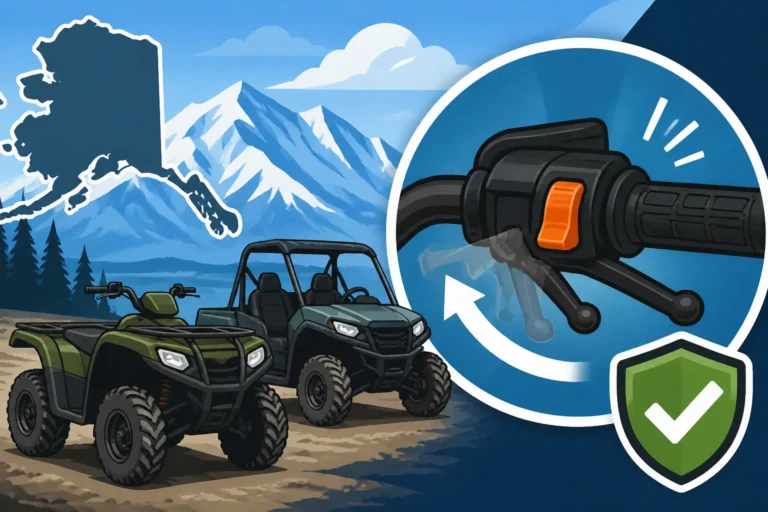
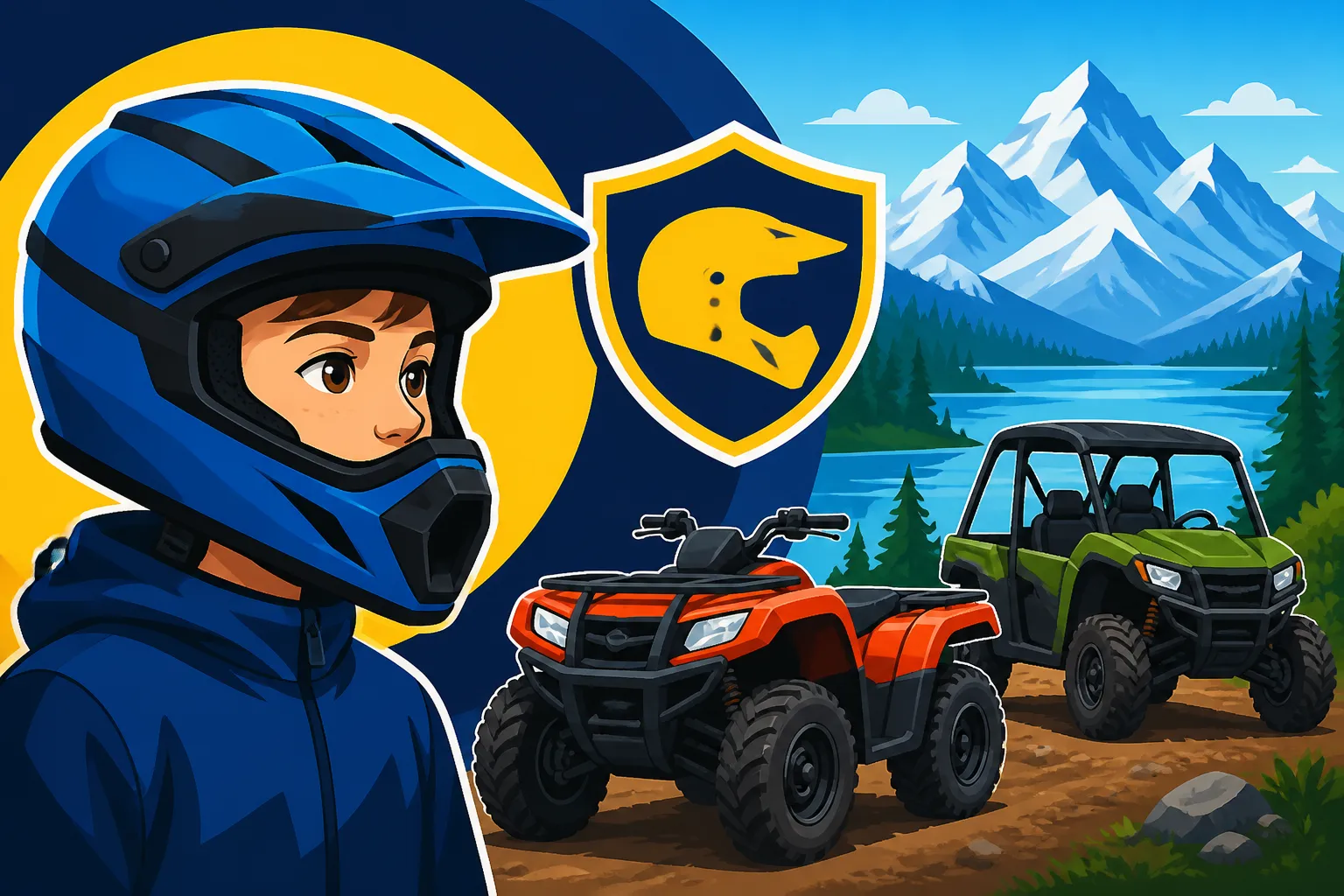
Alaska law is clear: any person operating or riding as a passenger on an APV who is under 16 years of age must wear a helmet. This isn't a suggestion; it's a mandatory requirement. This rule applies whether the young rider is behind the handlebars, actively driving the machine, or simply sitting in the passenger seat of a side-by-side or on the back of a quad that's designed for two-up riding. The intent is to safeguard children and young teenagers who might not have the experience or physical maturity to anticipate and react to sudden changes in terrain or unexpected events on the trail.
Imagine you're out near Jim Creek or on a remote trail on the Kenai Peninsula. Your 14-year-old is excited to take their first solo run on a smaller quad, or perhaps your 10-year-old is happily riding shotgun in your UTV. In both these instances, if they are under 16, a helmet is legally required. This rule doesn't care if they're skilled riders or just passengers; the age is the primary factor. Parents often grapple with this, especially when children feel "too cool" for a helmet, but the law prioritizes their safety above all else. Ignoring this can lead to not only legal repercussions but, more importantly, potentially life-altering consequences in the event of an accident.
It's also crucial to understand that this rule covers all APVs, including those you might consider "youth quads." The size or power of the machine doesn't exempt a rider under 16 from wearing a helmet. If a child under 16 is riding any APV, they need a helmet. This is a fundamental piece of [Alaska ATV Helmet Law Age] that every parent and guardian should engrave into their riding routine.
What Constitutes a Legal Helmet in Alaska
It's not enough to simply wear a helmet; it needs to be an approved safety helmet. Alaska's regulations, much like many other states, specify that helmets must meet certain recognized safety standards. While the specific wording may vary, the general expectation is that the helmet should meet standards established by organizations like the Consumer Product Safety Commission (CPSC) or the Department of Transportation (DOT). This isn't about brand names or fancy graphics; it's about structural integrity and impact protection. A bicycle helmet, for example, is not designed for the type of impacts an APV rider might experience and would not be considered legal or safe for this purpose.
A legal helmet means one that is designed for motor vehicles, specifically off-highway vehicles, and is in good condition. It should not have been through a previous impact, as its protective capabilities could be compromised. The fit is also paramount. A helmet that is too loose can shift during an impact, failing to protect effectively, while one that is too tight can be uncomfortable and distracting. When you're picking out a helmet for a young rider, ensure it fits snugly, is level on their head, and doesn't obstruct their vision. The chin strap should always be fastened securely. [What the CPSC Helmet Standard Actually Requires] provides excellent insight into the rigorous testing these helmets undergo, demonstrating why such standards are non-negotiable for safety.
Considering Alaska's diverse climate, from dusty summer trails to freezing winter rides, the helmet should also be practical. Features like good ventilation for warm days, or a clear, anti-fog visor for colder or rainy conditions, can significantly improve a rider's experience and safety. While the law focuses on the safety standard, choosing a helmet that is comfortable and appropriate for the conditions will encourage consistent use, which is ultimately the goal. When you’re looking for proper safety gear, including helmets and all the accessories that secure them, consider reputable providers that specialize in off-road equipment to ensure you meet safety requirements and enhance your comfort on the trails.
Penalties and Enforcement for Non-Compliance
Breaking the helmet law in Alaska, particularly the requirement for riders under 16, comes with penalties. Alaska Statutes outline these fines to emphasize the seriousness of child safety. For a first offense, the fine might be relatively low, but it's still a costly lesson. However, the penalties can escalate significantly for repeat offenders. This progressive fine structure is designed to encourage compliance and ensure that parents and guardians take the helmet rule seriously. [Alaska's Under-16 Helmet Fine] outlines the initial penalty, and you'll find [Alaska Second Offense Helmet Fines] detailing how subsequent violations impact your wallet even more.
Enforcement typically falls to the Alaska State Troopers and other law enforcement agencies who patrol public lands, trails, and sometimes even local roads where APVs are permitted. They are vigilant about ensuring riders are complying with safety regulations. If a trooper observes a rider under 16 without a helmet, they have the authority to pull over the APV operator, issue a citation, and potentially even prevent further riding until the situation is corrected (e.g., a helmet is obtained, or the minor stops riding). This can certainly put a damper on a family's day out.
Beyond the immediate financial cost, a citation can also mean lost time in court, and the overall hassle of dealing with a legal infraction. It’s far simpler and safer to just ensure everyone, especially those under 16, has a properly fitted and approved helmet before the wheels ever turn. This isn't about revenue generation for the state; it's genuinely about public safety, especially for the younger generation of riders who are still developing their riding skills and judgment.
Beyond the Law: Why Helmets Matter for All Ages
While the law specifically targets riders under 16, the reality is that helmets are a critical piece of safety gear for all APV riders, regardless of age. The risks associated with off-road riding don't disappear once you turn 16. A helmet is your primary defense against head injuries, which can range from concussions to far more severe, life-altering trauma. Thinking of a helmet as an optional accessory is a dangerous mindset; it's as essential as your brakes.
Protecting Your Most Important Asset
Your brain is your most important asset, and even seemingly minor accidents on an ATV or UTV can have devastating impacts on it. Off-road riding involves unpredictable terrain, varying speeds, and the potential for rollovers, collisions with obstacles like trees or rocks, or being thrown from the machine. In any of these scenarios, the risk of hitting your head is incredibly high. A helmet is specifically engineered to absorb and dissipate the forces of an impact, protecting your skull and, more critically, the delicate brain tissue within. Without a helmet, even a low-speed tip-over can result in a concussion, skull fracture, or worse, leading to permanent brain damage or even death.
Consider a scenario where you're navigating a winding trail through the woods, maybe near Willow or Palmer, and an unexpected root snags your tire. The machine lurches, you lose balance, and you're suddenly off the seat. Without a helmet, your head could easily strike the ground, a tree trunk, or even the machine itself. The cost of a good helmet pales in comparison to the medical bills, recovery time, and long-term consequences of a severe head injury. This isn't just about preventing a fatality; it's about preserving your quality of life, your ability to work, and your cognitive functions. No ride, no matter how thrilling, is worth risking your brain for.
It's an empathetic truth that accidents happen, even to the most experienced riders. A moment of distraction, an unforeseen hazard, or simply a mechanical failure can turn a fun outing into a nightmare. Wearing a helmet every single time you ride, even if it's just a short trip around your property, provides a layer of protection that could mean the difference between walking away with a few scrapes and facing a lifetime of physical and mental challenges. Thinking about protecting your brain really highlights why a helmet is non-negotiable, irrespective of age.
Choosing the Right Helmet for Alaska Riding Conditions
Selecting the right helmet goes beyond just meeting the legal requirements; it's about comfort, visibility, and suitability for Alaska's unique riding environment. Full-face helmets offer the most comprehensive protection, covering your entire head, face, and chin. These are excellent for dusty trails, protection from flying debris, and colder weather, as they keep your face warmer. Modular helmets offer a similar level of protection but have a flip-up chin bar, which can be convenient for quick conversations or getting some air without removing the whole helmet. Open-face helmets offer more ventilation but leave your face exposed, which might be less ideal for fast trails or areas with heavy brush.
When riding in Alaska, consider the typical conditions you'll encounter. In summer, good ventilation is crucial to prevent overheating, especially under the midnight sun. Many modern helmets incorporate advanced airflow systems to keep you cool. In the spring and fall, when dust can be an issue, a full-face helmet with a good visor or goggles will protect your eyes and lungs. For colder weather or snow machine riding (which, while often having separate rules, can still benefit from similar protective gear), warmth and anti-fogging capabilities in the visor become paramount. It's not just about protection from impact, but also from the elements.
When you're equipping yourself and your family for Alaska's trails, exploring options from trusted sources is a smart move. Companies like SuperATV offer a variety of accessories and gear designed to enhance your machine and your riding experience. While helmets are specialized, knowing where to find other protective elements for your UTV or ATV, such as windshields, side mirrors, or hard tops that complement helmet use by protecting from debris, can make a difference. Always ensure your chosen helmet meets current safety standards and is comfortable enough that you'll wear it consistently on every ride.
Encouraging Responsible Riding Habits for the Whole Family
Safety starts at home, and for APV riding, that means instilling responsible habits from a young age. The most effective way to encourage children to wear their helmets is for adults to wear theirs consistently. If kids see parents, older siblings, or guardians always buckling up their helmets before starting the machine, it normalizes the behavior. It transitions from being a "rule imposed by adults" to "just what we do when we ride." This lead-by-example approach is far more powerful than any lecture or threat of a fine.
Beyond just wearing helmets, talking about why they're important, in age-appropriate terms, can help children understand the value of safety gear. Explaining that a helmet protects their brain, allowing them to continue playing, learning, and having fun, resonates more than simply saying "because it's the law." Making helmet selection a fun process, letting them choose colors or styles (within safety standards), can also increase their buy-in. Think about it: if a child feels a sense of ownership over their gear, they're more likely to use it willingly. You can read more about [Alaska Helmet Law for Riders Under 16] to fully grasp the legal framework that underpins these safety recommendations.
Remember, responsible riding also extends to other areas: riding within your skill level, understanding the terrain, not exceeding passenger limits, and ensuring your machine is well-maintained. A helmet is a crucial component of this broader safety picture. By promoting a culture of safety within your riding group or family, where helmets are a given for everyone, you create a safer and more enjoyable environment for all your Alaskan APV adventures.
Navigating Specific Alaska Riding Scenarios and Helmet Use
The general rule regarding helmets for riders under 16 is consistent, but how it applies in various real-world scenarios can sometimes cause confusion. Let's break down some common situations specific to Alaska riding.
Passengers and Helmet Requirements
The Alaska helmet law for APVs doesn't differentiate between an operator and a passenger when it comes to riders under 16. If someone under the age of 16 is riding on an APV, regardless of whether they are driving or simply a passenger, they are legally required to wear a helmet. This is an important distinction, especially with the popularity of multi-seat UTVs (side-by-sides) where passengers might feel less exposed. Even in an enclosed UTV, the potential for head injury during a rollover or sudden stop is significant, making helmet use critical.
For passengers 16 years of age and older, Alaska law does not mandate helmet use. While not legally required, it is still highly recommended for all adult passengers to wear a helmet. As discussed, the risks of head injury are universal in APV riding. Furthermore, if you’re riding a quad designed for a single operator, and you carry a passenger anyway – a practice generally frowned upon and often unsafe – the helmet rule for those under 16 still applies to that passenger. It’s important to understand the regulations around [Alaska Passenger Helmet Rules] and consider the safety implications of carrying extra passengers, particularly on machines not built for them. Riding "two up" on a single-seat quad, for instance, is inherently more unstable and risky, even with a helmet. Learn more about [Riding Two Up on a Single-Seat Quad in Alaska].
It’s about making informed choices. Even if the law provides a loophole for adult passengers, responsible riding means minimizing risk for everyone on board. Before heading out, have a clear family discussion about safety expectations. Ensuring every passenger, especially children, is securely seated and wearing appropriate gear sets a good precedent for safe riding throughout your Alaskan adventures.
Helmets on Public Roads and Trails vs. Private Land
The helmet law, particularly the under-16 rule, primarily applies to APV operation on public lands, public trails, and any public roads where APVs are legally allowed. In Alaska, many APV trails crisscross state lands, federal lands, and designated public use areas. In these environments, law enforcement has jurisdiction to enforce helmet laws, along with other APV regulations. If you're riding through areas like the Knik River Public Use Area or navigating designated trails in the Mat-Su Valley, expect to comply with all state regulations. This is a key aspect of [Public Property as the Trigger] for many APV laws.
The situation can get a bit grayer when it comes to private land. Generally, if you are riding exclusively on your own private property, away from any public access points, state helmet laws might not apply. However, this is not an invitation to be reckless. Even on private land, the risk of injury is the same, and the moral obligation to protect young riders remains paramount. Many property owners still choose to enforce helmet use for all riders on their land, understanding the inherent dangers of APV operation. Furthermore, what constitutes "private land" can sometimes be ambiguous near public easements or trails. For more clarity on private land exemptions, you might find [Riding Only on Your Own Ground] and [When a Quad on Private Land Needs No Alaska Decal] helpful, though they primarily address registration, the principle of public vs. private land application remains relevant for other regulations.
It’s crucial to be aware of the specific local ordinances. While state law may have general guidelines, some Alaska communities or boroughs might have their own more restrictive rules regarding APV use, including helmet requirements, even on what might seem like quasi-private or limited-access roads. Always check local regulations for your specific riding area. Understanding [Alaska APV Road Rules Explained] is a good start, as some areas like [Alaska Bans APVs in Anchorage] or [Alaska Bans APVs in Fairbanks] have strict prohibitions on APV road use altogether, which would naturally extend to helmet laws in those specific contexts.
Out-of-State Visitors and Helmet Rules
Alaska welcomes visitors from all over, including those who bring their own ATVs or UTVs to experience our vast wilderness. However, ignorance of Alaska's laws is not a valid defense. When you operate an APV within Alaska's borders, you are subject to Alaska's laws, regardless of where you are from or where your machine is registered. This means that if you're visiting from Washington, California, or even from Canada, the Alaska helmet law for riders under 16 applies to your children and any young passengers on your machine.
For out-of-state visitors, this often means ensuring that any helmets brought from home meet Alaska's accepted safety standards. Most helmets certified by DOT or CPSC in other parts of North America will likely be acceptable, but it's always wise to ensure they are in good condition. The goal for Alaska's law enforcement is universal safety, not to create administrative hurdles for tourists. So, if you're planning a trip north with your machines, prepare as if you were an Alaska resident. Make sure all your paperwork is in order, including registration if required for your machine (though [Does an Out-of-State Machine Need Alaska Registration?] provides crucial details on this front), and definitely ensure that every rider under 16 has a proper helmet.
It's a simple courtesy and a safety imperative to familiarize yourself with Alaska's APV rules before you embark on your adventure. This way, you avoid any potential citations, and more importantly, you ensure a safe and enjoyable experience for your entire family exploring the unparalleled beauty of Alaska's trails and backcountry. Many visitors arrive excited to explore. Familiarizing yourself with [Alaska Rules for a Visiting Canadian Rider] or [Alaska Rules for a Visiting Washington Rider] can provide helpful context, though remember, Alaska's local laws are the ones that ultimately apply.
Alaska APV Helmet Law Summary
Here's a quick overview of Alaska's helmet requirements for APVs:
| Rider Age Category | Driver Helmet Required | Passenger Helmet Required | Legal Standard |
|---|---|---|---|
| Under 16 | Yes | Yes | Approved Safety Standard (e.g., CPSC, DOT) |
| 16 and Over | No (Recommended) | No (Recommended) | N/A |
This article is for general informational purposes only and does not constitute professional advice. Laws, prices and regulations vary by location and change over time. Consult a qualified professional for guidance on your specific situation.