Alaska Trapline Access by Machine
A trapline can give you a reason to travel through remote country, but it does not automatically give you permission to ride every trail or cross every parcel along the way. Before taking an ATV or UTV out, identify who manages the land, what access rights you have, and whether machine travel is allowed on your intended route.
A trapline is not blanket permission to ride
A trapline relates to trapping activity. It does not, by itself, settle who owns the ground, grant access across someone else’s land, or authorize every kind of vehicle travel. Those are separate questions, and they can involve different landowners, agencies, permits, and rules.
This distinction matters because a route to a trapline may cross a mix of land: state land, federal land, private property, Alaska Native corporation land, or land managed for a particular purpose. A road or established trail on a map does not necessarily mean the public can use it by machine. Nor does permission to trap necessarily mean permission to bring an ATV or UTV across the property.
Treat the trip as two separate checks:
- Is the trapping activity allowed? Confirm that the trapline, season, methods, and planned activity comply with current hunting and trapping regulations.
- Is the machine route allowed? Confirm that you can access each section of land and that motorized travel is permitted there, under current conditions.
A valid trapping license or other trapping authorization does not replace land-access permission. Likewise, a land permit does not replace hunting or trapping requirements. If the trip involves both, you need to meet both sets of rules.
The question is not only “Can I trap there?” It is also “Can I get there by machine, on this route, at this time, and under these conditions?” A route that is lawful on one parcel may become restricted or prohibited when it crosses onto a different parcel or enters a closed area.
For a broader explanation of why land ownership and access have to be checked separately, see Alaska Land Ownership and Who to Ask. If you are unsure which land manager has authority over a route, start with Asking Who Owns the Ground First.
Identify every land manager along the route
Before choosing a trail, work out what land it crosses. In remote Alaska, a trip that looks like one continuous route may pass through several jurisdictions. Each may have its own access rules, closures, seasonal restrictions, or permit requirements.
A land-status map can help you identify boundaries, but it is a starting point rather than permission to travel. Maps may not show every current closure, access agreement, or restriction on motorized use. Check the relevant land manager’s rules for the specific route and the type of machine you plan to use.
| Land or area type | What to verify before riding |
|---|---|
| State land | Whether a state permit applies, whether the route is open to your machine, and whether any local restrictions or closures apply |
| State park | Whether the park allows motorized access on the specific route; a general state-land permit may not cover park use |
| Federal land | Which agency manages the parcel and what its motorized-access rules allow |
| Alaska Native corporation land | Whether the corporation requires permission or a land-use permit for your route and activity |
| Private property | Whether the owner has given permission for access by machine, including permission to cross the property |
| Village or community land | Whether the local owner or authority has rules, access conditions, or closures that apply |
State land and general permits
A statewide general permit may authorize certain uses on eligible state land, but do not assume it covers every parcel or every activity. Land with a different designation, a park boundary, a closure, or another access restriction may require a separate check. The permit’s actual scope matters more than the fact that you have one.
Read What Alaska’s Statewide General Permit Actually Authorizes and Which Alaska State Land the General Permit Covers before relying on a general permit for a trapline trip. Also check where the permit stops. Why State Parks Sit Outside Alaska’s General Permit explains why a permit that applies on some state land may not be enough inside a park.
Native corporation and private land
Alaska Native corporation land is not automatically public land just because it sits near a public trail or within a broad map boundary. A corporation may set conditions for access, require a permit, or restrict machine travel. Confirm the requirements with the landowner or its designated permit office before riding.
The same principle applies to private property. A route that crosses a homestead, cabin area, or other private parcel needs the owner’s permission unless you have a separate legal right to use that route. Permission to reach a trapline from one direction does not necessarily authorize crossing another owner’s land on the way.
For corporation land, see Alaska Native Land Access Permits. For private ground and boundary questions, Alaska’s Permit Excludes Private Land and [Private Ground Inside a Boundary] are useful reminders that a public-land permit does not turn nearby private property into open access.
Federal land and other agencies
Federal land is not governed by the state’s general permit. Find out which agency manages the particular area, then check its current motorized-access rules. Some routes may be open only to certain vehicle types, limited to designated corridors, or subject to seasonal or temporary closures.
Do not rely on a route’s appearance, old tracks, or another rider’s account as proof that machine access is currently allowed. Conditions and management decisions can change, and a track that was legal in one season may be closed in another. Riding Onto Another Agency’s Land in Alaska and Does Alaska’s State Permit Cover Federal Land? offer more detail on checking the land manager before you go.
Check whether machine travel is allowed on the route
Even when you have permission to be in an area, that does not necessarily mean an ATV or UTV is allowed everywhere within it. Access may depend on the route, vehicle type, season, ground conditions, and the purpose of travel. A foot-access route, winter corridor, or narrow trail may not be open to a wheeled machine.
This is particularly important around wetlands, tundra, streams, and soft ground. A route that appears passable can still be subject to restrictions intended to protect vegetation, habitat, or water. Alaska’s surface conditions can also change quickly: a route that was firm when frozen may become vulnerable during thaw or breakup. Check both the land manager’s rules and the conditions for the time you plan to travel. See Alaska Tundra and Wetland Conditions and Alaska Winter Travel on Frozen Ground for related considerations.
Before setting out, check:
- The exact route. Identify where it begins, where it crosses property boundaries, and where you plan to stop. Do not treat a destination name or general area as a complete route description.
- The vehicle category. Confirm that rules cover your ATV or UTV, not just some other type of vehicle or travel.
- The season and ground conditions. Look for seasonal closures, thaw-related restrictions, and conditions that make travel damaging or unsafe.
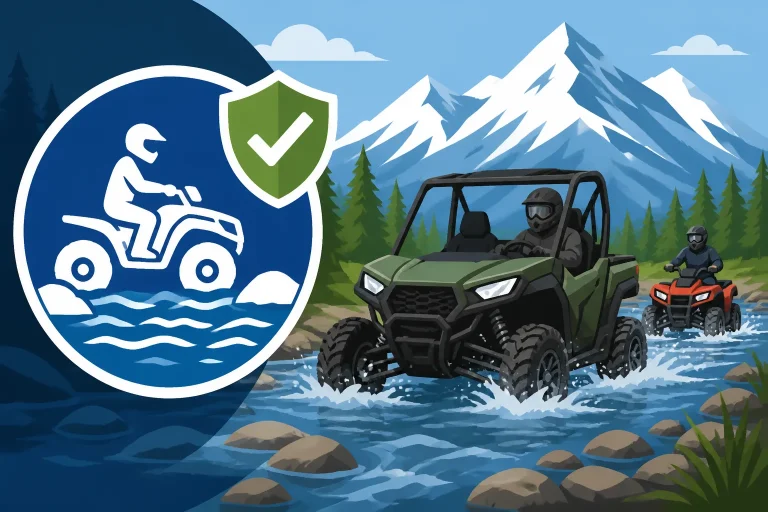
- Stream and river crossings. Verify whether crossings are permitted and whether a separate habitat or access rule applies. See Alaska Stream Crossing Rules and When Alaska Requires a Fish Habitat Permit.
- Temporary notices. Check for fire restrictions, emergency closures, construction, or other current limitations.
- The return route. A legal way in does not guarantee that every way out is legal. Confirm the full round trip, especially if you expect to use an alternate route.
A route can also pass through a designated area where ordinary access assumptions do not apply. If the route crosses a park, refuge, or other specially managed area, check that manager’s rules directly. Alaska’s Permit Excludes Designated Areas covers why an otherwise applicable state permit may not settle access in a designated area.
If the land manager’s information is unclear, ask about the exact route and machine rather than asking only whether “ATVs are allowed.” A useful question is: “May I ride this type of machine along this specific route to reach my trapping area, during this season, including the crossings and parcels shown on my map?” Provide enough detail for the manager to give a meaningful answer.
Plan the trip and keep permission clear
Once you have confirmed both the trapping requirements and machine access, make a simple trip record. Keep the information with you in a form that remains usable if your phone loses service or gets wet.
A practical pre-trip process is:
- Mark the route and parcels. Use a current land-status map to trace the planned route and note where land ownership or management changes.
- Contact each relevant manager or owner. Ask whether motorized travel is allowed on that specific route, whether permission is required, and whether any conditions apply.
- Confirm trapping rules separately. Check current requirements for the area and the activity. Do not infer trapping authorization from a travel permit or land-access answer.
- Record the answer. Save permits, written permission, maps, and contact details. If permission was given verbally, write down who gave it, when, what route it covered, and any restrictions.
- Check again before departure. Look for changed conditions, closures, or fire and weather restrictions close to the travel date.
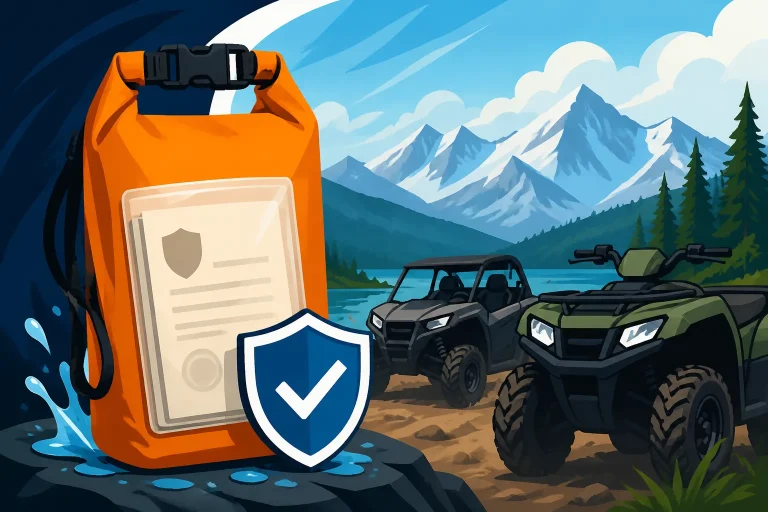
- Carry what you may need to show. Keep relevant permits and permission details protected from rain and easy to find. Carrying Documents in the Rain has practical advice for keeping paperwork usable in the field.
A clear record can prevent confusion if a landowner, agency employee, or enforcement officer asks why you are there. It also helps you avoid unintentionally crossing beyond the route or area you were authorized to use. Permission should be specific enough to understand its limits: who may travel, what machine is covered, which route is allowed, when access is permitted, and whether there are conditions such as staying on an established trail.
Do not assume that permission transfers between people or machines. If a friend is riding with you, confirm whether the permission covers the group. If you change machines, route, or travel dates, check whether the existing authorization still applies. A permit for one parcel does not necessarily grant access across adjoining land.
When a route is blocked, uncertain, or closed, do not improvise a detour across nearby ground. A short-looking bypass can cross a different owner’s property or a sensitive area. Stop and contact the land manager, or choose a route you have already confirmed. If access cannot be verified, postpone the ride rather than treating the trapping purpose as an exception.
Remote travel also calls for a safety plan. Tell someone where you expect to ride and when you plan to return. Carry navigation tools that work where there is no cell service, and have a plan for a breakdown or changing conditions. For longer or isolated routes, No Cell Coverage Off the Road System and Filing a Trip Plan With Someone can help you prepare.
Disclaimer
This article is for general informational purposes only and does not constitute professional advice. Laws, prices and regulations vary by location and change over time. Consult a qualified professional for guidance on your specific situation.