Alaska Event Permits for a Ride
Planning a club ride, charity run, or other organized ATV or UTV event in Alaska takes more than choosing a trail and inviting riders. The right approvals depend on who owns or manages the land, what the event involves, and how it may affect other users. Here’s how to identify the decision-makers, ask the right questions, and avoid treating a rider’s permit as event approval.
Why an Organized Ride May Need Separate Permission
A permit or authorization that lets an individual ride does not necessarily approve an organized event. A personal land-use permit, a trailhead parking pass, and an event authorization serve different purposes. Organizers should check each requirement separately rather than assume that one document covers the whole ride.
Alaska’s statewide general permit for ATV use applies to certain state land, but its scope is limited. It does not grant permission to use every parcel in Alaska, and it does not automatically settle whether an organized event is acceptable at a particular location. Review Alaska’s Statewide General Permit for ATV Use and confirm the current conditions with the land manager.
An event may bring more vehicles, concentrated traffic, spectators, support trucks, signs, vendors, or temporary facilities to an area. Those details can matter to the agency or owner responsible for the land, even if each participant is otherwise allowed to ride there. A small group traveling on an established route can raise different questions from a timed race, a large charity ride, or an event that uses a staging area.
There is no single event-permit rule that can be applied to every Alaska ride. Land ownership and management vary, and requirements can also depend on the event’s activities. The organizer’s first job is to identify the land manager and describe the event accurately.
| Event or access item | What it generally covers | What it does not automatically cover |
|---|---|---|
| Individual riding permit | A rider’s use of land within the permit’s scope | Organizing an event, bringing a large group, or using other owners’ land |
| Trailhead pass or fee | Access or parking arrangements at a specific trailhead | Permission to ride across every parcel on the route |
| Event authorization | An approved activity on land managed by the approving authority | Access to land managed by a different agency or owner |
| Private land permission | The use or crossing of the land described by the owner | Entry onto nearby public or Native corporation land |
| Insurance documentation | Evidence of coverage required by an owner, agency, venue, or event agreement | Land-use permission or a substitute for a permit |
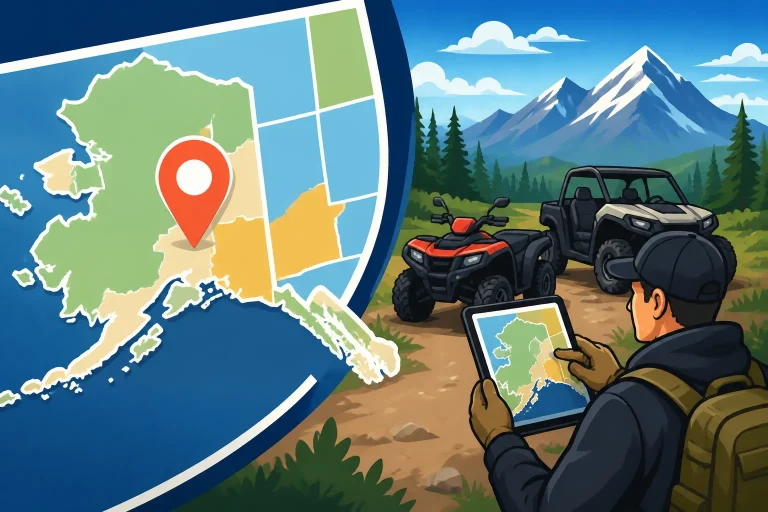
A route can cross more than one type of land. A ride that starts on state land might continue onto federal land, municipal property, private ground, or Native corporation land. Approval from one manager does not bind another. Use Alaska Land Status Maps to help identify ownership, then verify uncertain boundaries and access with the relevant office or owner. A map is a starting point, not permission to enter.
How to Find the Right Land Manager and Ask for Approval
Start with the route, not the application form. Mark the planned riding area, start and finish points, staging and parking areas, and any places where the group might stop. Include support-vehicle routes and any planned crossings. Then identify who manages each part.
If a route touches state land, the Alaska Department of Natural Resources may be the relevant contact, but not every state-managed area follows the same process. State parks have separate rules, and land managed by another agency requires that agency’s approval. Alaska State Park Riding Rules explains why a general state-land permit should not be treated as blanket authorization inside a park.
For other land, contact the responsible federal agency, municipality, private owner, or Native corporation. If you are unsure who manages a parcel, ask rather than relying on a trail map or another rider’s past experience. Boundaries, access conditions, and management rules can differ even between nearby areas.
When you contact a land manager, make the request concrete. “Can our club ride here?” is difficult to answer without details. Provide a clear event summary, including:
- The proposed date or date range, along with a backup date if you have one.
- Expected number of riders, machines, support vehicles, and spectators.
- Whether the ride is recreational, competitive, charitable, guided, or commercial.
- The route, including start and finish locations, stopping points, and land boundaries.
- Whether you plan to use signs, flags, portable facilities, vendors, or temporary structures.
- How you will handle parking, traffic, litter, breakdowns, injuries, and route closures.
- Whether participants will pay an entry fee or receive services as part of the event.
- The insurance and safety arrangements you can provide, if requested.
Ask the manager what kind of approval is required, who must submit the request, and how far ahead to apply. Also ask whether the event needs a separate approval for staging, parking, camping, commercial activity, or temporary installations. The answer may depend on the land and the event’s design, so do not assume that one permit will cover every activity.
For a club event on state land, Permits for a Club Ride on State Land is a useful starting point. Still, confirm the current process directly with the land manager. An old approval, a prior event’s paperwork, or a verbal “this area is usually open” should not be treated as approval for a new date, route, or event format.
Plan the Group, Route, and Trailhead Separately
Once you know who manages the land, check whether the proposed group size and route are workable. A trail can be open to individual riders and still be unsuitable for a large group or event. Narrow trails, sensitive ground, busy recreation areas, and limited parking can all affect whether a plan is accepted or needs changes.
Ask whether the manager sets limits on group size, requires staggered departures, or expects the event to use a specific route or staging area. Do not invent a group-size limit based on what another area allows. Requirements can vary by location and may change, so get the relevant details from the manager. Alaska Group Size on Public Land provides additional context on why group scale matters.
A trailhead pass is another separate issue. Some locations may charge a fee or require a pass for parking or day use. That does not necessarily grant permission to hold an event or ride on every parcel beyond the trailhead. Check Alaska Trailhead Fees and Passes for the distinction, then confirm event-specific arrangements with the manager of the staging area.
Build the route around land you can actually access. If an alternate route is needed because of weather, damage, a closure, or crowding, identify that route in advance and confirm it is acceptable too. A last-minute detour can cross a different owner’s land or enter a restricted area. Make sure the ride leader has a current route map and a way to communicate closures or changes to participants.
The event plan should also respect other land users. Consider whether the ride overlaps with hunting, camping, other trail traffic, or local travel. A well-organized event can still create a conflict if machines block an access road or overwhelm a small parking area. Ask the land manager whether there are seasonal restrictions, quiet areas, closures, or local practices that should shape the schedule.
Treat safety planning as part of the permit conversation, not as a replacement for permission. Explain how you will brief riders, manage spacing, identify a lead and sweep rider, handle a disabled machine, and respond if someone is injured. If the route has limited cell coverage, make a communication plan that does not depend on every rider having a working phone. Carry emergency contacts and route information in a form that remains available if a device fails.
A Practical Approval Process for Organizers
Use a sequence that leaves time to adjust the plan. Do not advertise an event as confirmed until you understand which approvals are required and have received them.
- Draft the event plan. Describe the purpose, dates, approximate attendance, machines, route, staging area, support vehicles, and any fee or commercial activity.
- Map the full footprint. Include riding sections, parking, check-in, spectator areas, facilities, and support routes. Identify any land boundary the event may cross.
- Confirm land ownership and management. Contact each relevant manager or owner. If a route crosses multiple parcels, seek a response from each one.
- Ask what approvals apply. Find out whether the riding activity, event gathering, parking, signage, camping, vendors, or other features need separate permission.
- Ask about conditions and timing. Confirm application steps, deadlines, insurance documentation, participant limits, fees, and any route or seasonal restrictions with the relevant authority. Requirements can change, so use its current instructions.
- Revise the plan before promoting it. If the manager requires a smaller group, different staging area, or route change, update the materials before participants make travel plans.
- Keep written approvals with event records. Share the relevant conditions with ride leaders and anyone managing check-in, parking, or route support.
- Reconfirm before the event. Check for closures, weather-related concerns, changed access conditions, or updated instructions. Be ready to postpone or cancel if the approved route is no longer suitable.
If the event includes paid guiding, commercial services, or a business operating on public land, say so when asking for permission. Commercial activity may involve a different authorization process from a volunteer club ride. Do not describe a paid tour as a private gathering to avoid asking about the correct rules.
Insurance is also worth raising early. A land manager, venue, event partner, or service provider may require proof of coverage or specific documentation. The requirements depend on the arrangement; ask what is needed rather than assuming that personal vehicle insurance covers the organizer’s event responsibilities. Keep any requested proof available to the person responsible for the event.
If an event is denied or the proposed route is unsuitable, ask whether a smaller group, different date, altered format, or alternate location would be acceptable. A refusal for one plan does not establish that all riding is prohibited in the area, but it also does not authorize a revised plan. Get approval for the version you intend to run.
Common Mistakes That Put a Ride at Risk
The most common mistake is confusing an individual riding authorization with event approval. A participant may have the right permit for a particular type of land, while the organizer still needs to clear the group activity, staging, or commercial elements.
Another is treating a trailhead pass as a route permit. A parking payment or day-use pass can address one part of access without granting authority to cross other land. Check the full route, not just the place where vehicles unload.
Organizers also sometimes assume a public trail is automatically suitable for a large gathering. Public access does not guarantee that every event size, schedule, or activity is acceptable. Ask about the event as proposed, including the number of machines and the use of the site.
Finally, do not rely on a previous year’s approval without checking whether it still applies. The land manager, route, conditions, event size, and local rules may differ. Keep written confirmation, share conditions with participants, and have a realistic backup plan.
Disclaimer
This article is for general informational purposes only and does not constitute professional advice. Laws, prices and regulations vary by location and change over time. Consult a qualified professional for guidance on your specific situation.