Insurance an Alaska Event Organizer Needs
An Alaska ATV or UTV event can involve more than riders and machines: land access, spectators, staff, vendors, transportation and changing trail conditions all create different risks. The right insurance depends on what the event includes and who manages the land. Here’s how to identify the coverage to discuss with an insurer and what to confirm before advertising or opening registration.
Start with the land manager and the event format
There is no single insurance checklist that fits every Alaska ride. A small, informal outing among friends is different from a public event with registration, paid guides, spectators, food vendors or a marked course. Insurance requirements can also depend on the landowner or managing agency, the location and the activity.
Before requesting a policy or setting a registration fee, describe the event plainly. Note whether it is a club ride, a timed competition, a guided outing or a community gathering; whether participants bring their own machines or rent them; and whether the route uses public land, private property, roads or more than one type of land. Include support vehicles, camping, demonstrations and vendor areas if they are part of the plan.
Then contact the manager of the proposed site. Ask whether the event needs a permit or other authorization, and request its current insurance conditions in writing. A general authorization for recreational riding should not be assumed to cover an organized event. For example, Alaska’s Statewide General Permit for ATV Use is a useful starting point for understanding a particular kind of state-land use, but an event may need separate review. The general permit does not replace permission from a different landowner or manager.
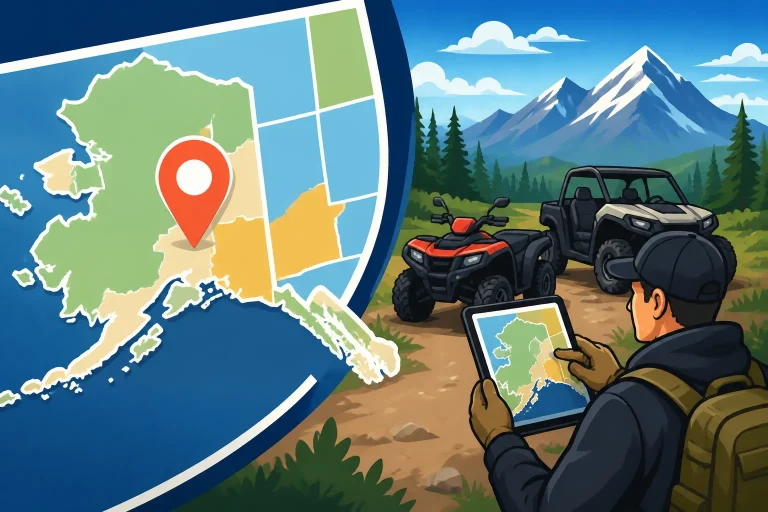
Ownership and access can change along a route. A trail that begins on state land may cross a private parcel, land managed by another agency or Alaska Native corporation land. Check the route and ask the relevant land manager what permission is needed. Alaska Land Ownership and Who to Ask and Alaska Land Status Maps can help you identify questions to resolve before committing to a location. For a club ride, see Permits for a Club Ride on State Land; for other organized rides, Alaska Event Permits for a Ride is also relevant.
Be specific when asking about insurance. Instead of asking only, “Do we need insurance?”, ask:
- Is proof of liability insurance required for this event or activity?
- Is there a required coverage limit or policy form?
- Must the landowner or agency be named as an additional insured?
- Does the requirement apply to the organizer, contractors, vendors or all of them?
- Is coverage needed for setup, cleanup and any overnight activity, as well as the ride itself?
- What documentation and submission deadline apply?
Do not rely on a past event’s paperwork as proof that the same terms still apply. Requirements can vary by place and event, and the manager should confirm the current conditions. Also, a trailhead or parking pass is not a substitute for event authorization or insurance. Alaska Trailhead Fees and Passes explains a different kind of access requirement.
Understand the main types of coverage
The central question is not simply whether the event has “insurance.” Different policies respond to different people, activities and losses. An organizer’s general liability policy, a participant’s machine coverage and a vendor’s insurance are not interchangeable.
| Coverage to discuss | What it may address | Questions to ask |
|---|---|---|
| Event or commercial general liability | Certain claims that the organizer caused bodily injury or property damage | Are ATV and UTV activities covered, including the specific event format and route? |
| Participant accident coverage | Certain medical expenses after a participant is injured | Who is eligible, what activities are covered, and what exclusions apply? |
| Vehicle liability | Certain claims involving the operation of a particular machine | Does it cover the rider, the machine, the event setting and any required road use? |
| Property or equipment coverage | Damage to eligible event equipment or property | Are borrowed, rented or stored items included? |
| Workers’ compensation | Certain work-related employee injuries, where required | Who counts as an employee, and what rules apply to the organizer’s staffing arrangement? |
| Vendor or contractor coverage | Claims connected to a vendor’s or contractor’s own operations | Must each vendor provide proof of coverage or name the organizer as an additional insured? |
The table is a way to structure a conversation, not a promise that any policy covers a particular loss. Policy wording, exclusions, endorsements and the event’s details matter. Ask an insurance professional to review the full activity rather than relying on a broad description such as “off-road event.”
Event liability coverage is often the first issue organizers investigate. Ask the insurer to confirm in writing that the policy covers the event as planned, including riding, staging areas, registration, spectators and any related activities. A policy intended for a social gathering, for example, may not address motorized recreation. A competition, guided ride or commercial event may also be treated differently from a private club outing.
Participant accident coverage is not the same as liability coverage. It may help with certain eligible medical costs for participants, but it does not necessarily protect the organizer against a claim. Ask who is insured, whether volunteers or minors are included, how the policy treats pre-existing conditions and what activities or locations are excluded.
Vehicle insurance deserves a separate check. Participants’ personal policies may not cover every type of off-road use, event format or machine. If the event uses organizer-owned or rented ATVs and UTVs, ask who is responsible for insuring those machines and whether the policy covers multiple operators. Alaska Insurance Requirements for an APV concerns legal requirements for an APV in applicable situations; it should not be treated as an event-wide insurance plan. A machine’s required road-use liability coverage, where applicable, does not by itself settle the organizer’s coverage needs.
Workers’ compensation and contractor coverage depend on how the event is staffed and on applicable rules. If you hire guides, mechanics, security, food vendors or setup crews, ask an insurance professional which parties need their own policies and what documentation to collect. Calling someone a volunteer or contractor does not, by itself, answer how insurance or employment rules apply.
Check exclusions, documents and participant forms
A certificate of insurance is evidence that a policy exists; it is not a replacement for reading the policy or confirming the event is covered. If a land manager requires additional-insured status, ask your insurer whether it can provide the required endorsement. Listing a name on a certificate alone may not create that status. Confirm that the named entity, event dates, location and activity description match the permit or authorization.
Ask the insurer to review details that are easy to omit from an application:
- The machine types, including quads and side-by-sides.
- Whether riders bring their own machines, use rentals or operate organizer-owned machines.
- Whether the event includes racing, timed sections, jumps, training or guided travel.
- The route surface and setting, including trails, roads, staging areas and any river crossings.
- The presence of spectators, vendors, campers, passengers or minors.
- Work performed by volunteers, employees, guides and contractors.
- Setup and takedown dates, not only the public event day.
Be direct about higher-risk activities. If the event includes competition, technical obstacles, night riding, towing, water crossings or a remote route, say so. An insurer needs accurate details to assess the risk, and an organizer needs a clear answer about whether the activity is covered or excluded. Do not assume that a policy covering an ordinary group ride also covers a race or demonstration.
Participant waivers and release forms can document that riders received event information and accepted certain risks, but they are not insurance. Their wording and enforceability can depend on the circumstances and applicable law. Have a qualified professional review forms, especially when minors participate. A signed waiver does not automatically prevent a claim or replace suitable coverage, equipment checks or safe event planning.
Keep the paperwork together: the land manager’s written requirements, permit or authorization, policy documents, endorsements, certificates, vendor evidence and participant forms. Give event leads a way to access the relevant documents during the event. If the route, date, activities or attendance plan changes, check whether the authorization and insurance still match. Changes should be reported to the insurer and land manager rather than left to guesswork.
Build insurance into the event plan
Insurance is one part of a practical risk plan. Before opening registration, match the route and schedule to the land manager’s conditions, confirm who is responsible for each machine, and decide how you will handle a crash, injury, lost rider or sudden closure. For a large group, clarify who can stop the ride and how participants will be notified if conditions change. Alaska Group Size on Public Land may help identify another issue to check when planning a group outing.
A useful sequence is:
- Choose a route and identify every land manager. Do not assume that permission for one segment applies to the whole route.
- Describe the event in writing. Include riding, competition, spectators, vendors, camping, staffing and setup.
- Request current land-use and insurance conditions. Ask who must be insured and what proof is acceptable.
- Give the same description to an insurance professional. Ask for confirmation about covered activities, exclusions, limits and additional-insured endorsements.
- Check every participant and vendor arrangement. Make clear who supplies machines, who operates them and who provides any required coverage.
- Review changes before they happen. A changed route, added activity or new sponsor can affect permissions or policy terms.
Plan for cost without assuming a fixed figure. Event insurance may be priced according to factors such as the event’s activities, duration, number of participants, location, coverage selected and past claims. The insurer may need additional information before giving a quote. Confirm the current terms directly with the provider, and compare what each proposal covers rather than comparing the premium alone.
If a land manager’s requirement is unclear, ask for the exact written condition and the name of the office or person who can interpret it. If an insurer’s answer is unclear, request clarification in writing before relying on it. A little coordination before registration can help prevent a last-minute discovery that a route, activity or named entity is missing from the paperwork.
Disclaimer
This article is for general informational purposes only and does not constitute professional advice. Laws, prices and regulations vary by location and change over time. Consult a qualified professional for guidance on your specific situation.