Alaska Registration for a Snow Machine
It's a common misconception, especially for those new to Alaska or moving between different types of off-highway vehicles, that all recreational machines fall under the same "APV" umbrella for every single state regulation. Many snowmachine owners often scratch their heads wondering why their winter ride seems to have slightly different rules than their summer quad when it comes to official paperwork. This guide is here to untangle the specific registration requirements for your snow machine in Alaska, helping you understand the nuances and get your machine properly documented so you can hit the trails with peace of mind.
Understanding Alaska's Definition: Why Snow Machines Aren't APVs (for Registration)
When it comes to the legal definitions that guide registration and titling in Alaska, it’s easy to assume that a snow machine, like an ATV or a side-by-side, is simply another type of "All-Purpose Vehicle" (APV). However, this isn't quite the case, and understanding this distinction is absolutely crucial for proper registration. The Alaska Department of Administration, Division of Motor Vehicles (DMV), operates under specific statutory definitions, and these definitions carve out a separate identity for snow machines.
For the purpose of registration and titling, Alaska law specifically distinguishes snow machines from other APVs. This means that while both types of machines are considered off-highway vehicles (OHVs) and are subject to registration requirements when used on public land, they aren't lumped together under the exact same APV classification for every administrative detail. This legislative separation, which you can see highlighted in topics like [Alaska Excludes Snowmobiles From APV], means that a snow machine doesn't receive an APV title, nor is it registered as an APV. Instead, it falls under its own category, though the administrative process for registration often looks very similar to that of an APV. The practical takeaway is that you won't be applying for an "APV registration" for your snow machine; you'll be applying for a "snow machine registration."
This distinction is more than just semantics. It affects how the state categorizes your machine, how ownership might be tracked (or not tracked, in the case of titling), and ultimately, which sections of the vehicle code apply to your specific mode of winter transportation. While you’ll still fill out similar forms and pay similar fees, keeping this definitional difference in mind helps clarify why certain questions might be phrased the way they are by DMV personnel, or why your decal looks like it does. The state provides a decal, not a traditional license plate, for these machines, as discussed in [Alaska Issues a Decal, Not a Plate].
The Specific Registration Requirement for Your Alaska Snow Machine
Even though snow machines are not classified as APVs for registration and titling purposes, they absolutely still require registration if you plan to operate them on public land in Alaska. This is a non-negotiable requirement that often catches new residents or first-time owners off guard. You might be thinking, "It's just for recreation, why does the government need to know about it?" The truth is, registration helps manage trail use, identify machines in case of theft or accident, and funds trail maintenance and safety programs that benefit all riders.
The law mandates that any snow machine operated on publicly owned land or trails in Alaska must be registered. This includes state-managed lands, borough trails, and even some federal lands where state registration is recognized. If you’re just riding exclusively on private land you own, you might fall under an exemption, similar to the [Alaska Private Land Registration Exemption] for other OHVs. However, for most Alaskans, the allure of vast public lands and interconnected trail systems means registration is a necessity. Don't risk a fine or having your machine impounded; it’s far easier and less stressful to complete the registration upfront. The cost for registration is relatively low, as detailed in [Alaska OHV Registration Cost], and the peace of mind is priceless.
A common oversight is forgetting that "public land" isn't just designated trails. It can include frozen rivers, unmaintained service roads, and even the shoulder of a state road if you're using it to access a trail. Any ground not explicitly owned by you or a private party, and where you don't have explicit permission, is generally considered public for these purposes. So, if you're thinking of taking your new sled out for some winter fun, assume you need to register it.
Navigating the Snow Machine Registration Process
Registering your snow machine in Alaska is a fairly straightforward process, but it does require attention to detail and, typically, an in-person visit. Unlike some states or certain vehicle types, Alaska does not currently offer an online registration option for OHVs, including snow machines, as noted in [Alaska Has No Online OHV Registration]. This means you’ll be making a trip to either a full-service DMV office or one of their authorized partner offices.
Gathering Your Required Documents
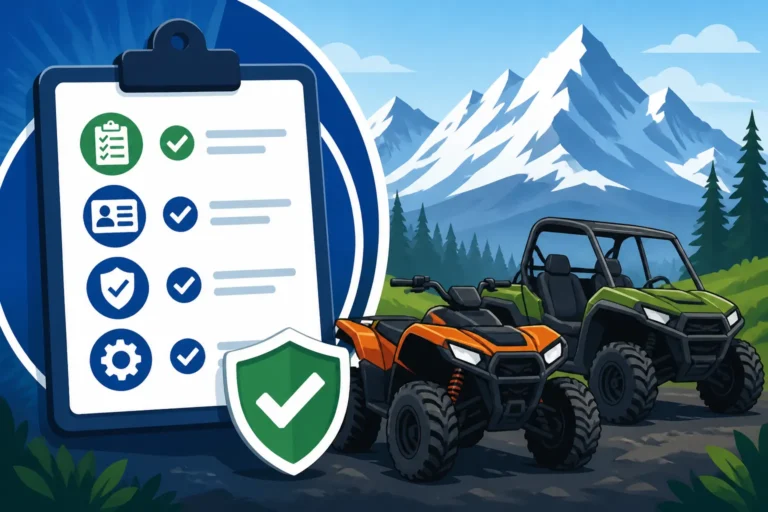
Before you head to the DMV, ensure you have all the necessary paperwork in order. This preparation will save you significant time and frustration. The primary document you’ll need is a completed "Vehicle Transaction Application," often referred to as Form V1. This form is universal for most vehicle transactions in Alaska, and you can find specific guidance on completing it in articles like [The Vehicle Transaction Application Every OHV Owner Files].
Beyond the application, you’ll need proof of ownership. This is critical and can come in a few forms:
- New Machine: If you just bought a brand-new snow machine from a dealer, your primary proof of ownership will be the Manufacturer's Certificate of Origin (MCO) or a similar document, along with the bill of sale.
- Used Machine (Private Sale): For a used snow machine purchased from a private party, a clear and comprehensive bill of sale is essential. This document should include the date of sale, purchase price, full names and addresses of both buyer and seller, and a detailed description of the snow machine, including its Vehicle Identification Number (VIN). If you need help drafting a reliable bill of sale, resources like LawDepot can provide templates that ensure all necessary information is included, giving you confidence in your documentation. An example of this is [Alaska Bills of Sale for a Used Machine].
- No Prior Registration/Lost Paperwork: If the snow machine hasn't been registered before, or if you've lost the original proof of ownership, things can get a bit more complex. You might need to provide an affidavit naming the seller, detailing how you acquired the machine. Again, platforms like LawDepot can be invaluable for generating legally sound affidavits to present to the DMV.
You'll also need a valid form of identification, like an Alaska driver's license or state ID. For the full list of potential documents, it's always a good idea to check the DMV's official checklist or refer to general guides like [Alaska Registration Paperwork Checklist].
The Application and Payment Process
Once you have your documents ready, head to your nearest DMV office or a partner office. Be prepared for potentially longer wait times, especially during peak seasons. At the counter, a clerk will review your documents, verify the VIN, and process your application. You'll specify the registration term you prefer—two, four, or six years—each with its own corresponding fee, as outlined in [Alaska Registration Terms of Two, Four or Six Years]. Keep in mind that regardless of when you register, all Alaska OHV registrations, including for snow machines, expire on September 30th, as highlighted in [Every OHV Registration Term Expires on September 30]. So, if you register in August, your two-year decal will still expire on September 30th of the second year, not August.
After payment, you’ll be issued a registration decal. This decal is your official proof of registration and must be affixed to your snow machine in a visible location. For snow machines, this is typically on the tunnel side, ensuring it's clearly visible when seated, as described in [Alaska Decal Placement on the Tunnel Side] and [Alaska Decals Visible When Seated]. Make sure to keep your physical registration card with you when you ride.
Important Considerations for Alaska Snow Machine Owners
Owning and operating a snow machine in Alaska comes with its own set of responsibilities and practical considerations beyond just registration. Being prepared for these aspects will ensure a smoother, more enjoyable winter riding experience.
Decal Placement and Maintenance
The registration decal you receive is more than just a sticker; it's your proof of legal operation on public lands. Proper placement is key. As mentioned, for snow machines, the decal goes on the tunnel, usually on the left-hand side, visible to a person seated on the machine or standing beside it. It’s crucial that this decal remains legible and securely attached throughout its validity. Given Alaska’s harsh winter conditions – snow, ice, mud, and extreme temperatures – decals can peel, fade, or get damaged. If your decal becomes unreadable or falls off, you'll need to apply for a replacement, which typically involves a nominal fee. You don't want to get pulled over by an Alaska State Trooper or a Wildlife Trooper and be unable to show proof of registration.
Keeping the decal clean is also important. While a little snow or slush is inevitable, regularly wiping off dirt or mud will help prolong its life and ensure it's always visible. A quick photograph of your VIN and decal number before winter hits can also be a helpful backup, especially if you ever need to report a theft or replace the decal.
Titling (or Lack Thereof) for Snow Machines
One of the most significant differences between snow machines and APVs in Alaska is the issue of titling. While ATVs and side-by-sides purchased after a certain date may require titling, snow machines generally do not receive a title in Alaska. This is directly related to their exclusion from the APV definition for titling purposes. This can be a point of confusion, especially for those accustomed to titled vehicles.
The absence of a title means that the bill of sale becomes the single most important document for proving ownership and facilitating future sales. When buying or selling a used snow machine, ensure your bill of sale is meticulously detailed and legally sound. Again, using a template from a service like LawDepot can provide peace of mind. Without a state-issued title, this document is your primary legal record of transaction. It's also why keeping past registration documents is important, as they indirectly support your ownership history.
What Happens When You Sell Your Registered Snow Machine
When it's time to upgrade or move on from your current snow machine, the process of transferring ownership is fairly straightforward, mainly because of the lack of a title. The sale primarily revolves around the bill of sale. As the seller, you'll provide the buyer with a signed bill of sale and your current registration document. The buyer will then use these documents to register the snow machine in their name.
It's vital for both parties that the bill of sale is complete and accurate. This document protects both the buyer, by proving their acquisition, and the seller, by showing they no longer own the machine. If the buyer doesn't register the machine promptly, you ideally want clear documentation that you've relinquished ownership. This protects you from potential liability for any incidents that occur after the sale. If you had a multi-year registration, such as [What Happens to a Six-Year Decal When You Sell], that registration typically doesn't transfer; the new owner will apply for a fresh registration.
Riding Legally and Responsibly
Beyond registration, snow machine owners need to be aware of other regulations governing their use. This includes understanding where you can and cannot ride, adhering to local ordinances, and following general safety guidelines. Remember that registration only grants you the privilege to operate on public land; it doesn't exempt you from other rules, such as speed limits, noise restrictions, or specific trail closures. Always check local regulations for the area you plan to ride. Carrying your registration card and proof of ownership is always a good practice when you're out on the trails.
| Document Type | New Snow Machine Purchase | Used Snow Machine Purchase (Private) | Lost Ownership Paperwork |
|---|---|---|---|
| Vehicle Transaction Application (Form V1) | Required | Required | Required |
| Manufacturer's Certificate of Origin (MCO) | Primary Proof (if applicable) | Not applicable | Not applicable |
| Bill of Sale | Required (from dealer) | Required (from private seller, must be detailed) | May be required if available, or substitute with affidavit |
| Affidavit of Ownership | Not typically needed | Recommended for clarity, especially if the bill of sale is brief | Essential, detailing acquisition history |
| Current Registration | Not applicable (first registration) | Helpful for VIN verification and previous ownership chain | Helpful if available, but not sufficient on its own |
| Valid ID | Required | Required | Required |
Disclaimer
This article is for general informational purposes only and does not constitute professional advice. Laws, prices and regulations vary by location and change over time. Consult a qualified professional for guidance on your specific situation.