Barging a Machine North
Moving a beloved ATV or UTV to Alaska can feel like a monumental task, especially if you're coming from the Lower 48 and have visions of vast Alaskan trails dancing in your head. The sheer distance, the unique logistics of the state, and the concern for your machine arriving safely can be a source of real anxiety. This guide is here to walk you through the process of barging your ATV or UTV north to Alaska, covering everything from the initial decision-making to the paperwork, the shipping process, and what to do once your machine finally arrives.
The Logistics of Moving Your Machine to Alaska
Bringing your all-terrain vehicle or utility terrain vehicle to Alaska isn't like shipping a package across state lines in the contiguous United States. Alaska's geographical isolation means that traditional ground transport methods often involve significant detours, border crossings into Canada, or simply aren't feasible for larger items like powersports machines. This is where barging often steps in as a critical solution, offering a reliable pathway for your machine to reach the Last Frontier.
Why Barging Makes Sense for Alaskan Moves
When you consider getting a quad or side-by-side to Alaska, your options are generally driving it yourself (which means traversing the Alaska Highway through Canada), flying it (prohibitively expensive for most private owners), or shipping it. Shipping, especially via barge, often emerges as the most practical and cost-effective solution for many Alaskans and those moving to the state. The Alaska Highway journey, while scenic, is long, can be hard on a vehicle, and requires navigating international border crossings with specific requirements for vehicles and even pets. For an ATV or UTV, trailering it all that way adds wear and tear, fuel costs, and potential risks on unfamiliar roads.
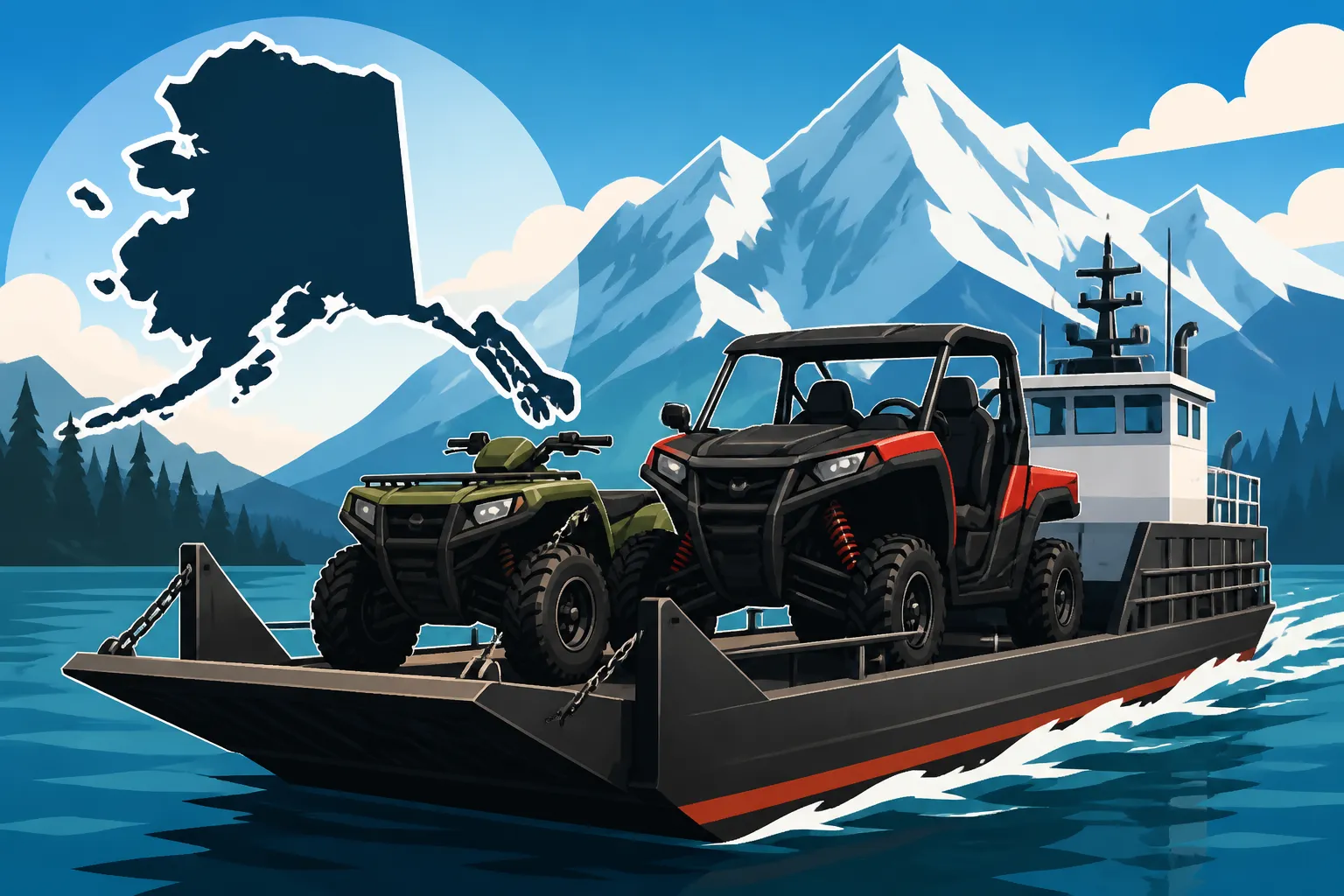
Barging companies specialize in moving freight up the coast, providing a direct and often more secure way to get your machine to port cities like Anchorage (via Whittier or Seward), Juneau, or Fairbanks (via Anchorage). It removes the burden of the long drive and the complexities of international transit, allowing you to focus on your own move or travel plans. Think of it as a dedicated, maritime highway for your gear.
Comparing Barging to Other Transport Methods
While the Alaska Highway offers an epic road trip, it's not always the best fit for powersports machines, particularly if you're already driving a moving van or have limited towing capacity. Flying is usually reserved for smaller, more specialized equipment due to its astronomical cost and logistical hurdles for anything larger than a dirt bike. This leaves barging as the often-preferred method for ATVs and UTVs.
Here’s a quick comparison to illustrate why:
| Feature | Driving (Alaska Highway) | Flying (Not Typical) | Barging (Ocean Freight) |
|---|---|---|---|
| Cost | High (fuel, lodging, food, vehicle wear) | Extremely High (specialized cargo) | Moderate (based on size/weight) |
| Time | ~3-7 days (driving only, plus stops) | Fastest (hours), but complex for cargo | ~7-14 days (port to port, plus transit) |
| Effort | High (active driving, border crossings) | Very High (specialized arrangements) | Low (drop-off, pickup) |
| Risk | Road hazards, theft, mechanical issues | Minimal for machine, high for logistics | Weather delays, minor handling damage |
| Paperwork | Vehicle registration, insurance, border docs | Air freight manifests | Bill of lading, ownership docs, customs forms |
| Machine Prep | Minimal for driving, securing on trailer | Extensive (fuel drain, crating) | Moderate (cleaning, fluid checks, securing) |
Barging offers a middle ground, providing a relatively hands-off approach once you've delivered your machine to the shipping terminal. It's built for bulk, and companies have established processes for securing vehicles for sea travel.
Initial Preparations for Shipping
Before you even book a barging company, there are a few important steps to take. First, thoroughly clean your machine. Many carriers and even customs officials prefer clean vehicles to prevent the spread of invasive species or dirt. Drain the fuel tank down to about a quarter full, and disconnect the battery to prevent accidental starts or electrical issues during transit. Remove any loose accessories like gas cans, tools, or strapped-on gear. These items can shift during transit and cause damage or get lost. Taking clear photos of your machine from all angles before drop-off can also be invaluable for insurance purposes or if any damage claims arise later.
Paperwork and Documentation for Alaska-Bound ATVs
Successfully getting your ATV or UTV registered in Alaska starts long before it ever touches Alaskan soil. The necessary paperwork for ownership and registration needs to be in order before you ship, as sorting it out from a distance can add significant delays and headaches. Alaska has specific requirements, and understanding them early will save you a lot of frustration.
Essential Documents to Prepare Before Shipping
Whether your machine is brand new or well-loved, you'll need proof of ownership to register it in Alaska. For a new machine, you'll typically have a Manufacturer's Certificate of Origin (MCO), which essentially acts as the birth certificate for your ATV. If it's a used machine, you absolutely need a clear bill of sale and, ideally, the previous owner's title. The bill of sale should clearly state the buyer and seller's full names and addresses, the date of sale, the machine's make, model, year, and its Vehicle Identification Number (VIN). Without a proper bill of sale, you could run into serious trouble with the Alaska DMV. You can find templates for a robust bill of sale on sites like LawDepot or through other legal document services, ensuring it covers all the necessary details. Don't forget that [Alaska Bills of Sale for a Used Machine] are a critical piece of documentation for registering your ride once it arrives.
What to Do If Your Paperwork is Lost or Incomplete
This is a common frustration, especially with older machines or those bought in private sales where the seller might have been less meticulous. If you don't have a clean title or bill of sale, Alaska offers paths like the "No Title Issued" (NTI) registration, but it's a longer process. If you're missing a bill of sale, or it's incomplete, you might need an affidavit. This is a sworn statement, signed in front of a notary, that details how you acquired the machine. [Alaska Affidavits Naming a Seller] are recognized for this purpose and can be an alternative if a traditional bill of sale is missing. Again, resources like LawDepot can provide templates for such affidavits, ensuring they contain the legally required language. It's always best to have as much documentation as possible, even if it's just a signed statement from the seller. Remember, [Alaska Registration Without a Bill of Sale] is possible, but it adds layers of complexity and waiting periods.
Understanding Alaska's Titling and Registration Requirements
Once your machine lands in Alaska, you'll be navigating the state's specific regulations for all-purpose vehicles (APVs). It's important to know that [Alaska APV Titling Required Since 2022] for certain machines, meaning many ATVs and UTVs will need a title in addition to registration. The process involves filling out the proper forms, which you can usually find through the Alaska DMV. A good starting point is understanding [What Alaska's ATV Registration Form Asks For] and collecting all the necessary information beforehand. Keep in mind that [Alaska Has No Online OHV Registration], so you'll need to visit an Alaska DMV office or a partner office in person to complete the registration process. Knowing the steps for [How to Register an ATV in Alaska] before your machine even arrives can streamline your post-shipping tasks.
The Barging Process: From Drop-Off to Alaskan Pickup
Once your paperwork is in order, the physical journey of your machine begins. Understanding the steps of the barging process, from preparing your ATV or UTV for its sea voyage to picking it up on the other end, will help manage your expectations and ensure a smoother experience.
Preparing Your ATV for the Journey
Before handing your machine over to the barging company, a few final checks are essential for its safety and to comply with shipping regulations. As mentioned, drain the fuel tank as low as possible – typically a quarter tank or less, depending on the carrier's rules. Disconnect the battery and secure the terminals to prevent any accidental shorts. Remove any personal items, loose parts, or accessories that are not bolted down. Think about things like portable GPS units, extra fuel cans, tools in a storage box, or even seat cushions if they're not fully secured. These items can become projectiles or go missing during transit. Many people choose to cover their ATV or UTV with a heavy-duty tarp or shrink wrap, not just to protect it from the elements but also from dirt, salt spray, and minor scuffs during loading and unloading. Be sure to check with your specific carrier about their preferences and restrictions on covering.
Choosing a Barging Company and Booking Your Shipment
Several companies specialize in shipping freight to Alaska. You'll want to research reputable carriers, read reviews, and get multiple quotes. Key questions to ask include:
- Insurance: What kind of insurance is included, and what are your options for additional coverage? Given the value of an ATV or UTV, full coverage is often a wise investment.
- Transit Time: How long will it take from drop-off to arrival at the Alaskan port?
- Drop-off/Pickup Locations: Where are their terminals, and how convenient are they for you?
- Preparation Requirements: Reconfirm their specific rules for fuel, battery, and loose items.
- Pricing Structure: Is it based on weight, dimensions, or a flat rate? Ask about any hidden fees or surcharges.
Once you choose a company, you'll book your shipment, receive a bill of lading (your contract with the carrier), and get instructions for drop-off. Keep this bill of lading safe, as it's crucial for picking up your machine on the other end.
Receiving Your Machine in Alaska
The moment your ATV or UTV arrives in Alaska is exciting! However, it's crucial to be meticulous during the pickup process. When you arrive at the shipping terminal, you'll present your bill of lading and identification. Before you drive your machine off the lot, perform a thorough inspection. Check for any new scratches, dents, or damage that wasn't present when you dropped it off. This is where your pre-shipping photos come in handy. Document any damage immediately with the carrier's representative and file a claim if necessary. Waiting until you get home could jeopardize your ability to claim compensation. Also, confirm that all the accessories and parts you left with the machine are still there. It's a busy environment, and sometimes things can be misplaced.
After Arrival: Getting Your ATV Ready for Alaskan Trails
Your machine has made the epic journey north! Now it's time for the final steps to get it ready for the vast and incredible trails Alaska has to offer. This involves immediate checks, navigating local registration, and understanding the unique riding environment.
Immediate Checks and Maintenance Post-Barging
Once you've retrieved your ATV or UTV, it’s not quite ready for the trails yet. Reconnect the battery terminals securely. If you drained the fuel tank, now's the time to add fresh fuel. Check all fluid levels – engine oil, brake fluid, coolant – just in case anything shifted or leaked during transit, or if you had drained them for shipping. Inspect your tires for proper inflation, as changes in temperature and altitude can affect tire pressure. Give all the controls a good once-over: test the brakes, throttle, and steering to ensure everything is functioning correctly after its long voyage. Sometimes, prolonged storage or movement can cause minor issues that are easily fixed with a quick inspection and some basic tools.
Navigating Alaska's Registration and Titling Process
With your machine back in working order, your next critical step is getting it legally registered and, if applicable, titled in Alaska. As we touched on earlier, [Alaska APV Titling Required Since 2022] for many machines, and registration is mandatory for riding on public lands. You'll need to gather all your ownership documents – MCO, bill of sale, previous title, or affidavits – and head to an Alaska DMV office or a partner office. You can't register online, so an in-person visit is essential. Check the [Alaska Registration Paperwork Checklist] to ensure you have everything needed. Be prepared for potential processing times; while some registrations are quick, issues with paperwork can extend the [Alaska Registration Processing Time]. The good news is, once registered, you'll receive a decal instead of a plate, clearly marking your machine as ready for Alaskan adventures. When you visit the DMV, be ready with your proof of ownership, your ID, and the required fees.
Getting Acquainted with Alaska's Unique Riding Landscape
Once your ATV or UTV is registered and ready, a whole new world of riding awaits. Alaska offers an incredibly diverse and often challenging environment for powersports. From vast tundra to glacial riverbeds, and dense forests to remote trails, the conditions can change rapidly. It's crucial to familiarize yourself with [Alaska APV Road Rules Explained] and local ordinances, as some communities have specific restrictions, such as [Alaska Bans APVs in Anchorage] or [Alaska Bans APVs in Fairbanks]. Always check the specific rules for the area you plan to ride. Carrying essential gear, understanding local wildlife, and being prepared for extreme weather are all part of the Alaskan riding experience. Consider joining local ATV clubs or talking to experienced riders to gain insights into specific trails and safety practices. Alaska is an incredible place to ride, but it demands respect for its unique wilderness and adherence to its rules.
Disclaimer
This article is for general informational purposes only and does not constitute professional advice. Laws, prices and regulations vary by location and change over time. Consult a qualified professional for guidance on your specific situation.