Alaska Registration When the VIN Is Gone
There’s nothing quite like the feeling of discovering an old ATV or UTV tucked away, perhaps from a family member or a remote property sale, only to find that the all-important Vehicle Identification Number (VIN) is missing, illegible, or completely gone. This frustrating situation can feel like a dead end when you’re trying to navigate Alaska’s registration process, leaving you wondering if your new-to-you machine will ever see legal trail use. This guide will walk you through the specific challenges and detailed steps for registering an All-Purpose Vehicle (APV) in Alaska when you're faced with a missing or compromised VIN, helping you get your quad or side-by-side ready for adventure.
The Challenge of a Missing VIN for Alaska ATV/UTV Registration
When you're trying to get your beloved quad or side-by-side registered in Alaska, a missing or illegible VIN can throw a serious wrench into your plans. It's not just a minor detail; it's a fundamental piece of your vehicle's identity, and without it, the Alaska Division of Motor Vehicles (DMV) has very little to go on. This situation can be incredibly frustrating, especially if you've put time and effort into getting an older machine running.
Why a VIN Is Crucial for Registration
Think of your vehicle's VIN as its unique fingerprint. It's a 17-character code that is specific to that one machine, much like a social security number for a person. This code provides a wealth of information, from the manufacturer and model year to the specific plant where it was assembled. For the DMV, the VIN is the cornerstone of vehicle identification and registration. It allows them to:
- Confirm Legal Ownership: The VIN is intrinsically linked to the machine’s ownership history. Without it, verifying that you are the rightful owner becomes incredibly difficult. They need to ensure the machine isn't stolen or subject to other claims.
- Track History and Specifications: The VIN allows the DMV, and you, to look up important details about the machine, such as its original specifications and any recalls. This is vital for safety and ensuring the machine meets basic requirements for registration.
- Prevent Theft and Fraud: A unique, identifiable VIN is a powerful tool against theft. If a machine is stolen, the VIN is how law enforcement tracks it. When a VIN is missing or tampered with, it raises immediate red flags, as it can be a sign of illegal activity. The state wants to be absolutely certain they aren't registering a machine that shouldn't be on the trails.
Without a clear, verifiable VIN, the DMV cannot confidently establish these crucial facts, which is why they have specific procedures for handling such unique cases. It’s not about making things hard for you, but about maintaining the integrity of vehicle records and public safety.
Common Scenarios for a Missing or Illegible VIN
While the ideal situation is always a clear, easily readable VIN, the reality of Alaska's rugged environment and the lifespan of some machines means that a missing or damaged VIN is more common than you might think. Many factors can contribute to this problem:
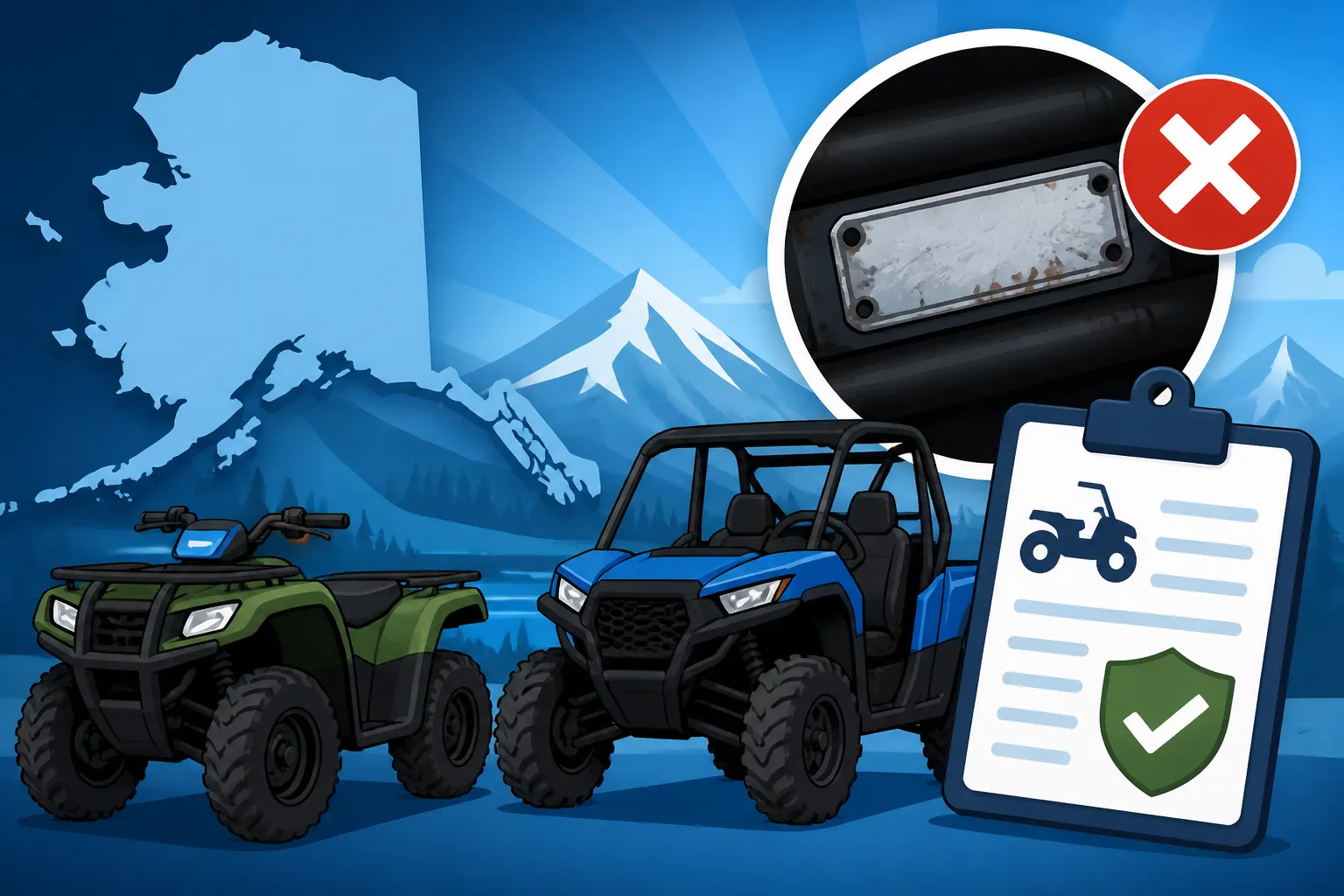
- Rust and Corrosion: Alaska's weather, especially in coastal areas or places with heavy snowfall and subsequent mud, can be incredibly harsh on metal. An older ATV or UTV that has spent years exposed to the elements might have its VIN plate or stamped frame areas heavily rusted, rendering the numbers illegible. Imagine an old Honda Big Red that's been parked outside a cabin for decades – that VIN might be a ghost of its former self.
- Accidental Damage: A rollover, a hard impact, or even years of vibrations can damage the area where the VIN is located. If the frame rail or a small plate was bent, scraped, or broken off, the VIN could be gone with it. Some machines have VINs on easy-to-damage plastic shrouds or stickers, which can simply wear away over time or with sun exposure.
- Aftermarket Frames or Repairs: Some dedicated enthusiasts or mechanics might replace a damaged frame with an aftermarket one, or make extensive frame repairs that inadvertently cover or remove the original VIN. If you bought a machine that has undergone significant customization or restoration, it's possible the original VIN wasn't properly transferred or preserved.
- Intentional Tampering: Unfortunately, in some rare cases, a VIN might be intentionally defaced or removed to obscure the machine's true history, often pointing to theft or illegal modifications. While this isn't the most common scenario, it's one reason why the DMV is so rigorous about VIN verification.
- Very Old Machines: Early ATVs, especially those from the 1970s and early 80s, sometimes had less robust VIN stamping or placement compared to modern machines. The methods weren't as standardized, making them more susceptible to simply fading away over time or being overlooked during a repair. If you've inherited a classic three-wheeler from your grandfather, you might find yourself in this situation.
Understanding these scenarios helps you anticipate the challenges and prepare the right approach for the DMV. It's about being realistic about what you're up against and systematically addressing each potential hurdle.
Steps to Take When Your Alaska ATV/UTV Has No Visible VIN
Discovering your ATV or UTV's VIN is missing or illegible can feel like hitting a wall, but it's not the end of the road for registering your machine in Alaska. There's a methodical approach you can take to try and recover or establish the necessary identification. This process often requires patience and a good deal of detective work.
Initial Investigation and Documentation
Before you even think about stepping foot into the DMV, your first task is a thorough investigation of the machine itself and any existing paperwork. Every little bit of information helps build your case.
First, search every possible location on your machine where a VIN might be. Manufacturers often place VINs in multiple spots, not just one. Common places include:
- The frame rail: This is typically the most common spot, often on the right-hand side, near the front suspension or the footpeg area. It might be stamped directly into the metal.
- A small metal plate: Sometimes, the VIN is on a small riveted plate, often near the steering column, under the seat, or on the engine casing.
- Engine block: Some engines have partial VINs or serial numbers stamped on them that might correspond to the main VIN.
- Original stickers/labels: While these are prone to wear, check for any remaining manufacturer labels on fenders, under the seat, or on plastic shrouds.
Use a strong flashlight, a wire brush (gently!), and even some penetrating oil or a rust remover to clean any suspected areas. Take clear, well-lit photographs of every spot you check, even if nothing is visible. Documenting your diligent search proves you've made a good faith effort.
Next, dig through any and all paperwork you have for the machine. Even if you don't have a formal title, you might have:
- Old bills of sale: Even a handwritten note from a previous owner can be a starting point. Look for [Alaska Bills of Sale for a Used Machine] for examples. It might have the VIN written down somewhere, even if the actual machine’s stamp is gone.
- Warranty cards or owner's manuals: If you're lucky enough to have these, they almost always contain the VIN. This is especially true for newer machines, where a [Alaska Warranty Cards for a New Machine] is common.
- Insurance documents: If the machine was ever insured, the VIN would be on the policy.
- Repair receipts: A mechanic might have recorded the VIN when they worked on it.
- Previous registration records: If the machine was registered in another state, or even previously in Alaska under a different owner, those records could hold the key.
Any piece of paper with a VIN on it, even if it's a photocopy, is gold. It provides tangible evidence that the machine once had this identifier.
The Affidavit Process for Establishing Ownership and History
When you don't have a clear VIN and you lack traditional proof of ownership like a title, the Alaska DMV will often require a sworn affidavit. This is a formal, written statement made under oath, attesting to the facts of your ownership and how the machine came into your possession. It’s a critical piece of documentation for machines that have fallen out of the normal paper trail.
An affidavit should be detailed and truthful. It needs to explain:
- How you acquired the machine: Was it a gift? Did you buy it from a private seller with only a verbal agreement? Did you find it on an inherited property?
- Why there's no VIN: Did it rust off? Was it damaged in a specific incident?
- What efforts you've made to find the VIN or previous owner information: This demonstrates your due diligence.
- That you are the rightful owner: You are asserting, under penalty of perjury, that the machine belongs to you and is not stolen.
It's crucial that any individual who can attest to the machine's history sign this affidavit. For example, if you bought it from a private seller who only gave you a handshake and cash, an [Alaska Affidavits Naming a Seller] form might be necessary, and they would need to sign it. If that seller has moved or passed away, you might need affidavits from multiple people who can corroborate the machine's story, such as family members or long-time neighbors.
You can often find templates for general affidavits online, or resources like LawDepot can provide customizable forms that you can adapt to your specific situation, ensuring it covers all the necessary legal points. While LawDepot offers templates, remember that the specific content needs to be accurate to your unique circumstances. The clearer and more consistent your affidavit, the more credible it will appear to the DMV.
Seeking Assistance from a Dealer or Mechanic
Sometimes, the VIN isn't truly gone, but simply incredibly well-hidden or obscured in a way that’s not obvious to the untrained eye. This is where the expertise of an experienced ATV/UTV dealer or mechanic can be invaluable.
- Dealer Expertise: Authorized dealers for brands like Polaris, Can-Am, or Honda often have intimate knowledge of where VINs are placed on various models and model years, including less common locations. They might have special tools or techniques for finding faded or lightly stamped numbers. They can sometimes trace an engine number back to a full VIN within their own internal systems, though this is not always possible for older machines.
- Mechanic’s Eye: A seasoned mechanic who regularly works on older machines in Alaska might have encountered this issue countless times. They know which areas are prone to rust, where stickers typically peel, or what common aftermarket parts might cover a VIN. They can meticulously clean areas you might have overlooked or identify if a frame has been altered.
Even if they can't magically make a VIN appear, a letter or statement from a reputable dealer or mechanic confirming their efforts to find a VIN, and that they couldn't locate one, can carry significant weight with the DMV. It demonstrates that a professional has examined the machine and verifies your own diligent search. This professional confirmation adds credibility to your situation and shows the DMV you've exhausted all immediate options.
The Alaska No Title Issued (NTI) Registration Process
When all your efforts to find a VIN or a traditional title for your ATV or UTV in Alaska come up short, it's easy to feel defeated. However, the Alaska DMV has a specific pathway designed for these situations: the No Title Issued (NTI) registration program. This program is a lifesaver for many Alaskans who acquire machines without conventional paperwork, especially in a state where many transactions happen off the road system or through informal channels.
Understanding Alaska's NTI Program
The Alaska NTI program is essentially a registration option for All-Purpose Vehicles (APVs) that lack a proper certificate of title or a clear, documented chain of ownership. It acknowledges the reality that many machines change hands without the formal titling process often seen with cars and trucks. For APVs, the emphasis is often more on registration for public land use than a legal title for financial transactions.
The NTI process allows you to get your machine registered and obtain a decal, enabling you to legally ride on public lands where registration is required. However, it's crucial to understand that an NTI registration is not a title. It's a registration that, after a waiting period and specific conditions are met, can lead to a title. This distinction is vital for future plans, such as selling the machine or using it as collateral.
The NTI program is a practical solution for scenarios like:
- Lost or destroyed titles: When the original title is simply gone and the previous owner can't be found.
- Informal sales: Machines acquired through private sales where no formal title was ever issued or exchanged.
- Very old machines: When a machine predates titling requirements or its title has been lost to time.
- Missing VINs: This is precisely why it's a critical path for your situation.
Essentially, NTI provides a way to establish legal identification and usage rights for a machine that, for various legitimate reasons, lacks traditional documentation. To learn more about the broader program, you can refer to [Alaska No Title Issued Registrations].
Requirements for NTI Registration Without a VIN
Navigating NTI registration when you also have a missing VIN adds an extra layer of scrutiny. The DMV needs to be absolutely certain the machine isn't stolen and that your claim of ownership is legitimate. The requirements become more stringent than for an NTI registration where the VIN is present.
Here’s what you’ll generally need, focusing on the missing VIN aspect:
- Vehicle Transaction Application (Form V1): This is the basic form for any APV registration in Alaska. You'll fill out as much information as you can about your machine. Refer to [What Alaska's ATV Registration Form Asks For] for details on completing it.
- Proof of Ownership: This is where your diligent detective work comes into play. If you don't have a traditional title or bill of sale with a VIN, this will primarily consist of your comprehensive affidavit (as discussed above) and potentially supporting affidavits from others. The stronger and more detailed your affidavits, the better. LawDepot can assist you in preparing a robust affidavit for this purpose.
- Documentation of VIN Search: Your photos and written record of searching for the VIN, and any statement from a dealer or mechanic that they couldn't locate it, are essential. This proves you've done your part to locate the original identifier.
- Alaska State Trooper or DMV Inspection (Mandatory): For NTI registrations, especially those with VIN issues, a physical inspection of the machine is required. This is a critical step, which we'll discuss in more detail shortly.
- A Waiting Period: Be prepared for a mandatory waiting period. Alaska's NTI process often involves a [Two-Year NTI Waiting Period] during which your registration is essentially provisional. During this time, the state maintains records and allows for any potential claims against the machine to surface. If no one contests your ownership after two years, you can then apply for a full title. This waiting period is critical for protecting everyone involved.
The DMV is very cautious when a VIN is absent, as it's the primary way they track potential theft. Be prepared for clerks to ask thorough questions and for the process to take longer than a standard registration. Organization of your paperwork and a clear, consistent story are paramount. You can find a comprehensive list of what you'll need for registration, even in these complex scenarios, by consulting the [Alaska Registration Paperwork Checklist].
The Role of an Alaska State Trooper or DMV Inspection
When dealing with an NTI registration, particularly one where the VIN is gone, an inspection by an authorized official is not just a recommendation – it's typically a mandatory requirement. This inspection serves several vital purposes for the state.
An Alaska State Trooper or a designated DMV agent will physically examine your ATV or UTV. During this inspection, they are looking for:
- Signs of Tampering: This is a major focus. They'll meticulously check the areas where VINs are normally found, looking for grinder marks, welding, or any other signs that the original VIN might have been intentionally removed or altered. They are trained to spot these anomalies.
- Legitimacy of the Machine: They'll confirm that the machine appears to be a legitimate, commercially manufactured APV and not a homemade or cobbled-together vehicle that doesn't meet safety standards. (Note that [Alaska Excludes Homemade ATVs] from APV registration.)
- Matching Descriptions: They'll compare the physical attributes of the machine (make, model, color, engine type, etc.) to the description you've provided on your application and affidavits. Any inconsistencies will raise questions.
- Absence of VIN: They will officially verify that there is no legible VIN present on the machine. This is crucial for documenting why you're going through the NTI process specifically for a missing VIN.
The inspector's role is not just to confirm the missing VIN but to act as a gatekeeper against potential fraud or stolen property. Be cooperative, have your machine clean and easily accessible for inspection, and be ready to answer any questions about its history and how you acquired it. The trooper or agent will likely complete a specific inspection form that will then become part of your registration packet for the DMV. Their report is a key piece of evidence that either validates your claim or raises further concerns.
Getting a New VIN Assigned If Necessary
In some extreme cases, even after extensive investigation and a thorough inspection, it might be determined that your ATV or UTV is completely devoid of any verifiable factory VIN, and it's not simply a matter of a lost title. In these situations, the Alaska DMV has a process for assigning a new, state-issued VIN. This is generally a last resort, but it ensures that every legally owned machine can eventually be properly identified and registered.
When a State-Assigned VIN Becomes Necessary
A state-assigned VIN becomes necessary when all other avenues have been exhausted and the Alaska DMV cannot establish the machine's identity through existing manufacturer VINs or sufficient supporting documentation. This usually happens after:
- No Original VIN Found: Despite your meticulous search, and a professional inspection by a dealer, mechanic, or State Trooper, no original manufacturer-stamped VIN can be located or deciphered on the machine.
- Suspicion of Tampering: In rare but serious cases, an inspection might reveal clear evidence that an original VIN was intentionally removed or defaced, but the machine is otherwise determined not to be stolen and legitimate ownership can be established through overwhelming evidence. The state cannot register a machine with a compromised VIN, so a new one is the only way forward.
- No Other Identifying Marks: If the machine is so old or modified that there are no other identifying marks (like engine serial numbers that can be cross-referenced) to prove its origin or legal status.
This step is essentially the state stepping in to create a legal identity for your machine because its original identity is irrevocably lost. It's a formal acknowledgment that the machine exists, belongs to you, and can now be tracked within the state's system.
The Process for Obtaining an Assigned VIN
Obtaining a state-assigned VIN is a more involved process than standard registration and requires close cooperation with the Alaska DMV. It’s not something you can generally initiate yourself without going through the NTI process first and having the need for an assigned VIN identified by the state.
Here's a general outline of what you can expect:
- Application for Assigned VIN: After it's determined that an assigned VIN is needed (usually following the NTI application and inspection), you will likely need to fill out a specific application form for a state-assigned VIN. This form will require all the information you have about your machine and details about why an original VIN cannot be found.
- Additional Inspection and Verification: The DMV will typically require another, even more thorough, inspection. This might involve a specialized unit or a senior inspector who will confirm the complete absence of a manufacturer's VIN and ensure there are no signs of a stolen vehicle. They'll review all the documentation you've submitted, including affidavits and any reports from previous inspections.
- DMV Review and Approval: Your application and all supporting documents will undergo a comprehensive review by the DMV. They are looking to ensure all legal requirements are met and that assigning a new VIN is the appropriate and safest course of action. This might take some time, as these cases are complex.
- Issuance of New VIN: If approved, the DMV will assign a unique VIN to your machine. This new VIN will be different from a manufacturer's VIN and will indicate that it is a state-assigned number.
- Permanent Stamping or Affixing: Crucially, this new VIN must be permanently affixed to your ATV or UTV. This usually involves the DMV instructing you to have the VIN professionally stamped onto the frame of the machine, or they may issue a permanent VIN plate that you must securely attach in a visible, non-removable location. The precise method will be determined by the DMV to ensure its permanence and visibility, much like [Why Your Decal Number Is the Registration Number] is critical for tracking.
- New Registration and Title: Once the assigned VIN is officially affixed and verified, your machine can then be fully registered with this new identifier. This new VIN will be used for all future registrations, transfers, and, eventually, a regular title once the NTI waiting period (such as [Two Uncontested Years]) is successfully completed.
This process is designed to be a fail-safe, providing a legal pathway for all legitimate machines to be identified and registered, no matter how challenging their history. While it can be a lengthy and detailed process, it ultimately provides the peace of mind and legal standing you need to enjoy your ATV or UTV responsibly on Alaska's trails.
| Scenario for Missing VIN | Initial Actions Recommended | Required Documentation (Example) | DMV Inspection | Outcome |
|---|---|---|---|---|
| Rust/Damage | Thorough cleaning, photos of affected area, search alternative locations. | [Alaska Affidavits Naming a Seller], prior owner testimony, mechanic statement. | Yes, to verify VIN illegibility/absence and no tampering. | NTI Registration, potential for assigned VIN if no trace. |
| No Record/Lost Paperwork | Deep dive into machine history, family records, past insurance. | Your detailed affidavit, [Alaska Bills of Sale for a Used Machine] (if found), [Registering a Quad When the Paperwork Is Lost]. | Yes, to verify machine identity and condition. | NTI Registration, eventually full title after waiting period. |
| Suspected Tampering | Document discovery, do NOT attempt to repair, consult law enforcement. | Detailed affidavit, police report (if applicable), expert mechanic assessment. | MANDATORY by State Trooper, extremely rigorous. | NTI Registration, if cleared; assigned VIN almost certain. |
| Aftermarket Frame/Parts | Identify original parts vs. aftermarket, document all modifications. | Affidavit explaining modifications, receipts for parts, mechanic statement. | Yes, to assess frame changes and look for hidden VINs. | NTI Registration, likely assigned VIN if original is gone. |
Disclaimer
This article is for general informational purposes only and does not constitute professional advice. Laws, prices and regulations vary by location and change over time. Consult a qualified professional for guidance on your specific situation.