Customs Paperwork From Canada
Thinking about bringing that sweet ATV or UTV you found across the Canadian border into Alaska? It sounds like a fantastic deal on paper, but trust me, the journey doesn't end when you shake hands with the seller. Navigating customs paperwork can feel like trying to cross a braided glacial river during breakup—confusing, with lots of hidden currents and potential snags. This guide is here to help you understand the essential customs paperwork and procedures, making your import process as smooth as an Interior trail after a fresh snowfall.
Why Crossing the Border with a Machine Isn't Just a Casual Drive
It’s easy to get caught up in the excitement of finding a great deal on an ATV or UTV in Canada, perhaps imagining a quick trip across the border and then straight onto the trails of the Mat-Su Valley. But the reality is that bringing a vehicle, even an off-highway one, from another country into the United States involves a significant amount of official scrutiny. This isn't just a casual drive home; it's an import process, and the rules are in place for some very important reasons.
Understanding the Basics of Vehicle Importation
At its core, any item you bring across an international border for permanent residence in the new country is considered an import, and that includes your quad or side-by-side. Governments have a vested interest in knowing what's coming into their country. This isn't just about collecting duties or taxes; it's also about national security, ensuring goods meet environmental and safety standards, and preventing the entry of stolen property. For off-highway vehicles, while some rules might differ from road vehicles, the principle of proper declaration and documentation remains absolutely critical. Skipping steps or trying to cut corners here can lead to significant delays, fines, or even the seizure of your machine, which is a headache no Alaskan rider wants.
The Difference Between Temporary and Permanent Import
Before you even begin the paperwork journey, it’s important to distinguish between temporary and permanent importation. If you're simply planning a quick riding trip into Alaska from Canada, perhaps to explore some of our incredible trails for a few weeks before heading back north, you're likely looking at a temporary import. For these situations, the requirements are generally less stringent, often only requiring proof of ownership, valid Canadian registration, and perhaps a temporary import declaration at the border. However, most Alaskans looking to buy a machine in Canada intend to keep it here for good, meaning you're dealing with a permanent import. This is where the paperwork really piles up, and the stakes are much higher. Our focus in this guide is on those permanent imports—bringing your new-to-you Canadian machine home to stay.
Essential Paperwork You'll Need to Bring Your ATV/UTV South
The backbone of any successful cross-border vehicle import is meticulous documentation. You need to prove who owns the machine, where it came from, and that it meets US standards. Think of it like preparing for a big hunting trip; you wouldn't head out without your license, tags, and all your gear accounted for. The border crossing is no different.
Proof of Ownership is Paramount
First and foremost, you need to prove that you are the rightful owner of the ATV or UTV, or that you have the legal right to import it. Without solid proof of ownership, you're not going anywhere.
- Bill of Sale: This is perhaps the most crucial document. For any used machine, a detailed bill of sale is indispensable. It needs to clearly state the seller's and buyer's full names and addresses, a complete description of the ATV/UTV (make, model, year, and especially the Vehicle Identification Number or VIN), the purchase price, and the date of sale. Both parties should sign and date it, and it's always a good idea to have it notarized, though not always strictly required for import, it adds a layer of authenticity. A vague bill of sale is a red flag for customs officials. For those wanting to ensure their bill of sale or other foundational paperwork is absolutely watertight, especially when dealing with international transactions, resources like LawDepot can be incredibly helpful. They offer templates and guidance for creating legally sound documents, which can give you peace of mind when you're preparing for a border crossing. Remember, this document is what will eventually help you with your [Alaska Bills of Sale for a Used Machine] requirements when registering it in the state.
- Title or Registration Document: If the ATV/UTV was titled in Canada (some provinces title all vehicles, others only register), you'll need the original title certificate. If it was only registered, then the original registration certificate is required. Make sure the name on the title/registration matches the seller on your bill of sale. Canadian titling and registration practices can differ from state to state or province to province, so be prepared for slight variations.
- Letter of Authorization: If you are not the person who purchased the machine, or if you are transporting it for a business or another individual, you will need a notarized letter of authorization from the registered owner or the purchasing entity. This letter should clearly state that you have permission to transport the vehicle across the border.
Preparing for US Customs and Border Protection (CBP)
The US Customs and Border Protection (CBP) officers are the gatekeepers. They are looking for specific declarations about the vehicle's compliance with US regulations. This is often where things get tricky, especially with off-road machines that weren't originally manufactured for the US market.
- EPA and DOT Compliance: This is usually the biggest hurdle. The Environmental Protection Agency (EPA) sets emission standards, and the Department of Transportation (DOT) sets safety standards for vehicles imported into the US. While off-highway vehicles are exempt from some DOT highway safety standards, they still must meet specific EPA emission requirements unless they are over 21 years old or specifically exempted. It’s critical to verify if the machine was originally manufactured to US EPA standards (often indicated by a label on the frame or engine) or if it qualifies for an exemption. Older machines, or those designed specifically for the Canadian market, might not meet these standards, making permanent import difficult or requiring costly modifications. This is not a step to overlook; a non-compliant machine will not be allowed to enter permanently.
- Form HS-7 (Importation of Motor Vehicles and Motor Vehicle Equipment): This form is required for all vehicle imports. On it, you'll declare whether your ATV/UTV complies with US DOT safety standards. For off-road vehicles, you would typically check a box indicating that it is not a motor vehicle subject to all federal motor vehicle safety, bumper, and theft prevention standards. However, you still need to know how to properly classify it.
- Form EPA 3520-1 (Importation of Vehicles and Engines): This form addresses EPA emission standards. You'll need to declare if the vehicle conforms to US emission standards, is exempt (e.g., if it was originally certified for sale in the U.S. and bears a US emissions label, or if it falls under an age exemption for off-road vehicles), or requires modifications to conform. Be truthful and have any supporting documentation ready. If you're unsure about a machine's compliance, contacting the manufacturer directly with the VIN is often the best first step.
- The CBP Declaration: When you arrive at the border, you will make a formal declaration to the CBP officer. Have all your original documents neatly organized and readily accessible. Be prepared to answer questions about the vehicle's purchase, its intended use, and its compliance status. Honesty and clarity are key here.
Navigating Duties, Taxes, and Other Financial Considerations
Beyond the paperwork proving ownership and compliance, there are financial aspects to consider when importing an ATV or UTV from Canada. While Alaska offers some unique advantages on the tax front, understanding potential duties is crucial.
Understanding Import Duties and Fees
When you bring a product into the US from another country, it's often subject to import duties, which are essentially taxes collected by the government. The amount of duty can vary based on the type of goods and their country of origin.
- Duty Rates: For ATVs and UTVs, the duty rate can depend on several factors, including whether the machine is new or used, its engine displacement, and its country of manufacture. For vehicles manufactured in Canada or Mexico, the North American Free Trade Agreement (NAFTA) or its successor, the United States-Mexico-Canada Agreement (USMCA), might offer preferential duty treatment. However, claiming these benefits requires specific documentation and proof of origin. It's not always automatic.
- Calculation: Duties are typically calculated as a percentage of the vehicle's declared value (the price you paid, as shown on your bill of sale). You'll pay these duties directly to CBP at the time of import, or you'll be given instructions on how to pay them if it's a commercial shipment. It's always a good idea to research the current duty rates for ATVs/UTVs by contacting CBP or checking their website before you head to the border, so you're not hit with an unexpected cost.
State and Local Sales Taxes in Alaska
This is one area where Alaskans often catch a break compared to folks in the Lower 48.
- No Statewide Sales Tax: One of the big advantages of living in Alaska is that we don't have a statewide sales tax. This means you won't pay any state sales tax on your imported ATV or UTV. This can be a significant saving compared to buying in many other states or even buying in Canada and then having to pay your home state's sales tax. Check out [No Statewide Sales Tax] for more details.
- Borough and Local Sales Taxes: While there's no state sales tax, it's important to remember that some boroughs and municipalities in Alaska do levy their own local sales taxes. If you reside in one of these areas, you might be subject to a local sales tax on the purchase price of your machine. It's critical to check the specific tax ordinances for your borough or city well in advance. For example, some areas might have a sales tax, while others do not. This will be an important consideration when you get around to [Alaska Borough Taxes on a Machine]. Make sure to account for this potential cost based on where you plan to register and primarily use your machine. Keep in mind that any sales tax you might have paid in Canada typically isn't refundable, and it doesn't offset any US duties or Alaskan local taxes.
Practical Tips for a Smooth Border Crossing and Beyond
Bringing a machine across the Canadian border isn't something you want to do on a whim. Just like planning a multi-day ride into the backcountry, preparation is your best friend. A little forethought can save you a ton of grief at the border and beyond.
Before You Even Drive to the Border
Preparation begins long before you load the ATV or UTV onto your trailer and head south. Getting everything in order beforehand can make all the difference.
- Call Ahead: This is perhaps the most undervalued tip. Different border crossings, even within the same region, can have varying traffic volumes, staffing levels, and specific procedures for vehicle imports. Call the specific US port of entry you intend to use several days or even weeks in advance. Ask them about the exact documentation they require for an ATV/UTV import from Canada, including which specific forms (HS-7, EPA 3520-1) they want and how they prefer them completed. This direct communication can clarify any ambiguities and prevent surprises.
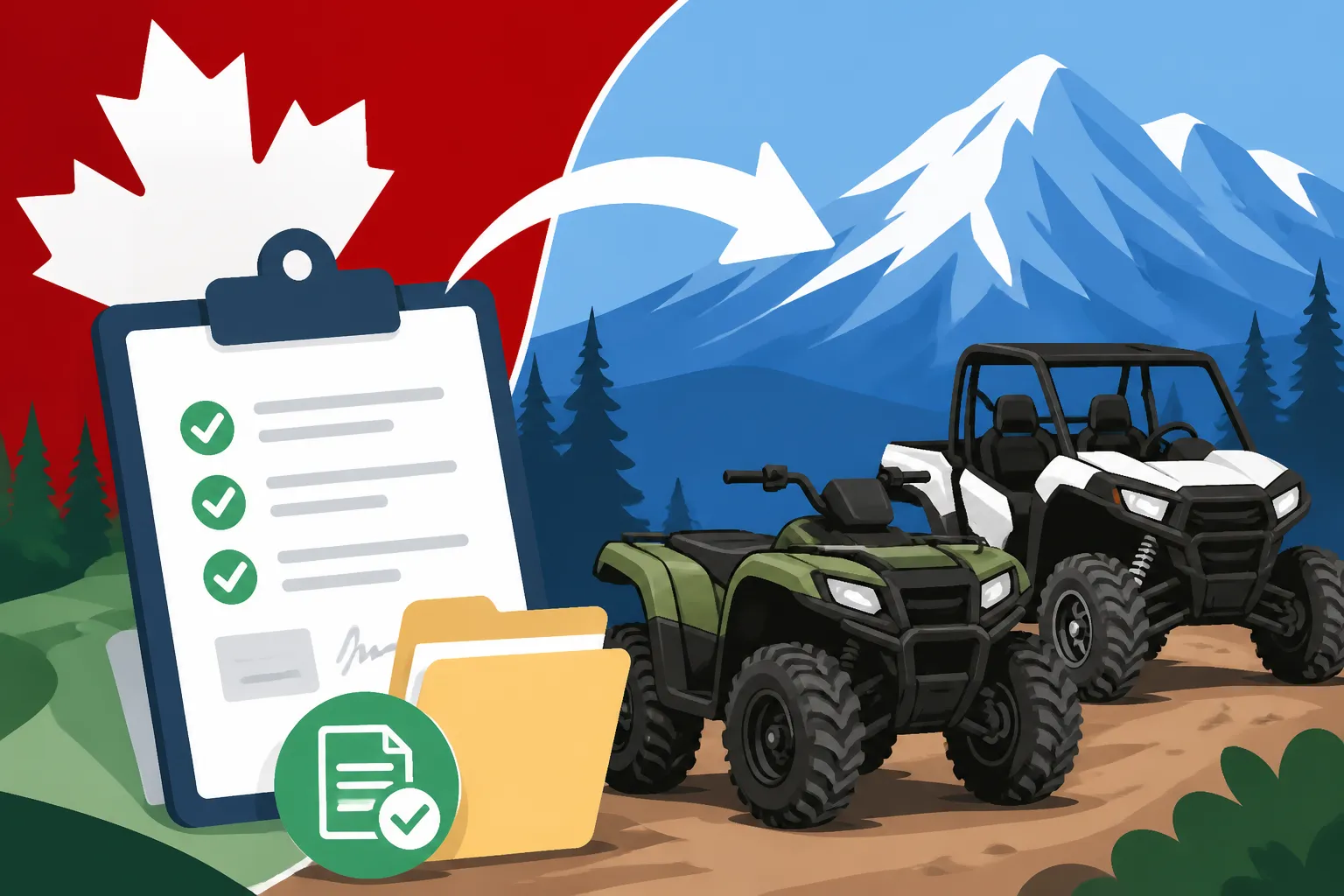
- Organize Your Documents: Create a dedicated folder or binder for all your paperwork. Include originals and several photocopies of everything: bill of sale, Canadian title/registration, your passport, driver's license, and any completed US customs forms. Have everything in a logical order, ready to present. A well-organized packet sends a message to the officer that you've done your homework.
- Clean Your Machine: This might seem minor, but it's important. Before crossing, thoroughly clean your ATV or UTV. Remove all mud, dirt, plant matter, and any other debris. Agricultural inspections are common, and any biological material can cause delays or even refusal of entry due to concerns about invasive species or diseases. A sparkling clean machine shows respect for the process and can help avoid unnecessary scrutiny.
- LawDepot for Paperwork Accuracy: For those wanting to ensure their bill of sale or other foundational paperwork is absolutely watertight, especially when dealing with international transactions, resources like LawDepot can be incredibly helpful. They offer templates and guidance for creating legally sound documents, which can give you peace of mind when you're preparing for a border crossing. This is especially useful for making sure your [Alaska Bills of Sale for a Used Machine] is comprehensive and includes all necessary details.
The Border Crossing Experience
Once you arrive at the border, the key is to be prepared, patient, and completely honest.
- Be Patient and Honest: Customs officers have a serious job. Expect a thorough review of your documents and potentially the vehicle itself. Answer all questions clearly, directly, and truthfully. Do not attempt to mislead or withhold information. Any discrepancies can lead to significant problems.
- Declare Everything: Make sure you declare all goods you are bringing into the US, not just the ATV/UTV. This includes any personal belongings, gifts, or other purchases. Failure to declare items can lead to fines and complications.
- Proof of Funds: Be prepared to show proof of how you paid for the machine, if asked. This could be bank statements, a cashier's check stub, or other financial records that confirm the transaction.
After the Border: Alaska Registration and Titling
Once you've successfully cleared US Customs and Border Protection, breathe a sigh of relief! The toughest part is over. Now, your focus shifts to getting your ATV/UTV legally registered and titled in Alaska. The customs paperwork you just navigated will be absolutely vital for this next step.
- Alaska DMV Process: Your CBP-stamped forms (like the HS-7 and EPA 3520-1) serve as official proof that the vehicle was legally imported into the United States. You'll need these documents, along with your Canadian bill of sale and title/registration, when you go to the Alaska Division of Motor Vehicles (DMV) or a partner office. This is a crucial step towards [Alaska APV Titling Required Since 2022] and [Registering an ATV at an Alaska DMV].
- Applying for Alaska Title and Registration: If you surrendered a Canadian title during the import process, you’ll be applying for an original Alaska title. You will also need to complete [The Vehicle Transaction Application Every OHV Owner Files]. Make sure you have all the required information about the machine and yourself. The DMV will review all your paperwork to confirm legal ownership and import status. They will also process your registration, which is essential for [Alaska Registration Before Riding Public Land].
- New Resident Considerations: If you’re also a new resident to Alaska, there might be additional requirements for your personal documentation. See [Alaska Registration for a New Resident] for more information.
- Ongoing Documentation: Even after crossing, if you find yourself needing to create a new bill of sale for subsequent sale in Alaska or want a robust record of your purchase, LawDepot’s templates can be a great asset. They simplify the legal aspects so you can focus on getting your machine on the trails. Keep all your import documents safely filed, as you might need them in the future if you ever sell the machine.
Here’s a quick overview of some key paperwork considerations:
| Document Type | Purpose for Customs & Alaska DMV | Key Details to Check |
|---|---|---|
| Bill of Sale | Proves ownership and purchase price for customs duties and Alaska registration. | Full names/addresses of buyer/seller, VIN, make, model, year, purchase price, date, signatures. Consider notarization. Crucial for [Buying From a Private Seller in Alaska]. |
| Canadian Title/Reg. | Proves previous legal ownership. Surrendered to CBP if titled, kept if only registered. | Original document, matches seller on bill of sale. If only registered, you might be registering an [Alaska Machines With No Paperwork] scenario if Canada doesn't issue titles for your machine type. |
| US Customs Form HS-7 | Declares vehicle compliance with DOT safety standards (or exemption for off-road use). | Complete accurately, indicating appropriate exemption for off-road vehicles. Your understanding of [Filling Out Alaska's Form V1 Line by Line] will follow this. |
| US Customs Form EPA 3520-1 | Declares vehicle compliance with EPA emission standards (or exemption). | Complete accurately, declaring compliance or relevant exemption (e.g., US-certified, age exemption). Important for meeting federal standards before Alaska registration. |
| Your Passport/ID | Verifies your identity as the importer. | Ensure it's valid and current. |
| The Vehicle Transaction Application (Form V1) | Alaska form to apply for title and registration once imported. | Required for all Alaska registrations. You'll transfer the machine into your name using the customs and bill of sale documents. See [What Alaska's ATV Registration Form Asks For] for details. |
Navigating customs paperwork from Canada into Alaska with an ATV or UTV might seem daunting, but with careful preparation and attention to detail, it's absolutely manageable. Remember to call ahead, organize everything meticulously, and be honest at the border. Soon enough, you'll have your Canadian import legally registered and ready to hit the incredible trails Alaska has to offer.
Disclaimer
This article is for general informational purposes only and does not constitute professional advice. Laws, prices and regulations vary by location and change over time. Consult a qualified professional for guidance on your specific situation.