Alaska Registration for a Cabin Machine
You've got a trusty ATV or UTV at your remote Alaska cabin, maybe it's been there for years, and you rarely, if ever, bring it back to the road system. The idea of going through a formal registration process for a machine that feels like it lives in its own wild world can seem like an unnecessary hassle, especially when you're miles from the nearest DMV office. This guide will walk you through Alaska's registration requirements specifically for those beloved cabin machines, helping you understand when and how to get it done without unnecessary stress.
Understanding Alaska's APV Registration Rules for Remote Machines
This is the million-dollar question for so many Alaskans who cherish their remote getaways: Does that quad tucked away at the cabin actually need to be registered? You might think, "My machine never leaves my property or the trails right around my cabin, far from any public road. Why would I need to register it?" And for a good reason, because Alaska's rules for All-Purpose Vehicles (APVs) — which include most ATVs and UTVs — hinge significantly on where you operate the machine. It's all about public versus private land.
When Does a Cabin Machine Really Need to Be Registered? Public Versus Private Land
The key distinction lies between private land and public land. If your ATV or UTV is only ever operated on your own private property, and it truly never touches any public trail, road, or state-managed land, then generally, you don't need to register it with the state. This is what's known as the [Alaska Private Land Registration Exemption]. It's a common scenario for folks with large parcels of land or those whose cabins are entirely self-contained, with all riding occurring exclusively within their own boundaries.
However, this definition of "private land" is critical. It means your land, not just land that feels "private" because it's remote or undeveloped. For example, if you ride on an easement that crosses state land, a federal right-of-way, or even a borough-maintained trail to get to your cabin, that portion of the ride would constitute public land use. In that instance, your machine absolutely needs to be registered.
The moment your cabin machine rolls onto any public land—be it state game refuge, borough land, federal forest land, or even a designated public trail or waterway—it needs to be registered. This includes crossing public access easements, using state-maintained trails, or traversing any ground not privately owned by you. Even riding on a frozen river that is considered a public highway, or using a beach that is public domain, would trigger the registration requirement. For many, it's often easier to just register the machine and be done with it, rather than constantly worrying if your specific use case falls under the exemption or not.
The All-Purpose Vehicle Class and Your Cabin Quad
Alaska categorizes ATVs and UTVs, along with certain other off-highway vehicles, under the "All-Purpose Vehicle" (APV) class. This class covers a broad range of machines designed for off-road use, which perfectly describes most cabin machines. When you register your quad or side-by-side, it's being registered as an APV. The state isn't just looking for vehicles on paved roads; they're very much interested in tracking machines used on the vast network of trails, winter routes, and open country that Alaskans rely on daily.
This registration is crucial because the fees collected help fund the very trail maintenance, signage, and public safety efforts that benefit all riders, even those who spend most of their time off the beaten path. It also provides a clear identification for your machine. In remote settings, where theft can sometimes be an issue, having your machine registered and displaying a valid decal can be an important deterrent and aid in recovery, as law enforcement has a clear identifier for your specific equipment. [Alaska OHV Registration Terms Explained] clarifies how these terms apply to your machine.
Even if your machine is an older model that might not look like the newest APVs roaring through the wilderness, if it fits the description of an ATV, UTV, or other specified off-highway vehicle, it falls under this class. There are specific exclusions, such as snowmobiles (which have their own registration class) and certain tracked vehicles, but most common cabin quads and side-by-sides are squarely within the APV definition. Don't assume just because it's an old, beat-up workhorse that it's exempt; its purpose and where it's ridden are the primary factors.
Common Misconceptions About Remote Machine Registration
It's easy to fall prey to common misunderstandings when it comes to registering a machine that spends its life tucked away in the bush. One major misconception is that if you only use your machine in "unorganized boroughs" or areas without a heavy local law enforcement presence, the rules don't apply. This isn't true. State law applies statewide, regardless of local borough organization or municipal density. Alaska State Troopers or park rangers can and do patrol remote areas, often by air or boat, and they are fully authorized to enforce APV registration rules and issue citations for non-compliance.
Another common myth is that if your machine doesn't have a title, you can't register it, or you don't need to. While titling rules for APVs in Alaska have evolved, registration is a separate process. Many older machines, particularly those that have lived at cabins for decades, may never have had a formal title document. Alaska has provisions for [Alaska No Title Issued Registrations] which allow you to register a machine even without a traditional title, provided you can demonstrate sufficient proof of ownership and a clear chain of possession. It might just take a bit more legwork and involve a waiting period in some specific cases.
Finally, some owners believe that because their machine is primarily used for subsistence activities, is a vital tool for their trap line, or essential for a mining claim, it's automatically exempt from registration. While these uses are integral to life in Alaska, the general rule still applies: if you're operating on public land, registration is required. Subsistence activities or commercial uses don't automatically grant an exemption from basic vehicle registration laws. It's always best to confirm your specific situation with the DMV if you're unsure, rather than risk a penalty miles from anywhere.
Navigating Ownership Proof Challenges for Old or Remote ATVs
One of the biggest hurdles for registering a cabin machine isn't the act of filling out a form, but proving you actually own the darn thing. Over the years, paperwork can get lost, families might pass machines down through generations, or an old quad might have been acquired in a less-than-formal transaction decades ago. This often leads to unique challenges when it's time to register.
Lost Bills of Sale and Affidavit Options
It's a familiar story for many Alaskans: you bought that reliable workhorse ATV years ago from a friend of a friend out in the Valley, paid cash, and the handwritten bill of sale vanished sometime between last summer's fishing trip and this winter's firewood haul. Now you need to register it, and that crucial piece of paper is nowhere to be found. Without the original bill of sale, what do you do? Thankfully, Alaska's DMV recognizes that life happens, and they do offer alternatives to prove ownership.
The most common solution for a lost bill of sale, especially if the original seller is still available and cooperative, is an affidavit. This is a sworn statement, signed by the seller (if you can still find them and they're willing) in front of a notary public, attesting that they sold the machine to you on a specific date, often including the VIN and other identifying details. This notarized document then acts as your proof of purchase for the DMV. [What an Affidavit Naming the Seller Must Include] outlines the key details needed. You can often find generic affidavit forms online, or use a legal document service like LawDepot to draft a legally sound document, ensuring all the necessary fields and disclaimers are properly covered.
If the seller is no longer available, or for whatever reason, unwilling to provide such an affidavit, the process becomes more complex. In such cases, it might require a different kind of affidavit from you, the buyer, detailing how and when you acquired the machine, along with any other supporting evidence you can provide, such as old photos or maintenance records in your name. Sometimes, a notarized copy of a previous registration or even a detailed purchase order from a dealer can serve as proof. However, for a truly old cabin machine, these might not exist. The goal is to provide enough verifiable information to satisfy the DMV that you are the rightful owner. Don't be afraid to explain your situation clearly to the DMV clerk; they often have experience with these kinds of unique scenarios.
Inherited Machines and Estate Considerations
When a beloved cabin machine passes down through a family, especially after an owner has passed away, proving ownership can become a delicate matter. Often, these machines weren't explicitly mentioned in a formal will, or the paperwork was stored with other personal effects that are now hard to locate. The state needs to see a clear chain of ownership, even in these emotional and often challenging circumstances, to legally transfer registration.
If the machine was part of a formal estate that went through probate, the executor of the estate should have documents such as letters testamentary or an affidavit of heirship, which legally authorize them to transfer ownership to the new designated owner. This demonstrates that the machine was legally bequeathed or distributed as part of the estate. The individual inheriting the machine would then present these legal documents along with [The Vehicle Transaction Application Every OHV Owner Files] to register it in their name.
If there was no formal estate process, which is quite common for smaller assets like an ATV in remote Alaskan families, it gets trickier. You might need to provide a family affidavit, signed by multiple family members and ideally notarized, attesting to the fact that the machine belonged to the deceased and has been legitimately passed to you. Again, using templates from services like LawDepot can help ensure these affidavits are properly structured and include all the legal language needed to satisfy the DMV, reducing the chance of rejection. This is a situation where careful documentation, even created after the fact, can save a lot of headaches down the line.
What to Do If You Have No Paperwork At All
Let's face it: for some older machines that have been at the cabin for generations, or were acquired decades ago in a casual trade, there might genuinely be no paperwork whatsoever—no bill of sale, no title, no previous registration records, nothing. This can feel like a dead end, a situation where you might throw your hands up in frustration, but it's not necessarily so in Alaska. The state has processes for these unique circumstances.
The state has a specific process for [Alaska Machines With No Paperwork]. This typically involves filing an application for a "No Title Issued" (NTI) registration. Essentially, you'll apply for registration based on your long-term possession and use of the machine, along with a detailed affidavit explaining the complete lack of original paperwork and how you came into possession of the ATV or UTV. The DMV will then run checks to ensure the machine isn't reported stolen and that there are no other claims on its ownership.
There's often a waiting period involved, sometimes up to two years, during which the machine is registered, and you'll receive a decal, but no formal title is issued. This waiting period allows any potential rightful owners to come forward and make a claim. After this waiting period, and assuming no conflicting claims have arisen, you can then apply for a full title for the machine based on your NTI registration. This process, while requiring patience and thoroughness, acknowledges the unique circumstances of machine ownership in Alaska's remote communities and is a vital pathway for many cabin owners to bring their machines into compliance. You can learn more about [Waiting Two Years for a Title] if this applies to you.
The Practicalities of Registering a Machine That Stays in the Bush
Okay, you've figured out if you need to register and how to prove ownership. Now comes the practical challenge: actually getting it done when your machine and, likely, you are far from the nearest official office. This step involves overcoming geographical and logistical hurdles that are commonplace in rural Alaska.
Gathering Necessary Documents Without Internet or Easy Access
In a world increasingly reliant on online forms and digital submissions, trying to gather paperwork for a remote cabin machine can feel like a significant logistical challenge. You might not have reliable internet access at your cabin, making it hard to download forms, research requirements, or communicate with the DMV. This means preparation is absolutely key before you head into town or to a more connected area.
Before you leave your cabin for a trip to the road system, make a comprehensive list of every single document and piece of information you need. Print out the generic [What Alaska's ATV Registration Form Asks For] and the [The Vehicle Transaction Application Every OHV Owner Files] beforehand. Gather any existing ownership documents you have: old bills of sale, a previous registration card, a transfer of title, or any affidavits you've prepared. Crucially, take clear photographs of the machine's Vehicle Identification Number (VIN) and any other identifying marks, as these will be essential for the application. If you have the luxury, scan or photograph these documents and email them to yourself or a trusted friend on the road system so you have digital backups.
Consider writing down answers to common questions about the machine – make, model, year, engine size, color, and how you acquired it. Also, have your personal identification ready. Having this information readily available and organized will significantly streamline the process once you get to a DMV or partner office, avoiding frustrated back-and-forth trips. This kind of diligent pre-planning makes a huge difference when you're dealing with limited time and resources away from your remote location.
Using Alaska Partner Offices for Registration in Rural Areas
For many cabin owners, the nearest full-service DMV office might be a multi-day journey by land, air, or water. Thankfully, Alaska understands this unique challenge and has established a network of [Alaska Partner Offices That Register OHVs]. These are often local businesses, city government offices, or other establishments authorized to process vehicle registrations on behalf of the state. They can be found in smaller communities and sometimes even in rural hubs that are still quite a distance from a main DMV branch.
Using a partner office can significantly reduce your travel time and logistical headaches. These offices can typically handle the registration application, collect fees, and issue your registration decal on the spot, allowing you to walk out with your proof of registration. It's always a good idea to call ahead to confirm their current hours of operation, what specific documents they require, and if they process APV registrations specifically, as some might focus only on automobiles or certain types of transactions. Be prepared with all your original documents, including your proof of ownership and identification.
While they might not be able to offer the same level of in-depth guidance as a main DMV office on complex titling issues like [Alaska No Title Issued Registrations], they are excellent for straightforward registration renewals or new registrations with clear documentation. This decentralized system is a lifesaver for residents who live far from major population centers, making it feasible to keep your cabin machine legal without dedicating a full week to travel.
Decal Placement and Visibility on a Cabin Machine
Once you've successfully registered your cabin machine and received your new decal, the next step is proper placement. This might seem like a minor detail, but incorrect decal placement can lead to questions or even citations from law enforcement, even if your registration is otherwise valid. Alaska's regulations are specific about where the decal should be displayed to ensure it's clearly visible when someone is inspecting the machine.
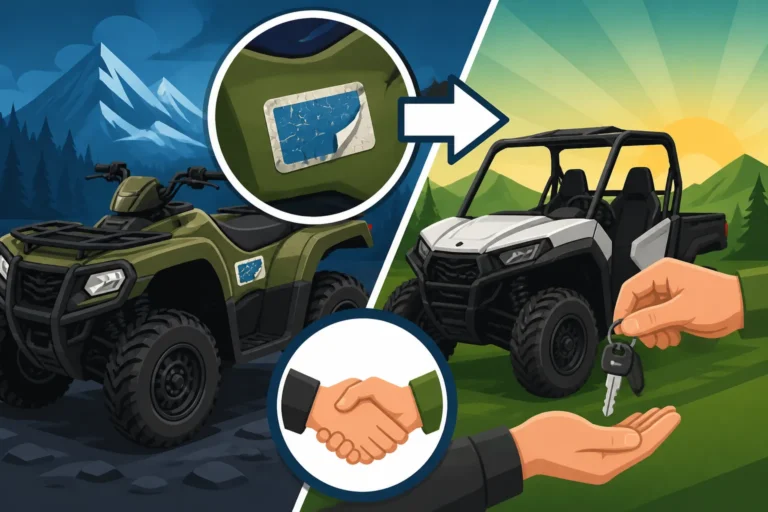
For ATVs, the decal needs to be displayed on the tunnel side of the machine. This typically means on the front half of the machine, often near the footwells, on the frame, or on the body panel, in a spot that is clearly visible to an observer. For side-by-sides or UTVs, the rules are similar, requiring visibility from the side of the vehicle, usually on a body panel. [Alaska Decal Placement on the Tunnel Side] gives more specific guidance. The idea is that an officer should be able to easily see the decal and its identifying numbers without having to search for it, confirming your machine is properly registered.
Choose a flat, clean, and smooth surface for placement, and ensure it's free of mud, grease, or peeling paint. In Alaska's harsh environment, decals can fade significantly from sun exposure, peel off due to weather, or simply get covered in mud, snow, or ice during use. It's a good practice to periodically check your decal's condition. If it becomes unreadable, damaged, or falls off, you'll need to obtain a replacement from the DMV or a partner office. Keeping your decal visible helps avoid unnecessary interactions with authorities and demonstrates your compliance with the state's APV laws.
Beyond Registration: Other Considerations for Your Cabin Machine
Getting your cabin machine registered is a crucial step for legal operation, but it's part of a larger picture of responsible ownership and safety in the Alaskan wilderness. There are other practical aspects to consider to ensure your machine serves you well and keeps you safe.
Insurance and Liability for Remote Use
While Alaska mandates liability insurance for APVs operated on roads or highways (where legal), the requirements for machines used exclusively off-road, particularly in remote cabin settings, can be a bit different. However, even if not strictly mandated by law for your specific use, carrying insurance for your cabin machine is incredibly wise. Accidents happen, even far from civilization, and the financial consequences for damage or injury can be devastating.
Consider the potential for damage to your own machine from a mishap, injury to yourself or a passenger, or even property damage to someone else's cabin, equipment, or private land. A comprehensive off-road vehicle insurance policy can cover these risks, providing a financial safety net. Many major insurance providers offer specific policies tailored for ATVs and UTVs. While you might feel isolated at your cabin, liability doesn't disappear just because you're miles from the nearest paved road. Imagine a scenario where you're helping a neighbor and accidentally damage their boat or cabin with your machine; without insurance, you'd be personally responsible for those repair costs.
Even if you're only riding on your own land, having adequate medical coverage for accidents is paramount. Access to emergency medical services in remote Alaska is often by air, which can incur astronomical costs, quickly reaching tens of thousands of dollars. Review your existing health insurance to understand its coverage for off-road accidents, and consider a specific APV policy that includes medical payment coverage or supplemental accident insurance. It's peace of mind that's worth the investment for any machine operating in the bush, especially when help is hours or days away.
Transporting Your Machine to and from the Cabin
The logistics of getting your machine to and from a remote cabin often involve unique challenges, whether by barge, small plane, snowmachine trail, or a long drive down gravel roads. While the machine is at the cabin, its APV registration status as discussed above applies. However, when you're actively transporting it to or from the cabin, especially if that transport involves public roads or highways, different rules come into play for the transport vehicle.
If you're trailering your ATV or UTV on public roads, the machine itself doesn't need to be registered for road use (as it's cargo), but your trailer likely will. Ensure your trailer has proper registration, functioning lights, and any safety chains required by law. If your cabin machine is being transported on the back of a truck, make sure it's properly secured with appropriate tie-downs to prevent shifting or falling out, which could create a severe hazard for others on the road.
For transport on designated snowmachine trails during winter, the snowmachine pulling the ATV/UTV on a sled needs to be registered as a snowmachine (if applicable to that trail), but the ATV/UTV being pulled doesn't need its own separate snowmachine registration. However, if that ATV/UTV is going to be driven on public land once it reaches the cabin, then its APV registration is still required. It's important to think about each stage of your journey and what rules apply to the specific vehicle you are operating or transporting at that moment, particularly when considering [Buying From a Private Seller in Alaska] and then transporting it to your cabin.
Maintenance and Storage for Longevity in a Harsh Climate
A cabin machine often faces tougher conditions and less frequent, specialized maintenance than one that lives in a heated garage in town. From extreme cold to damp summers, the Alaskan climate is brutal on machinery. Proper maintenance and storage are vital for keeping your registered machine running reliably and extending its lifespan, especially when parts and service are not readily available.
Before leaving your machine at the cabin for extended periods, especially through the long winter, perform thorough maintenance. This includes checking all fluid levels and conditions, lubricating moving parts, applying rust preventative, stabilizing fuel with additives, and ensuring the battery is either removed and stored in a warm place or connected to a trickle charger if consistent power is available. Protect exposed parts from rust and corrosion. Rodent-proofing is also a must; clogged air intakes, nests in exhaust, or chewed wiring can quickly disable a machine and be a costly repair.
When storing, try to keep the machine under cover, away from direct precipitation, blowing snow, and intense summer sun. While many cabin machines endure open-air storage, a simple tarp, a sturdy cover, or a small lean-to can make a huge difference in protecting it from the elements. Regularly checking on the machine, even briefly, if you visit the cabin, can help catch small issues before they become major, costly problems. A well-maintained and properly stored cabin machine, along with its valid registration, will serve you faithfully for many years to come in Alaska's backcountry.
Document Checklist for Alaska ATV/UTV Registration
To help you prepare for registering your cabin machine, here's a quick overview of common documents you might need, depending on your ownership scenario. Remember to always bring original documents if possible.
| Document Type | Scenario | Where to Get It / What to Do |
|---|---|---|
| Bill of Sale (original) | New purchase from private party | Obtain from seller; keep securely with original signatures |
| Warranty Card | New purchase from an authorized dealer | Provided by dealer upon purchase; often acts as initial proof |
| Affidavit Naming Seller | Lost bill of sale, seller cooperative | Drafted by you/seller, notarized; LawDepot for templates |
| Affidavit of Heirship | Inherited machine, no formal estate | Drafted by heirs, notarized; multiple family signatures helpful |
| Letters Testamentary | Inherited machine, part of a formal estate | Issued by probate court; legal authorization for transfer |
| Manufacturer's Certificate | New machine from out-of-state dealer | Issued by manufacturer, transferred via dealer for titling |
| NTI Application | No paperwork, long-term possession in Alaska | File with DMV; includes your affidavit; leads to [Waiting Two Years for a Title] |
| Vehicle Transaction App. (Form V1) | All registrations for any APV in Alaska | Required DMV form; fill out carefully with all machine details |
Disclaimer
This article is for general informational purposes only and does not constitute professional advice. Laws, prices and regulations vary by location and change over time. Consult a qualified professional for guidance on your specific situation.