Insuring a Machine Before Your First Ride
There's nothing quite like the excitement of bringing home a new ATV or UTV in Alaska. You've got visions of carving trails, exploring vast landscapes, and maybe even chasing a moose or two (from a safe distance, of course!). But before you even think about putting rubber to trail, there's a crucial, often overlooked, step that can save you a mountain of headaches down the line: getting your machine properly insured. This isn't just a formality; it's a shield against the unpredictable Alaskan wilderness and the unexpected mishaps that can turn an epic adventure into a costly disaster.
Why Insurance Matters Even Before Your First Alaskan Ride
It’s easy to get swept up in the thrill of a new machine. You want to get it off the trailer and onto the nearest gravel pit, or maybe just take a quick spin down the driveway. "I'll get insurance next week," you might think. But that week might be too late. Alaska's environment, while breathtaking, is also full of surprises, and the legal requirements for operating an All-Purpose Vehicle (APV) here mean you simply can't afford to be uninsured, even for that very first, innocent ride.
The Unpredictable Nature of Alaska's Outdoors
Picture this: You've just taken delivery of your shiny new side-by-side. You're eager to try it out, so you head to a familiar gravel track on the outskirts of town. Maybe it's a bit slicker than you expected, or a rock suddenly appears out of nowhere. A moment of distraction, a minor miscalculation, and suddenly you're looking at a bent A-arm or worse, a rollover. Now, imagine if that incident involved someone else's property—a fence, a parked vehicle, or even another rider. The excitement quickly turns into a pit in your stomach, and the bills start piling up.
Even if you're the most cautious rider in Alaska, the unexpected can happen. A rogue tree branch, a patch of ice that wasn't there yesterday, or wildlife darting across your path are all real possibilities. And let's not forget mechanical failures that can lead to accidents, or even theft of your prized possession from your garage or shed. Without insurance, you're on the hook for every single penny of repair costs, medical bills for injuries, or property damage to others. It’s a gamble that most Alaskans simply can’t afford to take.
Alaska's Legal Landscape for APVs
Here in Alaska, the law isn't just a suggestion; it's a requirement. Specifically, if you plan to operate your APV on a public road or highway, or any area accessible to the public, you must carry liability insurance. This isn't just about protecting yourself; it's about protecting everyone else on the road and trail. While many communities have strict [Alaska Bans APVs in Anchorage] and [Alaska Bans APVs in Fairbanks] on roads, there are still countless instances where an APV crosses a road, uses a shoulder to access a trail, or rides on a designated multi-use road.
Even a quick dash across a highway to get to another trail system, or a ride down a village road, triggers this insurance requirement. If that "first ride" involves even a foot of public right-of-way, you need to be covered. Getting caught without it can lead to fines, a suspended driver's license, and other penalties that quickly overshadow the cost of an insurance policy. It's not worth the risk, especially when the consequences can impact your ability to drive your regular vehicle too. As we often discuss, [Alaska Requires Liability Insurance for an APV] is a firm rule that every APV owner needs to understand before they even turn the key.
Understanding Alaska's APV Insurance Requirements
Navigating the world of insurance can feel like trying to find your way through a whiteout without a GPS. There are so many terms, so many options, and it can be tough to figure out what you truly need versus what's just extra. For your ATV or UTV in Alaska, it really boils down to two main categories of protection: what the law says you must have, and what's smart to have to protect your investment.
The Bare Minimum: Liability Coverage
When the state of Alaska talks about mandatory insurance for your APV on public roads, they're talking about liability coverage. This is your foundation, and it's designed to protect other people and their property if you're at fault in an accident. It doesn't pay for damage to your machine or your medical bills; it covers the damage you inflict on someone else.
For example, imagine you’re riding on a designated public trail, come around a blind corner a little too fast, and collide with another rider, damaging their quad and sending them to the emergency room. Your liability coverage would kick in to pay for the repairs to their machine and their medical expenses, up to your policy limits. Without it, those costs would come directly out of your pocket, potentially leading to financial ruin. It’s absolutely critical to understand that simply meeting the minimum state requirements might not be enough to fully cover a serious accident. Medical bills and vehicle repairs can add up incredibly fast, especially in Alaska where everything seems to cost a bit more. When you're talking to an insurance agent, always discuss what a realistic "worst-case scenario" might look like and how much coverage you'd need to feel truly protected.
Beyond Liability: Protecting Your Investment
While liability covers the other guy, what about your beautiful new machine that just cost you a small fortune? This is where additional coverages come into play, offering a much broader shield of protection for your investment.
- Collision Coverage: This is what pays to repair or replace your own ATV or UTV if it's damaged in a collision with another vehicle, an object (like a tree or a rock), or if it rolls over. If you swerve to avoid a moose and hit a ditch, collision coverage is your friend.
- Comprehensive Coverage: Think of this as protection against everything but a collision. This covers incidents like theft (a very real concern in some areas of Alaska), fire, vandalism, falling objects (like a tree branch during a storm), or even damage from an animal encounter. If your machine is stolen from your cabin, or catches fire in your garage, comprehensive coverage steps in.
- Uninsured/Underinsured Motorist (UM/UIM): This is a smart addition, especially when you consider how many people might be riding uninsured. If an uninsured rider hits you and causes damage or injury, your UM/UIM coverage will help pay for your expenses, rather than leaving you stranded.
- Medical Payments (MedPay): This covers your own medical expenses and those of your passengers, regardless of who was at fault in an accident. It's a quick way to get immediate medical care covered without waiting for liability determinations.
- Accessory Coverage: If you’ve added winches, light bars, upgraded tires, a plow, or a fancy GPS system, standard policies might not cover the full value of these aftermarket additions. Accessory coverage ensures these valuable upgrades are also protected.
Deciding which of these coverages to add depends on your budget, the value of your machine, and your risk tolerance. For many Alaskans, a machine is not just for recreation; it's a vital tool for hunting, fishing, trapping, or accessing remote property. Protecting that investment makes a lot of sense.
Finding the Right Policy: Where to Look
When it comes to insuring your APV, you've got options. Local insurance agents who specialize in Alaskan policies can be invaluable. They understand the unique risks we face up here and can help you tailor a policy that fits your specific needs and budget. Don't be afraid to shop around and get multiple quotes; what one company offers might be very different from another.
While LawDepot can't sell you an insurance policy directly, it's an excellent resource for making sure your documentation is in order, which is a critical piece of the insurance puzzle. If you're buying a used machine, having a solid, legally sound bill of sale is essential for both registering the vehicle and for any insurance claim you might need to make down the road. You can use a service like LawDepot to generate robust legal documents that ensure clear ownership. This is vital when you're discussing your machine with an insurance provider or, heaven forbid, making a claim. A well-documented purchase, perhaps with a clear bill of sale from LawDepot, can smooth the entire process significantly.
Practical Steps Before You Hit the Trail
Getting your ATV or UTV insured doesn't have to be a complicated process, but it does require a little preparation. Taking the right steps before you even think about your "first ride" will ensure you're covered, compliant, and ready for adventure without unnecessary worries.
Gathering Your Documents
Before you even pick up the phone or hop online to get an insurance quote, you'll want to have some essential information at your fingertips. Insurance companies, like the DMV, are big on details. They'll definitely want to know your machine's Vehicle Identification Number (VIN), make, model, and year. They'll also ask about the purchase date and whether it's new or used.
If you've bought a used machine, having a clear [Alaska Bills of Sale for a Used Machine] is absolutely critical. This document proves you own the machine and is vital for both registration and insurance purposes. This is another area where LawDepot shines. If you're wondering how to properly document your purchase, especially from a private seller, creating a comprehensive bill of sale through LawDepot can give you peace of mind. Not only will it satisfy your insurance provider's need for proof of ownership, but it also helps you with [Alaska APV Titling Required Since 2022] if you decide to go that route. Having all your paperwork in order, much like the items on the [Alaska Registration Paperwork Checklist], makes the insurance process smoother and faster.
Understanding Your Deductibles and Limits
When you get an insurance quote, you'll often see options for different deductibles and policy limits. Don't just pick the lowest premium without understanding these terms:
- Deductible: This is the amount of money you'll have to pay out of your own pocket before your insurance coverage kicks in for a claim. For example, if you have a $500 deductible and your machine needs $2,000 worth of repairs, you'd pay the first $500, and your insurance would cover the remaining $1,500. Generally, a higher deductible means a lower monthly premium, but be sure you can comfortably afford your chosen deductible if you ever need to file a claim.
- Policy Limits: These are the maximum amounts your insurance company will pay for a covered loss. For liability, you'll see figures like 50/100/25, which means $50,000 for bodily injury per person, $100,000 for bodily injury per accident, and $25,000 for property damage. For collision and comprehensive, it's usually the actual cash value of your machine. It's crucial to select limits that adequately protect you from potential financial disaster, not just the bare minimum. Discussing potential scenarios with your agent can help you decide what limits make sense for your Alaskan adventures.
Here's a quick comparison of common coverage types:
| Coverage Type | What It Protects | Typical Scenario | Is It Required in Alaska? (for public roads) |
|---|---|---|---|
| Liability | Damages/Injuries to others if you're at fault | You hit another rider's machine or property. | YES |
| Collision | Damage to your machine from an accident | You hit a tree, roll over, or collide with another vehicle. | NO |
| Comprehensive | Damage to your machine from non-collision events | Theft, fire, vandalism, animal strike, falling objects. | NO |
| Uninsured/Underinsured Motorist | Your damages/injuries if hit by an uninsured driver | An uninsured rider damages your machine or injures you. | NO (Optional but highly recommended) |
| Medical Payments | Your medical expenses (and passengers') after an accident | You or a passenger are injured in a crash. | NO (Optional) |
| Accessory | Aftermarket parts and custom additions | Your upgraded winch is damaged or stolen. | NO (Optional) |
Don't Wait for the Accident: Get Covered
The biggest takeaway here is simple: get your insurance in place before you ever take that first ride. The temptation to "just take it for a spin" can be strong, especially with a new machine, but the risks are far too high. Riding without the mandatory liability insurance on public lands or roads can lead to severe penalties, including fines, impoundment of your vehicle, and even license suspension. These are the kinds of consequences that overshadow the relatively small cost of a policy. Understanding [Alaska Penalties for Riding Unregistered] also gives you a sense of the state's seriousness when it comes to compliance.
Think of it this way: insurance is a safety net. You hope you never need it, but you'll be incredibly grateful it's there if you do. Make calling an insurance provider one of your first steps after purchasing your ATV or UTV, not an afterthought.
Storing Your Machine: Off-Season Protection
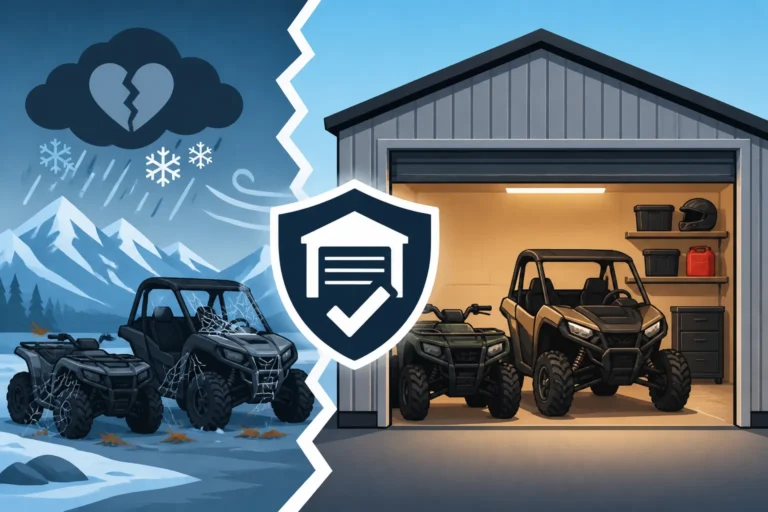
Even when the snow flies and your machine is put away for the winter, or during breakup when trails are closed, your ATV or UTV is still a valuable asset that needs protection. It’s easy to cancel comprehensive coverage when you're not riding, but this can leave you exposed.
For example, a fire in your garage, a break-in at your storage shed, or even damage from a heavy snow load are all possibilities during the off-season. Maintaining comprehensive coverage, even if you put collision and liability on hold during the months you're not riding, can save you from a major financial loss. Many insurance providers offer specific "storage" or "lay-up" options that reduce your premium while still protecting against these non-riding risks. Discuss your riding habits and storage plans with your agent to ensure you have appropriate coverage year-round, just as you'd plan for [Storing a Machine Through Breakup]. This foresight ensures your machine is ready to roll when the trails open up again, without any lingering worries from the long, dark winter.
Disclaimer
This article is for general informational purposes only and does not constitute professional advice. Laws, prices and regulations vary by location and change over time. Consult a qualified professional for guidance on your specific situation.