Hauling a Machine to a Mat-Su Trailhead
Heading out to the Mat-Su Valley for some ATV or UTV riding is one of Alaska's great joys, but getting your machine there can feel like a logistical puzzle, especially for newcomers or those hauling multiple machines. From securing your precious cargo to understanding the local rules, it's easy to feel overwhelmed before you even hit the highway. This guide will walk you through everything you need to know to safely and legally haul your machine to a Mat-Su trailhead, ensuring your adventure starts smooth and stress-free.
Planning Your Mat-Su Valley Adventure
The Mat-Su Valley is a legendary playground for ATV and UTV enthusiasts in Alaska, offering vast landscapes from the Knik River Public Use Area to the winding trails of Jim Creek. But before you even hitch up the trailer, a little thoughtful planning can make all the difference between a frustrating trip and a fantastic one. Understanding where you're going, what the conditions might be, and what you'll need once you arrive is paramount.
Picking Your Destination and Understanding the Terrain
The Mat-Su Valley is huge, and its riding areas are diverse. You might be aiming for the wide-open glacial flats of the Knik River Public Use Area, which are incredible for speed and vast views, but also present challenges with constantly shifting river channels and silty water. Or perhaps you're headed to Jim Creek, known for its more technical loops, wooded trails, and the popular campground. Each area has its own unique character, and understanding this will inform your packing, your machine choice, and your safety preparations. [Knik River Public Use Area in Alaska] is different from [Jim Creek Riding in Alaska], and knowing the difference means you're prepared for what lies ahead. Some trails are perfect for side-by-sides, while others are better suited for smaller, more agile ATVs. Always check recent trail reports or local forums before you go, as weather and seasonal changes can dramatically alter conditions, especially during breakup or freeze-up.
For example, if you're planning a multi-day trip deep into the Knik, you'll need to consider fuel caches and recovery gear far more than if you're just doing a day trip at Jim Creek with its easier access. Are you riding for a scenic tour, or are you hoping to access a remote hunting spot? Your purpose will dictate your planning.
Checking Seasonal Conditions and Trail Accessibility
Alaska's seasons dramatically impact trail conditions. Spring "breakup" can make many trails impassable with deep mud, standing water, and swollen river crossings, while summer brings dust, bugs, and potentially dry conditions that raise fire concerns. Fall offers crisp air and stunning colors, but can also mean early snow or sudden temperature drops. Winter riding is a whole different beast, requiring specific gear for cold, snow, and ice. Always check the weather forecast for your specific destination in the Mat-Su Valley. A clear day in Palmer doesn't guarantee the same conditions deep in the mountains near a glacier.
Some trailheads, like certain spots in Hatcher Pass, might be accessible only during specific months, or certain roads might close for the season. State parks or public use areas often have specific rules regarding seasonal closures or restrictions, so make sure to check the Alaska Department of Natural Resources (DNR) website for updates. The last thing you want is to haul your machine all the way out there only to find the gates locked or the trails deemed unsafe.
Choosing the Right Rig for the Job
Hauling an ATV or UTV across Alaska's roads, especially towards the Mat-Su Valley, requires careful consideration of your tow vehicle and trailer. It's not just about getting from point A to point B; it's about doing it safely and efficiently, protecting both your machine and those around you on the highway. Skimping on the right equipment can lead to expensive repairs, or worse, a dangerous situation on the road.
Selecting Your Tow Vehicle and Trailer
Your tow vehicle needs to be up to the task. Most full-size trucks or large SUVs can handle a single ATV and a small trailer, but if you're hauling multiple side-by-sides or a heavy enclosed trailer, you'll need a truck with a higher towing capacity. Always check your vehicle's owner's manual for its maximum towing weight and ensure your loaded trailer stays well within that limit. Overloading your tow vehicle can strain the engine, transmission, and brakes, and compromise handling.
When it comes to trailers, you have a few main options:
- Open Utility Trailers: These are the most common and often the most affordable. They're great for visibility and usually lighter, meaning less strain on your tow vehicle. They come in various sizes, from small single-axle trailers perfect for one quad to larger tandem-axle options for multiple machines.
- Enclosed Trailers: These offer superior protection from the elements – crucial for Alaska's unpredictable weather – and added security against theft. However, they are significantly heavier, create more wind resistance, and are more expensive. They also make checking on your cargo during transit more difficult.
- Tilt Trailers: These can be very convenient, allowing you to load machines without ramps.
Consider the dimensions of your machine(s) carefully. A side-by-side might be too wide for a standard utility trailer or too long for a short enclosed one. Ensure the trailer has proper tie-down points, working lights, and good tires. [Do Alaska Trailers Need Their Own Registration?] is an important question to answer before you hit the road.
Essential Trailer Maintenance and Safety Checks
Before every trip, especially a long haul to the Mat-Su, a thorough inspection of your trailer is non-negotiable. This isn't just a suggestion; it's a critical safety step. Check your tires for proper inflation, tread wear, and any cracks or damage. Low tire pressure can lead to blowouts, poor handling, and increased fuel consumption. Examine the wheel bearings – if they're making noise or getting excessively hot, they need attention.
Test all your trailer lights: brake lights, turn signals, and running lights. You'd be surprised how often a connection can come loose or a bulb can burn out. Ensure your safety chains are properly crossed under the hitch and securely attached to your tow vehicle. Inspect the hitch mechanism itself for wear or damage. Make sure the trailer coupler is fully seated and locked onto the hitch ball. If you're using a surge brake system, check its fluid levels and ensure it's operating correctly. It’s also a good idea to carry a spare tire for your trailer, along with the tools needed to change it. Being stranded on the side of the Glenn Highway with a flat trailer tire is a situation no one wants to experience.
Safety First: Securing Your Machine for the Alaska Highway
Once you've got your tow vehicle and trailer sorted, the next critical step is ensuring your ATV or UTV is properly secured. The Alaska Highway system, even on paved sections, can be rough, with unexpected bumps, potholes, and strong crosswinds. A poorly secured machine isn't just a risk to your cargo; it's a serious hazard to other drivers.
Proper Tie-Down Techniques and Equipment
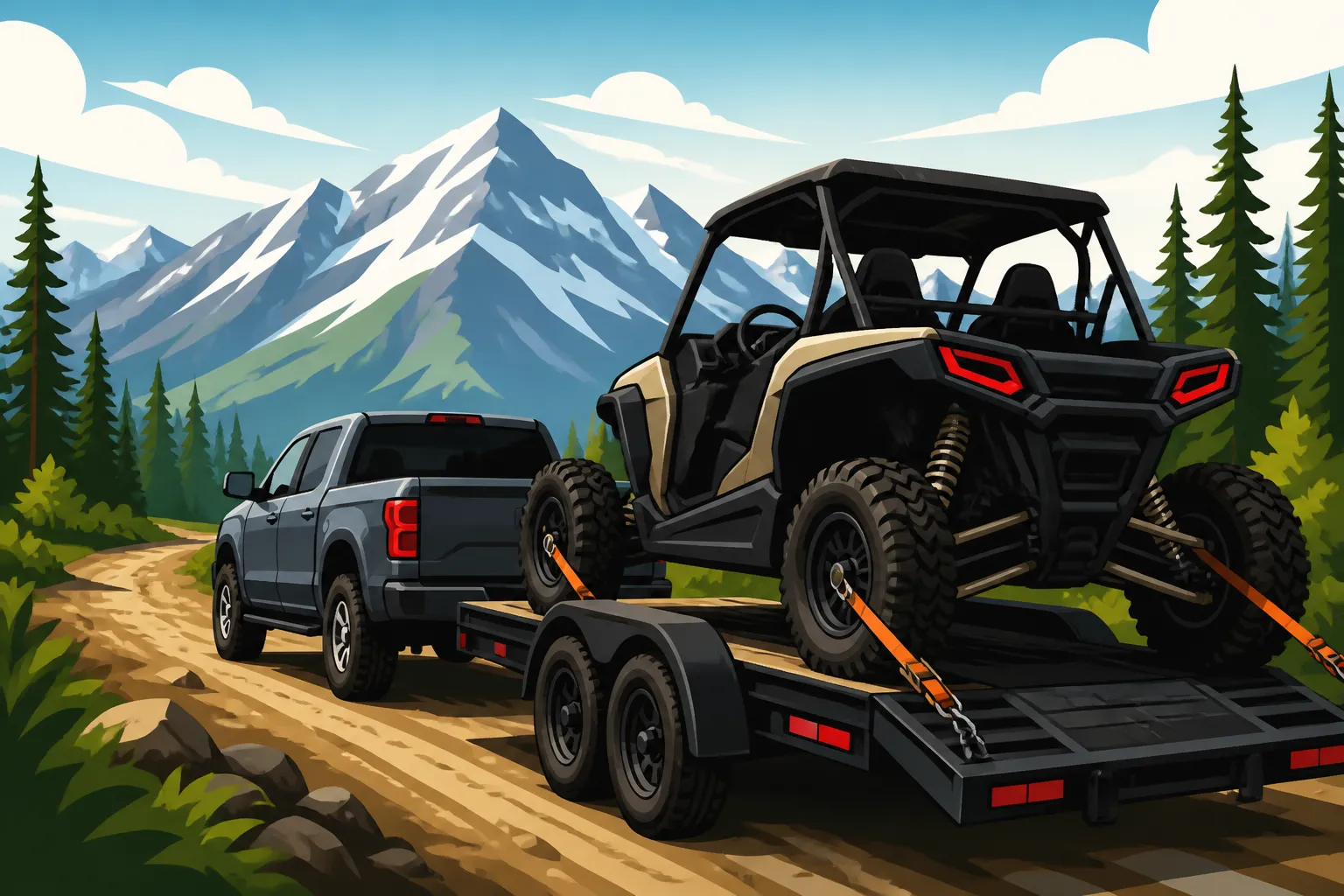
This is where many people cut corners, and it’s a huge mistake. Use heavy-duty ratchet straps, not bungee cords or thin ropes. Bungee cords are for holding down a tarp, not a thousand-pound machine. You should have at least four tie-down points per machine – one at each corner. Cinch the straps down tightly, compressing the suspension of your ATV or UTV slightly. This prevents the machine from bouncing and loosening the straps.
Avoid running straps over plastic body panels that could crack or scratch. Instead, find solid frame points or specific tie-down loops on your machine. For side-by-sides, sometimes dedicated tire bonnets that strap over the tires are excellent, as they allow the vehicle's suspension to absorb road shock without putting undue stress on the frame. If you're using an open trailer, ensure there's enough clearance between your machine and any trailer rails or other machines to prevent rubbing and damage during transit. It's also wise to check your straps after the first 15-20 miles of driving, and then periodically during your journey, as they can sometimes loosen with road vibration.
Weight Distribution and Load Balancing
Proper weight distribution on your trailer is crucial for stable towing. The general rule of thumb is to have 10-15% of the total trailer weight (including your machine) as tongue weight – the downward force on your hitch ball. Too little tongue weight can cause the trailer to sway violently, a phenomenon known as "fishtailing," which can quickly lead to loss of control. Too much tongue weight can overload your tow vehicle's rear axle and negatively affect steering and braking.
When loading your ATV or UTV, try to center the heaviest part of the machine slightly forward of the trailer's axle(s). If you have multiple machines, distribute their weight evenly from side to side to prevent uneven tire wear and lopsided towing. For example, if you're hauling two ATVs, place one slightly forward and the other slightly back, with their heavy engines roughly over the axles. If you're towing an enclosed trailer, make sure any loose gear inside is also secured so it doesn't shift and throw off the balance mid-trip. Taking the time to adjust your load before you leave will pay dividends in peace of mind and safety on the highway.
Before You Go: Paperwork, Permits, and Trailhead Etiquette
Hitting the trails in the Mat-Su Valley isn't just about having the right machine and trailer; it also involves a bit of administrative homework and understanding the unspoken rules of the backcountry. Being prepared with your documents and knowing how to behave on shared lands will ensure a smooth experience for you and respect for the Alaskan environment.
Essential Documents and Registrations
First and foremost, your ATV or UTV needs to be registered with the State of Alaska if you plan to ride on public lands. [Alaska Registration Before Riding Public Land] is a non-negotiable step. This means you'll have a current decal affixed to your machine. [Alaska Decal Placement on the Tunnel Side] or [Alaska Decal Placement on a Side-by-Side] explains where this decal should go. Make sure your registration is current, and carry proof of registration with you on every ride. You'll also need your driver's license, as the state requires a Class D license to operate an APV on roads where it's permitted.
If you bought your machine used, having a bill of sale is critical, especially if questions about ownership arise. You can find templates for these documents from providers like LawDepot, which can help ensure you have all the necessary information legally documented. If you're bringing a machine from out of state, there are specific rules about how long you can ride with your out-of-state registration before needing an [Alaska Registration for a New Resident].
Also, consider carrying proof of insurance. While Alaska doesn't mandate insurance for off-road use, it's highly recommended for liability, especially if you get into an accident. Some trail systems or organized events might even require it.
Mat-Su Valley Trailhead Passes and Land Use Rules
Many popular trailheads in the Mat-Su Valley, particularly those managed by the Matanuska-Susitna Borough or Alaska State Parks, require a parking pass or day-use fee. For example, you might need [Alaska Mat-Su Trailhead Parking Passes] for access to areas like Government Peak or Crevasse Moraine, or pay a day-use fee at the Jim Creek Campground. These fees help maintain the trails, facilities, and access roads. Check the specific requirements for your chosen trailhead online before you go, as some passes might need to be purchased in advance, or annual passes are available.
Beyond parking passes, understanding land ownership is crucial. Much of the Mat-Su Valley is state land, often covered by [Alaska's Statewide General Permit for ATV Use], but there are also areas of private land, Native Corporation land, and federal land, all with their own rules. Riding on private land without permission is trespassing and can lead to serious consequences. Respect signs for private property or designated closures. If you're unsure, it's always best to err on the side of caution or consult a land status map.
| Pre-Trip Hauling Checklist for Mat-Su |
| :———————————— | :—————————————————————————————————————————– |
| Tow Vehicle | Check tire pressure, fluid levels, brakes, lights. Verify towing capacity. |
| Trailer | Inspect tires (pressure, tread, spare), wheel bearings, lights, hitch connection, safety chains. |
| ATV/UTV | Ensure secure tie-downs (4 minimum, heavy-duty straps), proper weight distribution. Remove loose items. |
| Documents | Current Alaska APV registration decal, proof of registration, driver's license, bill of sale (if applicable). |
| Permits/Fees | Mat-Su trailhead parking passes, any required land use permits (e.g., [Alaska State Land Riding Explained]). Check fees. |
| Safety Gear | First-aid kit, tool kit, spare tire for trailer, tire repair kit for machines, recovery gear (winch, tow strap), bear spray. |
| Supplies | Extra fuel, water, snacks, communication device (satellite messenger for [No Cell Coverage Off the Road System]). |
| Navigation | GPS, paper maps, knowledge of your route and exit points. |
| Weather Prep | Appropriate layers, rain gear, bug spray. |
Responsible Trail Use and Etiquette
When you're out on the trails, remember you're a guest in Alaska's magnificent wilderness. Practice Leave No Trace principles: pack out everything you pack in, and leave the area cleaner than you found it. Stay on designated trails to prevent habitat damage, especially to fragile tundra or wetlands. Tundra damage can take decades to recover. Slow down and yield to hikers, horses, and mountain bikers, who often have the right-of-way on multi-use trails. [Alaska Trail Etiquette Locals Expect] is a good guide.
Be mindful of noise, especially near cabins or residential areas. Excessive noise can disturb wildlife and residents. If you encounter wildlife, give them a wide berth; don't chase or harass them. Carry bear spray and know how to use it. Be prepared for emergencies, as cell service is often non-existent in the backcountry. A satellite messenger device can be a lifesaver. By being a responsible and prepared rider, you help preserve access to these incredible areas for everyone.
Disclaimer
This article is for general informational purposes only and does not constitute professional advice. Laws, prices and regulations vary by location and change over time. Consult a qualified professional for guidance on your specific situation.