What a Trooper Can Ask to See
There's nothing quite like hitting the Alaska trails, feeling that crisp air, and taking in the breathtaking scenery from the seat of your ATV or UTV. But let's be real, that feeling of freedom can quickly be overshadowed by a knot in your stomach if you see a trooper's vehicle. It's not about doing anything wrong, it's just the uncertainty of knowing if you have everything you need, or what they might even ask for. This guide is here to clear up that confusion, covering exactly what Alaska State Troopers are looking for when they stop an all-purpose vehicle (APV) rider, so you can ride with confidence, not apprehension.
Essential Documents a Trooper May Request
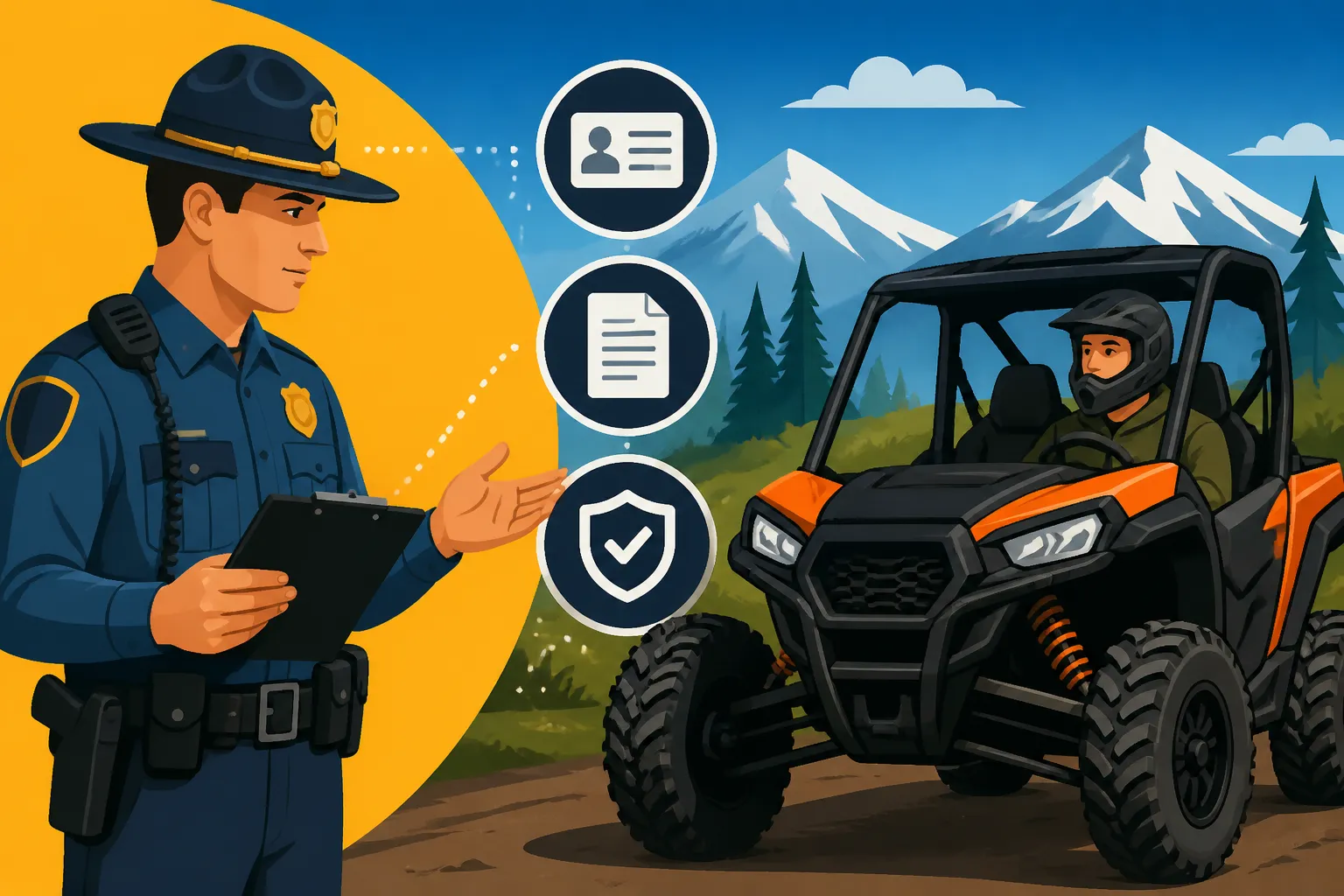
When a trooper signals you to pull over, the first thing they're likely to ask for are your documents. Think of it like a pop quiz for your trail day – you want to have all your answers ready and easily accessible. Being prepared can make a world of difference in how quickly and smoothly the interaction goes.
Proof of Ownership and Registration
In Alaska, registering your ATV or UTV is a critical step, especially if you plan on riding on public lands or managed trails. Unlike a regular car, you won't get a license plate; instead, you'll receive a decal that goes right on your machine. This decal isn't just a sticker; it's your visible proof that your machine is legally registered with the state. A trooper will certainly be looking for this decal and checking its validity. It's why Alaska doesn't issue a traditional license plate for APVs, but rather a prominent decal. Make sure your decal is placed correctly, usually on the tunnel side or a visible, flat surface, and that it's clean enough to be read easily.
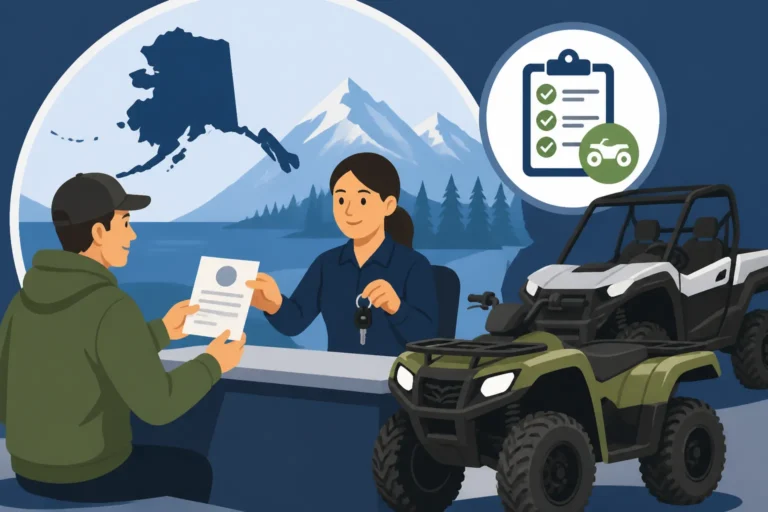
Beyond the decal itself, you also need to be able to prove that the machine you're riding actually belongs to you. This is where things can get a little varied, depending on how you acquired your ATV or UTV. If you bought it new, you might have a Manufacturer's Certificate of Origin (MCO) or a warranty card with your name on it. For a used machine, a bill of sale is typically the gold standard. This document should clearly list both the seller and the buyer, the machine's VIN, and the purchase price. If you’ve misplaced your original bill of sale, or perhaps bought a machine from a family member without one, you might need an affidavit naming the seller to establish your ownership. LawDepot is a useful resource for creating customized legal documents like a comprehensive bill of sale or an affidavit if you find yourself in need of official-looking paperwork that covers all the bases.
The decal itself contains a number that is actually your registration number, linking back to your personal information on file with the DMV. A trooper can cross-reference this to ensure everything matches up. Keeping a photocopy of your completed [What Alaska's ATV Registration Form Asks For] with you, tucked away safely, can also serve as handy backup proof of registration. Remember, even if you’re riding a machine that’s been in the family for years, having some form of written proof of ownership is essential to avoid any potential headaches during a stop. Knowing your [Why Your Decal Number Is the Registration Number] can also help answer any quick questions a trooper might have about your registration status.
Your Driver's License and Proof of Insurance
Many new riders are surprised to learn that operating an ATV or UTV on certain public lands or designated roads in Alaska requires a valid driver's license. Specifically, you'll need a Class D operator's license, which is the standard license most Alaskans carry for driving passenger vehicles. This isn't just a suggestion; it's a legal requirement if you're riding where a trooper might be present, particularly if you're accessing public land via an approved road or crossing a highway. They'll want to see this license, just as they would if you were driving a car. Ensuring you have your physical license on you, or at least a high-quality digital image if allowed by law in that specific situation (though physical is always best), is paramount. Make sure you understand [The Alaska Driver's License an APV Rider Needs] before heading out.
In addition to your license, Alaska has specific requirements for liability insurance when operating an APV, especially if you're using it on a public road or highway, even if just to cross or connect trails. Much like your car, you need to be able to provide proof of this insurance. This usually means carrying your insurance card or a copy of your policy declaration. This isn't just about covering potential damages; it's about being a responsible rider and complying with state law. A trooper will confirm that you have adequate liability coverage for your machine. This helps protect you and others in the event of an accident. [Alaska Requires Liability Insurance for an APV] is a key regulation that many riders sometimes overlook.
It’s a good practice to keep all these essential documents—your driver's license, proof of ownership, and insurance—in a waterproof bag or container, secured somewhere on your person or your machine. Trails can be wet, dusty, or muddy, and you don’t want your important papers to become illegible. After all, what good is having the documents if they’re ruined beyond recognition? Consider a sealed plastic pouch within a fanny pack or a waterproof compartment on your machine. Having [Carrying Documents in the Rain] is a common challenge for Alaskan riders.
Machine Equipment and Condition Checks
Beyond your paperwork, Alaska State Troopers are also concerned with the safety and legal compliance of the machine itself. They'll be doing a visual inspection, and sometimes a quick functional check, of various components to ensure your ATV or UTV meets state requirements. These checks are designed to protect you, other trail users, and the environment.
Required Safety Equipment
Alaska has a clear list of equipment that your ATV or UTV must have, especially if you’re riding on public lands or where you might encounter other vehicles or pedestrians. This includes basic lighting: a functional headlight that's visible for at least 100 feet and a taillight that can be seen from 1,000 feet to the rear. Brakes are another non-negotiable item; they must be in good working order and capable of stopping your machine effectively. Troopers will also look for a proper muffler to keep noise levels in check, as excessive noise can disturb wildlife and other recreational users. Furthermore, a spark arrester is often required to prevent sparks from escaping the exhaust and potentially starting wildfires, a very real concern in Alaska's dry seasons. These are all part of the [Alaska OHV Equipment Requirements] that help ensure safe and responsible riding.
Beyond the essentials, your machine might also need reflectors strategically placed to enhance visibility, especially at dawn, dusk, or night. Mud flaps are also required in many areas to prevent rocks, mud, and other debris from being flung up by your tires, potentially hitting other riders or passing vehicles. Finally, a self-closing throttle is a crucial safety feature, ensuring that if you let go, the throttle automatically returns to idle, preventing unintended acceleration. A trooper might give a quick squeeze of your throttle to ensure it's functioning correctly. Paying attention to [Alaska Lighting Rules on a Machine], [Alaska Muffler and Noise Rules], [Alaska Spark Arrester Requirements], [Alaska Reflector Requirements], [Alaska Mud and Snow Flap Rules], and [Alaska Self-Closing Throttle Rules] can prevent a simple equipment check from turning into a citation. These regulations are in place for safety and to minimize environmental impact.
Consider this checklist for a quick self-assessment before you head out:
| Category | Item | Why a Trooper Asks | What to Carry |
|---|---|---|---|
| Documents | Registration Decal | Proof of legal operation | Affixed to machine, proof of registration |
| Proof of Ownership | Verifies you're the rightful owner | Bill of Sale, MCO, Affidavit, Title Copy | |
| Driver's License (Class D) | Legal authority to operate | Physical license | |
| Proof of Insurance | Required for APV road use | Insurance card, policy declaration | |
| Machine Check | Headlight | Night riding visibility, safety | Functional, visible 100 ft |
| Taillight / Reflectors | Rear visibility, safety | Functional, visible 1000 ft | |
| Brakes | Ability to stop safely | Fully functional | |
| Muffler / Spark Arrester | Noise control, fire prevention | Intact, no modifications | |
| Mud Flaps | Prevents debris spray | Present, adequate size | |
| Self-Closing Throttle | Safety feature | Properly working | |
| Rider Check | Helmet (Under 16) | Head protection for young riders | CPSC compliant, properly worn |
Helmet Law Compliance (for applicable riders)
While many adult riders choose to wear a helmet for their own safety (and it's always a good idea!), Alaska has a specific helmet law that troopers will enforce for a particular age group. If you have a rider under the age of 16 on your ATV or UTV, they must wear a U.S. Department of Transportation (DOT) or Consumer Product Safety Commission (CPSC) compliant helmet. This isn't optional; it's a legal requirement aimed at protecting our younger riders from serious injury. A trooper will certainly be looking for this, and if a child is riding without one, it can lead to a citation.
It's not just about having a helmet; it's about wearing it correctly. The helmet should be properly fastened and fit snugly, providing the protection it's designed for. An ill-fitting or unbuckled helmet offers little to no protection. Troopers are trained to spot these details. As a parent or guardian, ensuring your younger passengers or riders comply with [Alaska ATV Helmet Law Age] requirements is your responsibility. This is one area where ignorance of the law simply won't cut it, and rightly so, given the potential for serious injury.
This helmet rule applies whether the child is operating the machine or riding as a passenger. When you're out on the trails, especially in popular riding areas, you can expect troopers to be vigilant about this. They want to see everyone riding safely and legally, and protecting kids is a top priority. Make sure the helmets are in good condition, too; a cracked or heavily damaged helmet might not pass muster, as its protective integrity could be compromised.
What Prompts a Stop and How to Respond
It’s easy to feel singled out when a trooper stops you, but often, there’s a specific reason for their interest. Understanding what might catch their attention and knowing how to respond calmly and respectfully can make the interaction much less stressful.
Common Reasons for a Trooper Stop
Troopers don't just stop riders at random. There's usually an observed reason. The most common one? Riding an unregistered machine. If your decal is missing, expired, or improperly placed, it’s a red flag. Similarly, if your machine is excessively noisy or if you’re operating it in a manner that seems unsafe or reckless, that’s going to draw attention. Speeding, especially in designated speed zones or congested areas, will also get you noticed. Troopers are specifically looking for compliance with regulations that cover public land use and road crossing, so any violation of [Alaska APV Road Rules Explained] or local ordinances could lead to a stop.
Another common reason is simply visibility during routine patrols. [Trooper Patrols on Public Land] are common in popular riding areas like the Knik River Public Use Area or Jim Creek. They’re there to ensure everyone is riding responsibly and legally. If you’re seen riding in a closed area, damaging fragile tundra, or operating your machine in wetlands during restricted seasons, these environmental violations are also major reasons for a stop. Troopers are not just enforcing traffic laws; they are also guardians of Alaska’s vast and sensitive wilderness. Any activity that appears to be harmful to the environment could lead to a stop and investigation.
Sometimes, a stop might be prompted by a safety concern, like an unhelmeted child. Or perhaps you’re riding in an area where APVs aren’t typically allowed, like on a paved highway without proper road-legal modifications and a permit. The troopers are performing their duties to ensure public safety and compliance with the numerous rules governing APV use in Alaska. It’s not personal; it’s about enforcement and education.
Your Rights and Responsibilities During an Encounter
If a trooper does signal you to stop, the best thing to do is comply immediately and safely. Pull your machine over to the side of the trail or road in a clear, safe spot. Turn off your engine and keep your hands visible, perhaps resting them on the handlebars. This shows cooperation and helps the trooper feel safe, which can de-escalate any potential tension. They will likely approach you and explain why they stopped you. Listen carefully to their questions and respond honestly and respectfully.
When asked for your documents, retrieve them calmly and present them. Don't fumble around or make sudden movements, which can be misinterpreted. If you’re unsure where a document is, politely explain that you’re looking for it. Remember, you have the right to remain silent if you feel your answers might incriminate you, but you are generally required to provide identification and documentation related to your machine. If you don't have a required document, such as a bill of sale because you bought your machine from [Buying From a Private Seller in Alaska] without formal paperwork, be honest about it. They might ask you to explain your ownership history or other details. Using a service like LawDepot beforehand to draft documents like an [What an Affidavit Naming the Seller Must Include] can save you a lot of hassle and show you're trying to be compliant, even if the original documents are missing.
Ultimately, remember that the trooper is doing their job. A polite and cooperative attitude often leads to a more positive outcome, even if a citation is issued. Arguing or being confrontational rarely helps your case. If you feel a mistake has been made, it’s best to address it through the proper legal channels after the encounter, not during the stop itself. Even if you're issued a citation, maintaining a respectful demeanor is always the recommended approach.
Consequences of Non-Compliance
Nobody wants to get a ticket or have their fun cut short. But understanding the potential consequences of not having your ducks in a row can be a powerful motivator to ensure you're always prepared before you hit the trails.
Fines and Citations
The most immediate and common consequence of non-compliance is receiving a fine or citation. These can vary significantly depending on the specific violation. For instance, riding an unregistered machine or failing to have proper proof of insurance can result in a fine. Operating an APV recklessly or in a prohibited area might carry a steeper penalty. [Alaska Penalties for Riding Unregistered] can range from monetary fines to more serious repercussions if it's a repeated offense. Similarly, violations of road use rules can be just as costly as a traffic ticket for a car. You can check specific [Alaska Ticket Costs for Road Riding] for a better idea, but suffice it to say, these costs can add up quickly and definitely put a damper on your riding budget.
Beyond the monetary aspect, citations can sometimes lead to points on your driving record, depending on the nature of the offense, especially if it involves reckless operation or road use violations. While APV riding is often considered recreational, the state takes safety and compliance seriously. It's not just about revenue; it's about discouraging behavior that puts riders, other outdoor enthusiasts, and the environment at risk. A simple lack of paperwork can escalate into a citation that costs more than the registration fee itself, making that initial oversight quite a costly one.
Think about the impact on your wallet: a few hundred dollars for a fine could have been spent on fuel, gear upgrades, or another awesome weekend trip. Prevention is always cheaper and less stressful than dealing with the aftermath of a citation. Taking the time to double-check your documents and machine condition before each ride is a small effort that can save you a big headache and a lighter wallet.
Machine Impoundment and Other Actions
While less common for minor infractions, a trooper does have the authority to impound your machine in certain circumstances. This can happen if the machine is found to be stolen, if you are operating it under the influence, or if there are serious, repeated violations that indicate a disregard for public safety or legal requirements. If your machine is impounded, retrieving it can be a lengthy, expensive, and frustrating process, involving impound fees, storage charges, and ensuring all legal issues are resolved before its release. This is certainly a situation every rider wants to avoid at all costs.
In extreme cases, especially involving environmental damage or serious safety violations, there could be other legal actions, including court appearances or even revocation of riding privileges in certain areas. While these are rare for the average rider, they highlight the importance of understanding and respecting all local and state regulations. Troopers have a wide range of tools at their disposal to ensure compliance, and they will use them when necessary to protect Alaska's resources and its people. For instance, if you're found to be riding in a habitat-sensitive area that is clearly marked as closed, the consequences could be more severe than a simple fine.
Ultimately, the best defense is a good offense: be prepared, be compliant, and be respectful. Knowing what a trooper can ask to see and ensuring you meet all those requirements not only keeps you on the right side of the law but also contributes to a safer and more enjoyable riding experience for everyone in the Last Frontier. Don't let a moment of unpreparedness ruin an otherwise perfect day on the trails.
Disclaimer
This article is for general informational purposes only and does not constitute professional advice. Laws, prices and regulations vary by location and change over time. Consult a qualified professional for guidance on your specific situation.