Alaska Excludes Homemade ATVs
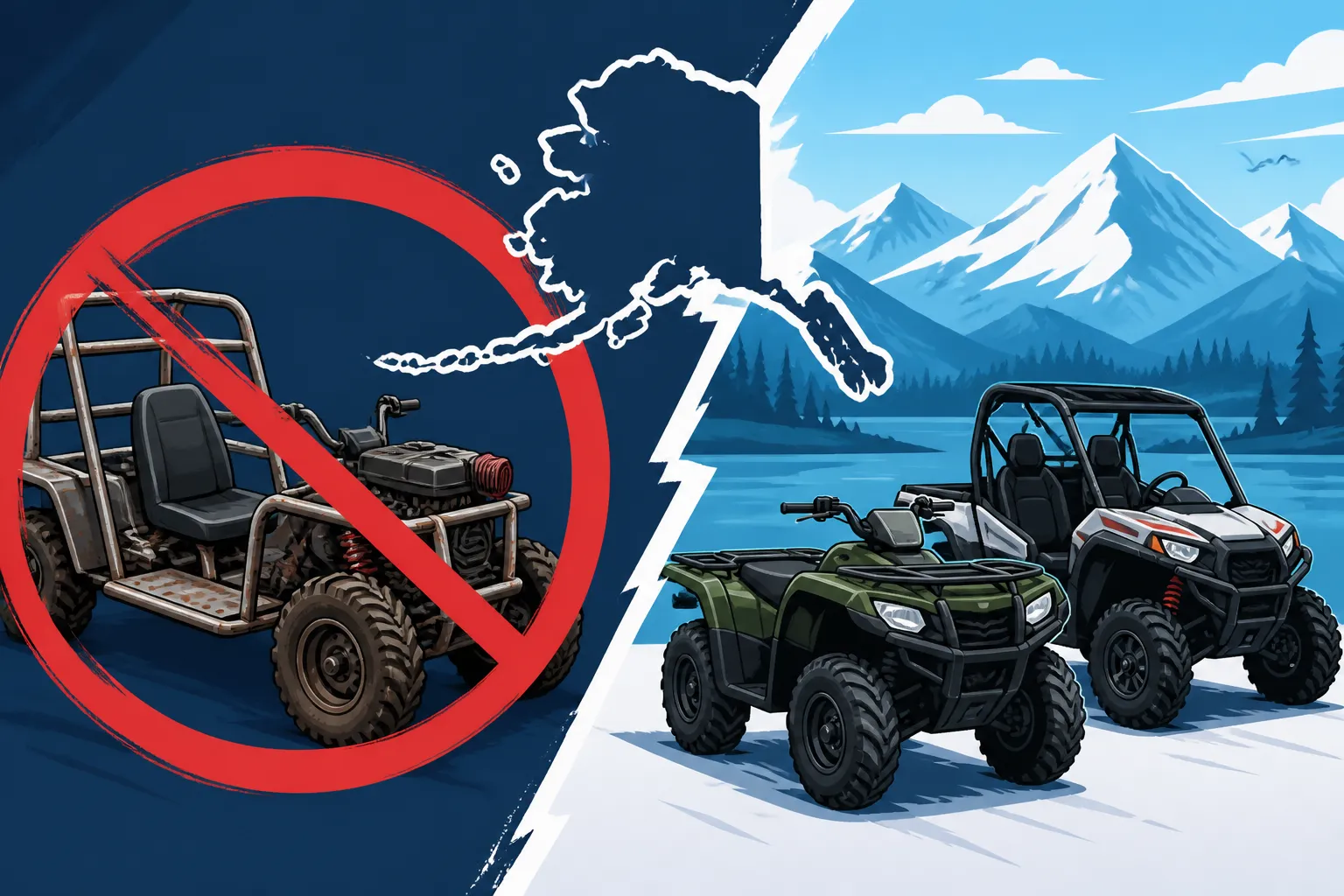
It's a common dream for many Alaskans, especially those with a knack for mechanics and a pioneering spirit: building your very own ATV or UTV from the ground up. The idea of crafting a machine perfectly suited to our rugged terrain, perhaps saving some money in the process, is incredibly appealing. But then you hit a wall: you've got this amazing custom ride, ready for the trails, and you go to register it, only to find out Alaska has some very specific rules that often exclude these passion projects. This guide is here to shed light on why Alaska's registration process doesn't typically accommodate homemade ATVs and UTVs, what frustrations you might face, and what your options are.
The Dream of the Custom Build: Why Homemade ATVs Appeal
There's something deeply satisfying about building something with your own hands, especially when that something is designed to conquer the wild expanses of Alaska. For many, a homemade ATV or UTV isn't just a vehicle; it's a testament to ingenuity, problem-solving, and a profound connection to the land.
The Allure of Personalization and Cost Savings
Imagine a machine built precisely for your needs. Maybe you need extra cargo capacity for hauling firewood or hunting gear, or perhaps a specific suspension setup to handle the endless potholes and uneven ground of a remote trail. Commercial ATVs, while fantastic, are mass-produced and generalized. A homemade build allows for ultimate personalization, from custom racks and specialized tires to a truly unique engine setup. You envision a machine that's an extension of your will, perfectly suited to the tasks and adventures you have in mind.
Beyond personalization, the perceived cost savings are a huge draw. New ATVs and UTVs can be a significant investment, often running into the tens of thousands of dollars. The idea of sourcing used parts, fabricating components, and assembling it all yourself often conjures visions of saving a substantial amount of money. For many, it's a budget-friendly way to get into the off-road lifestyle, or to acquire a specialized tool without breaking the bank. There's a genuine pride in knowing that every bolt, every weld, and every component was chosen and installed by you, making the machine uniquely yours.
Creative Solutions for Alaska's Unique Terrain
Alaska isn't just "off-road"; it's a world unto itself. Our trails can range from rock-strewn riverbeds and deep mud bogs to frozen tundra and dense forest paths. Standard factory machines, while capable, often need modifications to truly excel in these extreme conditions. Alaskans are known for their resourcefulness, and this extends to their machines.
A homemade ATV might feature a wider stance for stability on steep sidehills, a higher ground clearance to navigate deep snow or submerged logs, or a completely sealed electrical system for crossing braided glacial rivers. Builders might incorporate custom winches, oversized fuel tanks for long journeys into the bush, or even specialized tracks for winter travel. The spirit of self-reliance and adaptation runs deep here, and building a custom machine is a natural extension of that ethos. It's about creating a tool that doesn't just cope with Alaska but thrives in it, reflecting a deep understanding of what it takes to get around out here.
The Expectation of Registration After Completion
Once the custom fabrication is complete, the engine purrs, and the tires are mounted, the natural next step for many proud builders is to register their new "vehicle" with the state. After all, if you can register a manufactured ATV, why not one you built yourself that's just as capable, if not more so? You've invested countless hours, considerable effort, and often a fair bit of money, and you want to use your creation legally on public lands, like the [Knik River Public Use Area in Alaska] or the vast network of state trails.
The expectation is that you'll bring your proof of parts, perhaps a detailed build log, and the state will recognize your hard work and issue a registration. Many assume there's a process for "homemade" vehicles, similar to how some states might handle kit cars or custom trailers. Unfortunately, when it comes to All-Purpose Vehicles (APVs) in Alaska, the state's legal definitions and requirements create a significant hurdle that often catches custom builders by surprise.
Alaska's Definition of an All-Purpose Vehicle (APV)
Alaska has a very specific way of defining what an All-Purpose Vehicle (APV) is for registration purposes, and these definitions are where homemade machines often run into trouble. It's not about how functional or well-built your machine is; it's about the paperwork trail.
Understanding the "Manufacturer's Certificate of Origin" (MCO) Requirement
One of the cornerstones of registering any APV in Alaska is the "Manufacturer's Certificate of Origin," or MCO. Think of the MCO as the birth certificate for a vehicle. It's an official document issued by the manufacturer when the vehicle is new, certifying that it was produced by them and meets certain standards. This document verifies the vehicle's make, model, year, and—crucially—its unique Vehicle Identification Number (VIN). When you purchase a new ATV or UTV from a dealership, the MCO is a vital piece of paperwork they'll give you, or send directly to the DMV, which then allows you to register the machine for the first time.
The MCO is critical because it's the first official link in the chain of ownership and identity. It signifies that the vehicle started life as a commercially manufactured product, designed and tested to certain specifications. Without this document, the state doesn't have a recognized point of origin or a verified identity for the vehicle in its system. For a homemade machine, by its very nature, there is no "manufacturer" in the commercial sense to issue such a certificate. This immediately places a homemade ATV outside the standard registration pathway.
The Role of a Vehicle Identification Number (VIN)
Closely tied to the MCO is the Vehicle Identification Number (VIN). This 17-character alpha-numeric code is a standardized identifier, unique to each manufactured vehicle. It contains information about the manufacturer, the vehicle's characteristics, and its production year. The VIN is essential for tracking ownership, reporting stolen vehicles, recalling defective products, and generally managing the vehicle population. When you fill out [What Alaska's ATV Registration Form Asks For], the VIN is one of the first pieces of information required.
Manufactured ATVs come with a VIN stamped onto the frame by the factory. This number is then recorded on the MCO and, subsequently, on the vehicle's title and registration documents. While it's possible for the state to issue a VIN for certain assembled vehicles (like custom trailers or rebuilt salvage vehicles in some cases), the process for an APV is much more stringent. For a truly homemade ATV, where the frame itself might be fabricated from raw materials, there isn't a factory-assigned VIN, and the state's APV registration process isn't set up to assign one to a completely scratch-built off-road machine in the same way. The absence of this standardized identifier complicates things immensely, making it impossible to fit the machine into the existing registration framework.
How These Definitions Exclude Homemade Machines
The combination of the MCO requirement and the need for a factory-assigned VIN forms an impenetrable barrier for homemade ATVs and UTVs. Alaska's registration system for APVs, including ATVs and UTVs, is built around the premise that these vehicles originate from a recognized manufacturer with a formal MCO and a corresponding VIN. Without these two foundational documents, the vehicle simply doesn't meet the legal definition of an APV eligible for registration.
This means that even if you've built an incredible, road-worthy machine that outperforms many factory models, if it doesn't have that MCO and VIN from a recognized manufacturer, the state cannot issue a registration decal. It's not a judgment on the quality of your craftsmanship; it's a matter of legal definition and documentation. This is a crucial distinction that many aspiring builders overlook, leading to significant disappointment when their finished project cannot be legally ridden on public lands where a registered APV is required. It's a tough pill to swallow after pouring so much into a project.
Challenges and Frustrations for Homemade ATV Owners
Discovering that your meticulously crafted homemade ATV cannot be registered in Alaska can be incredibly frustrating. This isn't just a bureaucratic inconvenience; it has real, tangible impacts on how you can use and even own your machine.
Legal Limitations on Public Land Use
The most immediate and impactful consequence of an unregistered homemade ATV is the restriction on where you can ride it. In Alaska, riding an All-Purpose Vehicle (APV) on most public lands—including state recreation areas, designated trails, and borough-managed lands—requires current registration decals. This is a fundamental rule, as outlined in [Alaska Registration Before Riding Public Land]. Without that decal, your homemade machine is effectively barred from these areas.
Imagine spending months building your dream quad, picturing yourself cruising through the Mat-Su Valley or heading deep into the bush on a hunting trip. Then you realize that you can't legally access these places. This limitation can be disheartening, turning your custom build into a very expensive yard ornament or a machine confined to a small plot of private land. Enforcement officers, like Alaska State Troopers or park rangers, regularly check for current registration, and riding an unregistered vehicle on public land can lead to fines and potentially even impoundment of your machine. It's a tough reality that crushes the dreams of many builders who just want to enjoy their creations in Alaska's vast outdoors.
Difficulty Proving Ownership and Value
Another significant challenge for owners of unregistered homemade ATVs is the difficulty in formally proving ownership. For a manufactured ATV, your ownership is established through the [Alaska APV Titling Required Since 2022] (if applicable) and registration documents, which are all tied back to the original MCO and VIN. For a homemade machine, without these official documents, proving that you are the rightful owner can become surprisingly complicated.
While you might have receipts for all the individual parts you purchased or even a detailed build log, these documents don't collectively create a formal proof of ownership for the entire assembled vehicle in the eyes of the state. This can create problems if the machine is ever stolen, as law enforcement has no official record to trace it back to you. It also complicates any potential resale. Selling an unregistered, untitled homemade vehicle means you can't transfer official ownership, which severely limits your pool of potential buyers and dramatically reduces its market value. Even using an affidavit [Alaska Affidavits Naming a Seller] or a general bill of sale, often facilitated by online services like LawDepot, can prove ownership of components but does not establish legal ownership of the vehicle for registration purposes.
Insurance Hurdles and Liability Concerns
Trying to insure a homemade, unregistered ATV or UTV is another major headache. Most insurance companies require a valid VIN and proof of registration (or at least a clear path to registration) to issue a policy for an off-road vehicle. Without these, you'll find it extremely difficult, if not impossible, to obtain coverage for damage, theft, or, most critically, liability.
Imagine an accident where your homemade machine causes injury or property damage to someone else. Without liability insurance, you would be personally responsible for all medical bills, repair costs, and potential legal fees, which could easily run into hundreds of thousands of dollars. This lack of insurance coverage isn't just a financial risk; it's a legal one. The state might not require insurance for all APVs, but the personal liability risks are immense. The peace of mind that comes with knowing you're protected by insurance is simply not available for these custom builds, leaving owners in a very vulnerable position every time they ride. It's a stark reminder that the lack of official documentation has far-reaching consequences beyond just getting a decal.
Alternatives and Workarounds for Enthusiasts
While Alaska's registration rules might seem to dash the dreams of homemade ATV builders, there are still avenues for enthusiasts to enjoy their creations or pursue their passion in other ways. It's about understanding the rules and finding smart workarounds.
Riding on Private Land Only
The most straightforward workaround for owning a homemade ATV that cannot be registered is to restrict its use to private property. The requirement for state registration decals, as detailed in [Alaska Registration Before Riding Public Land], applies primarily to public lands, including state-managed trails, parks, and other public access areas. If you own private land, you are generally free to ride your homemade machine on your own property without state registration.
This means your backyard, your cabin property, or a friend's expansive acreage can become your personal riding haven. However, if you plan to ride on someone else's private land, it is absolutely crucial to obtain explicit permission, preferably in writing. A simple, custom agreement or permission form, which can be easily drafted using resources like LawDepot, can protect both you and the landowner. This document should clearly state the terms of access, the duration of permission, and any agreed-upon liabilities. While this limits your scope, it keeps your custom build active and legal within those boundaries. It's not the vast Alaskan wilderness you might have dreamed of, but it's a legal and safe way to enjoy your machine.
Exploring Off-Road Equipment That Doesn't Require Registration
Sometimes, the lines between an "ATV" and other types of specialized off-road equipment can blur, especially with homemade projects. It's worth researching whether the specific design and intended use of your homemade machine might fall under a different category of equipment that does not require APV registration. For instance, certain types of utility vehicles designed exclusively for agricultural or specific industrial tasks on private property might have different regulatory classifications. However, it's crucial to understand that these are specific exceptions and not a general loophole for what most people would recognize as a recreational ATV.
Alaska explicitly excludes several types of vehicles from APV classification, such as snowmobiles [Alaska Excludes Snowmobiles From APV] and certain tracked vehicles. While these are also off-road, they fall under different regulatory frameworks. A truly homemade recreational ATV, built to mimic a factory quad or side-by-side, will almost certainly be considered an APV, and thus subject to the MCO/VIN requirements for public land registration. The key is in the definition and purpose; if it looks and functions like an ATV for recreational or general utility use, it's likely an APV for state purposes. Always confirm with the DMV if you believe your unique build might fit an alternative category, but prepare for the APV definition to apply.
The Path of Titling for Components or Seeking Kit-Built Certification (If Applicable)
Unfortunately, for a truly "homemade" ATV built from scratch with a fabricated frame, Alaska does not offer a straightforward path to registration or titling comparable to that of manufactured APVs. The "No Title Issued" (NTI) process [Alaska No Title Issued Registrations] that some registered APVs without a title might go through, is specifically for already registered machines where the title has been lost or was never issued initially for a manufactured vehicle. It's not for a brand-new, never-registered homemade creation lacking an MCO.
Some states have processes for titling "assembled" or "custom-built" vehicles, often requiring extensive inspections, receipts for major components, and an assigned VIN. However, for Alaska's APV class, the MCO and factory VIN are paramount for initial registration. If you are building from a kit that provides a frame with a certified VIN and perhaps an MCO for the kit itself, then there might be a path, but this is different from fabricating everything yourself. Even then, the kit would need to be from a recognized manufacturer that the state acknowledges for APV purposes. Most kits that provide an MCO are typically for motorcycles or trailers, not usually for the APV classification in Alaska. This means that for the vast majority of homemade ATV projects, there isn't a state-sanctioned certification or titling process that would lead to public land registration. It's a harsh reality that underscores the need for thorough research before embarking on such a project.
What to Do Before You Start a Homemade Project
If the idea of building your own ATV still captivates you, and it certainly can be a rewarding endeavor, it's absolutely crucial to approach it with eyes wide open, fully understanding Alaska's regulations. Prevention is always better than disappointment.
Thoroughly Researching Alaska's Current Regulations
Before you even cut the first piece of steel or buy your first engine component, immerse yourself in Alaska's current APV registration and titling laws. Do not rely on assumptions or anecdotes from others, as laws can change, and interpretations vary. Start with the official Alaska Division of Motor Vehicles (DMV) website. Look specifically for the definitions of "All-Purpose Vehicle," registration requirements, and titling procedures. Pay close attention to the documents required for initial registration, particularly the mention of a Manufacturer's Certificate of Origin (MCO) and a Vehicle Identification Number (VIN).
Even better, contact the Alaska DMV directly. Call their registration department, or visit a DMV office or a partner office that registers OHVs [Registering an OHV at a DMV Partner Office] in person. Ask very specific questions about registering a truly "homemade" ATV, explaining that it would not have an MCO or factory VIN. Document who you spoke with, when, and what information they provided. This due diligence is the most critical step you can take to avoid future heartache. Understanding the exact requirements, like those found on [The Vehicle Transaction Application Every OHV Owner Files], will help you grasp the state's expectations.
Considering Alternatives to a Fully Homemade Build
Given the strict registration requirements for homemade APVs, a more practical approach for many enthusiasts who want a custom machine is to start with a used, already registered ATV or UTV. Instead of fabricating an entire frame and powertrain from scratch, consider purchasing a manufactured machine that already has an MCO, a VIN, and clear title/registration history [Alaska Bills of Sale for a Used Machine].
Once you have a legally registered base machine, you can then proceed with extensive modifications. This could include upgrading the suspension, engine components, adding custom racks, changing body panels, or even completely re-engineering parts of the frame, as long as the original VIN remains intact and readable. This strategy allows you the creative freedom of customization while bypassing the insurmountable hurdle of initial registration for a truly homemade vehicle. You get the best of both worlds: a personalized machine that is also legal to ride on Alaska's public lands.
The Importance of Realistic Expectations
Finally, and perhaps most importantly, manage your expectations. If your heart is set on building an ATV from the ground up, accept that it will likely be a project for private land use only. Embrace the challenge of the build itself, the learning experience, and the satisfaction of craftsmanship, but temper your vision of exploring vast public trails with the reality of Alaska's regulations.
Plan accordingly for storage, maintenance, and transport of your unregistered machine. If public land access is a non-negotiable part of your off-road dream, then investing in a manufactured and registrable ATV—new or used—and then customizing it, is almost certainly the more pragmatic and legally sound path. It's tough to hear that your passion project might be limited, but knowing this upfront can save you significant frustration, time, and money in the long run. The Alaskan spirit is all about overcoming challenges, and sometimes, that means finding the smartest way to navigate the rules.
Registration Requirements: Manufactured vs. Homemade ATVs
To clarify the distinct differences, here's a breakdown of what's typically required for manufactured ATVs versus the challenges faced by homemade ones for Alaska APV registration.
| Feature/Requirement | Manufactured ATV/UTV (Eligible for Registration) | Homemade ATV/UTV (Ineligible for Registration) |
|---|---|---|
| Manufacturer's Certificate of Origin (MCO) | Required for initial registration; documents factory origin and specifications. | Does not exist. No commercial manufacturer to issue one. |
| Vehicle Identification Number (VIN) | Factory-stamped, 17-character VIN on the frame; essential for identification. | No factory VIN. State does not assign VINs for homemade APVs for registration. |
| Proof of Ownership | MCO, [Alaska Bills of Sale for a Used Machine], or prior registration/title. | Receipts for parts, build log; does not equate to vehicle ownership for registration. |
| Eligibility for APV Registration | Yes, if all documentation and requirements are met. | No, due to lack of MCO and factory VIN. |
| Public Land Access | Legal with current registration decals [Alaska Issues a Decal, Not a Plate]. | Not legal on most public lands; risk of Alaska Penalties for Riding Unregistered. |
| Insurance Availability | Generally available from most insurance providers. | Extremely difficult, often impossible, to obtain full coverage. |
| Resale Value | Retains value, can be legally transferred with proper documentation. | Significantly reduced, difficult to sell legally without official documentation. |
Disclaimer
This article is for general informational purposes only and does not constitute professional advice. Laws, prices and regulations vary by location and change over time. Consult a qualified professional for guidance on your specific situation.