Alaska Bans APVs in Juneau
The dream of exploring Alaska's wild beauty on your ATV or UTV often bumps up against local regulations, and Juneau is a prime example. For all-purpose vehicle (APV) enthusiasts, it's crucial to know that Juneau has a specific ban on these machines within its city limits. This guide breaks down what that means, where you can't ride, and what your alternatives are for legal APV adventures.
Understanding Alaska's APV Class and Local Ordinances
When you own an ATV or UTV in Alaska, it's easy to assume the rules are the same across the entire state. After all, it's a vast land where these machines are practically a way of life for many. However, that assumption can quickly lead to trouble, especially when you venture into different municipalities. Alaska's framework for All-Purpose Vehicles (APVs) provides a general outline, but it also gives significant power to local governments to set their own, often more restrictive, rules. Juneau is a prime example of a community that has exercised this power to shape its unique APV landscape.
What is an APV in Alaska?
First, let's clarify what Alaska considers an APV. Generally speaking, an All-Purpose Vehicle (APV) is a motor vehicle, other than a snowmobile or tracked vehicle, that is designed to travel over unimproved terrain and that has a width of 70 inches or less, an unladen weight of 1,200 pounds or less, and a wheelbase of 60 inches or less. This definition primarily covers your typical ATVs (quads) and many smaller side-by-sides (UTVs). While the state provides this broad classification, it’s important to remember that this is just the starting point. [Alaska's APV Class Explained] dives deeper into the specific dimensions and characteristics that define an APV under state law.
The state mandates that if you're riding an APV on public land, it must be registered. You'll get a decal, not a license plate, to display on your machine. [Alaska Issues a Decal, Not a Plate] explains this process. However, even if your machine is perfectly registered and meets all state requirements, that doesn't automatically grant you access everywhere. Local ordinances can and often do impose additional restrictions, creating a patchwork of rules that can be incredibly frustrating for riders trying to explore new areas. This local control is exactly why Juneau's approach to APVs differs so significantly from other places in the state.
The Power of Local Control: Why Juneau Can Ban APVs
Alaska is a state that values local governance, giving municipalities the authority to manage their own roads, public safety, and quality of life. This means that while the state might have general rules about APV registration and equipment, cities and boroughs can enact their own specific laws regarding where and how these machines can be operated within their boundaries. Juneau, as the capital city and a unique community carved into the mountains with limited road access, has chosen to implement a comprehensive ban.
This local autonomy stems from the desire to address specific community needs and concerns. What works for a remote village or a vast open area like the Mat-Su Valley might not be suitable for Juneau's tighter urban environment, bustling tourist season, or particular geographic constraints. Factors like traffic congestion, noise complaints, pedestrian safety, and the desire to preserve the quiet nature of certain areas all contribute to a city's decision to restrict or ban APV use. For Juneau, these considerations led to a definitive stance against APV road use and general operation within city limits, reflecting a community decision to prioritize other aspects of urban living over widespread APV access.
The Specifics of Juneau's APV Ban
When we talk about a ban, it's easy to imagine a blanket prohibition, but the details often matter. For APV owners hoping to experience Juneau, understanding the precise nature of this ban is critical to avoid accidental violations and potential penalties. It's not just about main thoroughfares; the restrictions extend to most areas where one might typically ride or transport an APV.
What Constitutes a "Ban" in Juneau?
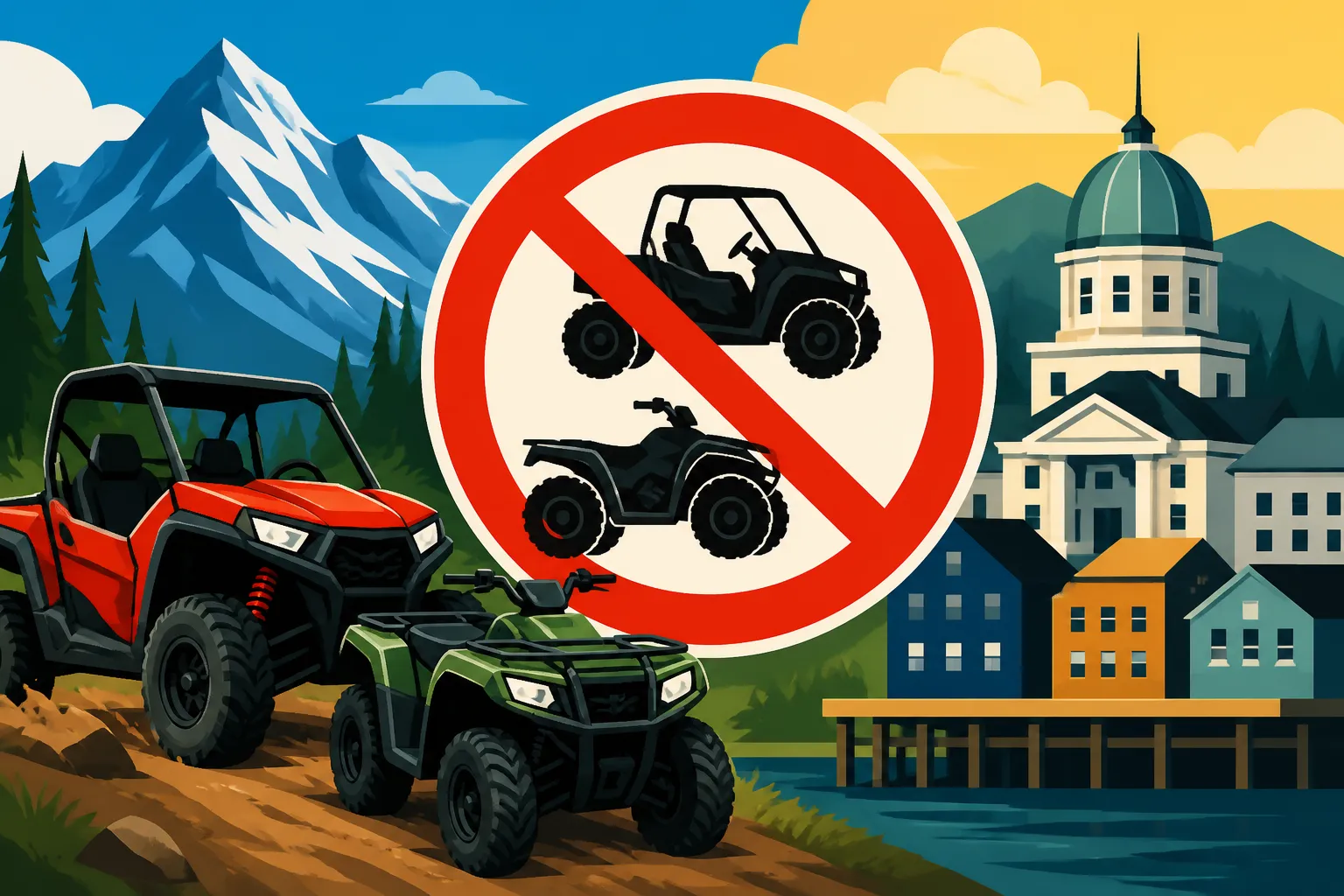
In Juneau, the ban on APVs is quite comprehensive, particularly concerning public roads and areas. Essentially, you cannot legally operate an ATV or UTV on city streets, public rights-of-way, or most public lands within the Juneau city and borough limits. This means your registered and insured machine, which might be perfectly legal to operate on the roads in a community like Nome, is strictly off-limits in Juneau. The intent is to keep these off-highway vehicles off the established transportation network and out of public spaces.
This can be a tough pill to swallow for riders who have invested in powerful machines and aftermarket accessories, perhaps even from companies like SuperATV, that enhance performance for rugged terrain. While those upgrades are fantastic for legitimate off-road use, they won't change Juneau's local ordinance. The ban reflects Juneau's commitment to maintaining its urban character and ensuring pedestrian and vehicle safety on its limited road system. It's a clear distinction from communities that allow [Alaska Rules for Riding a Village Street] or even [Alaska Rules for Riding a Gravel Road].
Areas Where APVs Are Prohibited
The prohibition isn't just for downtown Juneau. It generally applies across the entire Juneau City and Borough boundaries. This means:
- Public Roads and Streets: No operation of ATVs or UTVs on any paved or unpaved public roads. This includes residential streets, arterial roads, and highways within the borough.
- Public Rights-of-Way: These are the areas immediately adjacent to roads, often used for utilities or pedestrian access. APVs are not permitted here either.
- Most Public Lands: Unlike some areas of Alaska where state land is open to APV use, Juneau's local ordinances typically restrict APV access on public parks, greenbelts, and other city-managed lands.
- Sidewalks and Pedestrian Paths: This might seem obvious, but it's important to explicitly state that these areas are also off-limits.
Essentially, if it's public property and within Juneau's jurisdiction, assume APV use is prohibited unless explicitly stated otherwise by a specific, narrow exception. This can make simply transporting a machine through town, even on a trailer, a tricky endeavor if you're planning to unload it within the borough. Riders who are used to the freedom of [Alaska Riding in the Mat-Su Valley] will find Juneau's environment a stark contrast.
Exceptions and Designated Access Routes
Now, it's natural to wonder if there are any exceptions or designated routes, as is common in some other restrictive areas. For Juneau, these exceptions are exceedingly rare, almost to the point of non-existence for recreational riders. Unlike some communities that might have specific corridors for crossing a highway or accessing certain trails, Juneau has largely opted out of such provisions for general APV use.
There might be highly specialized, extremely limited circumstances where a municipal service vehicle, or a machine used for critical infrastructure maintenance, could operate under specific permits. However, for the average recreational rider or even someone needing an APV for subsistence activities, Juneune's ban offers virtually no leeway for operating within the city and borough. This means there are no "secret" trails or designated routes that allow for legal APV operation for the public. Your best bet for APV adventures will be to trailer your machine to an area outside Juneau's restrictive zone, where such activities are explicitly permitted. [Alaska Bans APVs in Juneau] is not an overstatement; it's a reality riders must contend with.
Navigating APV Use Outside Juneau
While Juneau might be a no-go zone for your ATV or UTV, the spirit of Alaskan riding is vast and alive. It’s crucial to understand the broader context of APV rules across the state so you can plan legal and enjoyable adventures beyond Juneau’s restrictive boundaries. Thinking regionally rather than locally is key to unlocking Alaska’s true potential for off-road enthusiasts.
Statewide Regulations vs. Local Laws
Alaska’s state regulations provide a baseline for APV operation. They cover things like registration requirements, minimum age for operators, helmet laws for minors, and basic equipment needs like working brakes and lights if you're operating on a road where permitted. For instance, [Alaska Requires a Class D License] for APV road use, and [Alaska Requires Liability Insurance for an APV] in such scenarios. However, this is where the interplay with local laws becomes essential.
A statewide rule might say APVs can operate on certain public lands, but a local ordinance, like Juneau's, can completely override that within its jurisdiction. This means you could be in perfect compliance with state law – having your machine registered, carrying proof of insurance, and wearing all the right gear – and still be breaking a local law by riding where a municipality has imposed a ban. It’s a classic case of knowing your local laws before you go. Always check the specific city or borough ordinances for any area you plan to ride in, as they can vary wildly from one community to the next.
Examples of Other Communities with Bans or Restrictions
Juneau isn't the only Alaskan community with APV restrictions, though its ban is particularly comprehensive. Other major population centers, often grappling with similar issues of congestion, noise, and safety, have also put limits in place. For example, [Alaska Bans APVs in Anchorage] on city roads and most public lands, mirroring Juneau's strict approach. [Alaska Bans APVs in Fairbanks] also has its own set of rules, often restricting road use to specific areas or for limited purposes.
Then you have communities like Wasilla and Palmer in the Mat-Su Valley, where APV use is much more integrated into daily life. While they have specific rules for road crossings and designated routes, APV access is generally much broader. Even in these areas, however, there are still rules about speed limits, helmet use, and where you can access public trails. The takeaway is that there's no "one size fits all" rule for Alaska; each city or borough has its own unique regulatory landscape. A quick check of municipal codes before you load up the trailer is always a smart move.
Planning Your Ride Beyond Juneau's Boundaries
So, if Juneau is off-limits, where can you go? Thankfully, the rest of Alaska offers a wealth of incredible opportunities for APV riding. The trick is to plan your adventures in areas where APV use is explicitly permitted and encouraged. The Mat-Su Valley, for instance, is a popular destination with vast riding areas like the [Knik River Public Use Area in Alaska] and [Jim Creek Riding in Alaska]. These areas offer designated trails, open spaces, and often amenities for riders.
When planning, consider transporting your machine to areas like these, or to more remote parts of the Interior, where trails and land status are more favorable to APVs. You might consider upgrading your machine for these more rugged environments with heavy-duty components from a reputable supplier like SuperATV – think stronger axles, lift kits, or durable tires built for Alaska's challenging terrain. Always confirm land ownership and regulations. [Alaska State Land Riding Explained] offers a great overview of how to navigate state-managed lands. Remember, a well-planned trip in a permitted area is always safer and more enjoyable than trying to skirt rules in a restrictive zone.
Consequences of Violating Juneau's APV Ban
Ignoring Juneau's APV ban isn't just a minor inconvenience; it can lead to significant legal and financial headaches. Alaskan law enforcement, including Alaska State Troopers and local police, are generally familiar with APV regulations and will enforce them, particularly in areas where bans are clearly established. Understanding the potential repercussions is essential for anyone considering operating an APV where it's not allowed.
Fines and Penalties for Unlawful Operation
Operating an APV in Juneau where it's prohibited can result in citations, much like a traffic ticket. The exact fines can vary depending on the specific ordinance violated and whether it's a first offense or a repeat issue. You could be looking at a fine that easily runs into the hundreds of dollars, and these aren't just slaps on the wrist. These penalties are designed to deter illegal operation and reinforce the city's commitment to public safety and order.
Beyond the initial fine, there can be additional costs. Court fees, administrative charges, and potentially even an increase in your insurance rates if the infraction is reported to your provider, can quickly add up. Furthermore, repeat offenses could lead to escalating fines or more severe consequences. This is a far cry from the open-access policies you might find in many rural parts of Alaska where APVs are commonplace for everything from hunting to everyday travel. [Alaska Ticket Costs for Road Riding] offers a general idea of what to expect for similar violations in other parts of the state.
Machine Impoundment and Recovery
One of the most immediate and costly consequences of violating an APV ban is the potential for your machine to be impounded. If an officer stops you operating an APV illegally in Juneau, they have the authority to seize the vehicle. This means your ATV or UTV could be towed away and stored at an impound lot. Getting your machine back from impound isn't a simple process, nor is it cheap.
You'll typically face daily storage fees, towing charges, and administrative release fees, all of which must be paid before you can even begin the process of recovering your machine. These costs can quickly accumulate, often dwarfing the original fine. Imagine having your valuable side-by-side, perhaps one you've invested heavily in with performance parts, suddenly out of reach and accruing charges daily. The hassle of arranging transport to get it out of Juneau, coupled with the financial burden, makes it a scenario every rider should actively avoid. It's a sobering reminder that simply trying to squeeze in a quick ride where it's not allowed is rarely worth the risk.
Why Juneau Implemented the Ban
Bans and restrictions on APVs aren't typically enacted to spite riders. They're usually the result of a community weighing various factors and deciding that unrestricted APV use poses challenges to public well-being, environmental preservation, or the character of the city. Juneau's decision is no different, rooted in specific concerns that are particularly relevant to its unique geography and population.
Public Safety Concerns and Urban Congestion
Juneau is a city built into a mountain environment, characterized by winding roads, steep grades, and often narrow passages. It also experiences significant pedestrian traffic, especially during the bustling cruise ship season. Introducing ATVs and UTVs onto this already complex transportation network raises immediate public safety concerns. These machines are designed for off-road performance, not for sharing tight streets with cars, buses, and pedestrians. Their maneuverability, speed, and braking characteristics differ significantly from traditional street-legal vehicles, increasing the risk of accidents.
Furthermore, Juneau's road system is limited. Adding more types of vehicles, especially those not designed for urban traffic, can exacerbate congestion, particularly at choke points. The city's decision to ban APVs on roads is a proactive measure to prevent potential collisions, protect vulnerable road users, and maintain traffic flow on an already constrained infrastructure. It's a similar rationale seen in communities that ban [Alaska Bans APVs in Anchorage] or [Alaska Bans APVs in Fairbanks], where the density and traffic volume make APV road use incompatible with existing urban planning goals.
Environmental and Noise Considerations
Beyond safety and traffic, environmental and noise impacts play a significant role in Juneau's APV ban. The city takes pride in its natural surroundings, from its forests to its waterways, and residents value the relative quiet of many neighborhoods. APVs, by their nature, can be noisy, especially older models or those with modified exhausts. The constant hum or roar of these machines can disrupt the peace of residential areas and impact wildlife.
Environmental concerns also factor in. While modern APVs have improved emissions, widespread off-road use, even in what might seem like "undeveloped" areas within the borough, can lead to habitat degradation, erosion, and water quality issues if not managed very carefully. The compact nature of Juneau's developed areas, nestled against pristine wilderness, makes these concerns particularly acute. By imposing a ban, Juneau aims to preserve its natural beauty, protect wildlife habitats, and ensure a quieter environment for its residents and visitors. It's a measure to prevent [Alaska Noise Complaints About Quads] and safeguard the ecosystem that makes Juneau so special.
What Juneau Riders Can Do Instead
Living in Juneau doesn't mean you have to give up your passion for ATVs and UTVs entirely. It just means you need to adjust your approach and find legal, permitted avenues to enjoy your machine. Alaska is vast, and while Juneau has its restrictions, there are countless other places where your APV can truly shine.
Exploring Designated Trail Systems Outside City Limits
The most practical solution for Juneau-based APV owners is to transport their machines to designated riding areas located outside the city and borough's restrictive zones. This usually involves trailering your ATV or UTV to areas like the Mat-Su Valley or other Interior regions where extensive trail networks and public lands are open to APV use. Imagine loading up your side-by-side, perhaps one you've equipped with enhanced suspension or a winch system from SuperATV for those challenging Alaska trails, and heading out for a weekend of legitimate adventure.
Places like the [Knik River Public Use Area in Alaska] offer hundreds of thousands of acres of diverse terrain, from glacial riverbeds to forest trails. Similarly, areas around Willow and Talkeetna provide access to state lands and private concessions that cater to off-road enthusiasts. Planning a trip to these areas involves checking local rules, securing any necessary permits (like [Alaska's Statewide General Permit for ATV Use] for state lands), and being prepared for the journey. It's an opportunity to explore new landscapes and connect with fellow riders in environments where APVs are welcomed.
Alternatives for Transportation within Juneau
For residents of Juneau, if you need to get around, your APV simply isn't the answer for city travel. The ban means you'll rely on conventional street-legal vehicles: cars, trucks, motorcycles, or public transportation. Many Juneauites also embrace walking and cycling, especially given the city's scenic pathways and relatively compact downtown.
If you have a legitimate need for an APV for specific tasks on private property in Juneau, you would need to ensure its operation is strictly confined to your own land and does not involve public rights-of-way. However, for general transportation or recreation, the APV needs to stay off the streets and public areas. This might mean investing in a good truck and trailer if you don't already have one, so you can easily transport your machine to legal riding locations elsewhere in the state. It's about adapting to Juneau's unique environment while still pursuing your passion for riding in appropriate venues.
| Aspect | Juneau City Limits | General Alaska State Land (where permitted) |
|---|---|---|
| Road Use | Generally Banned | Often Restricted/Limited, Max 45 mph |
| Public Trails | Extremely Limited/Banned | Permitted on Designated Trails |
| Private Property | Subject to local zoning | Generally permitted with owner consent |
| Registration Required | Yes, if ridden anywhere in AK | Yes, if ridden on public land |
| Helmet Law | N/A (due to ban) | Under 16, and for passengers |
| Insurance Required | N/A (due to ban) | Yes, for road-legal APVs |
Disclaimer
This article is for general informational purposes only and does not constitute professional advice. Laws, prices and regulations vary by location and change over time. Consult a qualified professional for guidance on your specific situation.