When a Trooper Gives a Warning Instead of a Ticket
Riding your ATV or UTV in Alaska is often about freedom, adventure, and connecting with the wild, but that freedom comes with a set of rules and the ever-present possibility of encountering law enforcement. Many riders worry about making a mistake and immediately getting a costly ticket. This guide will help you understand the nuances of trooper interactions in Alaska, exploring the circumstances under which an Alaska State Trooper might opt for a warning instead of a citation, and how your actions can influence that outcome.
Understanding the Trooper's Discretion
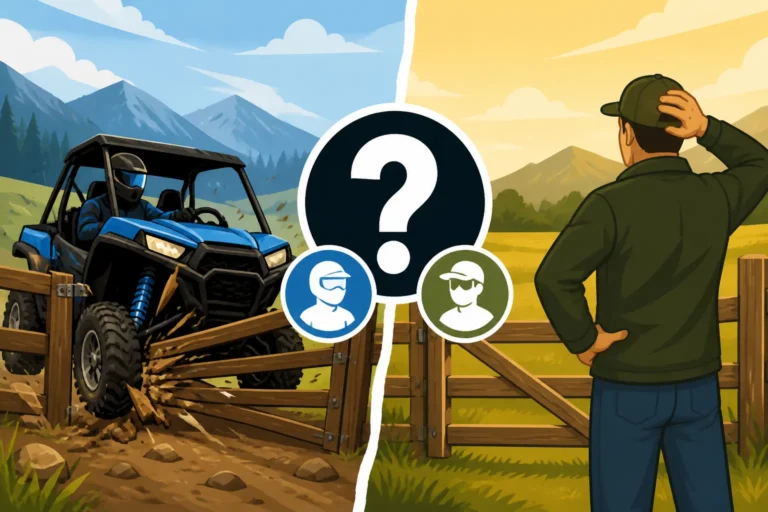
Let's face it, getting stopped by a trooper can send a jolt of anxiety through even the most seasoned rider. You might be cruising down a permissible gravel road, thinking you're doing everything right, when those flashing lights appear in your rearview. It's easy to assume the worst – a ticket is coming, no doubt about it. However, it’s important to understand that law enforcement officers, including Alaska State Troopers, often have a degree of discretion when enforcing traffic and vehicle laws. They aren't just ticket-writing robots; they're individuals tasked with upholding public safety, and sometimes, education and a stern warning are deemed more effective than a punitive fine.
The Role of Law Enforcement in Alaska
In Alaska, troopers are out there for a reason: to ensure the safety of everyone on public lands and roads, whether they're in a car, on a snowmachine, or riding an ATV or UTV. They enforce a wide range of regulations, from proper registration and equipment standards to rules about where and how you can ride your all-purpose vehicle (APV). Their primary goal isn't necessarily to penalize every minor infraction, but to promote compliance and prevent accidents or conflicts. They understand that not everyone is intimately familiar with every single statute, especially new residents or those new to the APV scene. Because of this, their role often includes educating the public on specific rules, like [Alaska APV Road Rules Explained], which can be quite complex depending on where you are.
They're looking at the bigger picture. Is this a blatant disregard for the law that endangers others, or is it a simple oversight that can be corrected with a friendly reminder? When a trooper approaches you, they're assessing the situation, not just the single potential violation. They're considering factors like how you're riding, who you're with, and whether your machine appears well-maintained or haphazardly thrown together. This holistic view is where discretion truly comes into play. They want riders to be safe, not just to collect fines.
The "Spirit of the Law" vs. the "Letter of the Law"
This concept is crucial to understanding why a warning might be issued. The "letter of the law" is exactly what it sounds like: the precise wording of the statute, the black-and-white rule. For instance, the letter of the law might state that your ATV must have a functioning headlight visible from 100 feet at all times when operating on public roadways [Why Your Headlight Must Be Visible at 100 Feet]. If your headlight is out, that's a violation of the letter.
However, the "spirit of the law" refers to the underlying intent behind that rule. Why do we need headlights? To ensure visibility and prevent collisions, especially in Alaska's long periods of darkness or sudden weather changes. If you're pulled over at high noon on a perfectly clear summer day because one of your headlights has burnt out, and you immediately acknowledge it and commit to fixing it at the next opportunity, a trooper might decide that while you've technically broken the letter of the law, you weren't operating in a way that truly violated its spirit by endangering others. Contrast this with someone riding at dusk with no lights, clearly ignoring safety protocols.
This distinction is often the gray area where a trooper exercises their judgment. They're weighing the severity of the infraction against its potential impact and your perceived intent. A small crack in a tail light, while technically a violation, might be less of a concern than a rider weaving recklessly through a designated riding area. This isn't a guarantee of a warning, of course, but it illustrates why a trooper might decide that a brief conversation and a directive to fix the issue serve the spirit of the law better than a formal citation.
Common Violations That Might Trigger a Warning
Let's be real, nobody's perfect. We all make mistakes, or sometimes things just go wrong. When you're out on an ATV or UTV, especially on Alaska's vast and sometimes challenging terrain, minor issues can pop up. The good news is that for some of these less egregious violations, a trooper might lean towards a warning, especially if you demonstrate a good attitude and a willingness to correct the problem. It’s all about context and how you present yourself.
Minor Equipment Malfunctions
Imagine you're deep in the Mat-Su Valley, miles from a repair shop, and suddenly your taillight flickers out. You're trying to be responsible, maybe you even checked it before you left, but things happen. Minor equipment malfunctions often fall into this category. We're talking about things like a burnt-out bulb (headlight, taillight, or brake light), a loose reflector, or maybe even a slightly frayed mud flap. These are usually repairable on the spot or easily fixed once you get back to town. If a trooper stops you and points out a non-functional light, and you express surprise, show an immediate intent to fix it, and it's not a systemic issue with your machine, you stand a much better chance of receiving a warning. They want you to fix it, not necessarily punish you for a random component failure.
It's different, of course, if your machine is a complete wreck, missing essential components, or clearly hasn't seen maintenance in years. But for a single, minor, and seemingly accidental failure, a warning is definitely on the table. Make sure you've generally maintained your machine well, maybe even upgraded parts with quality accessories from brands like SuperATV, as this demonstrates a commitment to safety and good riding practices.
Slight Deviations from Road Rules
Alaska's road rules for APVs can be tricky, varying by community. For example, some towns completely ban APVs on roads, while others have specific allowances [Alaska Bans APVs in Anchorage]. It's easy to accidentally drift onto a restricted section for a short distance, or momentarily exceed a designated speed limit on a permitted road if you're not paying close attention. Or perhaps you made a slightly wider turn than regulation dictates while crossing a highway [Crossing a Highway on a Quad in Alaska].
These are the kinds of "oops" moments that, if they don't cause an immediate danger or a significant disturbance, might result in a warning. The key here is the "slight deviation" – it wasn't a deliberate, prolonged, or dangerous act of disregard. If you realize your mistake, acknowledge it to the trooper, and immediately correct your course or speed, they might choose to educate you about the specific rule, like [Alaska's 45 mph Road Limit for APVs], rather than issuing a ticket. They often differentiate between someone genuinely trying to follow the rules who made a slight misjudgment, and someone who is openly flouting regulations.
Registration and Decal Issues
Ah, the paperwork! It's one of the most common areas where riders can inadvertently fall short. Forgetting to carry your [Carrying Your Driver's License on Every APV Ride] or [Proof of Insurance on a Quad] are frequent issues. Or maybe your [Alaska Decal Placement on the Tunnel Side] is slightly obscured, or your registration just expired and you genuinely haven't had a chance to renew it yet. These are administrative issues, and while important, they often don't pose an immediate threat to public safety in the same way reckless riding might.
If you have a valid registration but simply forgot the paper proof, or your decal is slightly misplaced but clearly visible upon closer inspection, a trooper might issue a warning and instruct you to carry your documents next time or reposition your decal. The key is proving that you do have the correct registration and insurance, even if the physical proof isn't immediately available or perfectly displayed. They might ask you to produce proof later, or instruct you to fix the decal placement. It's an opportunity for them to remind you of the rules for [What Alaska's ATV Registration Form Asks For] and to keep everything up to date.
Factors Influencing a Trooper's Decision
When a trooper stops you, they're not just looking at the single infraction. They're making a quick assessment of the entire situation. Think of it like a mental checklist of variables that can sway their decision toward a warning or a ticket. This is where your actions, the specifics of the violation, and the environment all come into play.
Rider Demeanor and Cooperation
This is arguably one of the most significant factors. Imagine two scenarios:
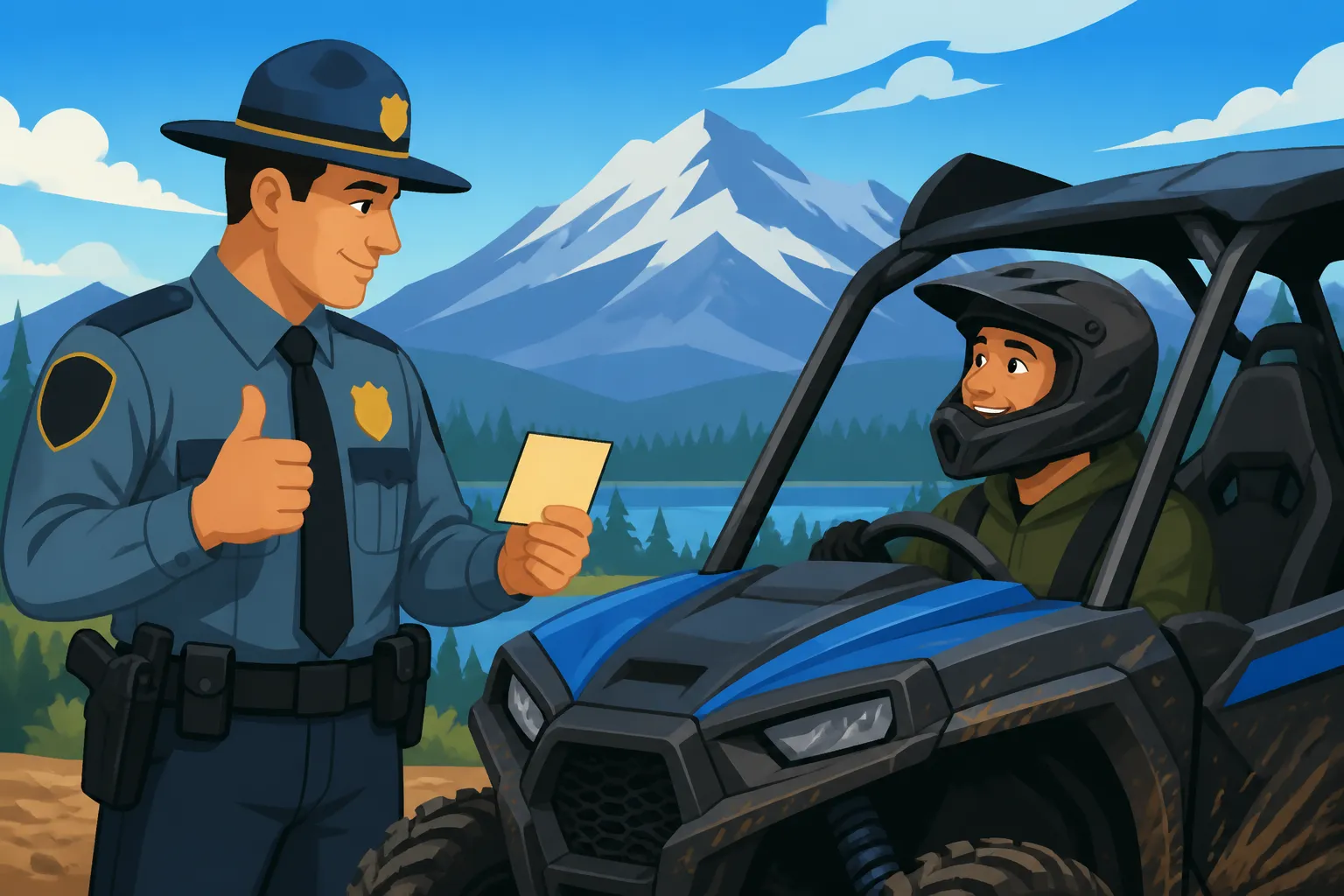
- Scenario A: You're pulled over for a minor speed infraction on a gravel road that permits APVs. You immediately slow down, pull over safely, turn off your engine, and keep your hands visible. When the trooper approaches, you're polite, respectful, and answer their questions clearly. You acknowledge your mistake, explain that you were enjoying the ride and weren't paying close enough attention to your speed, and assure them you'll be more careful. You have all your documents ready, and your machine is in good order. This rider has a high chance of receiving a warning.
- Scenario B: You're pulled over for the same minor speed infraction. You take your time pulling over, maybe even question why you're being stopped. When the trooper approaches, you're defensive, argue about the speed limit, or act dismissive. You can't find your registration, and you might even have a slightly aggressive tone. This rider is far more likely to get a ticket, even for a minor offense.
Troopers are people, too. They appreciate respect and cooperation. Being polite, honest, and cooperative can go a long way. They're looking for signs that you respect their authority and the rules they enforce. A simple "Yes, sir/ma'am" and a calm explanation are far more effective than an argument. They often remember these interactions, and your demeanor can set the tone for the entire encounter. Remember, [What a Trooper Can Ask to See] includes your license, registration, and proof of insurance, so have them readily available.
Severity of the Offense
This one seems obvious, right? A minor infraction is more likely to get a warning than a major one. But let's define "severity." It's not just about the specific rule broken, but the potential impact of that broken rule.
- Low Severity (Warning Potential): A burnt-out headlight during daylight hours, a slightly expired registration (if you can prove renewal is in process), or riding a few miles per hour over the limit in a very remote, low-traffic area. These are issues that, while technically violations, pose minimal immediate risk to others or property.
- High Severity (Ticket Likely): Riding an APV while impaired, reckless operation that endangers pedestrians or other vehicles, riding a machine that is dangerously unsafe (e.g., no brakes, missing critical safety components), or riding in a clearly prohibited area like [Alaska Bans APVs in Fairbanks]. These actions directly threaten public safety and property and are almost certainly going to result in a citation, potentially even an arrest. Violations like [Alaska Helmet Law for Riders Under 16] when a child is involved, or riding without [Alaska Requires Liability Insurance for an APV] can also be seen as high severity due to the potential consequences.
The trooper is constantly assessing the risk you pose. The less risk, the more likely a warning. The greater the risk, the higher the chance of a ticket.
Location and Time of Day
The context of where and when you're riding can also influence a trooper's decision.
- Remote Trail vs. City Street: Riding slightly off a designated trail in a vast, remote area might be viewed differently than riding an APV illegally down the main street of a busy town where [Alaska Bans APVs in Juneau]. The potential for conflict with other users or the general public is much higher in populated areas. Troopers in remote areas might be more inclined to educate riders on specific land use regulations, like those for [Alaska State Land Riding Explained], whereas in a city, the rules are often clearer and enforcement more stringent due to higher traffic and pedestrian volumes.
- Day vs. Night: A minor equipment issue like a single burnt-out taillight during broad daylight might warrant a warning. However, if that same taillight is out at night, especially during Alaska's long winter darkness, it becomes a much more serious safety hazard. [Alaska Night Riding Equipment Rules] are there for a reason, and a trooper will likely be less forgiving of lighting infractions after dark. Similarly, sound complaints about quads [Alaska Noise Complaints About Quads] are often more prevalent late at night in residential areas, increasing the likelihood of a formal response.
Previous Record (if known)
While a trooper on a routine stop might not immediately have access to your full APV riding history, if they recognize you or if your vehicle has been flagged for previous incidents, it can absolutely affect their decision. If you're a known repeat offender for certain types of violations, or if you've been warned for the same issue multiple times, a trooper is far less likely to extend a warning again. At that point, a warning hasn't been effective, and a ticket becomes the necessary next step to encourage compliance. This is why it's so important to learn from a warning and make sure the issue is truly resolved.
How to Respond if Pulled Over
So, the lights are flashing. Your stomach drops a bit. What do you do? The moments immediately following a stop can significantly impact whether you receive a warning or a ticket. Staying calm, being cooperative, and knowing how to present yourself and your documentation are absolutely key. This isn't just about avoiding a ticket; it's about a safe interaction for everyone involved.
Safe Stop and Immediate Actions
Your first priority is safety. As soon as you see those lights, signal your intent to pull over safely.
- Slow Down Gradually: Don't slam on your brakes, but begin to reduce your speed.
- Find a Safe Spot: Look for a safe place to pull your ATV or UTV completely off the trail or road, away from traffic. This might be a wide shoulder, a pull-out, or a flat, clear area. Avoid stopping on a blind curve or in the middle of a busy lane.
- Turn Off Your Engine: Once stopped, kill your engine. This shows respect, reduces noise, and prevents accidental movement.
- Keep Hands Visible: Place your hands on the handlebars or steering wheel, or in plain sight on your lap. Avoid rummaging around for documents until asked. This helps the trooper feel safe and allows them to clearly see your intentions.
- Stay Seated (Unless Instructed Otherwise): Remain on your machine unless the trooper specifically tells you to dismount. Getting off without being asked can sometimes be misinterpreted.
- Avoid Sudden Movements: Don't make any sudden or unexpected movements. Wait for the trooper to approach you.
By following these initial steps, you've already made a positive first impression, demonstrating that you are responsible and understand how to react to law enforcement. This sets a good tone for the rest of the interaction.
Communicating Respectfully
Once the trooper approaches, your verbal communication is just as important as your actions.
- Be Polite and Respectful: Greet the trooper with "Hello, officer" or "Good morning/afternoon/evening, sir/ma'am." Maintain a polite and calm tone throughout the conversation.
- Listen Carefully: Pay close attention to what the trooper says and asks. Don't interrupt.
- Answer Questions Truthfully and Concisely: Provide direct answers to their questions. Avoid rambling or offering unsolicited information, but don't be evasive. If you're unsure of an answer, it's okay to say, "I'm not sure, officer."
- Acknowledge and Apologize (if appropriate): If you know you made a mistake, a sincere apology can go a long way. For example, "Officer, I apologize, I wasn't paying close enough attention to the speed limit," or "My apologies, I just noticed my headlight went out." This shows accountability.
- Avoid Arguing or Becoming Defensive: Even if you disagree with the reason for the stop, this is not the time or place to argue. Save any challenges for a court date if a ticket is issued. Arguing will almost certainly eliminate any chance of a warning.
- Do Not Make Excuses: While a brief, honest explanation for a mistake might be accepted, a long list of excuses often sounds like you're trying to avoid responsibility. Stick to the facts.
- Ask Questions Respectfully: If you don't understand something, you can respectfully ask for clarification, for example, "Could you clarify where the APV speed limit changes on this road, officer?"
Remember, your words contribute significantly to the trooper's perception of you. A respectful, cooperative attitude makes a much better impression than an antagonistic one.
Providing Documentation
The trooper will almost certainly ask for your identification, registration, and proof of insurance. Having these readily accessible and in order will smooth out the process.
- Retrieve Documents When Asked: Don't start fumbling for your wallet or papers until the trooper asks for them. This again helps maintain safety and control of the situation.
- Present Valid Documents: Make sure your driver's license (yes, you need a [The Alaska Driver's License an APV Rider Needs] for road use!), vehicle registration, and proof of liability insurance are all current and valid. [Alaska APV License and Insurance Rules] are strictly enforced.
- Offer All Requested Documents: Hand over everything they ask for. If you don't have something, politely state that you don't. For example, "Officer, I have my license and insurance, but I seem to have misplaced my registration paper."
- Be Prepared for Questions About Your Machine: They might ask about recent maintenance, who owns the machine, or where you're headed. Answer these questions truthfully. If your machine features aftermarket parts, like something from SuperATV, it might even be a conversation starter about how you maintain your vehicle.
Making the trooper's job easier by having your documents ready, and by being polite and cooperative, is your best bet for turning a potential citation into a constructive warning. It shows you're a responsible rider, even if you've made a minor misstep.
When a Warning is Definitely Off the Table
While discretion exists, there are clear lines in the sand. Some violations are so serious, or demonstrate such a blatant disregard for safety and the law, that a warning simply isn't an option. In these situations, a trooper's duty to enforce the law and protect the public takes precedence, and a citation, possibly even an arrest, is the only appropriate response.
Serious Safety Violations
These are the big ones that directly put lives at risk. If you're engaging in any of the following, expect a ticket, and potentially more serious legal consequences:
- Riding Under the Influence (RUI/DUI): Operating an APV while impaired by alcohol or drugs is extremely dangerous and illegal, just like driving a car. Alaska has strict [Alaska DUI Law and Off-Road Machines] that apply to ATVs and UTVs. This is an immediate ticket and likely an arrest. There's no warning for this.
- Reckless Operation: This includes excessive speed in unsafe areas, performing stunts near others, driving erratically, or weaving through traffic. Actions that clearly demonstrate a disregard for the safety of yourself or others will result in a citation.
- Operating a Dangerously Unsafe Machine: While a single burnt-out light might get a warning, if your machine has critical failures like non-functional brakes, bald tires, no working lights whatsoever at night, or a severely damaged frame, it's deemed too dangerous for public use. [Alaska Requires Lights and Brakes] for a reason, and if these are absent or severely compromised, you're looking at a ticket.
- Refusal to Comply/Evading Law Enforcement: If you refuse a trooper's instructions, try to flee, or actively resist, you're escalating the situation dramatically. This will result in serious charges, not a warning.
These actions go beyond simple mistakes; they reflect a conscious choice to put safety at risk, and troopers are trained to address them with firm enforcement.
Impacting Public Safety or Property
Some violations, even if not immediately life-threatening, have a significant negative impact on the community, the environment, or property.
- Illegal Trail Creation or Environmental Damage: Deliberately riding in sensitive areas like tundra or wetlands, creating new trails, or causing significant environmental damage is a serious offense in Alaska [Alaska Tundra Damage and Riding]. Such actions show a disregard for the environment and other users, and a warning is unlikely. Permits are often required for such travel [Alaska Tundra Travel Permits].
- Trespassing on Private or Restricted Land: Riding on private property without permission, or entering areas clearly marked as restricted (e.g., wildlife refuges, closed state park areas, or Native Corporation land without a permit), is a direct violation of property rights and land management rules. Land managers and property owners expect enforcement, not warnings, for such infringements. [Alaska Trespass Law for Riders] applies just as much to APVs as to other vehicles.
- Accidents Involving Injury or Significant Damage: If your actions lead to an [Alaska Accident Reporting for an ATV Crash] involving injury to a person or significant damage to property, the incident will be thoroughly investigated, and appropriate citations will be issued. A warning is not an option when actual harm has occurred.
Repeat Offenses or Aggravated Circumstances
Finally, even for seemingly minor offenses, the context can turn a warning into a ticket.
- You've Been Warned Before (for the same thing): If a trooper pulled you over a month ago for the same expired registration or burnt-out headlight, and you failed to fix it, that second encounter is almost certainly going to be a ticket. A warning is a chance to correct an issue; failing to do so indicates a lack of compliance.
- Aggravating Factors: This could be anything that makes the situation worse. Perhaps you're riding a machine that's clearly modified to be excessively loud, knowingly violating [Alaska Muffler and Noise Rules], or you're operating without proper [Alaska Spark Arrester Requirements] during fire season. Maybe you're caught riding on a road in one of the eight Alaska communities that explicitly [Alaska Bans APVs in Wasilla and Palmer] after being specifically informed about the ban. These elements show a deliberate choice to ignore regulations or compound the risk, making a warning highly improbable.
Preventative Measures to Avoid Encounters
The absolute best way to deal with the question of "warning or ticket" is to avoid the situation entirely. By being a responsible, informed, and prepared rider, you significantly reduce your chances of being stopped by a trooper in the first place, or at least ensure that any interaction you do have is a positive one. This isn't just about avoiding fines; it's about ensuring a safe and enjoyable experience for yourself and others on Alaska's vast network of trails and roads.
Knowing and Following Alaska APV Laws
Ignorance of the law is never an excuse. Alaska's regulations for ATVs and UTVs can be complex, varying by location, land ownership, and even the type of machine. Dedicate time to truly understand the rules that apply to where you ride.
- Research Your Riding Area: Before you head out, know the specific regulations for that area. Is it state land, federal land, Native Corporation land, or private property? Each can have different rules. For instance, [Alaska State Park Riding Rules] are distinct from general state land rules. Check for any local ordinances in specific boroughs or cities, as [Alaska Municipal ATV Ordinances] can add another layer of complexity.
- Understand Road Use Rules: If you plan to ride on roads, know where it's permitted, what speed limits apply, and what equipment is required. Many communities ban APVs on roads entirely [Eight Communities That Opted Out], while others allow limited use under specific conditions, such as the [Alaska's 45 mph Road Limit for APVs]. Always pay attention to [Reading the Speed Limit Sign Before You Ride].
- Learn Equipment Requirements: Ensure your machine meets all state-mandated equipment standards. This includes working [Alaska Requires Lights and Brakes], a proper muffler, [Alaska Spark Arrester Requirements], and reflectors. Even mud flaps might be required in certain situations [Alaska Mud and Snow Flap Rules]. Companies like SuperATV offer a range of compliant parts and accessories that can help you meet these requirements while also improving your machine's performance.
- Helmet Laws: If you're riding with younger passengers, be especially vigilant about [Alaska Helmet Law for Riders Under 16].
- Registration and Insurance: Always ensure your ATV or UTV is properly registered and that you have current liability insurance, as required for APV road use [Alaska Requires Liability Insurance for an APV].
Here's a quick reference for common elements:
| Aspect | Warning Likely (if minor, first offense, cooperative) | Ticket Likely (if serious, repeat, uncooperative) |
|---|---|---|
| Equipment | Single burnt-out headlight (daytime) | No brakes, no lights (night), excessive noise |
| Documentation | Forgot physical registration (but have valid copy) | No valid registration, no license, no insurance |
| Road Rules | Briefly exceeded speed limit on permitted road | Reckless driving, riding in banned area, RUI |
| Safety Gear | Helmet worn incorrectly (adult, minor) | No helmet for underage rider, child passenger unsafe |
| Demeter | Polite, cooperative, apologetic | Argumentative, evasive, aggressive, resistant |
| Environmental | Accidental minor deviation from trail | Deliberate wetland damage, illegal trail creation |
Maintaining Your Machine
A well-maintained machine is not only safer but also tells a trooper that you're a responsible owner. It reduces the likelihood of equipment-related stops and enhances your chances of a warning if a minor issue does arise.
- Pre-Ride Checks: Before every ride, do a quick check of your lights, brakes, tire pressure, and fluid levels. This can catch small issues before they become problems on the trail.
- Regular Maintenance: Follow your manufacturer's recommended maintenance schedule. Keep your machine clean, especially your VIN number and decals, so they are easily readable. [Keeping a Decal Readable in Mud] is important.
- Address Issues Promptly: Don't put off fixing minor problems. A flickering headlight today could be a non-functional one tomorrow. Proactive repairs demonstrate responsibility.
- Quality Parts: Invest in quality replacement parts and accessories. Whether it's a new set of tires, an upgraded lighting system from SuperATV, or a durable winch, reliable components reduce the chance of breakdowns and safety hazards.
Riding Responsibly and Respectfully
This encompasses your overall behavior on the trail and on any permissible roads.
- Be a Good Neighbor: Respect other trail users, private property owners, and wildlife. Keep noise levels reasonable, especially near residential areas or wildlife habitats.
- Ride Within Your Limits: Don't attempt maneuvers beyond your skill level, and always adjust your speed to conditions. Rough terrain, blind corners, and limited visibility all call for a slower pace.
- Stay on Designated Trails: Protect Alaska's sensitive ecosystems by sticking to marked trails and roads. Going off-trail, especially in fragile areas, can cause irreparable damage and reflects poorly on all riders.
- Carry Your Documents: Always have your driver's license, registration, and proof of insurance with you [Carrying Your Driver's License on Every APV Ride]. Store them in a waterproof bag to protect them from the elements.
- Don't Give Reasons to Be Stopped: The easiest way to avoid a ticket is to not break the law in the first place. Ride sober, follow speed limits, ensure your machine is in good working order, and respect property boundaries.
By embracing these preventative measures, you're not only increasing your chances of getting a warning instead of a ticket, but you're also contributing to a more positive perception of ATV and UTV riders in Alaska, making the trails safer and more enjoyable for everyone.
Disclaimer
This article is for general informational purposes only and does not constitute professional advice. Laws, prices and regulations vary by location and change over time. Consult a qualified professional for guidance on your specific situation.