Alaska Ticket Costs for Road Riding
It's incredibly frustrating when you just want to get from Point A to Point B on your ATV or UTV in Alaska, maybe cutting down on a long drive or just getting a little more use out of your machine, only to realize the rules for road riding are a maze. Many riders wonder what the actual financial hit will be if they get caught bending or breaking these rules. This guide is here to shed some light on the potential ticket costs and other consequences you could face for operating an ATV or UTV on Alaska's public roads when you shouldn't be.
The Reality of Riding an ATV on Alaska Roads
Let's be real: the siren song of taking your quad or side-by-side on the pavement, even just for a short stretch, can be strong. It feels convenient, and sometimes, it seems like the most direct route. But Alaska has some pretty clear distinctions between off-road vehicle use and on-road vehicle operation, and ignoring them can lead to a world of headaches, starting with those dreaded ticket costs.
Why the Rules Exist
It's not just about making things difficult for riders; there are genuine reasons behind these regulations. Standard ATVs and UTVs are designed for off-road environments – think trails, mud, snow, and varied terrain. Their suspension, tires, and even braking systems aren't typically optimized for high-speed, smooth-pavement travel alongside cars and trucks. This creates significant safety concerns, not just for the ATV rider but for other motorists too. Imagine trying to stop quickly on pavement with knobby tires, or the potential for a low-speed, wide-turning side-by-side to disrupt traffic flow. These are the kinds of scenarios the rules aim to prevent. Additionally, there are concerns about noise, emissions, and simply maintaining a clear distinction between registered road vehicles and recreational machines.
Where You Can and Cannot Ride
Here's the rub: for the most part, you cannot ride your ATV or UTV on Alaska's public roads, streets, or highways. This includes the vast majority of paved and maintained gravel roads that make up our state's transportation network. However, there are some very specific exceptions, and these are crucial to understand. You might be allowed to cross a highway, for example, or ride on the shoulder of certain roads if the speed limit is 45 mph or lower, provided your machine meets specific equipment requirements. Some communities, particularly in rural or Bush Alaska, have their own local ordinances that do allow for ATV use on public roads, often as a primary mode of transportation. But these are exceptions to the general rule, and you absolutely need to know the specific local rules before you even think about putting a tire on the pavement. Not every town is Nome or Bethel when it comes to [Alaska APV Road Rules Explained]. [Alaska Communities That Ban APV Road Use] are quite common, and just assuming it's okay can be an expensive mistake.
Common Offenses and Their Penalties
So, what happens if you get caught? Alaskan law treats many unauthorized ATV or UTV road operations as misdemeanors, which means they can carry significant fines and other legal repercussions. These aren't just slaps on the wrist; they can hit your wallet hard and sometimes lead to more serious issues.
Riding on a Banned Road or Above the Speed Limit
This is probably the most common offense. Cruising down a highway, even for a short distance, where ATVs are explicitly prohibited, or exceeding the [Alaska's 45 mph Road Limit for APVs] on an approved road, will likely result in a citation. The specific fine can vary greatly depending on the borough or municipality, but you're generally looking at a base fine that could easily be in the hundreds of dollars. For instance, in some areas, a basic traffic misdemeanor can start around $150-$200, but with court fees and surcharges, it quickly escalates. If you're caught on a major thoroughfare or causing a significant traffic hazard, the enforcement officer might take a stricter view, leading to higher penalties or even multiple citations. It's not just about the posted speed limit; it's about the very classification of the road itself. [Why a Highway Posted Above 45 Is Off Limits] is a critical point many riders miss.
Lack of Required Equipment or Insurance
Even in areas where limited road use is permitted, your ATV or UTV must meet specific equipment requirements to be considered "street legal" in that context. This often includes functioning headlights, taillights, brake lights, a muffler, a spark arrester, and working brakes. Many stock ATVs don't have all these components, especially the lighting required for night riding, or they might not meet specific [Alaska OHV Equipment Requirements]. If you've been customizing your machine, you might look into robust aftermarket options. Companies like SuperATV, for instance, offer lighting kits, horns, and other accessories that can help bring your machine closer to meeting these kinds of standards, where permissible. Being pulled over for riding on an allowed road but missing something like a functioning headlight or proof of [Alaska Requires Liability Insurance for an APV] can lead to separate fines, each adding to your overall ticket cost. Insurance is particularly important; showing proof of coverage is often a requirement for any road-legal operation, even if limited.
Operating Without a Valid Driver's License
This is a big one. While you don't necessarily need a special endorsement to ride an ATV off-road, if you're operating an APV on a public road in Alaska, you absolutely need a valid Class D driver's license. That's the same license you'd use to drive a car. If you're caught without one, the penalties can be severe. This isn't just a minor traffic infraction; operating a motor vehicle without a valid license can result in substantial fines, potential vehicle impoundment, and could even lead to more serious legal trouble, especially if combined with other offenses or an accident. Always carry your [Carrying Your Driver's License on Every APV Ride] documentation with you.
Underage Riding Without a Helmet
Alaska has a specific helmet law for ATV riders under the age of 16. If a rider under this age is caught operating an ATV on a public road or highway without a helmet, they (or more accurately, their parent or guardian) can face a fine. The [Alaska's Under-16 Helmet Fine] for a first offense is generally set at a lower amount, but it can increase significantly for subsequent offenses. This law is strictly enforced for the safety of young riders, and enforcement officers are usually quite vigilant about it, especially on roads or in areas where children might be tempted to ride. Making sure young riders wear a helmet, like one that meets CPSC standards, is not just about avoiding a ticket, but about their safety. [What the CPSC Helmet Standard Actually Requires] is worth looking into for appropriate gear.
Beyond the Fine: Other Costs and Consequences
A ticket isn't just the dollar amount printed on the citation. There are often a cascade of other financial and personal costs that can quickly add up, turning a quick illegal road ride into a very expensive lesson.
Court Costs and Administrative Fees
That base fine we talked about? It's almost never the final amount you pay. When a citation goes through the court system, you're typically hit with additional court costs, administrative fees, and sometimes surcharges that can easily double or even triple the initial fine. These fees cover the cost of processing your case, whether you plead guilty, pay the fine, or contest it. Even if you simply mail in a check, those fees are generally tacked on. This can be a rude awakening for riders who only mentally budget for the "fine" portion of the ticket. [Alaska Court Costs for an OHV Citation] can make a small fine feel much larger.
Insurance Premium Increases
Just like with a car, traffic violations on your ATV or UTV can impact your insurance rates, particularly if your machine is insured for on-road use (even limited). Insurance companies often view moving violations as an increased risk, which can lead to higher premiums when it's time to renew your policy. This isn't a one-time cost; it's an ongoing expense that could affect you for years. Depending on the severity of the offense, it might even make it harder to find affordable insurance coverage in the future. [Insurance After a Backcountry Collision] or any other incident could be significantly impacted by a history of citations.
Vehicle Impoundment or Towing
In more serious cases, or if you're operating an unregistered or uninsured machine, or simply causing a major safety hazard, an enforcement officer has the discretion to impound or tow your ATV or UTV. This means immediate additional costs: towing fees, daily storage fees at the impound lot, and possibly administrative release fees. These can quickly add up to hundreds, if not thousands, of dollars, especially if you can't retrieve your machine right away. And of course, you'll still have to deal with the original ticket. It's a double whammy that can really sting and disrupt your plans for getting out on the trails.
Preventing a Ticket: Know Before You Go
The best way to avoid those hefty ticket costs and the ensuing headaches is to be informed and prepared. A little research and proactive planning can save you a lot of money and stress in the long run.
Research Local Ordinances
Alaska is a vast state, and what's allowed in one community might be strictly forbidden just a few miles down the road. Before you even think about putting your tires on any public thoroughfare, make it your mission to find out the local rules. Check the municipal code, call the local police department, or inquire with the local DMV or borough offices. Many communities, especially those on the road system, have adopted specific ordinances regulating ATV and UTV use. For example, [Alaska Bans APVs in Anchorage] and in many other urban centers. You might find that [Checking a City Code Before You Ride] reveals unexpected restrictions or, conversely, specific routes that are permissible. Don't rely on assumptions or what "everyone else is doing."
Equip Your Machine Properly
If you plan to ride your ATV or UTV in any situation where road access is permitted – even for crossing or shoulder use – ensure it meets all the necessary equipment requirements. This means checking your headlights, taillights, brake lights, horn, mirrors (if required), muffler, and spark arrester. Many riders outfit their machines with aftermarket accessories for safety and performance, and this is where brands like SuperATV can come into play, offering a range of lights, mirrors, and other components designed to enhance visibility and compliance where allowed. Having working [Lights That Work at Midnight] and proper [Brakes a Trooper Will Check] isn't just about legality; it's about your safety and the safety of others.
Carry All Required Documentation
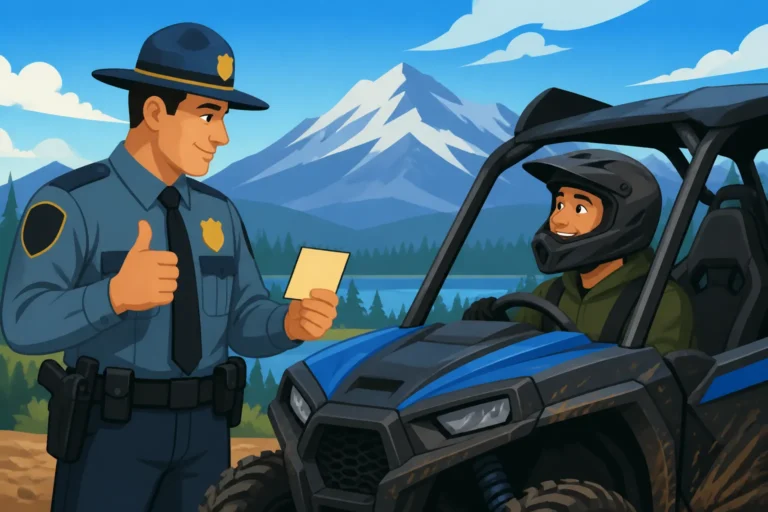
Always, always, always carry your valid driver's license (if you're operating on a road, even for a moment), your ATV's registration, and proof of insurance. Keep these documents in a waterproof bag or container. Many riders carry a copy of their [Alaska Registration Paperwork Checklist] and [Proof of Insurance on a Quad] to ensure they have everything. If a trooper or enforcement officer stops you, being able to readily provide these documents can make the encounter much smoother, even if you're still facing a citation for an offense. Fumbling for documents or not having them at all can sometimes escalate a situation.
Here's a quick look at potential costs:
| Offense Category | Examples of Specific Violations | Potential Fine Range (Estimate) | Additional Costs (Estimate) | Total Impact (Estimate) |
|---|---|---|---|---|
| Unauthorized Road Use | Riding on a banned highway; exceeding 45 mph on allowed road; riding in a prohibited community. | $150 – $500 | Court costs ($50-$200); surcharges; potential insurance hike. | $200 – $1,000+ (plus multi-year insurance increase). This is often the starting point for most road-riding citations. |
| Equipment Violations | Missing/non-functional headlights, taillights, brakes, muffler, spark arrester, reflectors, mud flaps. | $50 – $250 (per item) | Court costs; administrative fees; cost of new parts; repair time. | $100 – $500+ per violation. Multiple equipment issues can quickly add up. For example, [Why Your Headlight Must Be Visible at 100 Feet] is a clear requirement. |
| No Valid Driver's License | Operating an APV on a public road without a Class D license. | $200 – $1,000+ | Court costs; impoundment/towing fees; potential jail time. | $500 – $2,000+ (plus legal fees if contested). This is a serious offense that can escalate quickly, especially if you need to contest the citation or retrieve an impounded machine. |
| No Proof of Insurance | Operating an APV on a public road without liability insurance. | $150 – $500+ | Court costs; administrative fees; potential impoundment. | $200 – $1,000+. This can lead to your machine being impounded until proof of insurance is provided, and then some. |
| Underage Helmet Violation | Rider under 16 without a helmet on a public road. | $25 (first offense) – $50+ (second offense). | Parent/guardian responsibility; potential for repeat offense fines. | $25 – $100+. While lower, it's a direct and easily avoidable fine aimed at youth safety. [Alaska Second Offense Helmet Fines] show a quick escalation if not addressed. |
| Vehicle Impoundment/Towing | Due to severe violations (e.g., no registration, no license, dangerous operation). | Variable (based on towing/storage company) | Towing fees ($100-$300); daily storage ($30-$75/day); impound release fees. | $300 – $1,000+ (quickly accumulates). This is in addition to any fines for the original offense. It's often the most financially painful immediate consequence. |
This article is for general informational purposes only and does not constitute professional advice. Laws, prices and regulations vary by location and change over time. Consult a qualified professional for guidance on your specific situation.