Why Your Headlight Must Be Visible at 100 Feet
Riding your ATV or UTV in Alaska offers unparalleled freedom, but hitting the pavement, even briefly, can feel like navigating a legal minefield. It’s a common frustration: one minute you’re tearing up a trail, the next you’re wondering if your machine is even legal to cross that two-lane highway. This guide is here to untangle the complexities of Alaska's road rules for all-purpose vehicles (APVs), focusing on the critical equipment requirements that ensure your machine is visible and compliant when you venture onto public roadways.
Understanding Alaska's APV Headlight Requirement
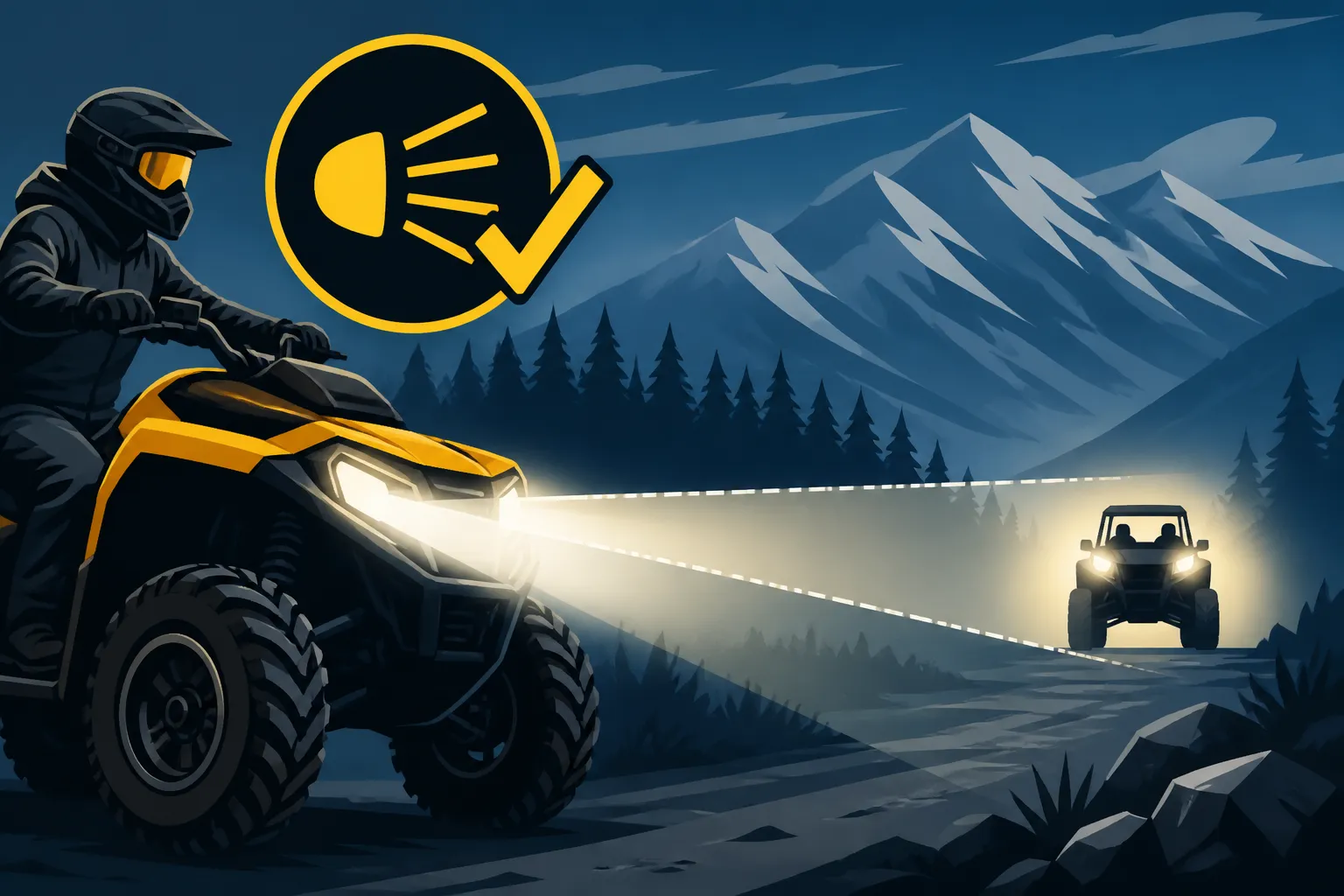
There’s a good reason why Alaska specifically states that your APV’s headlight must be visible from at least 100 feet away. It's not just some arbitrary number plucked from thin air; it's a fundamental safety standard designed to protect you and everyone else on the road, especially during those long Alaskan nights or unpredictable weather conditions. We've all seen those dim, flickering headlights that barely illuminate the path ahead, let alone announce a machine's presence to oncoming traffic. That simply won't cut it when you're sharing the road, even for a short stretch.
Why 100 Feet Matters for Safety
Think about the dynamics of road travel: vehicles move, and they move quickly. If another driver can't see your headlights from a sufficient distance, they don't have enough time to react. One hundred feet provides a crucial buffer, giving drivers ample warning that a vehicle is approaching or present on the road. This distance becomes even more critical in Alaska's unique environment, where daylight hours can be fleeting in winter, and summer rides under the midnight sun can still involve shaded areas or unexpected dips in visibility. Imagine yourself cresting a hill on a two-lane road in the fading light; that 100-foot visibility from your APV's headlight could be the difference between a safe encounter and a dangerous surprise for an approaching car. It's about proactive safety, ensuring you're seen long before you become a hazard.
Furthermore, this 100-foot rule isn't just about being visible to others; it's also about your own ability to see. A headlight visible from 100 feet usually indicates a lamp strong enough to adequately illuminate the road or trail directly in front of you. This is especially important for navigating unexpected potholes, wildlife, or debris when transitioning from a trail to a paved or gravel road. You're not just trying to avoid a ticket; you're trying to avoid an accident.
Checking Your Headlights for Compliance
Before you even think about putting a wheel on a public road, make it a habit to check your headlights. It's a quick, easy step that can save you a lot of grief. First, ensure both headlights are working. A burnt-out bulb is a definite no-go. Then, consider the brightness. Does it look weak or is the beam diffused? Headlights can dim over time, or lenses can become clouded with mud and dust, significantly reducing their effectiveness. Many riders upgrade their stock lights to brighter LED options, and companies like SuperATV offer a fantastic range of aftermarket lighting solutions that exceed standard requirements, providing better visibility and durability for Alaskan conditions. This isn't just about meeting the letter of the law; it's about giving yourself the best possible illumination.
To truly test the 100-foot visibility, find a flat, dark area, like a long driveway or an empty parking lot. Position your APV and then walk out 100 feet. Can you clearly see the light source? Is it a distinct beam, or just a faint glow? If you're questioning it, chances are a law enforcement officer will too. It's always better to err on the side of caution and ensure your lights are bright, clear, and properly aimed. Don't forget to wipe down your headlight lenses regularly; a thick layer of mud or dust can drastically reduce visibility, making even the brightest bulb less effective. This simple maintenance is key to staying safe and compliant.
Beyond Headlights: Other Essential Lighting for Alaska APVs
While headlights are paramount, they're only part of the illumination puzzle when it comes to riding your APV on Alaskan roads. Being street legal in Alaska means ensuring your machine is visible from all angles, not just the front. This comprehensive approach to lighting helps to create a safer environment for everyone, communicating your presence and intentions clearly, especially crucial for [Alaska Night Riding Equipment Rules]. From the back of your machine to how you signal a turn, every light serves a vital purpose in preventing accidents and ensuring you're seen, day or night.
Taillights and Reflectors: Being Seen From Behind
Just as important as seeing what's ahead is ensuring you're seen from behind. Alaska law mandates that your taillight be visible from at least 1,000 feet to the rear. This massive distance provides following vehicles with plenty of time to recognize your presence, brake if necessary, or adjust their position. Many stock APV taillights are sufficient, but constant vibration, mud, and water can take their toll. It's not uncommon for bulbs to burn out or wiring to fray, so regularly inspecting your taillights is a must. Riders often find that aftermarket LED taillight upgrades, which draw less power and are far more robust, are a smart investment for reliability and enhanced visibility. You can find robust options at places that specialize in powersports accessories.
Reflectors are another critical, yet often overlooked, component for rear visibility. Even if your taillight fails, strategically placed reflectors can still catch the light from other vehicles, providing a passive safety net. Alaska specifies where reflectors need to sit on your machine to maximize their effectiveness. Make sure yours are clean, intact, and not obscured by cargo or mud. Think of them as tiny backup systems, always working to make you seen. This dual approach of active (taillight) and passive (reflector) illumination significantly reduces the risk of rear-end collisions, a particular concern on dusty gravel roads or in low-light conditions.
Turn Signals and Brake Lights: Communicating Your Intent
In a world where ATVs and UTVs are primarily designed for off-road use, adding proper turn signals and brake lights for road access is often an upgrade. However, if you plan to use your APV on Alaska's roads, these are not optional; they're essential. Your brake light, typically integrated into your taillight, must illuminate when you apply the brakes, signaling to anyone behind you that you are slowing down or stopping. This immediate visual cue is vital for preventing collisions, especially when you might be decelerating quickly to avoid an obstacle or turn off a highway.
Turn signals, while not always standard on every APV, are a requirement for road use. They allow you to clearly indicate your intention to turn or change lanes, just like any other vehicle. Without them, you’re left relying on hand signals, which can be awkward and less visible, especially with bulky gear or in low light. Many aftermarket kits exist to add integrated turn signal systems, making your APV much safer and more predictable on paved or gravel roads. Consider how a simple blink of a light communicates so much information to other drivers and reduces ambiguity. For a truly road-ready machine, these signals are non-negotiable for safe interaction with other traffic.
Critical Safety Equipment for Road-Legal APVs in Alaska
Beyond lighting, Alaska's regulations extend to a suite of other equipment designed to ensure your APV is safe and won't unduly impact other road users or the environment. It's about making sure your machine performs reliably, controls its emissions, and minimizes any potential hazards. This isn't just about ticking boxes on a checklist; it's about responsible riding and being a good neighbor on the road. From controlling noise to ensuring you can stop on a dime, every piece of equipment plays a role in collective safety. For a full rundown, refer to [Alaska OHV Equipment Requirements].
Mufflers, Spark Arresters, and Noise Control
Alaska has specific rules regarding mufflers and emission controls for APVs operating on public roads. An intact, functional muffler is required to keep noise levels within acceptable limits. This is a common point of contention, as many riders enjoy the roar of an aftermarket exhaust system off-road. However, on public roads, excessive noise can be a nuisance to residents and other drivers, and it's certainly something a trooper might pull you over for. Exhaust cutouts are explicitly not allowed for this reason. It's about balancing the fun of riding with respect for shared spaces. If your machine is significantly louder than a typical car, you might be out of compliance.
Equally important is a spark arrester. This device, usually integrated into your muffler system, prevents hot carbon particles from exiting the exhaust, which can be a significant fire hazard, especially during dry Alaskan summers. When you're riding through forests or dry tundra, a rogue spark can quickly escalate into a wildfire. Therefore, a properly functioning spark arrester is a legal requirement and a critical safety feature. Before heading out, especially if you've modified your exhaust, always ensure your spark arrester is in place and in good working order.
Brakes, Mirrors, and Other Mandates
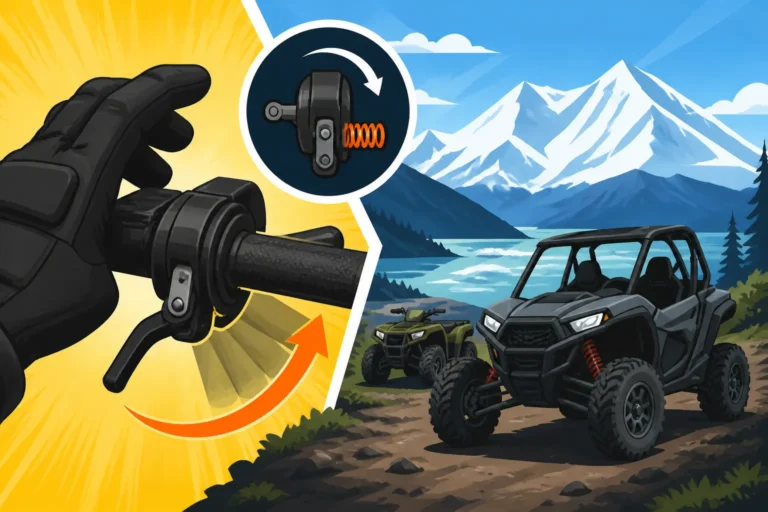
Your APV absolutely needs reliable brakes that are capable of stopping your machine safely and effectively. Alaska law requires your brakes to be in good working order, meaning they should be able to stop your machine and hold it stationary. Before every ride, check your brake levers or pedals for proper pressure and engagement. Any sponginess, excessive travel, or grinding sounds mean it's time for maintenance. Good brakes are your first line of defense in avoiding accidents, giving you the confidence to navigate any situation on the road or trail.
Mirrors are another often-overlooked but essential piece of equipment for road use. While not always standard on every ATV, side-by-sides typically come with them. For any APV on an Alaska road, you need at least one mirror that provides a clear view of the road to the rear. This allows you to monitor traffic behind you, facilitating safer lane changes, turns, and overall situational awareness. Many aftermarket options exist for adding mirrors to ATVs, from bar-end mirrors to windshield-mounted designs. Again, consider reputable suppliers like SuperATV for durable and effective mirror solutions designed for powersports.
Beyond these, Alaska requires your APV to have intact body panels, primarily for safety and to prevent debris from being thrown at other vehicles. Headlights, taillights, and brakes must be operational. It's about making sure your machine is a complete, well-maintained vehicle, not just a bare-bones off-road racer, when it shares space with cars and trucks.
Tires and Mud Flaps: Keeping It Clean and Safe
While often associated with grip and performance, your tires also play a crucial safety role when riding on public roads. They need to be in good condition, without excessive wear, bulges, or damage that could compromise their integrity at higher road speeds. Many knobby off-road tires, while great in mud, can be a bit squirrely on pavement, especially at speed, and may wear out quickly. Choose tires appropriate for your intended mixed-use, or at least be mindful of the different handling characteristics.
Mud flaps are another specific requirement, especially for machines with aggressive tires. They are designed to prevent mud, rocks, and other debris from being thrown up by your tires, which could strike other vehicles or pedestrians. Imagine the frustration of a driver behind you getting pelted with gravel! Mud flaps are a simple, yet effective, way to be courteous and compliant. They should be wide enough to cover the tire tread and extend down sufficiently to be effective. Check your machine's setup and ensure you're not inadvertently creating a hazard for others.
Navigating Alaska's APV Road Rules: Where and How You Can Ride
Once your APV is properly equipped, the next challenge is understanding where you can actually ride it on Alaska's extensive network of roads. This is where it gets a little nuanced, as not all roads are created equal when it comes to APV access. Alaska has adopted a framework that allows APVs on certain public roads, but with important caveats and restrictions that every rider needs to know. Ignoring these rules can lead to fines, citations, or worse. The key is to be informed and always assume restrictions unless explicitly stated otherwise. Dive into [Alaska APV Road Rules Explained] for a more comprehensive overview.
Speed Limits and Restricted Roadways
Perhaps the most significant rule for APVs on public roads is the speed limit. In Alaska, an APV cannot be operated on a public highway where the posted speed limit is greater than 45 mph. This means major highways like sections of the Glenn, Parks, or Sterling Highway are generally off-limits for APVs, unless explicitly designated for APV use. If you find yourself on a road with a 55 mph or 65 mph sign, you simply cannot legally operate your APV there. This 45 mph limit is a critical differentiator from other vehicles and is strictly enforced.
Even on roads posted 45 mph or lower, there are further restrictions. Many communities and boroughs have their own ordinances that override the state's general rule, often banning APVs entirely from any public road within their limits. It's not enough to just look at the speed limit sign; you must also be aware of local regulations. This patchwork of rules means what's legal in one town might get you a ticket in the next. Always check with the local municipality or the Alaska Department of Transportation & Public Facilities for the specific area you plan to ride. Never assume, and always verify before you venture out.
Here's a quick look at common scenarios for APV road use:
| Road Type | APV Use (General Alaska Rule) | Common Restrictions |
|---|---|---|
| Paved Roads (Speed Limit 45 mph or less) | Generally Allowed, with Equipment & License | Often Banned by Local Ordinance (e.g., Anchorage) |
| Gravel Roads (Speed Limit 45 mph or less) | Generally Allowed, with Equipment & License | Can be restricted; dust/noise complaints common |
| Roads > 45 mph | NOT ALLOWED | No exceptions for speed limit |
| Shoulders of Highways | Allowed for crossings or access to trails/private land, with restrictions | Must be minimal use, not continuous travel; speed limits apply |
| Village Streets | Often allowed, but check local village ordinances | Speed limits, curfews, or specific access routes |
Driver's License and Insurance Requirements
Yes, you absolutely need a valid driver's license to operate an APV on any public road in Alaska. Just because it's an off-road machine doesn't mean you can bypass the basic requirements for operating a motor vehicle. A standard Class D driver's license is what you'll need. This is a common misconception, especially for younger riders or those who primarily use their APV on private land. If you're pulled over on a public road without a license, you'll face the same penalties as someone driving a car without one. Make it a habit to carry your driver's license on every APV ride, whether on a trail or a short road crossing.
Insurance is another non-negotiable for APV road use in Alaska. Specifically, you must carry proof of liability insurance. This isn't just a suggestion; it's a legal requirement. Just like with a car, this insurance protects you financially in case you're involved in an accident that causes damage to property or injury to another person. The minimum coverage requirements are similar to those for a standard automobile. Carrying your proof of insurance in a dry bag on your machine is a smart practice. Don't leave home without it, as a trooper can ask to see it, and failing to provide proof can result in a citation. For more details, see [Alaska Insurance Requirements for an APV].
Helmet Laws and Passenger Safety
Alaska has specific helmet laws that apply to APV riders, particularly for younger individuals. If you are under the age of 16, you are required to wear a helmet that meets federal safety standards (like the CPSC standard) whenever you are operating or riding as a passenger on an APV. This rule applies whether you're on a trail or a public road. While adults 16 and over are not legally required to wear a helmet on an APV, it is highly recommended for your own safety, especially when sharing the road with other vehicles. A helmet can significantly reduce the risk of serious head injury in an accident. For additional information on age requirements, check out [Alaska ATV Helmet Law Age].
When it comes to passengers, you also need to be mindful. Many ATVs are designed for a single rider and are not equipped to safely carry a passenger. Carrying a passenger on a single-seat ATV, even for a short distance, can compromise stability and handling, making it a dangerous proposition on any surface, let alone a public road. Side-by-sides (UTVs) are designed for multiple passengers and often come with seatbelts and roll cages, making them a safer option for carrying additional riders. Always adhere to the manufacturer's recommendations for passenger capacity and ensure all occupants are properly secured. Remember, even if you’re a seasoned rider, an unexpected bump or swerve can throw an unsecured passenger, with potentially severe consequences.
Community-Specific APV Ordinances Across Alaska
One of the biggest pitfalls for APV riders in Alaska is assuming statewide rules apply everywhere. The truth is, many cities and boroughs have enacted their own ordinances that further restrict or even ban APV use on public roads within their boundaries. This hyper-local approach means what's legal in one small town might be strictly prohibited just a few miles down the road. It's crucial for riders to research the specific rules of any community they plan to pass through or ride in, as ignorance of local law is not a valid defense for a citation. This is a common source of frustration for riders simply trying to connect trails or access a store.
Where APVs are Banned Entirely
Several prominent Alaskan communities have outright banned APV operation on public roads within their city limits. These bans are often driven by concerns about noise, traffic safety, and pedestrian conflicts in more densely populated areas. For example, [Alaska Bans APVs in Anchorage] and [Alaska Bans APVs in Fairbanks] are strict about APV road use. [Alaska Bans APVs in Juneau] and even smaller but significant towns like [Alaska Bans APVs in Wasilla and Palmer] or [Alaska Bans APVs in Kenai and Soldotna] have similar restrictions. Homer, another popular destination, also generally prohibits APV use on its city streets.
This means you cannot simply hop on your quad and drive it down Main Street in these locations, even if your machine is fully equipped and you have a license and insurance. These bans apply regardless of the state's general 45 mph rule. Riders in these areas typically need to trailer their APVs to designated trailheads or private land for riding. It can be a real inconvenience, but these local ordinances are legally enforceable. Always verify the specific rules for your destination before you unload your machine.
Local Rules and Exceptions to Be Aware Of
While some communities have outright bans, others might have more nuanced rules. Some smaller villages or rural areas might be more permissive, understanding that APVs are essential for transportation and subsistence. In these places, you might find that riding on village streets is acceptable, but perhaps with specific speed limits, curfews, or designated routes. It's always best to ask local residents or the village council for clarification.
Some boroughs, like the Mat-Su Valley, might have sections with more permissive rules for connecting to trails or accessing property, while other areas are stricter. Understanding these local variations requires a bit of homework, but it's a vital step in avoiding trouble. When in doubt, call the local city hall or police department. Remember, the goal is to ride responsibly and respectfully integrate APV use where it's permitted, ensuring safety for everyone sharing the roads. Ignoring these local rules doesn't just put you at risk of a ticket; it can also contribute to negative perceptions of APV riders and potentially lead to even stricter regulations in the future.
Table: Alaska APV Road Use Quick Reference
| Requirement | On-Road Use (Alaska General Law) | Off-Road Use (State Land) | Key Consideration |
|---|---|---|---|
| Headlights | Visible 100 ft | Recommended | Essential for visibility, especially low light |
| Taillights | Visible 1000 ft | Recommended | Critical for being seen from behind |
| Reflectors | Required (rear) | Recommended | Passive safety, always working |
| Brakes | Required, functional | Required, functional | Safety first! |
| Muffler/Spark Arrester | Required | Required (fire safety) | Noise control & fire prevention |
| Mirrors | At least one required | Not required | See traffic behind you |
| Turn Signals | Required for turns/lane changes | Not required | Clearly communicate intentions |
| Driver's License | Required (Class D) | Not required | Legal mandate for public road operation |
| Liability Insurance | Required | Not required | Financial protection on public roads |
| Helmets (Under 16) | Required (CPSC standard) | Required (CPSC standard) | Age-based safety mandate |
| Speed Limit | Max 45 mph | N/A | Strict limit on public highways |
| Local Ordinances | Crucial Check | N/A | Can override state law; check city/borough rules |
Disclaimer
This article is for general informational purposes only and does not constitute professional advice. Laws, prices and regulations vary by location and change over time. Consult a qualified professional for guidance on your specific situation.