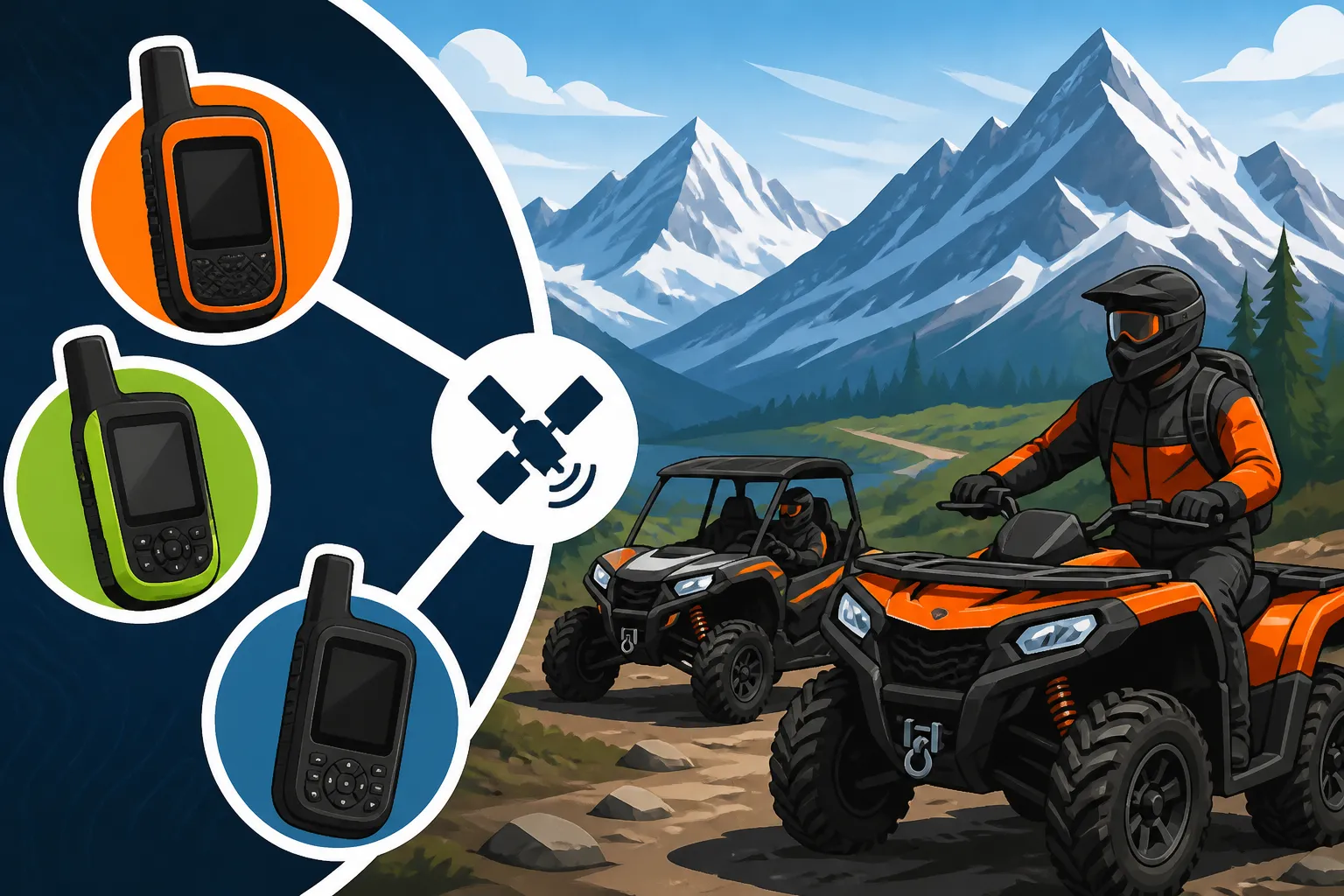
Choosing a Satellite Messenger for a Backcountry Ride
Venturing into Alaska's vast and breathtaking backcountry on your ATV or UTV is an experience like no other, but it comes with a unique set of challenges. One of the biggest realities you'll face is the almost immediate disappearance of cell service once you leave the main road system. This guide is all about helping you understand why a satellite messenger isn't just a nice-to-have gadget but a crucial piece of safety equipment for any serious off-road adventure in the Last Frontier, and how to choose the right one for your needs.
Why You Absolutely Need a Satellite Messenger in Alaska's Backcountry
Picture this: you're miles deep into the Knik River Public Use Area, soaking in views of glacial valleys, and suddenly your ATV sputters to a halt. Or maybe you're riding a remote trail near the Denali Highway, and a sudden change in weather brings an unexpected whiteout. In Alaska, these scenarios aren't hypothetical "what-ifs"; they're real possibilities that can turn a fantastic day into a precarious situation in a heartbeat. That cell phone in your pocket, usually your lifeline, is now little more than a camera or a clock.
The Harsh Reality of Alaska's Connectivity Desert
Alaska's beauty lies in its wild, untamed nature, but that also means vast stretches of land are entirely off the grid when it comes to cellular networks. Step just a few miles beyond the outskirts of Anchorage, Fairbanks, or Palmer, and you'll quickly realize how quickly those precious signal bars vanish. This isn't just about making phone calls; it's about not being able to text for help, check weather updates, or even let loved ones know you're okay. When you're out there riding, perhaps on the way to a remote cabin or exploring a new mining road, the ability to communicate can mean the difference between a minor inconvenience and a full-blown emergency.
The unique risks of Alaskan backcountry riding only amplify this need. A broken axle far from any road, an unexpected wildlife encounter like a moose on a winter trail, or a sudden change in river crossing conditions can all necessitate a quick call for assistance. Even a simple fall or injury can become critical if you're alone and unable to reach anyone. The time it takes for help to arrive, even if someone knows generally where you are, can be hours or even days. This is where a satellite messenger steps in, bridging that communication gap by using satellite networks that cover even the most remote corners of the globe. You might be surprised how many popular trails are [No Cell Coverage Off the Road System].
Beyond Just Emergency SOS: Communication and Peace of Mind
While the emergency SOS feature is undoubtedly the most critical function of a satellite messenger, these devices offer so much more than just a panic button. Many modern satellite messengers provide two-way messaging, allowing you to send and receive text messages with family, friends, or even a local tow service if you're just dealing with a mechanical issue. Imagine being able to tell your spouse you're running late because you helped another rider, instead of them worrying sick when you don't show up at the expected time.
Beyond simple check-ins, many devices also offer tracking features. You can set your messenger to send out breadcrumb points at regular intervals, allowing chosen contacts to follow your progress online. This not only gives peace of mind to those back home but can also be incredibly useful for search and rescue if something does go wrong, giving them a much more precise starting point than just "somewhere near Jim Creek." Planning ahead, like [Filing a Trip Plan With Someone], combined with a satellite messenger, forms a robust safety net for your adventures. Knowing you have a reliable way to communicate, even if it's just to say "all clear," allows you to truly relax and enjoy the incredible Alaskan wilderness.
Key Features to Look For in a Satellite Messenger
When you start looking at satellite messengers, you'll find a variety of options with different capabilities and price points. Choosing the right one means considering what kind of riding you do, where you go, and what level of connectivity you need.
Emergency SOS Capabilities and Protocols
This is the non-negotiable, must-have feature for any satellite messenger. When you activate the SOS function, your device sends a distress signal, usually with your precise GPS coordinates, to a 24/7 emergency response coordination center. This center then contacts the appropriate local search and rescue services – whether it's an Alaska State Trooper unit, a volunteer SAR team, or another emergency responder – and relays your location and situation.
Look for a device with a dedicated, clearly marked SOS button that's protected from accidental activation, perhaps by a flap or a multi-step press sequence. Some devices even allow for a brief, pre-programmed message to be sent with the SOS, giving responders a tiny bit more information immediately. It's crucial to understand that activating SOS is a serious action, and it should only be used in true emergencies where life or limb is at risk. While you can often communicate with the response center after activation, the primary goal is rapid notification.
Two-Way Messaging and Connectivity Options
The ability to send and receive custom text messages is a significant upgrade from older, one-way "check-in" devices. Two-way messaging allows you to have a conversation via satellite with anyone on their cell phone or email, which is incredibly useful for non-emergency situations. Maybe you need to tell your group you're waiting at a specific trail junction, or you want to ask someone back home to check a weather forecast for your area.
Many modern satellite messengers pair with your smartphone via Bluetooth, allowing you to type messages more easily using your phone's keyboard and view maps on a larger screen. This integration often extends to downloading detailed topographic maps for offline use on your phone, providing a powerful navigation tool even when you're [Alaska Riding Off the Road System]. Be sure to check what kind of messaging options each device offers: some have character limits, while others offer more robust communication.
Battery Life, Durability, and Weather Resistance
Alaska's backcountry can be tough on gear, and your satellite messenger needs to be up to the challenge. Consider devices known for their robust construction, capable of withstanding drops, vibrations from your machine, and general rough handling. Companies that specialize in durable off-road accessories, like SuperATV, understand the need for gear that can take a beating, and your messenger should be no different.
Battery life is another critical factor. You don't want your communication lifeline dying on you halfway through a multi-day trip. Look for devices with long-lasting internal batteries, measured in days, not hours, especially if you plan to use tracking features extensively. Many riders also carry portable power banks to recharge their devices. Finally, given Alaska's notoriously unpredictable weather, ensure your messenger is highly weather-resistant, ideally waterproof (IPX7 or higher) to survive rain, snow, or even an accidental dip in a stream during a river crossing.
GPS Tracking, Navigation, and Mapping Integration
Most satellite messengers include a GPS receiver, allowing them to pinpoint your location accurately. This is fundamental for the SOS feature, but it also enables valuable tracking and navigation capabilities. Tracking features let you broadcast your location at regular intervals, creating a digital breadcrumb trail that can be viewed by friends and family online. This not only offers peace of mind but also provides crucial data for search and rescue if needed.
Some devices offer basic on-device navigation, showing your current location on a rudimentary map or providing simple waypoint navigation. More advanced messengers integrate seamlessly with smartphone apps, leveraging your phone's larger screen to display detailed topographic maps, plan routes, and even navigate turn-by-turn. This combination can be incredibly powerful for exploring new areas or making sure you stay on designated [Alaska State Land Riding Explained]. Having a device that logs your track can also be great for reviewing your ride later or sharing your route with others.
Understanding Subscription Plans and Associated Costs
It's a common misconception that once you buy a satellite messenger, you're all set. The device itself is only half the equation; it needs to connect to a satellite network, and that requires an active subscription plan. This is where the ongoing cost comes in, and understanding the different options is key to making an informed decision.
The Necessity of a Service Plan
Think of a satellite messenger like a cell phone. You buy the phone (the device), but it won't work unless you activate it with a service provider (a subscription plan). Satellite communication companies operate the global networks of satellites that your device uses to send and receive signals. Without a paid plan, your device is essentially a paperweight for communication purposes, though basic GPS functions might still work on some models. The subscription fee covers the cost of accessing these satellites, routing your messages, and maintaining the 24/7 emergency monitoring center.
When budgeting for your backcountry adventures, remember to factor in this recurring cost. It's an essential investment in your safety and peace of mind, just like equipping your ATV with durable components from a trusted brand like SuperATV for the challenging terrain.
Exploring Different Tiers and Their Offerings
Satellite messenger providers typically offer various subscription tiers, much like cell phone plans. These usually range from basic emergency-only plans to more comprehensive options with unlimited messaging and frequent tracking updates.
- Basic Plans: These are often the most affordable and typically include unlimited SOS capabilities and perhaps a limited number of pre-set "check-in" messages (e.g., "I'm okay" or "At camp"). They are ideal if you primarily want the emergency lifeline and don't anticipate needing frequent two-way communication.
- Mid-Tier Plans: These plans usually include unlimited SOS, more custom two-way text messages (e.g., 20-40 messages per month), and more frequent tracking intervals. This is a good balance for many Alaskan riders who want both safety and the ability to stay in touch periodically.
- Unlimited Plans: For frequent or long-duration backcountry travelers, unlimited messaging and tracking plans offer the most flexibility. These are the most expensive but provide complete freedom to communicate without worrying about message counts or data usage.
Each plan will specify the number of included messages, tracking frequency (e.g., every 10 minutes, 30 minutes), and any additional features like weather forecasts delivered to your device. Be sure to read the fine print about overage charges if you exceed your plan's limits.
Seasonal vs. Annual Plans for Alaska Riders
For many riders in Alaska, the riding season is distinct, typically from late spring through fall, with winter bringing snow machine adventures. Recognizing this, some satellite messenger providers offer seasonal plans that allow you to activate and deactivate your service as needed.
- Seasonal/Freedom Plans: These plans allow you to pay monthly and pause your service during the off-season without penalty. This can be cost-effective if you only ride your ATV or UTV for a few months out of the year and don't need continuous coverage. However, there might be a small reactivation fee, and sometimes the monthly rates are slightly higher than annual plans.
- Annual Plans: These require a commitment for a full year and are often paid monthly or as a single upfront sum. While they might seem more expensive initially, the per-month cost can sometimes be lower than a seasonal plan if you average it out. Annual plans are best for those who ride year-round, perhaps switching between ATVs in summer and snow machines in winter, or for those who want the peace of mind of continuous coverage.
Carefully consider your riding habits. If you put your machine away for winter storage for six months, a seasonal plan might save you money. However, if you're out exploring [Alaska Riding in Fall Hunting Season] and then transition to snow machines for [Alaska Riding in Winter], an annual plan might make more sense.
Integrating Your Satellite Messenger into Your Backcountry Setup
Having the best satellite messenger is only effective if it's properly integrated into your riding routine and readily accessible when you need it most. Thoughtful preparation can make a huge difference in an emergency.
Mounting and Accessibility on Your ATV/UTV
First and foremost, your satellite messenger needs to be securely mounted and easily accessible on your ATV or UTV. Tossing it in a backpack or under a seat might seem convenient, but it can be dangerous if you need it quickly in an emergency, especially after a rollover or an unplanned dismount.
Consider a dedicated mount that attaches directly to your handlebars, roll cage, or dashboard. The mount should be robust, able to absorb vibrations, and keep the device protected from mud, dust, and water. Many riders find that having it within arm's reach while seated is ideal, allowing them to send messages or hit the SOS button without fumbling around. Some aftermarket accessory companies, like SuperATV, offer a variety of mounting solutions for different gear, so exploring those options might give you ideas for securely stowing your messenger. Ensure the device has a clear view of the sky for optimal satellite reception, and avoid mounting it underneath metal roofs or cargo racks that could obstruct the signal.
Practice and Preparation Before You Head Out
A satellite messenger is not a "set it and forget it" device. Before every significant backcountry ride, especially on longer trips into areas with [No Cell Coverage Off the Road System], you should:
- Test It: Send a test message to your designated contacts to confirm everything is working correctly and your subscription is active. This also familiarizes you with the messaging interface.
- Learn Its Functions: Know how to send custom messages, pre-set messages, activate tracking, and most importantly, initiate an SOS. Practice with a clear head, so muscle memory takes over in a crisis.
- Inform Your Contacts: Let your emergency contacts know you have a satellite messenger, explain how the tracking works, and what to do if they receive a distress signal from you. Provide them with the website or app details they'll need to monitor your progress.
- Charge It: Always start with a fully charged battery. This seems obvious, but it's easily overlooked in the rush to hit the trail.
This pre-ride ritual should be as routine as checking your tires, fuel, and engine oil. The more familiar you are with your device, the more effective it will be when you truly need it.
Essential Companions for Your Messenger
While your satellite messenger is a powerful tool, it's part of a broader safety ecosystem. Think about what other gear can complement its capabilities:
- External Battery Pack: Even with excellent battery life, a portable power bank can extend your messenger's operational time significantly, especially on multi-day excursions or if you're using tracking frequently.
- Dry Bag/Protective Case: While many messengers are water-resistant, an extra layer of protection from prolonged submersion, extreme dust, or physical impacts is never a bad idea.
- First Aid Kit: A messenger can call for help, but a well-stocked [First Aid Hours From a Hospital] kit can stabilize an injury until that help arrives.
- Survival Gear: A good knife, fire starter, emergency blanket, and basic shelter are crucial if you find yourself stranded for an extended period, even with communication.
- Maps and Compass: Electronic navigation is fantastic, but paper maps and a compass serve as a bomb-proof backup, especially if your messenger or phone battery dies entirely. Familiarizing yourself with [Alaska Land Status Maps] can also inform your route planning and potential land use permits.
- Bear Spray/Firearm: For encounters with Alaska wildlife like [Bear Encounters on a Trail], having appropriate defense is a critical consideration for many riders.
By combining a reliable satellite messenger with thorough preparation and complementary safety gear, you're not just buying a gadget; you're investing in a comprehensive safety strategy that allows you to explore Alaska's incredible backcountry with confidence and peace of mind.
Disclaimer
This article is for general informational purposes only and does not constitute professional advice. Laws, prices and regulations vary by location and change over time. Consult a qualified professional for guidance on your specific situation.