Alaska Lighting Rules on a Machine
Riding an ATV or UTV in Alaska is an experience unlike anywhere else, but it also comes with its own unique set of rules, especially when it comes to visibility. Many riders, whether new to the state or just new to off-road machines, often find themselves scratching their heads over what lights are actually required and what will keep them safe and legal on Alaska’s diverse terrain. This guide is here to untangle those rules, clarify what you need, and help you understand why proper lighting is so crucial for every Alaskan adventure.
Why Alaska Cares So Much About Your Machine's Lights
It might seem like a no-brainer that you need lights to ride after dark, but Alaska's regulations go a bit deeper than that. The state isn't just trying to make things difficult; these rules are born out of a genuine concern for safety, given the unique challenges of the Alaskan environment. From the dramatically varying daylight hours to the sheer unpredictability of weather and terrain, your machine's lighting is a critical component of safe operation.
The Alaskan Environment's Demands
Imagine heading out on a gorgeous August afternoon, chasing the last rays of the midnight sun, only to have a thick fog roll in off a glacier, or a sudden, heavy rain shower turn the trail into a slick, dark tunnel. Or think about winter, when daylight is a precious commodity, often limited to just a few hours around midday, with long stretches of dawn, dusk, and utter darkness. These aren't just inconveniences; they're conditions that drastically reduce visibility for everyone on the trail, whether they're on another machine, a snowmachine, or even a vehicle crossing a road. The state's lighting requirements are designed to help cut through that gloom, making sure you can see what's ahead and, perhaps even more importantly, that others can see you.
Safety for You and Everyone Else
Ultimately, proper lighting is about preventing accidents. It's about spotting that fallen tree across the trail before you hit it, or seeing the deep water crossing before you plunge in. But it’s equally about being visible to others. A moose could bolt across the trail, a hiker might be around a blind corner, or another rider could be coming towards you. When you’re riding on public lands, especially areas that might intersect with roads or shared trails, your lights become your primary communication tool. They signal your presence, your direction, and your braking actions. Having the right lights, and ensuring they work, is a fundamental responsibility that protects not just you, but everyone sharing the great outdoors. This focus on visibility is a big part of why [Alaska OHV Equipment Requirements] exist, aiming to keep everyone safe.
Specific Lighting Requirements for All-Purpose Vehicles
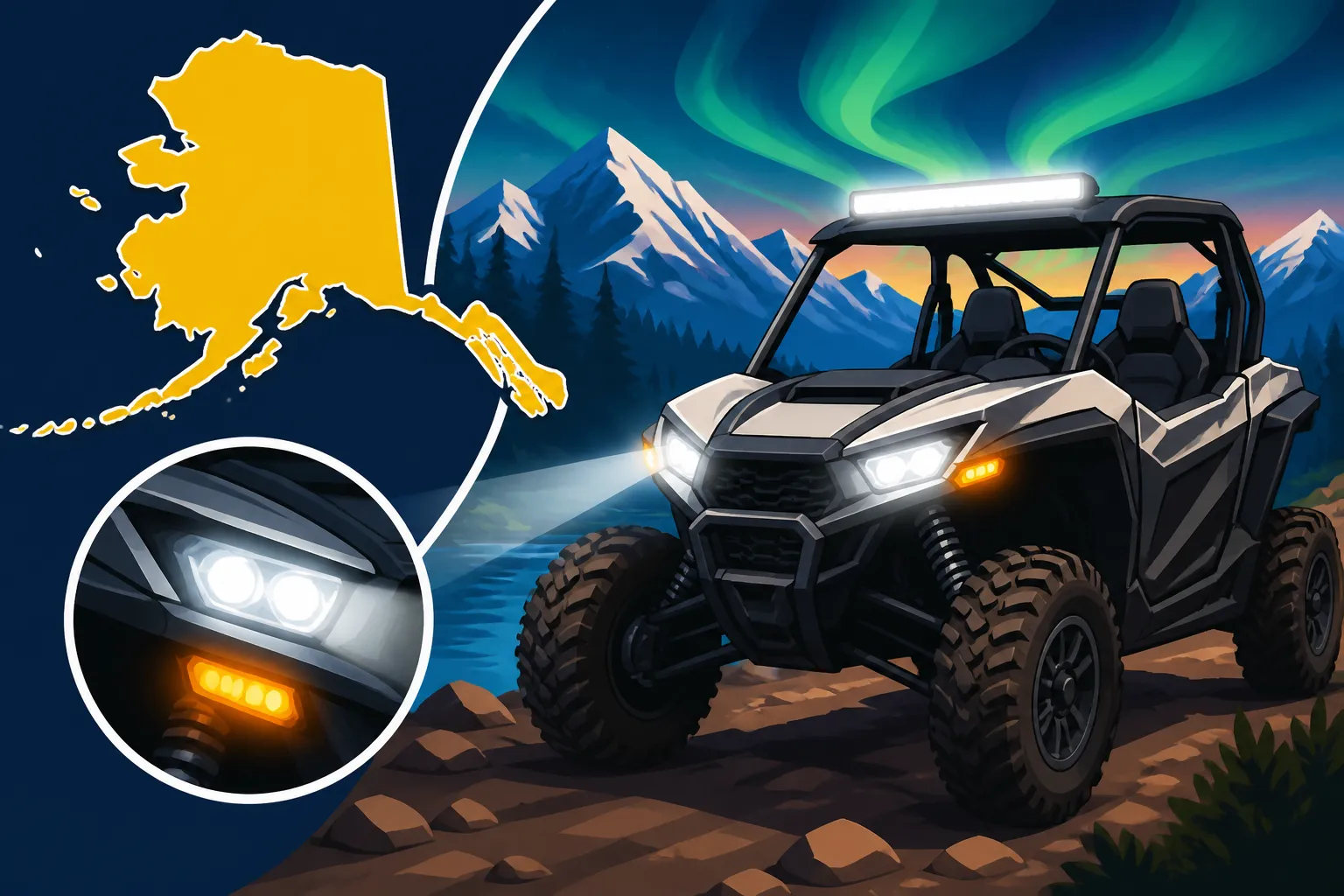
Alaska's statutes are quite clear about the minimum lighting an All-Purpose Vehicle (APV) needs to be considered legal for use on public land or to cross certain roads. It's not just about having a light; it's about having the right lights, in the right places, and functioning correctly to meet specific visibility standards. Knowing these specifics can save you a ticket and, more importantly, a dangerous situation.
Headlights: Seeing the Path Ahead
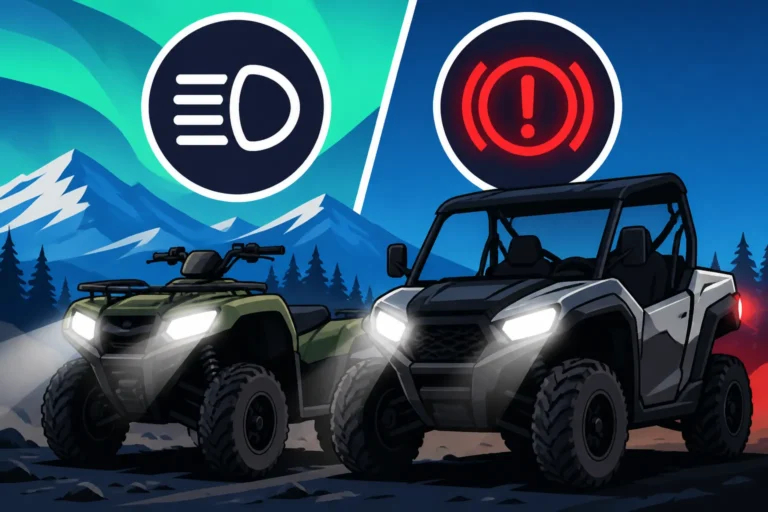
Every APV, whether it’s a quad, a side-by-side, or a dirt bike that falls under the APV class, must be equipped with at least one headlight. This isn't just for looking cool; it has a very practical, safety-focused purpose. The rule specifies that this headlight must be capable of illuminating persons and vehicles at least 100 feet ahead of your machine. This 100-foot requirement is crucial for navigating trails, especially at speeds where you need enough reaction time to avoid obstacles.
Think about riding a winding trail with trees pressing in on both sides. A weak or misaligned headlight isn't just annoying; it's dangerous. You need that beam to cut through the darkness, highlight dips, rocks, and unexpected turns. If your machine only has a single, dim headlight, or if one of a pair is out, you might not meet the statutory requirement for [Alaska Headlight Distance at Night]. For many older machines, or those that have seen a lot of hard use, the factory headlights might not quite cut it anymore, or they might be prone to failure. This is where upgrades, such as brighter LED bulbs or even supplemental light bars from companies like SuperATV, can make a huge difference, ensuring you meet or exceed the visibility standards.
Taillights and Brake Lights: Being Seen From Behind
While seeing where you're going is vital, being seen by others is equally important. Alaska law mandates that your APV must have at least one taillight, which, when illuminated, must be visible from a distance of at least 1,000 feet to the rear of your machine. That’s a long way, and it's intended to give other riders and vehicles ample warning of your presence, especially on dusty trails, in bad weather, or when crossing roads.
Beyond just a steady red glow, your machine also needs a working brake light. This light typically integrates with the taillight but illuminates brighter when you apply the brakes. It's a critical signal to anyone behind you, communicating your intent to slow down or stop. Imagine riding in a group: a non-functional brake light could lead to a rear-end collision, which no one wants out on the trail. Regular checks of both your taillight and brake light are essential, especially since wires can get jostled and bulbs can burn out from vibration. For specific details on these requirements, you can look up [Alaska Taillight Distance at Night].
Reflectors: Passive Visibility When Lights Fail
Even the best electrical systems can fail. A snapped wire, a blown fuse, or a dead battery can leave your lights useless. That's why Alaska law also requires your APV to be equipped with reflectors. These aren't active lights but reflective surfaces that bounce back light from other sources, providing a crucial layer of passive visibility.
Specifically, your machine needs at least one red reflector mounted on the rear, visible from 500 feet, and at least one amber reflector on each side, also visible from 500 feet. These small but mighty components can make the difference between being utterly invisible and at least partially detectable if your powered lights go out, or even during daytime in low-light conditions like heavy snow or rain. They're inexpensive, easy to replace, and often overlooked. If you're inspecting your machine and notice a reflector is missing, cracked, or caked in mud, it’s time for a replacement. A quick search for aftermarket reflectors, perhaps from a reputable supplier like SuperATV, can get you back in compliance. Ensuring your [Alaska Reflector Requirements] are met is a simple but important safety step.
Night Riding and Enhanced Visibility
Meeting the minimum legal requirements for lighting is a solid starting point, but in Alaska, "minimum" often isn't "optimal," especially when you venture out after dark or in conditions that challenge visibility. Experienced Alaskan riders know that sometimes you need to go above and beyond the letter of the law to truly ensure your safety and the safety of those around you.
Beyond Minimums for True Safety
When the sun dips below the horizon, or when you find yourself navigating through thick timber on an overcast day, those 100-foot headlight and 1,000-foot taillight minimums can feel a bit… skimpy. Many riders opt for aftermarket auxiliary lighting to enhance their visibility. This can include:
- LED Light Bars: These are incredibly popular for a reason. They throw a vast amount of light, often illuminating the trail far beyond what stock headlights can manage. They broaden your field of vision, helping you spot wildlife lurking in the shadows or deep ruts obscured by darkness.
- Spotlights/Floodlights: Depending on your machine and riding style, dedicated spot or floodlights can be invaluable. Spots help you see far down a straightaway, while floods illuminate a wider area right around your machine, excellent for technical terrain or when setting up camp after dark.
- Enhanced Taillights/Accent Lights: While not strictly required, brighter or additional taillights can dramatically improve your visibility from the rear, especially if you're riding in a convoy or anticipating shared trail use.
Remember, while these add-ons greatly improve your safety, make sure they are installed correctly and don't blind oncoming riders. Responsible use of high-intensity lights is key, just as you'd dim your high beams for an oncoming car. These kinds of upgrades are commonly available from brands like SuperATV, which offers a wide array of lighting solutions tailored for off-road environments.
Practical Considerations for Night Riding
Outfitting your machine with extra lights is one thing; making sure they actually work when you need them is another. Here are a few practical tips for night riding:
- Battery Draw: More lights mean more power draw. Ensure your machine's charging system can handle the added load. If you're running multiple light bars and other accessories, you might need an upgraded stator or a larger battery to prevent being stranded with a dead battery miles from anywhere.
- Mounting and Durability: Alaska's trails are rough. Lights need to be mounted securely to withstand vibrations, bumps, and potential impacts from branches. Look for durable, waterproof designs, especially for auxiliary lighting.
- Keeping Them Clean: Mud, dust, snow, and even glacial silt can quickly obscure your lights, rendering them useless. Always carry a rag or wipes and make a habit of checking and cleaning your lights regularly, especially during long rides or when transitioning from one type of terrain to another. A quick wipe-down at every stop can make a huge difference. You might want to review [Alaska Lighting Rules on a Machine] before you head out, just to be sure your maintenance plan is adequate.
- Pre-Ride Checks: Before every ride, day or night, do a quick walk-around. Turn on your lights (headlights, taillights, brake lights) and ensure they are all functioning. Give your reflectors a quick glance too. This simple routine can prevent a lot of headaches down the trail. You'd be surprised how often a bulb burns out between rides.
Common Lighting Pitfalls and How to Avoid Them
Even with the best intentions, riders sometimes fall prey to common issues that compromise their machine's lighting. Understanding these pitfalls and taking proactive steps can save you from inconvenient breakdowns, dangerous situations, and potentially a citation from a trooper patrolling the public lands.
Mud, Snow, and Debris: The Enemy of Visibility
It's an inescapable reality of Alaska riding: mud, dust, and snow. These elements don't just make for a fun (or challenging) ride; they are the archenemies of clear lights. A pristine headlight or taillight can become completely opaque within minutes on a muddy trail, reducing your effective visibility to zero.
To combat this, a dedicated cleaning routine is a must. During your ride, stop periodically, especially after particularly messy sections, and wipe down your lights. Consider adding mud flaps if your machine doesn't have them, as they can significantly reduce the amount of spray hitting your lights from your own tires. Some riders even apply clear protective films to their light lenses, which can make cleaning easier and protect against scratches. Remember, a light that's caked in mud isn't a functional light, regardless of whether the bulb is on. Keeping a decal readable in mud also applies to your lighting – if it’s covered, it’s not doing its job.
Wiring, Maintenance, and Pre-Ride Checks
Your lights are only as good as the electrical system powering them. Loose connections, corroded terminals, chafed wires, and blown fuses are common culprits for non-functional lights. The constant vibration and exposure to the elements that ATVs and UTVs endure can wreak havoc on electrical components.
Make it a habit to check your wiring periodically. Look for any signs of wear, especially where wires might rub against the frame or other components. If you're adding aftermarket lights, ensure they are installed with proper weather-resistant connectors and fuses. Always carry spare fuses appropriate for your machine's electrical system; a simple fuse swap can often restore power to a dead circuit. A quick inspection before each ride, checking that all lights illuminate, can catch an issue before it becomes a problem. This is part of the broader [Alaska OHV Equipment Requirements] that help ensure your machine is trail-ready.
Out-of-State Machines and Compliance
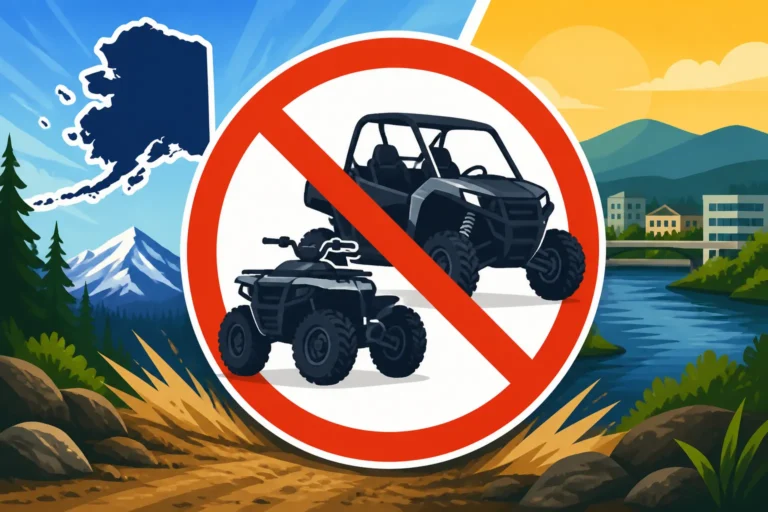
If you're new to Alaska or visiting from another state, you might assume your machine's lighting is compliant here because it was back home. This isn't always the case. Different states have different requirements, and what's legal in Washington or Oregon might not meet Alaska's specific standards for APVs.
When bringing an out-of-state machine to Alaska, take the time to review Alaska's APV regulations. This includes not just lighting, but other equipment like spark arresters and mufflers. It's much better to proactively ensure compliance than to find out you're in violation during a routine stop by a trooper. You don't want to get a ticket or be turned back from a trail because of something you could have easily fixed. For visitors, understanding [Alaska Rules for an Out-of-State Machine] is a critical first step before hitting the trails.
Here’s a quick overview of essential lighting requirements for Alaska APVs:
| Light Type | Minimum Requirement | Visibility Distance (Statutory) | Purpose |
|---|---|---|---|
| Headlight | At least one, producing a white light | 100 feet ahead | Illuminates path, identifies rider |
| Taillight | At least one, producing a red light | 1,000 feet to the rear | Identifies rider from behind |
| Brake Light | Must illuminate brighter with brake application | Visible when activated | Signals deceleration/stop |
| Rear Reflector | At least one, red | 500 feet to the rear | Passive visibility, emergency backup |
| Side Reflectors | At least one amber on each side | 500 feet to the side | Passive visibility, emergency backup |
Disclaimer
This article is for general informational purposes only and does not constitute professional advice. Laws, prices and regulations vary by location and change over time. Consult a qualified professional for guidance on your specific situation.