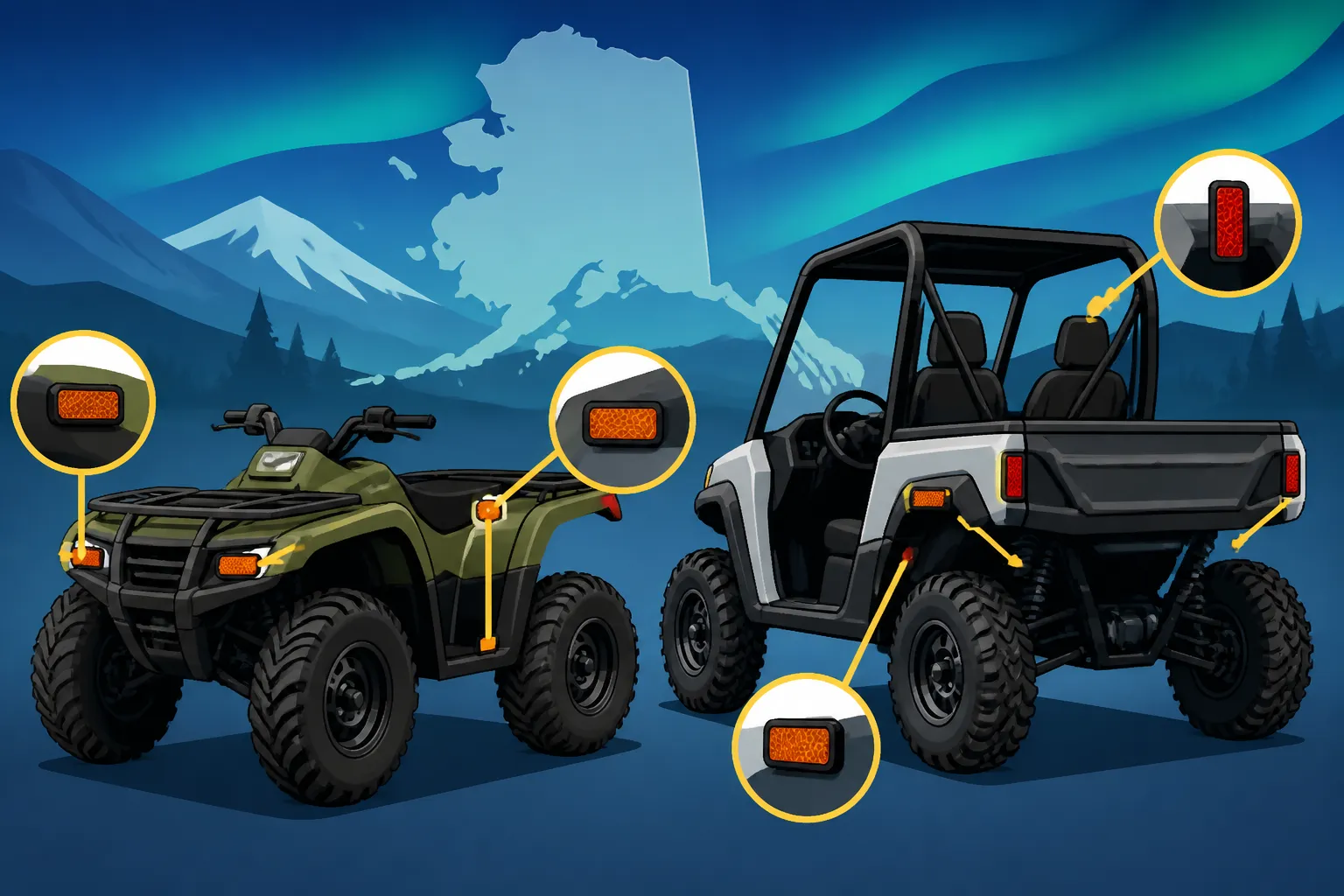
Where Reflectors Have to Sit on Your Machine
One of the trickiest parts about riding your ATV or UTV in Alaska, whether you're heading out to the backcountry or just using a village trail to get around, is staying on top of all the little equipment requirements. It’s easy to focus on the big things like headlights and brakes, but ignoring seemingly minor details, like where your reflectors are supposed to sit, can lead to an unexpected conversation with a trooper. This guide is here to walk you through Alaska's specific regulations for reflector placement on your all-purpose vehicle (APV), ensuring you're visible and compliant.
Understanding Alaska's Reflective Requirements for APVs
It might seem like a small detail, but those little pieces of reflective material play a huge role in keeping you and others safe on the vast Alaskan landscape. Think about it: you’re out on a long trail ride, the sun is dipping below the horizon earlier than you expected, or maybe a quick afternoon squall rolls in, dropping visibility dramatically. Your lights are crucial, of course, but reflectors provide an extra layer of passive visibility, bouncing light back from other vehicles or sources, even if your own electrical system decides to call it quits.
Why Reflectors Matter on Alaskan Trails and Roads
Alaska's riding conditions are incredibly diverse and can change in a heartbeat. From the dusty gravel roads of the Interior to the slick, muddy trails of the Mat-Su Valley, and the often-overcast skies, maximum visibility is always your friend. Reflectors aren't just for night riding; they can significantly enhance your machine's profile during dawn, dusk, or foggy conditions when light is dim but not completely absent. They act as a silent beacon, letting others know where your machine begins and ends, which is especially critical when sharing trails with other riders, snowmachiners (in winter, of course!), or even vehicles on permissible roads. This passive safety measure is a non-negotiable part of safe operation, much like ensuring your [Alaska OHV Equipment Requirements] are met across the board.
Beyond just safety, there's the legal aspect. Alaska has specific statutes outlining what equipment must be on an APV, and that includes reflectors. Troopers and other law enforcement officials are out there patrolling, and while they'd rather help you than ticket you, they have a job to do. If your machine isn't equipped correctly, it could lead to a citation. It’s not just about avoiding a fine; it’s about being a responsible rider in a state where conditions demand vigilance.
The Core Rule: Visibility from Specific Distances
The heart of Alaska's reflector requirement boils down to visibility. The state wants to ensure that if a light source hits your machine from certain angles, those reflectors are going to shine back and make your APV noticeable. This isn't some arbitrary rule; it's based on physics and the need for other operators to have enough time to react, whether they're approaching you from the front, rear, or side.
The regulations specify that reflectors must be visible from a minimum distance, typically around 500 feet. Now, think about that on a winding trail or a snow-covered village street. Five hundred feet might sound like a lot when you're standing still, but at speed, or with limited sightlines, that distance shrinks rapidly in terms of reaction time. This is why having properly placed and clean reflectors isn't just a suggestion, it's a critical safety feature. Ensuring your reflectors are up to par is just as important as checking that your [Alaska Taillight Distance at Night] or [Alaska Headlight Distance at Night] meets the regulations for active lighting.
Distinguishing Reflectors from Lights
It’s easy to get confused between active lighting (headlights, taillights, brake lights) and passive reflectors, but they serve different, albeit complementary, purposes. Active lights require power from your machine's electrical system to function. They are your primary illumination and signaling devices. Reflectors, on the other hand, don't generate their own light. They simply reflect light that hits them. They are always "on," as long as they're clean and intact, providing a constant safety backup.
This distinction is important because even if your machine has plenty of bright LED lights, it still needs the mandated reflectors. Reflectors are a failsafe. Imagine your battery dies in the middle of nowhere, or a wire frays and knocks out your lights. In such a scenario, those reflectors are your last line of defense for being seen, especially if another rider comes along with their own lights. This is a common point of confusion for new riders or those new to Alaska's specific APV laws, which often have unique stipulations compared to other states.
Specific Placement: Where Your Reflectors Should Be
When it comes to reflector placement, Alaska isn't just asking for "some reflectors somewhere." The law is quite particular about their location and color to ensure maximum effectiveness from all critical viewing angles. This isn't about making your machine look like a Christmas tree; it's about strategic visibility. Ignoring these specifics can be just as problematic as not having reflectors at all.
Front-Facing Reflectors: What's Required
For the front of your ATV or UTV, Alaska regulations typically require at least one white or amber reflector. This makes sense when you consider that vehicles approaching you from the front will either be seeing your headlights (if it's dark) or your machine's general profile. The white or amber color is universally recognized as a forward-facing indicator on vehicles.
These front reflectors should be positioned to provide clear visibility to anyone approaching head-on. Often, manufacturers integrate these into the front bumper or fender area, but if you've added aftermarket accessories, you need to ensure they don't obstruct the factory reflectors or that you've added new ones to compensate. For riders who enjoy customizing their machines, selecting robust, weather-resistant reflectors from brands like SuperATV that can withstand Alaska's harsh environment is a smart move. They need to be securely attached, not just dangling, and clean enough to do their job.
Rear-Facing Reflectors: Ensuring Visibility from Behind
When it comes to the rear of your machine, the requirement is for at least one red reflector. Red is the international standard for rear-facing visibility and indicates the back of a vehicle. This is critical for preventing rear-end collisions, especially if you're stopping on a trail, traveling at a slow speed, or if your taillights are somehow obscured or not functioning.
Like the front reflectors, the rear reflector needs to be visible from a specific distance, usually 500 feet. Often, these are integrated into the taillight assembly or mounted on the rear bumper or mud flaps. For those machines that haul gear, like a sled or a small trailer for hunting or subsistence, you also need to consider if your main machine's reflectors are still visible, or if the towed equipment itself requires additional reflective tape or dedicated reflectors. It’s an easy oversight, but one that could put you and your passengers at risk, especially when riding on public access corridors. Always double-check your setup, especially before heading out for a long ride or on trails that might intersect with roads, as per [Alaska APV Road Rules Explained].
Side-Facing Reflectors: Covering Your Angles
The side profile of your machine also needs reflective attention. Alaska generally requires side-facing reflectors, typically amber, on both the left and right sides. These are crucial for situations where your machine might be perpendicular to another vehicle's path, such as crossing a road, pulling out from a trail, or when another rider is passing you.
These side reflectors ensure that your machine is visible from a broader range of angles than just direct front or rear. Some APVs come with these molded into the plastic bodywork, while others might have small stick-on reflectors. The key is that they need to be present, correctly colored, and positioned so that they aren't hidden by tires, suspension components, or your body when you're seated on the machine. Think about how your machine would look to someone approaching from the side on a dimly lit [Alaska Rules for Riding a Village Street]; those side reflectors provide that crucial outline.
Here's a quick overview of reflector requirements:
| Reflector Location | Color | Minimum Number | Visibility Distance | Common Placement |
|---|---|---|---|---|
| Front | White/Amber | At least 1 | 500 feet | Front bumper, fender, grille |
| Rear | Red | At least 1 | 500 feet | Taillight assembly, rear bumper, mud flap |
| Sides (Left & Right) | Amber | At least 1 per side | 500 feet | Body panels, frame near wheel wells |
Practical Considerations and Compliance Tips
Meeting the letter of the law regarding reflectors is one thing, but making sure they actually work effectively in the real-world conditions of Alaska is another. It's not just about having them; it's about them being visible and doing their job when it counts most. A well-placed reflector that's covered in mud is just as useless as no reflector at all.
Choosing the Right Reflectors for Alaskan Conditions
When you're outfitting or inspecting your machine, don't just grab any old reflector. Alaska’s environment is tough on equipment. You'll encounter extreme cold, relentless mud, dust, rain, and snow. Therefore, you need reflectors that are built to last and maintain their reflectivity. Look for products that boast durability and strong adhesive if they're stick-on. Many aftermarket accessories, including those from companies like SuperATV, offer integrated reflective elements or heavy-duty standalone reflectors designed for off-road use.
Consider reflectors with a strong backing or those that can be bolted on for maximum security. Cheap stick-on options might peel off after a few encounters with brush, water, or extreme temperature swings. It’s an investment in safety that pays off by staying put and staying visible. Remember, the goal is consistent visibility, not just passing a quick glance inspection.
Maintaining Your Reflectors for Optimal Visibility
This is where the rubber meets the trail, quite literally. Reflectors only work if they can, well, reflect. That means keeping them clean. After a muddy ride through Jim Creek or a dusty trek along the Denali Highway, your reflectors are likely going to be coated in grime. Take the time to wipe them down with a damp cloth during your post-ride cleanup. It's a small task that makes a huge difference.
Beyond cleanliness, routinely check their condition. Are they cracked? Faded? Scratched to the point where they no longer effectively bounce light back? A damaged reflector needs to be replaced. Also, ensure they are securely attached. A loose reflector could fall off on the trail, leaving you non-compliant and less visible. Just like you'd check your tire pressure and oil, add a reflector check to your pre-ride routine. This diligence ties directly into overall [Alaska OHV Equipment Requirements] and ensures you're ready for any journey.
What to Expect During an Equipment Check
If you happen to be stopped by an Alaska State Trooper or a Wildlife Trooper on public land, they might conduct an equipment check. This is part of their routine to ensure all riders are operating safely and legally. They'll be looking at things like your headlights, taillights, brakes, muffler, and yes, your reflectors. They'll want to see that they're present, correctly colored, properly positioned, and visible. It's part of the comprehensive check that helps ensure everyone's safety on the trails and any roads where APV use is permitted.
Being prepared means not only having the right equipment but also having it in good working order. If your reflectors are missing, damaged, or obscured, you could face a citation. It’s often a quick fix that can save you hassle and money. Think of it as part of being a good steward of the trails and a responsible rider in the Last Frontier. Knowing your stuff, like where reflectors have to sit on your machine, can also make those interactions with law enforcement much smoother. It also helps to be familiar with broader checks, such as what a trooper might [What a Trooper Can Ask to See] when you’re out on a ride.
Disclaimer
This article is for general informational purposes only and does not constitute professional advice. Laws, prices and regulations vary by location and change over time. Consult a qualified professional for guidance on your specific situation.