Riding to the Store
It’s a familiar scenario for many Alaskans: you’re out enjoying your ATV or UTV, maybe working on the property or hitting a local trail, and suddenly you realize you’re out of milk, or you forgot that one crucial ingredient for dinner. The convenience of just hopping on your machine and buzzing down to the local store is incredibly tempting. But before you shift into high gear and point your quad toward the nearest grocery aisle, it’s absolutely essential to understand the complex web of rules and regulations that govern off-highway vehicle (OHV) use on public roads in the Last Frontier. This comprehensive guide will walk you through the nuances of what's allowed, what's definitely not, and what you need to do to make sure your quick errand doesn't turn into a costly citation.
The Allure and the Legalities of Riding Your ATV to the Store in Alaska
There's no denying the appeal of using your ATV or UTV for short hops. It’s practical, often fun, and in many rural Alaskan communities, it’s a deeply ingrained part of daily life. For many, an OHV isn't just a recreational toy; it's a workhorse, a commuter vehicle, and a vital link to resources. However, this practicality clashes with statewide laws designed to maintain safety on public roads where cars, trucks, and larger vehicles operate. The biggest hurdle isn't always common sense; it's understanding the specific legal framework.
Why the Short Cut Isn't Always the Easy Route
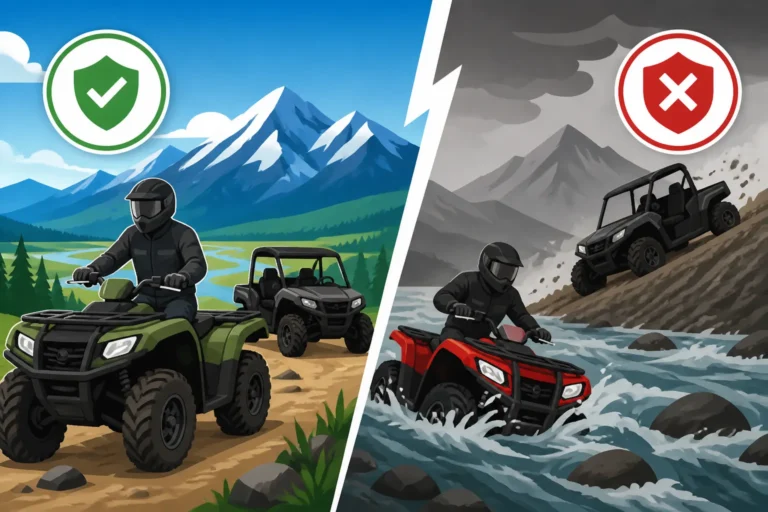
Picture this: you're just a mile down the gravel road from the general store, and your fridge is empty. It feels like a no-brainer to take the quad. What could possibly go wrong? Well, without proper knowledge, quite a bit. That quick, seemingly harmless trip could land you with a ticket, especially if you're not properly equipped or if your local municipality has outright banned OHV road use. The state of Alaska generally classifies ATVs and UTVs as All-Purpose Vehicles (APVs), and while there are provisions for their use on public roads, these are not universal and come with strict caveats. It's not like riding your snowmachine down a plowed village road during winter – the rules are different, and often much more restrictive, for wheeled vehicles in non-winter conditions.
The core issue boils down to safety and compatibility. Roads are designed for cars, and while your ATV might feel nimble, it doesn't offer the same visibility, braking distances, or protective chassis as a traditional vehicle. Furthermore, the noise, dust, and potential for damage to road surfaces are all factors that municipalities consider when setting their own rules. So, while the thought of a quick run to the store is appealing, the reality is that the "short cut" can lead to unexpected expenses and legal headaches if you haven't done your homework first.
The Core Rule: Public Property as the Trigger for Registration and Road Use
Here’s the fundamental principle many new riders or those new to Alaska often miss: if you're riding on public land or public roads, your machine needs to be registered. This isn't just a suggestion; it's the law. The moment your tires hit a public right-of-way, even if it's just to cross a road to get to another trail, you fall under a different set of regulations than if you were just puttering around your own private property. This also extends to certain types of private land if it's open for public access, like some utility easements or logging roads. If you're staying strictly on your own ground, the registration requirements might not apply, but for that store run, you're almost certainly on public property.
Beyond registration, the very act of riding on a public road triggers all the associated rules regarding equipment, licensing, and local ordinances. It's not just about having a decal; it's about operating a street-legal-adjacent vehicle in a way that respects other road users and complies with local statutes. Think of it like this: your backyard is your domain, but the moment you step onto the sidewalk, you're subject to public rules. Your ATV is no different. You'll need to understand [Public Property as the Trigger] for registration and road use.
Understanding Alaska's APV Class and What It Means for Road Riding
Alaska defines an "All-Purpose Vehicle" (APV) as a motorized vehicle designed to travel over any terrain, typically 50 inches or less in width, with an unladen dry weight of 1,200 pounds or less, traveling on four or more low-pressure tires, with a seat designed to be straddled by the operator. Side-by-sides, while often wider, also fall under this general umbrella but have specific considerations. For many years, Alaska’s state law has allowed APVs to be operated on a public highway or street if the highway or street is not an interstate highway and is posted for a speed limit of 45 miles per hour or less. However, this is where the state law meets local control, and local municipalities have the power to override this state allowance.
So, while the state might say "45 mph or less," your local borough or city might say "absolutely no APVs on any paved road." This distinction is critical. Furthermore, even where allowed, APVs are generally restricted to the far right of the paved portion of the road or the shoulder, and only when safe. Crossing highways, for instance, has its own specific set of rules. Understanding the definition of an APV is just the first step; knowing how that definition applies to the actual roads you intend to use is the real challenge. You can find more details in [Alaska APV Road Rules Explained].
Navigating the Maze of Local Ordinances for Quick Errands
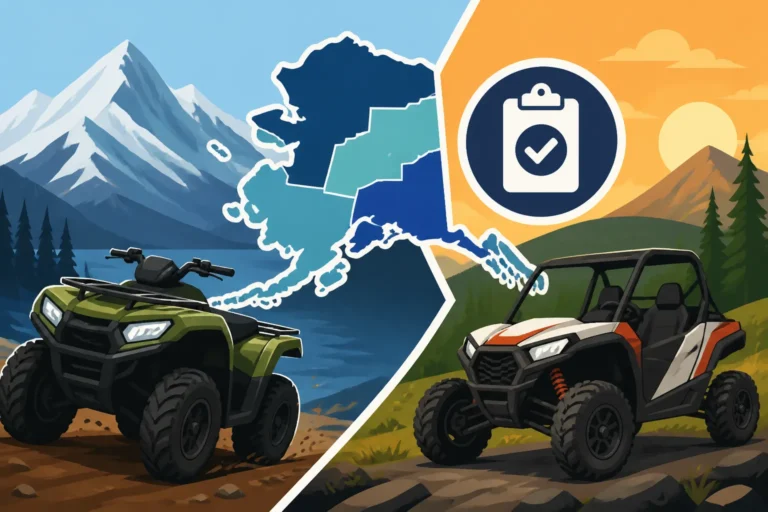
This is arguably the most critical section for anyone considering a store run on their ATV or UTV. While state law provides a general framework, Alaskan communities have a significant amount of autonomy when it comes to regulating OHV use within their city or borough limits. What's perfectly fine in one town might be a serious offense just a few miles down the road. This patchwork of regulations can be incredibly frustrating, but it's a reality that every Alaskan rider must contend with.
Communities That Have Opted Out of Road Use
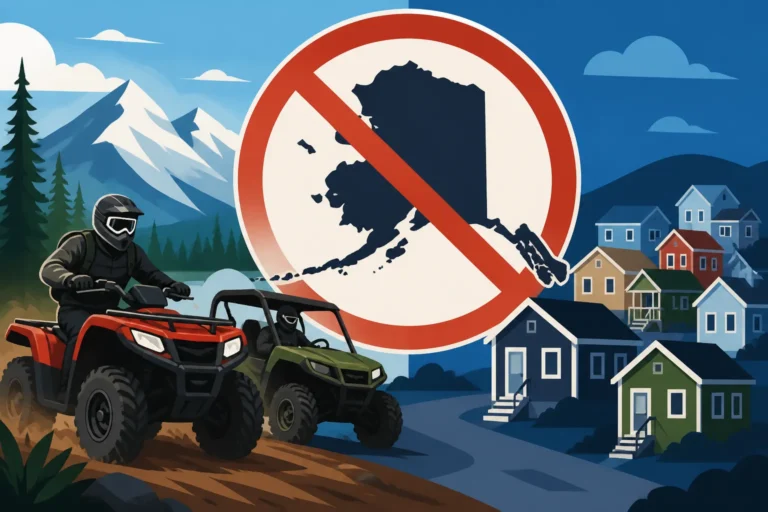
Many of Alaska’s more populated cities and boroughs have enacted ordinances that ban APV use on paved public roads and highways within their boundaries, or severely restrict it. This means that even if the state law theoretically allows it on a 45 mph road, the local law can (and often does) override that for safety and traffic management reasons. For instance, you might think of buzzing down a residential street in Anchorage or Fairbanks, but these cities, along with others like Juneau, Wasilla, Palmer, Kenai, Soldotna, and Homer, are among the [Alaska Communities That Ban APV Road Use]. Attempting a store run in these areas on your quad is a surefire way to encounter a law enforcement officer and receive a citation.
These bans are usually in place due to higher traffic volumes, a desire to minimize noise complaints, and general safety concerns regarding mixing slower-moving, less-protected OHVs with faster, heavier road traffic. It's not about prohibiting fun; it's about public safety in dense areas. So, before you even think about starting your engine, make sure your planned route doesn't cross into one of these restricted zones. Ignorance of the local ordinance is rarely a successful defense in court.
Towns That Allow Limited Road Access
On the flip side, some communities, particularly those in more rural or remote parts of Alaska, do permit limited APV road access. In these areas, the OHV often serves as a primary mode of transportation, especially when snow machines aren't practical. These allowances, however, are almost always accompanied by strict conditions. You might be allowed on specific roads, only during certain hours, or perhaps only to cross a road to access a trail system. The speed limit restriction from the state ([Alaska's 45 mph Road Limit for APVs]) usually still applies, and often local ordinances will add further limitations, such as prohibiting use on sidewalks, bike paths, or during specific events.
For example, a small village might have designated streets where APVs are common and expected, acting as community thoroughfares. Here, residents might genuinely use their machines to get to the store, the post office, or the community center. However, even in these places, you’ll still need to be registered, licensed, and your machine must meet specific equipment requirements. The key is that "limited" truly means limited – it’s not a free-for-all. Always assume restrictions exist and seek clarity.
How to Check Your Local City or Borough Rules
Given the variance, the single most important step before using your ATV or UTV on any public road for a store run is to check the specific ordinances of the city or borough you are in. This isn't a suggestion; it's a non-negotiable step. Many communities have their municipal codes available online, or you can contact the local city hall or borough office. Don't rely on what your neighbor says or what you think the rule might be. Laws can change, and interpretations vary.
When you're looking up the rules, specifically search for "All-Purpose Vehicle," "OHV," "ATV," or "UTV" ordinances. Pay close attention to sections on public road use, speed limits, specific road exclusions, and equipment requirements. It's better to spend 15 minutes researching online or making a phone call than to risk a fine and impoundment. Remember, a law enforcement officer can ask to see your registration and proof of compliance at any time. Being able to demonstrate that you know and adhere to the local rules can make a significant difference. [Checking a City Code Before You Ride] is crucial.
Equipping Your Machine for a Legal Trip to the Grocery Aisle
Let's say you've done your homework, and your local community does allow limited road use for your ATV or UTV. Great! But your journey to legality isn't over. Your machine, and you as the operator, must meet a specific set of equipment and safety requirements to be considered compliant on public roads. This isn't just about avoiding a ticket; it's about ensuring your safety and the safety of others sharing the road. Standard trail-riding setups often don't cut it for road-legal operation.
The Must-Have Safety Gear for the Rider
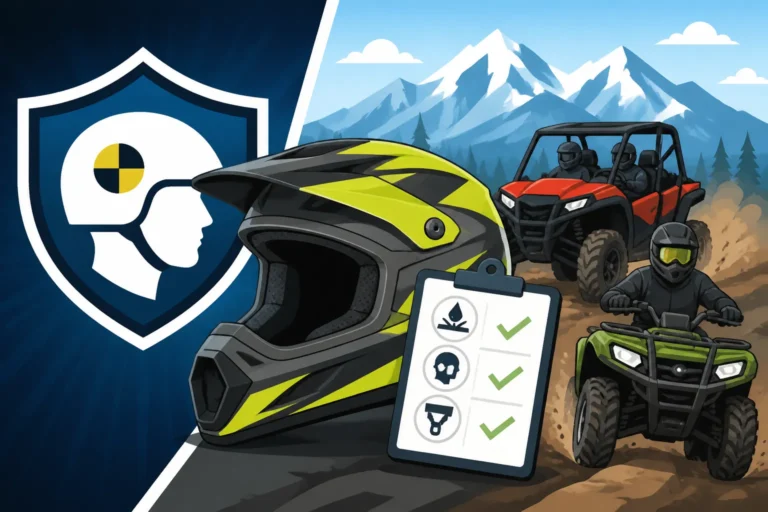
First and foremost, the human element: you. In Alaska, if you're under 16 years old, you must wear a helmet that meets federal safety standards (like CPSC) when operating an APV, regardless of where you're riding. While the helmet law doesn't extend to adult riders on APVs, it is an incredibly smart decision to wear one for any road riding. You're far more exposed than in a car, and a helmet provides critical protection in the event of an accident. Think of it as investing in your own well-being. Additionally, appropriate eye protection (goggles or a face shield), sturdy footwear that covers the ankles, gloves, and long-sleeved clothing are all highly recommended. Road debris, dust, and unexpected encounters with wildlife or uneven pavement can turn a quick errand into a serious injury if you're not properly geared up.
Beyond protective gear, you also need to carry your valid Alaska driver's license (a Class D license is generally required for APV road use), proof of registration for your machine, and proof of liability insurance. You can learn more about this in [Alaska APV License and Insurance Rules]. Yes, even for that quick trip to the store, these documents are vital. A trooper or police officer can ask to see these at any time.
Machine Requirements: Lights, Brakes, and More
Your ATV or UTV needs to be equipped to operate safely and visibly alongside other vehicles. This means having functional lighting and braking systems. Specifically, your machine must have:
- Headlights: At least one, capable of illuminating objects at least 100 feet ahead. These must be on when riding after dark or during periods of reduced visibility.
- Taillights: At least one, visible from at least 1,000 feet to the rear. Again, essential for visibility, especially if you're out past dusk or on an overcast day.
- Brakes: A functioning brake system, capable of controlling the movement of and stopping the vehicle. This seems obvious for any vehicle, but ensure yours are well-maintained and effective.
- Reflectors: Adequate reflectors to enhance visibility from all angles.
- Muffler: An effective muffler system to limit noise emissions. Excessive noise is not just a nuisance but can be a legal issue.
- Spark Arrester: A spark arrester, especially crucial in dry conditions to prevent wildfires.
Many aftermarket parts, like those you might find from a company like SuperATV, can help you meet these requirements. For instance, upgrading your lighting with brighter, more robust headlights or adding additional taillights and turn signals (even if turn signals aren't explicitly required by state law, they are a huge benefit for road safety) can make a significant difference in how visible you are to other drivers. Having a well-maintained, quiet exhaust system with a proper spark arrester is not only a good neighbor policy but also a legal necessity. You can dive deeper into these specifics in [Alaska OHV Equipment Requirements] and [Alaska Requires Lights and Brakes].
Spark Arrestors and Mufflers: Keeping the Peace (and the Law)
These two components often get overlooked until there’s a problem. A properly functioning spark arrester is not just a nice-to-have; it's a legal requirement for most public land use in Alaska, and by extension, on any public road. Its purpose is to prevent hot carbon particles from exiting the exhaust system and potentially igniting dry vegetation, which is a major wildfire risk in Alaska. Especially during the drier summer months, troopers and land managers are vigilant about ensuring machines are equipped with them. Using aftermarket exhausts that remove the spark arrester can lead to fines and is simply irresponsible given Alaska's fire danger.
Similarly, an effective muffler is critical. OHVs, especially older models or those with modified exhaust systems, can be quite loud. Excessive noise is a frequent source of public complaint and can lead to specific noise ordinance violations, even if everything else on your machine is compliant. While Alaska doesn't have a uniform statewide decibel limit for OHVs, municipalities can and do enforce their own limits. Keeping your machine's exhaust system in good working order and ensuring it meets [Alaska Spark Arrester Requirements] and [Alaska Muffler and Noise Rules] is part of being a good citizen and a responsible rider. If you're looking at performance parts, check how they impact your machine's sound output to stay compliant and neighborly.
| Equipment Item | Purpose | Road Use Requirement (General) |
|---|---|---|
| Driver's License | Legal authorization to operate a motor vehicle | Required (Class D) |
| Registration | Proof of ownership and legal operation | Required for public land/road use |
| Insurance | Financial responsibility for accidents | Required (Liability) |
| Helmet | Head protection | Required for riders under 16; highly recommended for adults |
| Headlight | Forward illumination | Required, visible 100 ft ahead |
| Taillight | Rear visibility | Required, visible 1,000 ft behind |
| Brakes | Stopping ability | Required, functional and effective |
| Reflectors | Passive visibility | Required, visible from sides and rear |
| Muffler | Noise reduction | Required, effective and not excessively loud |
| Spark Arrester | Fire prevention | Required for public land/road use |
Practical Tips for a Responsible Store Run on Your OHV
Even when you've confirmed that road use is permitted in your area and your machine meets all the equipment requirements, there are still practical considerations that can make your store run safer, more efficient, and ensure you remain on the right side of the law and public opinion. It's about being prepared and riding responsibly, especially when sharing the road with other vehicles.
Planning Your Route to Stay Legal
This goes hand-in-hand with understanding local ordinances. Don't just point your machine in the general direction of the store. Take a moment to map out your route. Are there specific roads or sections of road that are prohibited for APV use? Is the speed limit on your chosen path consistently 45 mph or less? Avoid any roads designated as interstate highways, as these are universally off-limits for APVs. If you need to cross a higher-speed highway, ensure you understand [Crossing a Highway on a Quad in Alaska] regulations, which typically require you to do so at an intersection and proceed in the most direct, safe manner possible.
Sometimes, the "shortest" route on a map might not be the "legal" route on your ATV. It might mean taking a slightly longer path on gravel roads or designated trails that parallel the main thoroughfares, even if it adds a few extra minutes to your trip. Remember, the goal is to get to the store and back without incident, and that means prioritizing legality and safety over speed or perceived convenience. Utilizing digital maps and overlaying local ordinance data, if available, can be a great way to visualize your compliant path.
Carrying Your Essentials: License, Registration, and Insurance
We touched on this earlier, but it bears repeating because it's so fundamental. Every single time you operate your ATV or UTV on a public road, even for a five-minute hop to the store, you must carry your valid driver's license, the machine's registration, and proof of liability insurance. This isn't just about avoiding a ticket; it's what any responsible driver would do. Imagine being involved in a minor fender bender with a car – without proof of insurance, you could face significant financial and legal repercussions.
Keep these documents in a waterproof bag or pouch on your person or securely on your machine. Faded, illegible, or missing documents will cause delays and potential headaches if you're stopped. It's good practice to take a photo of your documents on your phone as a backup, but always carry the physical copies as required by law. For more on what a trooper can ask to see, check out [What a Trooper Can Ask to See]. Companies like SuperATV offer storage solutions for ATVs and UTVs that can help keep your essentials safe and dry.
Staying Safe and Visible Among Larger Vehicles
Operating an ATV or UTV on a public road, even a low-speed one, puts you in a vulnerable position. Cars and trucks are larger, faster, and their drivers might not always be expecting an OHV. Your primary goals should be to maximize your visibility and practice defensive riding.
- Visibility: Wear bright, reflective clothing. Consider adding reflective tape to your helmet and machine. Ensure your headlights and taillights are clean and fully functional, even in daylight. Many riders choose to add auxiliary lighting or even an amber safety flag, especially if their UTV is wider or taller.
- Defensive Riding: Maintain a safe following distance from vehicles ahead of you. Be extra cautious at intersections, assuming other drivers might not see you. Signal your turns if your machine has them, or use clear hand signals. Ride predictably and avoid sudden maneuvers. Stay to the far right of the lane or on the shoulder where permitted and safe.
- Awareness: Be constantly aware of your surroundings – traffic approaching from behind, driveways, pedestrians, and potential road hazards. Alaska's roads can be rough, and an unexpected pothole or patch of gravel can be far more dangerous on an ATV than in a car.
Remember, even with all the proper equipment and legal clearances, your machine is still an off-highway vehicle sharing a space designed primarily for cars. Ride with respect for other road users and a strong focus on your own safety. A quick run to the store shouldn't compromise your well-being or break the bank with an unnecessary fine.
Disclaimer
This article is for general informational purposes only and does not constitute professional advice. Laws, prices and regulations vary by location and change over time. Consult a qualified professional for guidance on your specific situation.