Alaska Rules for Riding in Breakup
It’s a truly frustrating paradox of living in Alaska: the days are finally getting longer, the sun feels warmer, and that itch to get out on your ATV or UTV is almost unbearable after a long, dark winter. You see patches of bare ground, hear the rivers starting to swell, and think, "Finally, time to ride!" But hold on a second, because this time of year—known affectionately, or perhaps not so affectionately, as "breakup"—is perhaps the most dangerous and damaging time to take your machine out on many of Alaska's cherished trails and wild lands. This guide is here to walk you through exactly what breakup means for riders, why it's so risky, and the crucial rules and considerations that every Alaskan ATV and UTV enthusiast needs to understand to stay safe, avoid fines, and protect our precious environment.
Understanding "Breakup": Alaska's Muddy Reality for ATV & UTV Riders
Here in Alaska, "breakup" isn't just a season; it's a monumental shift, a transformation from the hard-packed, frozen landscape of winter to the soft, saturated ground of spring. For those of us who love to get out on our ATVs and UTVs, it can be a particularly challenging time, full of temptation and hidden dangers. The desire to ride is strong, but the reality of breakup often makes it a terrible, if not downright destructive, idea.
What Breakup Actually Means for the Landscape
Imagine winter's deep freeze, where the ground is locked solid, sometimes for feet down. Trails are often smooth, rivers are frozen highways, and wetlands are passable. Then spring arrives. The snow starts to melt, days get longer, and temperatures rise. This isn't just surface melt; it's a deep thaw. The frozen ground beneath—what we call permafrost in many areas, or simply deeply frozen soil—thaws from the top down. This creates a highly unstable layer of mud, water, and saturated soil sitting atop still-frozen ground that can't drain. It's like a giant sponge that's been wrung out but has nowhere for the water to go.
Rivers swell with snowmelt, ice jams can cause massive floods, and what were once small creeks become raging torrents. Low-lying areas and wetlands become impassable bogs, even if they looked deceptively solid just days before. Trails that were once firm turn into greasy, bottomless pits of mud. The ground itself, no longer held together by ice, becomes incredibly fragile. It's a landscape in flux, beautiful in its own way, but utterly treacherous for any kind of wheeled travel.
The Dangers: Why This Time Is Different
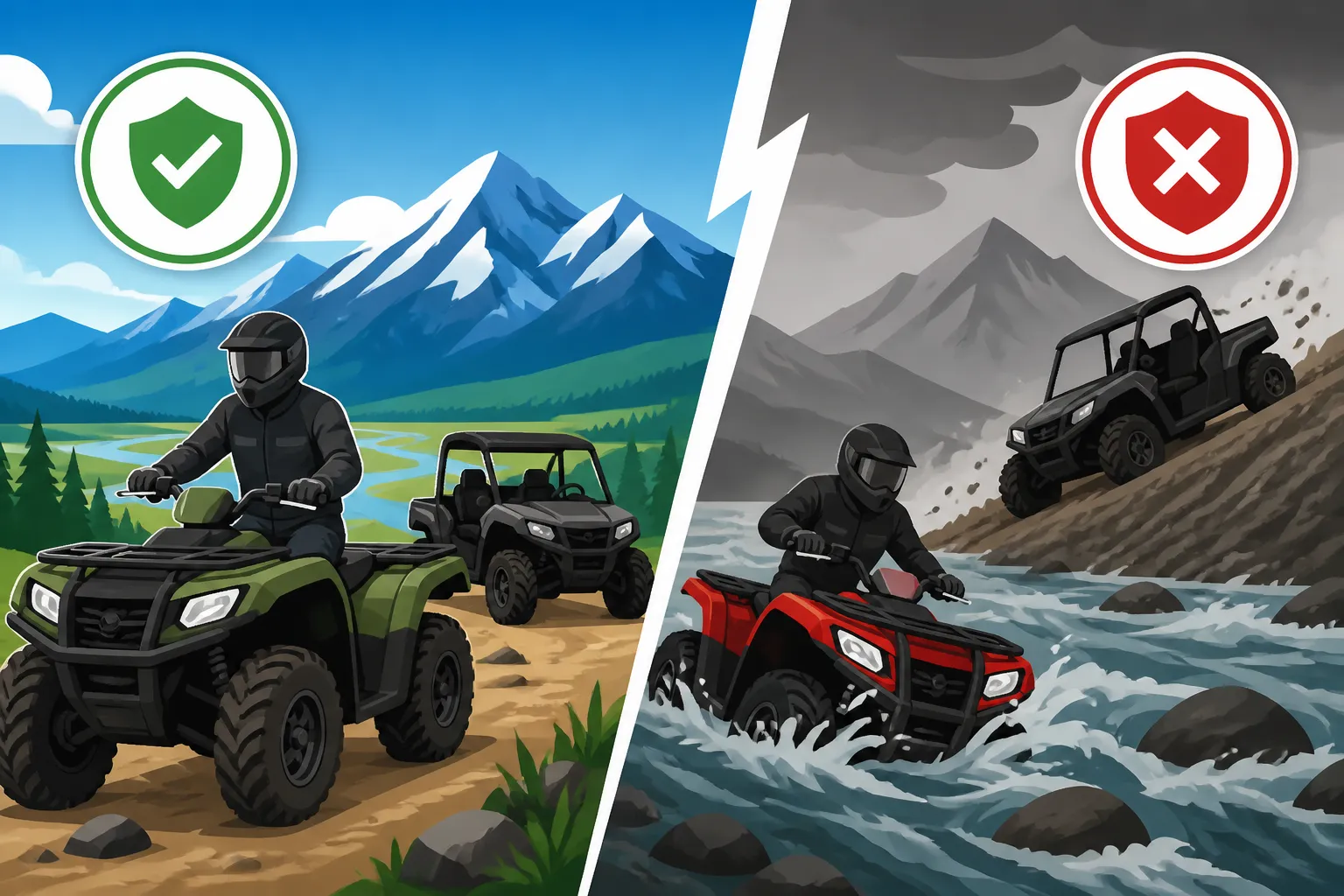
The dangers of riding an ATV or UTV during breakup are manifold and serious, extending far beyond just getting a little muddy. First and foremost, there's the risk of getting seriously stuck. We’re not talking about a quick tug with a winch; we're talking about machines sinking axle-deep, or even frame-deep, in soft mud and water, sometimes miles from the nearest road or help. Recovering a machine in these conditions can be a multi-day ordeal, requiring specialized equipment, significant manpower, and putting rescue personnel at risk. Many an Alaskan has spent a miserable, cold night stranded because they underestimated the deceptively solid-looking ground. Even the toughest machines, perhaps equipped with enhanced recovery gear like a powerful winch or extreme-duty axles from SuperATV, are no match for soft, saturated ground that can swallow an entire machine.
Beyond getting stuck, there's the danger of hidden hazards. The swollen rivers and creeks can have dangerously strong currents, even if they don't look deep. Ice shelves can collapse unexpectedly. Debris, like logs and rocks, can be hidden just beneath the churning water. Riders can suffer hypothermia if they get wet and stranded, and serious injuries can occur if a machine rolls or a rider is ejected into frigid water. It's a time when many of Alaska's [Why Alaska Riders Travel in Pairs] rules become even more critical, though the best advice is often to simply stay home.
How to Identify True Breakup Conditions
So, how do you know if it's "breakup" and not just a regular muddy spring day? It's often less about calendar dates and more about observing the land. Here are some tell-tale signs:
- Standing Water Everywhere: Even in areas that are usually dry, you'll see large puddles and sheets of water that don't seem to drain.
- Saturated Trails: If the trails look shiny, greasy, and your boots sink in easily, it's a huge red flag. Look for ruts from other vehicles—if they're deep and filled with water, the ground is too soft.
- Swollen Rivers and Creeks: Water levels will be noticeably higher, and the currents will be much stronger than usual. Avoid crossing any moving water unless you are absolutely certain of its depth and the stability of the banks.
- Melting Snow Piles: You'll see large, often dirty, snow piles still melting, contributing to the overall saturation of the ground.
- Open Water on Lakes/Ponds: While exciting for boaters, open water on lakes means the surrounding ground is also thawing.
- No Drainage: The key characteristic of breakup is the lack of drainage. Water just sits, because the ground beneath is still frozen, creating that unstable, muddy layer.
- Local Reports: Listen to local news, talk to experienced Alaskans, or check land management agency websites for updates on trail conditions and closures. They often have the most current information on how safe (or unsafe) conditions truly are.
Official Rules and Restrictions: Where You Can't Ride During Breakup
Given the inherent dangers and significant environmental impact, it's no surprise that various land management agencies and local governments implement rules and sometimes outright closures during breakup. Ignorance of these rules is no excuse, and getting caught riding in a restricted area can lead to hefty fines, recovery costs, and a damaged reputation for the entire riding community.
State Land Closures and Warnings
Alaska's vast state lands are managed by the Department of Natural Resources (DNR), and they are very aware of the vulnerabilities of the land during breakup. While there might not be a blanket statewide ban on ATV/UTV use during breakup, specific areas, trails, or regions will often have seasonal restrictions or closures. These closures are put in place to protect sensitive ecosystems, like wetlands and tundra, from irreparable damage. [Alaska Wetland Travel Restrictions Explained] is a critical read, especially this time of year. Riding across soft tundra in the spring can leave ruts that can persist for decades, altering drainage patterns and harming plant life.
DNR field offices in areas like the Mat-Su Valley or Fairbanks will often issue advisories or temporary closures for trails and public use areas that are particularly susceptible to breakup conditions. For instance, areas with heavy clay soils or those that are naturally low-lying and wet will be among the first to be closed. It’s always best to check the specific DNR public information notices for the region you plan to ride in before you even load your machine onto the trailer. Look for signs at trailheads, check agency websites, or call local offices for the most up-to-date information. Remember, your [Alaska's General Permit Covers State Land] doesn't supersede specific seasonal closures.
Borough and Local Ordinances
Beyond state-level guidance, many boroughs and local municipalities have their own ordinances regarding ATV and UTV use, which can become particularly stringent during breakup. For example, some boroughs might have rules about where you can ride on gravel roads or within certain proximity to residential areas, and these rules often become more strictly enforced when the ground is soft. Boroughs are generally concerned about preventing significant environmental damage and property destruction on lands they manage.
A community like Fairbanks, or even the Mat-Su Borough, might issue specific warnings about riding on unpaved roads or trails that are managed locally. Some might even enforce temporary weight restrictions on local access roads if the roadbed itself becomes unstable due to thawing. These local rules can vary dramatically, so it's imperative to consult the specific borough's code or local city ordinances before venturing out. What's permissible in one part of the state might be completely illegal, or at least highly discouraged, just a few miles down the road.
Native Corporation and Private Land Considerations
A significant portion of Alaska is owned by Native Corporations or private individuals, and their land use rules are paramount. During breakup, these landowners are often even more protective of their property. Many Native Corporations will have explicit policies prohibiting off-road travel during certain times of the year to prevent [Tundra Damage in Summer] and other environmental degradation. Access to these lands often requires specific permits even in dry conditions, and those permits are almost certainly rescinded or suspended during breakup.
Before you consider riding on any land that isn't clearly marked as public, you absolutely must verify ownership and obtain permission. This is especially true during breakup. [Alaska Land Ownership and Who to Ask] is a crucial first step. Riding on private or Native Corporation land without permission is trespassing, and the consequences can be severe, ranging from fines to impoundment of your machine. During breakup, the damage you could cause further complicates matters, potentially leading to additional charges or liability for environmental restoration. Always err on the side of caution: if you don't have explicit, current permission from the landowner, do not ride on their property, especially when the ground is soft and wet. [Checking a Land Status Map] can help you identify ownership boundaries before you head out.
The Environmental Toll: Why Riding in Breakup is Harmful
Beyond the immediate dangers to riders and the legal ramifications, the most compelling reason to avoid riding ATVs and UTVs during breakup is the profound and often irreversible damage it inflicts on Alaska's fragile ecosystems. The state's unique landscape, with its permafrost, wetlands, and tundra, is incredibly susceptible to disturbance when the ground is soft and saturated.
Irreversible Tundra and Wetland Damage
Imagine a carpet of delicate plants, mosses, and lichens, often only a few inches deep, that has taken hundreds, even thousands, of years to form over the frozen ground. This is tundra. When this thin, vegetative layer is broken by the wheels of an ATV or UTV during breakup, it creates ruts that can expose the underlying permafrost to the sun. Once exposed, the permafrost can begin to melt, creating an irreversible process called thermokarst. These ruts can deepen, fill with water, and become permanent scars on the landscape, altering drainage patterns and turning what was once firm ground into a muddy trench. A single pass can cause damage that takes generations, if ever, to heal. [Alaska Tundra Travel Permits] exist for a reason – to prevent exactly this kind of damage.
Similarly, Alaska's extensive wetlands are critical habitats for a vast array of wildlife, from migratory birds to moose. During breakup, these areas become completely saturated, and riding through them churns up the delicate soil, destroys vegetation, and contaminates water sources. The impact isn't just aesthetic; it fundamentally disrupts ecological processes and habitat integrity. The phrase "leave no trace" takes on a whole new meaning when dealing with the fragility of a landscape in thaw.
Impacts on Wildlife and Fish Habitat
Breakup is also a critical time for many of Alaska's wildlife species. It's when bears are emerging from hibernation, moose are calving, and migratory birds are returning to nest in wetlands and along rivers. Increased human activity, especially noisy ATV/UTV traffic, can stress these animals, disrupt their breeding cycles, and force them to expend precious energy avoiding disturbances. A cow moose with a newborn calf, for example, is already vulnerable, and unexpected encounters with machines can cause her to abandon her young or flee to less suitable habitat. [Alaska Wildlife on the Trail] is something we cherish, and we must protect them during their most vulnerable times.
The damage to stream banks and riverbeds from machines can also directly impact fish habitat. The churning of saturated soil releases sediment into the water, which can smother fish eggs, fill in critical spawning grounds, and reduce water quality. For a state renowned for its salmon and trout populations, protecting these aquatic environments is paramount. Every rider has a responsibility to understand how their actions can ripple through the entire ecosystem.
Long-Term Consequences for Trail Systems
While it might seem like riding a muddy trail "only" makes it muddier, the reality is much more severe. Riding during breakup exacerbates erosion, creating deeper ruts and wider, more degraded trails. These ruts can then channel water, turning once-passable paths into permanent drainage ditches. This not only makes the trails more challenging and dangerous for future riders but also increases maintenance costs for land managers. In some cases, trails can become so degraded that they must be permanently closed, depriving everyone of access.
The choices made during breakup affect the entire riding season and beyond. It’s an investment in the future of our trails and our access. Responsible riders understand that preserving these resources means knowing when to ride and, more importantly, when to park the machine and wait for conditions to improve. Just like you wouldn't want to ride a pristine trail into oblivion, you shouldn't contribute to its destruction during breakup.
Beyond Breakup: Preparing for Safe and Responsible Spring Riding
So, what’s an eager Alaskan ATV/UTV enthusiast to do? The best advice for breakup is almost always to wait. Be patient. Let the ground dry out and stabilize. But once the landscape begins to firm up, usually later in May or early June in many parts of the state, it's time to prepare for some incredible riding. Even after breakup, however, early spring conditions can still be challenging.
Assessing Your Machine for Post-Breakup Trails
When the trails finally start to dry out, you'll still encounter plenty of mud, water crossings, and potentially rough terrain from the winter's freeze-thaw cycles. It's a great time to ensure your machine is up to the task.
- Tires: Mud-specific tires with aggressive treads can make a huge difference in traction. Check your tire pressure before each ride.
- Skid Plates: Rocks and hidden obstacles are common after the snow melts. Quality skid plates, perhaps from SuperATV, will protect your vital undercarriage components from damage.
- Winch: A working winch is not optional; it's essential. Make sure the cable is in good condition, and you have all necessary accessories like a tree saver strap and shackles.
- Snorkel Kit: If you anticipate deep water crossings (and you should, even after breakup, as rivers remain high), a snorkel kit can protect your engine and CVT system.
- Service: Give your machine a thorough check-up. Change fluids, inspect belts, check brakes, and ensure all lights are working. Mud and water are tough on components, so preventative maintenance pays off.
- Fuel: Plan your route and ensure you have enough fuel, perhaps even carrying extra in a secure, approved container. [Carrying Extra Fuel Safely] is always a good practice in the Alaskan backcountry.
Essential Gear for Muddy Conditions
Even when the ground firms up, spring riding often means encountering plenty of mud and water. Being prepared is key to staying comfortable and safe.
- Waterproof Outerwear: Invest in good quality, waterproof jacket and pants. Layering underneath is crucial for managing temperature fluctuations.
- Waterproof Boots and Gloves: Cold, wet feet and hands can quickly ruin a ride. Neoprene or GORE-TEX lined boots and gloves are highly recommended.
- Recovery Gear: Beyond your winch, pack a shovel, a tow strap, and a small hand saw. These can be lifesavers if you or a riding buddy gets stuck.
- Navigation: Cell service is notoriously spotty off the road system. Carry a GPS device with pre-loaded maps or a satellite messenger like a Garmin InReach. [Choosing a Satellite Messenger for a Backcountry Ride] is a must.
- First Aid Kit: A comprehensive first aid kit is non-negotiable for any backcountry adventure.
- Survival Gear: Fire starter, emergency blanket, knife, headlamp – standard Alaskan survival items.
- Bear Spray: Always carry bear spray and know how to use it. [Bear Encounters on a Trail] are a real possibility.
Here's a quick look at how ride conditions typically change during and after breakup:
| Condition Category | Breakup (Early Spring) | Post-Breakup (Late Spring/Early Summer) |
|---|---|---|
| Ground Stability | Extremely soft, saturated, deep mud, widespread standing water. Underlying ground often still frozen, no drainage. Highly unstable. | Ground firming up, but still localized muddy spots, wet areas, and soft shoulders. Better drainage, but water still abundant. |
| Water Crossings | Rivers swollen, fast currents, ice jams, hidden debris, unpredictable depths. High risk of hypothermia. | Rivers still high but often more predictable. Strong currents possible. Depths vary. Caution still required. |
| Trail Integrity | Trails turn into deep, long-lasting ruts. Severe erosion and environmental damage if ridden. Many trails closed. | Trails still show signs of winter damage and erosion. More navigable, but expect bumps, washouts, and lingering mud. |
| Vegetation | Minimal new growth, fragile thawing tundra and wetlands. Highly susceptible to irreversible damage. | New growth emerging, but still sensitive. Tundra and wetlands are still vulnerable, but less saturated. |
| Wildlife | Peak calving and nesting season. High stress on animals, easily disturbed. | Wildlife still active, but perhaps less sensitive to general presence. Still need to be mindful of young animals. |
| Overall Risk | VERY HIGH. High risk of getting stuck, hypothermia, injury, environmental damage, and fines. | MODERATE. Lower risk of getting stuck or severe environmental damage, but still requires caution and proper gear. |
When to Safely Resume Your Adventures
Patience truly is a virtue when it comes to spring riding in Alaska. The key is to wait until the ground has thoroughly dried out and solidified, and any temporary trail closures have been lifted. This varies dramatically depending on your location in Alaska and the specific spring. In some parts of the Interior, this could be as early as late May, while in coastal or higher elevation areas, it might not be until June.
A good rule of thumb is to look for sustained dry weather, and observe the overall conditions of your favorite trails. Talk to fellow riders, check local online forums, or contact land managers. If there's still widespread standing water, deep, squishy mud, or areas that haven't visibly drained, it's best to give it more time. The rewards of a safe, responsible ride on firm ground, enjoying Alaska's unparalleled beauty, far outweigh the risks and potential damage of rushing out during breakup. Remember, [Freeze-Up and When Riding Resumes] is just as critical a time to understand, but for different reasons! Respect the land, stay safe, and your Alaskan ATV and UTV adventures will be much more enjoyable and sustainable for years to come.
Disclaimer
This article is for general informational purposes only and does not constitute professional advice. Laws, prices and regulations vary by location and change over time. Consult a qualified professional for guidance on your specific situation.