Mining Roads and Alaska Riders
Alaska offers some of the most breathtaking backcountry riding imaginable for ATV and UTV enthusiasts, but knowing where you can legally and responsibly ride can be a real headache. One area that causes a lot of confusion for riders is access to mining roads and claims. Many folks see a track heading into the wilderness and wonder, "Can I take my quad down that?" This guide is here to untangle the complexities of riding on mining roads and claims across Alaska, helping you understand your rights, responsibilities, and how to enjoy these unique areas without running into trouble.
Understanding Mining Claims and Access in Alaska
Alaska has a rich history of mining, and that legacy means there are countless mining claims and associated roads scattered across the state. But just because a road exists doesn't automatically mean it's open for recreational use. The key to understanding access often lies in distinguishing between the type of land and the nature of the mining activity.
The Nature of Mining Claims
First, it's crucial to understand what a mining claim actually is. In Alaska, and under federal law, a mining claim grants an individual or company the right to explore for and extract valuable minerals from public lands. This isn't the same as outright land ownership. Most mining claims are located on federal or state-owned public lands. The claim holder has specific rights regarding mineral extraction and access for that purpose, but the land itself often remains public land. This can create a tricky balance: the public generally retains access rights to public lands, but those rights can be limited or restricted by active mining operations or the reasonable needs of the claim holder.
Imagine you're out near the Talkeetna Mountains. You see a road veering off what looks like a public trail. It might lead to an active claim. While the land around it might be state land, the claim holder has the right to develop and use that land for mining. This could mean heavy equipment, blasting, or simply active work zones that are dangerous or disruptive to recreational users. It's not like riding through an empty park; there's a job being done.
State Land vs. Federal Land Claims
The rules can subtly shift depending on whether the mining claim is on state land or federal land. Alaska's Department of Natural Resources (DNR) manages state lands, while federal agencies like the Bureau of Land Management (BLM) or the U.S. Forest Service manage federal lands. Both have processes for staking mining claims, and both generally maintain a principle of public access, but with caveats.
On state lands, the public generally has a right to access for recreational purposes, even if a mining claim exists, as long as that access doesn't interfere with the claim holder's reasonable operations. You can find more details on this in [Alaska State Land Riding Explained]. However, "reasonable operations" is the operative phrase. If a claim holder has active machinery, excavations, or even security concerns, your recreational access might be curtailed or redirected for safety. For instance, a claim holder might put up signs or gates to manage traffic during an active drilling project.
Federal lands, particularly those managed by BLM, also generally allow public access to mining claims, again, with the same caveat about not interfering with active operations. Different federal agencies might have slightly different interpretations or local ordinances, so it's not a one-size-fits-all situation. Knowing which agency manages the land you're interested in is always the first step.
Navigating Public Access vs. Private Rights on Mining Roads
This is where many riders hit a wall of uncertainty. You're on a trail, you come to a turn-off labeled "XYZ Mining Road," and you're not sure if it's fair game or a private pathway. The reality is often a blend of public access and private operational needs.
Established Public Access on Mining Roads
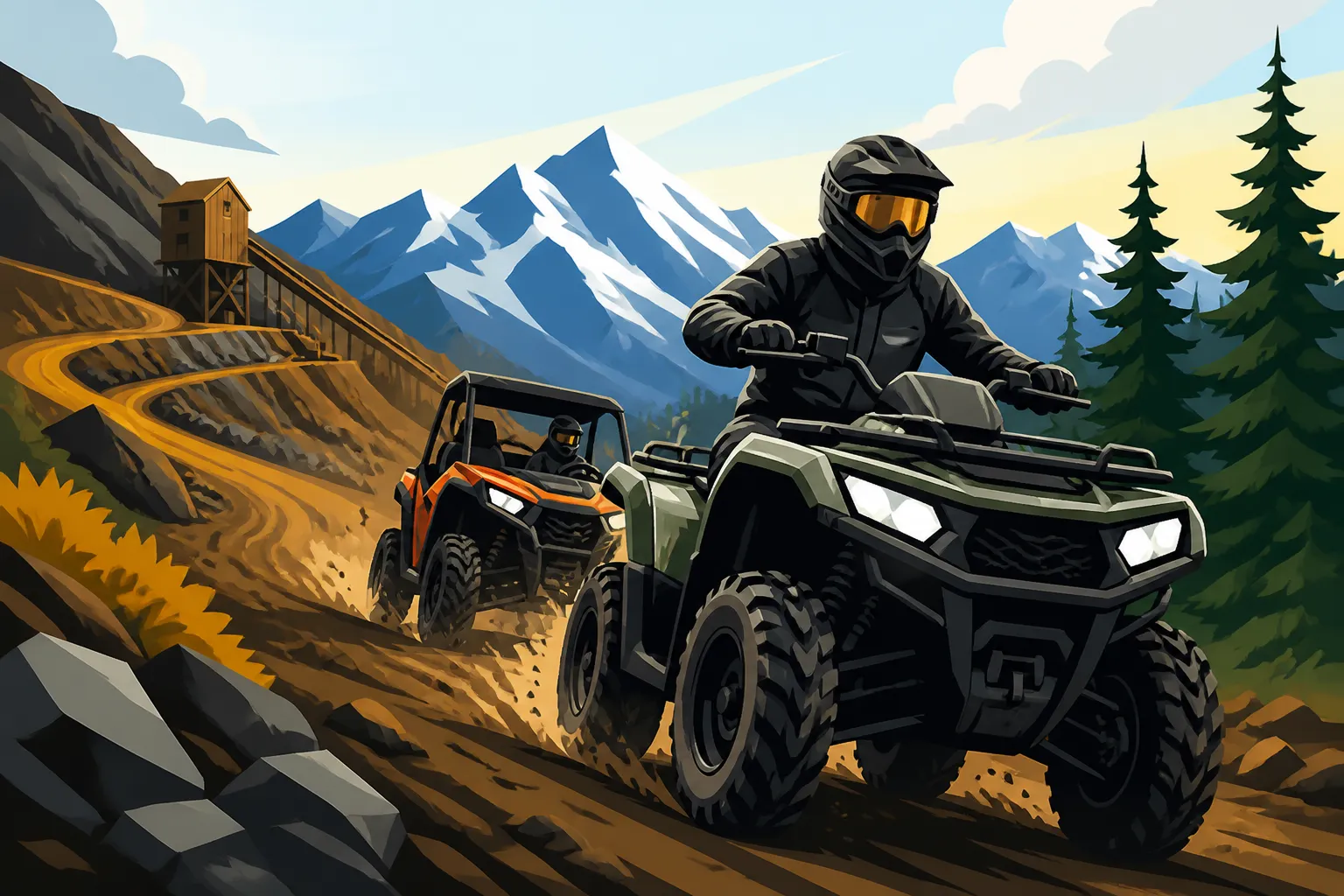
Many mining roads, especially older ones, were built over public lands and have long served as de facto access routes for hunters, trappers, and other backcountry users. In some cases, these roads are so well-established and used by the public that they're effectively public access routes, even if they lead to or through mining claims. The state or federal government might even maintain portions of these roads.
For example, certain long-established roads like some leading into the Interior from Fairbanks, or those crisscrossing the Mat-Su Borough, might pass through areas with historical or even active mining claims but are widely recognized as public access corridors. These roads are often used by folks heading out to hunt caribou or just explore. However, even on these well-traveled routes, it's good practice to remain vigilant for signs of active operations. You might encounter heavy equipment, and a simple courtesy of yielding the right-of-way can prevent issues. If you’re looking for gear sturdy enough for these challenging routes, checking out heavy-duty components from SuperATV might be a smart move, as mining roads can be incredibly punishing on suspension and driveline.
When Mining Operations Limit Public Access
The situation changes significantly when a mining operation is active and requires exclusive or restricted access for safety, security, or efficiency. A claim holder has the right to restrict access to their active operations area. This does not necessarily mean they can lock up the entire claim or deny access to traversable public land routes through their claim. However, they can certainly limit access to areas where heavy machinery is operating, where blasting is occurring, or where sensitive equipment is stored.
Think about it this way: if a logging company has a claim on state land, they can restrict public access to the active logging site for safety reasons, but they can't necessarily block a well-traveled trail that crosses their overall claim boundary if it doesn't interfere with their immediate operations. The challenge for riders is discerning between these two scenarios. Is the gate there because it's a private road, or because there's active blasting today? This is where research before you ride becomes absolutely invaluable.
Understanding Trespass on Mining Claims
While a mining claim isn't private land in the traditional sense, claim holders do have specific rights to protect their property and operations. Intentionally interfering with active mining, damaging equipment, or entering clearly marked operational areas without permission could constitute trespass or other offenses. This is where you need to be cautious. [Alaska Trespass Law for Riders] provides a good overview of what can happen if you accidentally end up where you shouldn't be.
You might be in a situation where the general public can cross a claim, but not park their ATV directly next to a drill rig, or wander into a processing plant. Always err on the side of caution. If a road is gated and signed, respect those boundaries unless you've confirmed public access. A simple call to the managing agency (DNR or BLM) can save you a lot of grief.
Best Practices for Riders on Mining Roads
Navigating mining roads and claims safely and legally requires a bit of homework and a lot of common sense. Here are some best practices to ensure you have an enjoyable and trouble-free ride.
Do Your Homework: Land Status Maps
The single most important step you can take before heading out is to check land status maps. Both the Alaska DNR and the BLM offer online mapping tools that can show you land ownership, including where mining claims are located. These maps are invaluable for understanding who manages the land and whether there are any claims in your intended riding area. You can even find specific claim boundaries. [Alaska Land Status Maps] are readily available and should be your first resource.
For example, if you plan a trip into the Fortymile Mining District, which is largely federal land managed by BLM, you'll want to check the BLM's interactive mapping system. This can show you if the trails you want to ride cross active placer or lode claims. If they do, you'll know to be extra cautious and look for signs of activity. Knowing this upfront helps you avoid surprises.
Respect Active Operations and Claim Holders
If you encounter signs of active mining, such as equipment, excavations, or personnel, always give them a wide berth. These are workplaces, and safety is paramount. Do not enter areas that are clearly marked as restricted, even if you believe you have a right to be on the broader public land. A friendly wave or a polite question to a worker can go a long way. Most claim holders are reasonable and understand public access, but they need their operations to run safely and smoothly.
It's also important to avoid disturbing any equipment, structures, or excavations. Never pick up samples, whether they look like gold or just interesting rocks, without explicit permission. That material belongs to the claim holder. A good rule of thumb is to treat mining operations like any other private business you might encounter in the backcountry – with respect and a clear understanding of boundaries. This approach can help foster good relationships between recreational users and claim holders, which is vital for maintaining access in the long run. When tackling rough terrain common on mining roads, many riders find that aftermarket parts from SuperATV provide the extra ground clearance and protection needed to safely navigate varied conditions.
Safety First: Equipment and Awareness
Mining roads can be rugged, unmaintained, and present unique hazards. They are often built for heavy equipment, not necessarily recreational vehicles. Expect rough surfaces, large rocks, steep grades, and potentially washouts. Ensure your ATV or UTV is properly equipped for such conditions. This means good tires, functioning brakes, and potentially a winch. [Alaska OHV Equipment Requirements] outlines general safety gear, but for mining roads, consider extra precautions.
| Condition | Potential Hazard | Recommended Action/Equipment |
|---|---|---|
| Active Operations | Heavy equipment, blasting, uneven ground | Yield, maintain distance, obey all signs, communicate if necessary. |
| Unmaintained Road | Washouts, large rocks, mud holes, steep grades | Use caution, proper tires, skid plates, winches, lift kits (e.g., from SuperATV). |
| Remote Location | Limited cell service, no immediate help | Carry satellite messenger, first-aid kit, extra fuel, travel in groups. |
| Claim Holder Concerns | Interference with operations, security | Research land status, respect signs, avoid active areas, be polite. |
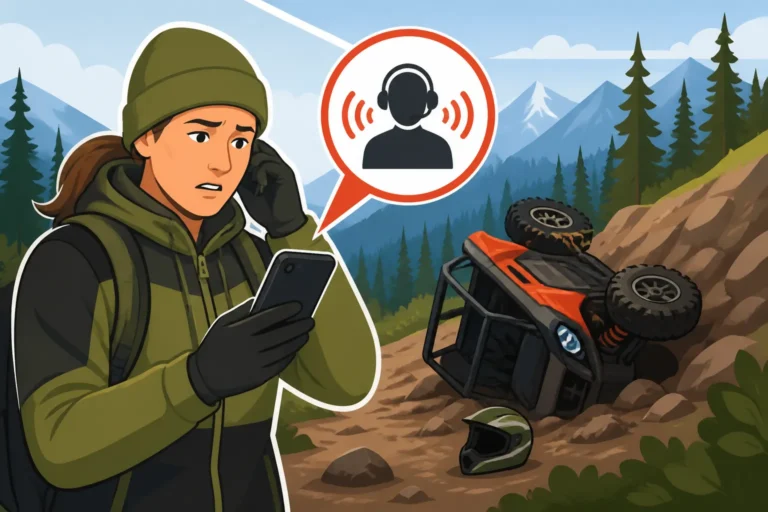
Always ride with a buddy or let someone know your plans, especially in remote areas. Cell service is often non-existent on these roads. Carry a satellite messenger for emergencies. [Carrying a Satellite Messenger for a Backcountry Ride] is essential reading for anyone venturing off the beaten path.
Legal and Practical Considerations for Riding Mining Roads
Beyond general best practices, there are specific legal and practical points every rider needs to consider when planning to use mining roads in Alaska.
The Role of Permits and Permissions
For most public lands in Alaska, a specific permit isn't required just to ride an ATV on an existing road or trail, even if it passes through a mining claim, provided you are not interfering with operations. However, this general rule has exceptions.
- Native Corporation Lands: Many mining claims, particularly older ones, can be found on lands that have since been conveyed to Alaska Native Corporations. These lands are private, and you will need permission or a permit from the specific Native Corporation to access them, even if there's a historic mining road. Ignoring this is a direct trespass. Look into [Alaska Native Corporation Land Permits] if you suspect you might be crossing these lands.
- Designated Areas: Some areas, even on public land, might have specific restrictions due to environmental concerns, wildlife habitat, or management plans. Always check local regulations for the specific area you intend to ride.
- Federal Mining Claims: While often allowing public access, some federal lands (like National Parks or Wildlife Refuges) have very strict rules about off-road vehicle use, and mining claims within these boundaries would fall under those more restrictive regulations. [Alaska National Park Machine Rules] would be highly relevant in such cases.
When in doubt, it's always best to contact the land managing agency (DNR, BLM, Forest Service, or the specific Native Corporation) to confirm access. [Alaska Permit Questions Riders Ask] covers many common scenarios.
Potential Penalties for Misuse
Riding where you shouldn't, damaging property, or interfering with mining operations can lead to serious consequences. These can range from fines for trespass to charges for property damage or interference with business operations. Law enforcement, including Alaska State Troopers and federal land agency enforcement officers, patrol these areas. They can issue citations or even confiscate vehicles in egregious cases. [Alaska Penalties for Riding Unregistered] covers one aspect, but interfering with mining operations can be far more costly.
Imagine spending your hard-earned money on a top-of-the-line side-by-side, maybe even kitting it out with high-performance parts from SuperATV, only to have it impounded because you ignored "No Trespassing" signs on an active claim. It’s a costly mistake that can easily be avoided with a little research.
Confirming Legal Access
The best way to confirm legal access is to combine mapping resources with direct communication.
- Identify Land Status: Use online tools from DNR (e.g., the Alaska Mapper) or BLM (e.g., GeoCommunicator) to identify land ownership and the presence of mining claims.
- Look for Posted Signs: Pay close attention to gates, signs, and physical barriers. "No Trespassing," "Private Property," or "Active Mine Site – Keep Out" signs should always be respected.
- Contact Land Managers: If you're still unsure, contact the local field office of the DNR or BLM, or the specific Native Corporation if applicable. They can provide the most accurate and up-to-date information on access restrictions.
- Consult Local Knowledge: Talk to local residents, outfitters, or ATV clubs. They often have invaluable firsthand knowledge of specific roads and their access status. However, always cross-reference this with official sources, as informal agreements can change.
By taking these steps, you can ensure your ride on Alaska's mining roads is both exhilarating and entirely legal, preserving the future of recreational access for everyone.
Disclaimer
This article is for general informational purposes only and does not constitute professional advice. Laws, prices and regulations vary by location and change over time. Consult a qualified professional for guidance on your specific situation.