Carrying a Firearm on a Machine in Alaska
For many folks venturing out into Alaska's vast and wild landscape, whether for hunting, exploring, or simply enjoying the immense solitude, the question of carrying a firearm on their ATV or UTV comes up pretty quickly. It's a natural instinct when you're heading into true wilderness, but the rules and practicalities can feel a bit murky. This guide is here to shed some light on the subject, helping you understand the legal landscape, practical considerations, and best practices for responsibly carrying a firearm on your machine in the Last Frontier.
The Basics of Firearm Carry in Alaska's Backcountry
Stepping into Alaska's backcountry on your all-terrain vehicle (ATV) or utility terrain vehicle (UTV) is an experience unlike any other. It’s breathtaking, humbling, and often, profoundly remote. For many Alaskans, a firearm isn't just a tool; it's a vital piece of their outdoor gear, as essential as extra fuel or a good survival kit. Understanding why and how to carry one safely and legally is the first step in responsible backcountry exploration.
Why Alaskans Carry Firearms on Machines
Let’s be honest: Alaska is wild, and that wildness is a huge part of its appeal. But with that wildness comes a certain level of preparedness. One of the primary reasons Alaskans carry firearms when riding their ATVs or UTVs is for personal protection. This isn't just about the occasional two-legged threat you might encounter, but more often, it’s about the very real possibility of a close encounter with some of the state's magnificent, yet potentially dangerous, wildlife. Bears – both black and grizzly – are a constant presence in many areas, and knowing you have a means of defense can bring a significant level of peace of mind.
Beyond personal safety, many riders are using their machines for hunting, trapping, or accessing remote fishing spots. In these scenarios, the firearm is a primary tool for harvesting game or furbearers. Carrying a rifle, shotgun, or handgun on your ATV or UTV makes it far easier to transport your hunting gear to remote areas, increasing your chances of success and allowing you to explore deeper into the wilderness. It’s also common for folks to simply be heading to a remote cabin or a favorite spot for target shooting, making the machine a convenient way to get their equipment to the destination. It’s all part of the lifestyle up here, where self-reliance and readiness are deeply ingrained.
General Alaska Firearm Laws and Your Machine
Alaska has some of the most permissive firearm laws in the United States, which often comes as a relief to residents and visitors alike. When you're out on your ATV or UTV, the general principles of firearm carry still apply. Most notably, Alaska is an "open carry" state, meaning that anyone legally allowed to possess a firearm can generally carry it openly without a permit. This applies whether you're walking down a street in a small town or traversing a remote trail system on your machine.
For concealed carry, Alaska is also a "constitutional carry" state. This means that if you're 21 or older and legally allowed to possess a firearm, you can carry it concealed without needing a specific permit. There are, of course, some exceptions, such as federal buildings, schools, and certain restricted areas, but for the vast majority of Alaska's wild lands, these general rules hold true. Your ATV or UTV is considered an extension of your personal transport, and these firearm laws apply to how you carry your weapon while operating or riding on it. It’s always smart to refresh yourself on the fundamentals, but generally, carrying a firearm on your machine is well within the bounds of Alaskan law. Just remember, common sense and safety should always be your guiding principles, especially when you consider [The Alaska Driver's License an APV Rider Needs] and the responsibility that comes with it.
Practical Considerations for Carrying a Firearm on Your ATV/UTV
Once you’ve got a handle on the legal aspects, the next step is figuring out the "how." Carrying a firearm safely and effectively on your ATV or UTV involves more than just tossing it onto the rack. You need to consider protection from the elements, security, and accessibility. The Alaskan backcountry can be rough on gear, and you want to ensure your firearm is ready when you need it and protected when you don't.
Secure Storage and Transport on Your Machine
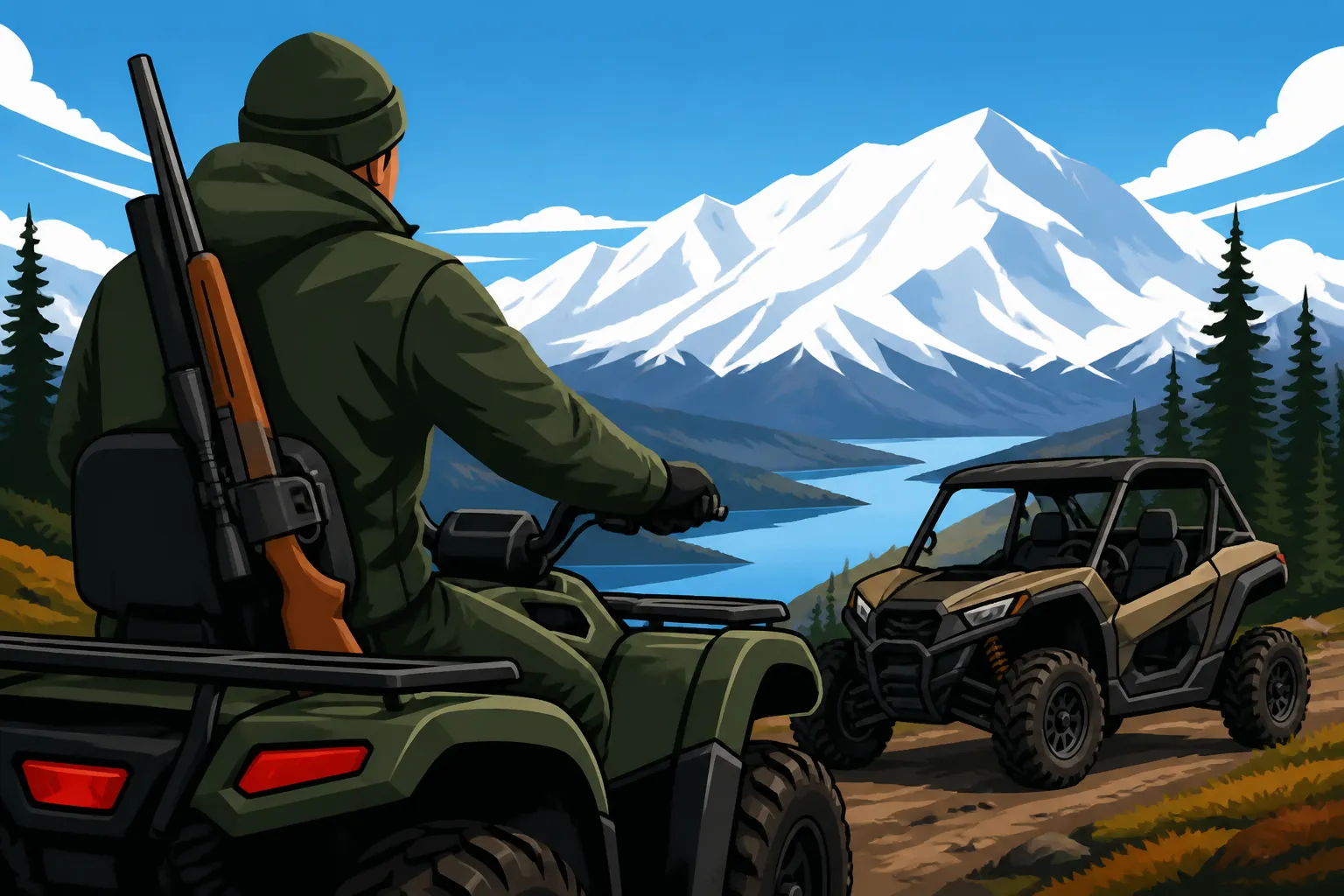
The key to carrying a firearm on your ATV or UTV is to ensure it's securely mounted and protected. Alaska's trails can be notoriously bumpy, muddy, and wet, so your firearm needs to be shielded from impacts, dust, rain, and snow. A common solution for rifles and shotguns is a purpose-built gun boot or scabbard. These typically mount to the front or rear rack of your machine, holding the firearm snugly and protecting it within a hard case. Brands like SuperATV offer robust gun boots designed to withstand the rigors of off-road travel, keeping your rifle free from mud and grit. These enclosures are often watertight, which is a huge bonus when you're crossing streams or riding through a sudden downpour.
Another option for smaller firearms, or for those who prefer to keep their weapon closer to hand, might be a soft-sided scabbard or a chest holster. These methods offer greater accessibility but less protection from the elements or impact. If you opt for a soft case, make sure it’s made from durable, water-resistant material and that it can be firmly secured to your machine to prevent bouncing or falling off. Whatever method you choose, always ensure the firearm is unloaded during transport, especially if it’s not in a fully enclosed, locked case. This is a critical safety practice that helps prevent accidental discharges and ensures compliance with safe handling guidelines.
Accessibility vs. Safety: Finding the Right Balance
Finding the sweet spot between having your firearm readily accessible and ensuring it's safely stowed is a balancing act unique to each rider and their specific needs. For some, quick access might mean a handgun in a chest holster or a rifle in an open-top scabbard mounted within easy reach. This can be particularly important if you're traveling through known bear country or if you anticipate needing to deploy it quickly, such as when Carrying a Firearm on a Machine in Alaska for predator control or defense.
However, accessibility should never come at the expense of safety. An unsecured firearm, or one that's too exposed, risks accidental discharge, falling off the machine, or even being stolen. Hard cases or locked gun boots offer the highest level of security and protection. They might take a few extra seconds to open, but that trade-off can be well worth it for the peace of mind. Consider where children might be riding on your machine, or if you're frequently getting on and off. The goal is a mounting position that allows for comfortable riding, doesn't obstruct your view or controls, keeps the firearm out of the way of branches or obstacles, and ultimately, protects both you and the weapon. Always practice drawing and re-holstering or unmounting your firearm in a safe environment to ensure it’s a smooth and safe process.
Here's a quick comparison of common firearm carry methods on an ATV/UTV:
| Method | Protection from Elements/Impact | Accessibility | Security (Theft/Accidental Discharge) | Common Use Case |
|---|---|---|---|---|
| Hard Gun Boot/Scabbard | Excellent | Moderate | High (especially if lockable) | Rifles, Shotguns; Hunting, Remote Travel |
| Soft Scabbard | Fair to Good | Moderate | Moderate | Rifles, Shotguns; Quick-access needs |
| Chest/Hip Holster | Limited | High | Moderate (personal retention) | Handguns; Self-defense, Trail Riding |
| Gear Bag/Box | Varies (depends on bag type) | Low | High (if locked) | Any firearm; Transporting to range/camp |
| Secured to Rack (Open) | Poor | High | Low | Not Recommended; Field repairs only |
Legal Nuances: Where and When You Can Carry
Alaska's vast landscape isn't uniformly regulated, and understanding land ownership is absolutely critical when it comes to carrying a firearm on your ATV or UTV. While state laws are generally permissive, federal and private land rules can introduce additional restrictions or requirements that you must be aware of. Getting this wrong can lead to fines, confiscation, or worse, so it pays to do your homework.
Land Ownership and Firearm Restrictions
The biggest factor dictating where and when you can legally carry a firearm on your machine in Alaska is the type of land you're on. Alaska is a patchwork of state, federal, Native Corporation, and private lands, and each category can have its own set of rules. On state lands, which include millions of acres managed by the Alaska Department of Natural Resources (DNR), general state firearm laws largely apply. This means open and constitutional carry are generally permitted. However, even on state land, you need to be mindful of specific areas like [Alaska State Park ATV Rules] where firearms might be restricted or require special conditions, particularly within developed campgrounds or visitor centers.
Federal lands, such as those managed by the Bureau of Land Management (BLM), U.S. Forest Service, or National Wildlife Refuges, generally follow federal laws regarding firearms, which permit carry in accordance with state laws, but often have specific regulations regarding hunting, discharge, or concealed carry in certain facilities. National Parks, however, typically have stricter rules, often prohibiting the carrying of loaded firearms except in very specific circumstances, and even then, usually requiring them to be unloaded and stored. When you're considering riding on these lands, it’s imperative to check the specific agency's regulations for that particular area. Lastly, Native Corporation lands and private properties require explicit permission from the landowner or corporation to access, and they can impose their own rules regarding firearm carry. Never assume; always ask before you ride, especially when it comes to [Alaska Native Corporation Land Permissions].
Specific Scenarios: Hunting, Trapping, and Emergency Use
The reason you’re carrying a firearm often influences the specific rules you need to follow. If you're using your ATV or UTV for hunting, remember that while you can transport a firearm to a hunting area, it must be unloaded while on the machine, especially if it's being transported on public roads or trails where other users are present. Most hunting regulations require firearms to be unloaded and cased (or secured) when transported in or on a vehicle, including ATVs and UTVs, until you are actually ready to begin hunting. This ensures ethical hunting practices and prevents accidental discharge. Once you're off the machine and actively hunting, the usual rules regarding loaded firearms apply. For more detailed information, look into [Alaska Hunting Access by Machine] before your season starts.
For trapping, a firearm is often a crucial tool for dispatching animals or for personal defense in remote areas. Similar transport rules apply, but once you're on your trapline, the firearm can be kept ready for use. When it comes to emergency use, such as defense against wildlife, Alaska law generally protects your right to self-defense. However, discharging a firearm, even in self-defense, should always be a last resort. If you ever have to use your firearm in an emergency, be prepared to report the incident to Alaska Wildlife Troopers as soon as safely possible. Understanding these specific contexts helps ensure you're not only safe but also legally compliant in the Alaskan wilderness.
Responsible Ownership and Training in the Alaskan Backcountry
Carrying a firearm in Alaska's backcountry is a serious responsibility. It's not just about knowing the laws; it's about being proficient, safe, and prepared. The environment itself demands a higher level of awareness and skill, and how you handle your firearm reflects directly on the wider ATV/UTV riding community. Responsible ownership extends beyond the legal minimums and into practical safety and preparedness.
Firearm Safety and Training for Off-Road Riders
The four fundamental rules of firearm safety are absolute and apply even more so when you're bouncing along a remote trail on your machine: treat every firearm as if it's loaded, never point the muzzle at anything you're not willing to destroy, keep your finger off the trigger until your sights are on the target, and be sure of your target and what's beyond it. These aren’t just suggestions; they are the bedrock of safe firearm handling. When you’re riding, your attention might be split between the trail ahead and your surroundings. This makes it even more crucial that your firearm is securely stowed, unloaded during transport, and handled with extreme care when you do access it.
Beyond these basics, consider taking a specific firearm safety course, especially if you plan to carry for personal or bear defense. While Alaska does not mandate specific safety courses for general firearm carry, there are many reputable organizations that offer classes focused on defensive firearm use in the backcountry, including dealing with wildlife encounters. These courses often cover proper shot placement, firearm selection, and how to react under stress – skills that can be invaluable in a real-world Alaskan scenario. Even a basic safety course, like those covered in [Alaska Voluntary Safety Courses], can significantly improve your confidence and competence. Remember, a firearm is only as safe as the person operating it.
Field Maintenance and Preparedness
The Alaskan environment is notoriously harsh on equipment, and firearms are no exception. Mud, dust, glacial silt, rain, and snow can quickly foul up the mechanisms of a firearm, rendering it unreliable when you need it most. Regular field maintenance is therefore critical. After a particularly wet or muddy ride, make sure to thoroughly clean and lubricate your firearm as soon as possible. Carry a basic cleaning kit appropriate for your weapon – brushes, cleaning patches, and a small bottle of oil can make a huge difference in keeping your firearm in top working order throughout your trip.
Preparedness also means carrying the right ammunition for your needs. If you’re carrying for bear defense, for example, you’ll want powerful, penetrating loads specifically designed for large game. If you’re hunting, ensure you have enough rounds for your anticipated harvest and any unexpected situations. Beyond the firearm itself, consider your overall survival gear. A satellite messenger, a robust first-aid kit, extra layers, and food are all essential when venturing into remote areas. Your firearm is one tool among many in your backcountry kit; ensure all your tools are well-maintained and that you are prepared for whatever Alaska throws your way. Being fully prepared and having a well-maintained piece of equipment is far more reassuring than just having a firearm strapped to your SuperATV UTV.
Disclaimer
This article is for general informational purposes only and does not constitute professional advice. Laws, prices and regulations vary by location and change over time. Consult a qualified professional for guidance on your specific situation.