Riding a Village Trail That Doubles as a Road
Navigating the unique pathways of Alaska’s villages often means encountering trails that serve dual purposes: they're traditional routes for subsistence and daily life, but they also function as the primary thoroughfares for accessing homes, stores, and community services. This can lead to a lot of head-scratching for ATV and UTV riders trying to figure out if their machine is "street legal" on these unpaved, shared paths. This comprehensive guide aims to clear up that confusion, helping you understand the rules, expectations, and safety considerations for riding your all-purpose vehicle responsibly on these essential village trails.
The Unique Landscape of Alaska Village Trails as Roads
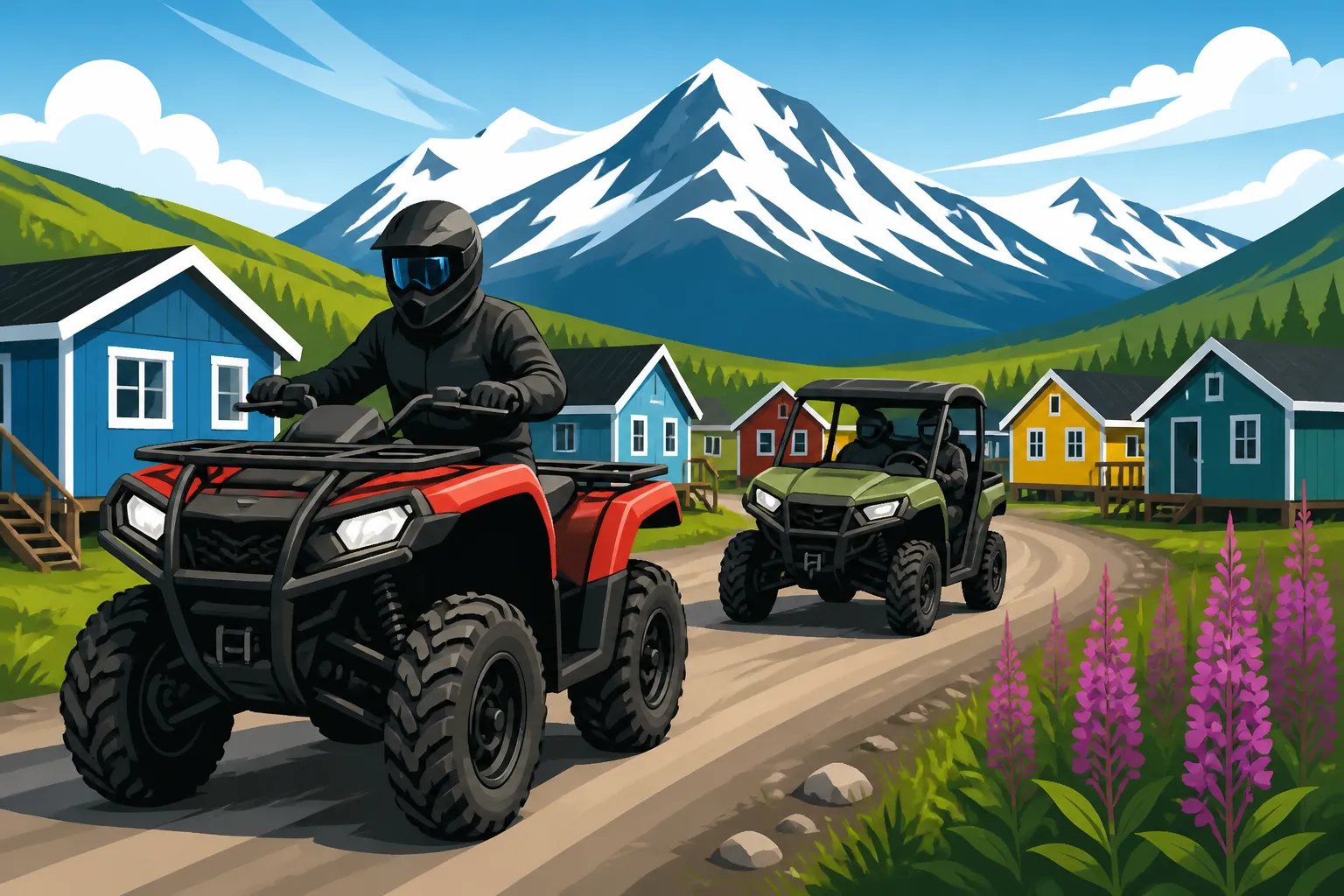
For many of us living in rural Alaska, the idea of a clearly defined "road" versus a "trail" is a bit of a luxury. In countless communities off the road system, the paths connecting homes, the store, the clinic, and the school are simply what they are – well-worn routes shaped by generations of foot traffic, sled dogs, snowmachines, and yes, ATVs and UTVs. These aren't just recreational trails; they are the very arteries of village life.
Why Village Trails Often Double as Roads
The reality of remote Alaskan living dictates much of our infrastructure, or lack thereof. Many villages simply don't have the extensive, paved road networks found in larger towns or the Lower 48. Instead, what you often find are gravel paths, dirt tracks, or even packed snow trails that have evolved over time to become the de facto road system. These routes are crucial for everyday transportation, from hauling groceries and firewood to getting kids to school or visiting neighbors.
ATVs and UTVs fill a critical role in this environment. They are versatile, capable of handling rugged terrain, and often the most practical, if not the only, means of personal transportation available. They allow residents to navigate the unique challenges of the Alaskan landscape, making them indispensable tools for everything from hunting and trapping to simple errands. This deep integration of machines into daily life means that what looks like a recreational trail to an outsider is, for a villager, a vital transportation corridor.
These trails aren't just for getting from point A to point B; they connect entire communities. Without them, and without the machines that can traverse them, daily life would grind to a halt. It's a system born of necessity, where efficiency and practicality often override the rigid distinctions found in more urbanized areas. Understanding this fundamental difference is the first step toward appreciating the nuances of riding in Alaska's villages.
The Regulatory Gray Areas and Rider Frustrations
Given the organic development of these "road-trails," it’s no wonder that riders often feel caught in a regulatory gray area. State laws regarding All-Purpose Vehicles (APVs) on roads are primarily designed with the paved or well-maintained gravel roads of the road system in mind. But how do those laws apply to a narrow, unpaved path through a village that might see everything from kids on bikes to dog teams, and occasionally even a pickup truck?
This creates genuine frustration for riders who want to be compliant but struggle to find clear, consistent guidance. You might hear different answers from different people, or encounter areas where rules are simply unwritten, relying instead on long-standing community norms. There’s rarely a sign explicitly stating "APVs allowed on this village path at 20 mph," or "No APVs on this section." It's a patchwork of state mandates, local ordinances, and communal expectations that can leave even seasoned Alaskan riders scratching their heads.
The lack of clear signage or easily accessible information can lead to situations where a rider believes they are operating legally, only to find out they’ve inadvertently violated a local ordinance or an unwritten village rule. This isn't just an inconvenience; it can strain community relations and, in the worst cases, lead to citations. It truly underscores the need for riders to be proactive in understanding the specific context of where they are riding.
Balancing Necessity with Safety and Compliance
The tension between the undeniable necessity of ATVs and UTVs for village life and the need for safety and regulatory compliance is a constant challenge. On one hand, these machines are essential for daily living; on the other, their presence on shared paths introduces safety concerns, especially when mixed with pedestrians, children, and other slower-moving traffic. The goal, then, is to find a balance where utility and responsibility coexist harmoniously.
This means that even if a trail feels "off-road," if it's acting as a road for community access, the rules that apply to APVs on public roads in Alaska generally come into play. It’s about more than just avoiding a ticket; it’s about ensuring the safety of everyone in the community. Residents rely on these paths for safe passage, and loud, fast, or poorly operated machines can disrupt that peace and put people at risk.
Compliance, therefore, isn't just about adhering to a set of abstract rules; it's about being a good neighbor and contributing positively to the safety and well-being of the village. It requires riders to be mindful of their speed, noise, and general conduct, recognizing that their machine is part of a larger, shared ecosystem of transportation, not just a personal recreational vehicle.
Navigating Alaska's APV Laws on Village "Roads"
While the terrain might feel informal, Alaska's state laws regarding All-Purpose Vehicles (APVs) generally apply to any public way, including those village trails that function as roads. This means that if you're riding your ATV or UTV on a path that the public uses to access homes, businesses, or other community points, you're likely subject to the same regulations as if you were on a paved road outside of town. It’s crucial to understand these rules to avoid issues.
Understanding the APV Class and Its Limitations
Alaska's APV class is specifically defined to regulate vehicles like ATVs and UTVs when they are used on public roads or rights-of-way. The state acknowledges that these machines are a vital part of transportation, but with that comes a set of responsibilities. The most significant limitation for village "roads" is the 45 mph speed limit. Regardless of how open a stretch might seem, exceeding this limit on any public way designated for APV use is a violation.
Furthermore, APVs, when operating on public roads, fall under motor vehicle laws in many respects. This includes the requirement for the operator to hold a valid Class D driver's license. It’s not enough to be an experienced rider; you need to be a licensed driver. These machines also need to be properly registered with the state, just like any other vehicle operating on public land. For a deeper dive into these rules, check out [Alaska APV Road Rules Explained].
It's important to remember that even if the path feels like a private track, if it's a public access route for the village, these rules are likely in effect. The intention is to ensure that all vehicles sharing these spaces are operated by qualified individuals and meet minimum safety standards, protecting both the rider and other community members.
Essential Equipment for Road-Legal Operation
One of the biggest surprises for new riders, or those coming from states with more lax rules, is the specific equipment required for an APV to be considered road-legal in Alaska. Even on a dirt trail that doubles as a village road, your ATV or UTV must be equipped as if it were traveling down a paved highway. This isn't just about general safety; it's about specific legal requirements.
Your machine must have functional headlights capable of illuminating 100 feet ahead, and taillights visible from at least 1,000 feet to the rear. Working brakes on all wheels are a must, as is a muffler that keeps noise levels within acceptable limits – no excessively loud exhaust systems, please! A spark arrester is also required, especially crucial in dry conditions to prevent wildfires. Reflectors are necessary on the front, rear, and sides, ensuring visibility from various angles. Mud flaps are also important to keep debris from being thrown up at other users. Finally, a self-closing throttle is a standard safety feature that must be operational. Many riders look to aftermarket parts from companies like SuperATV to ensure their machine meets these rigorous standards, especially for things like lighting and mirrors, if their stock setup isn't up to par. You can learn more about these specifics in [Alaska OHV Equipment Requirements].
Ignoring these equipment requirements, even on a short trip to the village store, can lead to a citation from a trooper. These aren't just recommendations; they are mandated by law to ensure that your machine is visible and safe for everyone sharing the public pathways.
License, Registration, and Insurance Realities
Beyond the physical equipment on your machine, there are critical administrative requirements that must be met when operating an APV on village "roads." These are often overlooked in remote settings but are strictly enforced when necessary. First and foremost, you must possess a valid Class D driver's license. This isn't a suggestion; it's a legal mandate for anyone operating an APV on a public highway or right-of-way. For more details on this, see [Alaska Requires a Class D License].
Next up is registration. Your ATV or UTV must be registered with the Alaska Department of Administration, Division of Motor Vehicles (DMV), and you need to carry proof of that registration with you. This process can be done at a DMV office or through an authorized third-party vendor. While it might seem like a formality for a village machine, it’s a crucial step to legal operation. For a full guide on this, refer to [How to Register an ATV in Alaska].
Finally, and this is a big one: insurance. Alaska requires liability insurance for all APVs operating on public roads. This protects not only you but also others in the event of an accident. Even if you consider your village path to be "off-road," if it's acting as a public thoroughfare, you need to be insured. Understanding [Alaska Requires Liability Insurance for an APV] is vital. These three requirements – license, registration, and insurance – are the bedrock of legal APV operation on any public way in Alaska, including those essential village trails.
Local Ordinances and Community Expectations in Villages
While state law provides a foundational framework, many Alaska villages and boroughs have the authority to implement their own local ordinances regarding ATV and UTV use. This means that what's perfectly legal on a public trail just outside village limits might be prohibited or heavily restricted once you enter the community. Understanding these local nuances and the unspoken community expectations is just as important as knowing state regulations.
The Power of Local Governance in APV Rules
Local governments, whether they are city councils, borough assemblies, or even traditional village councils, can add layers of regulation to state law. This allows communities to tailor rules to their specific needs, concerns, and infrastructure. For instance, a village might implement a stricter speed limit than the state's 45 mph on certain residential trails, or ban APV use entirely on paths that primarily serve pedestrians, especially near schools or playgrounds.
Some communities have specific noise ordinances that apply to all vehicles, including ATVs, which could lead to issues if your machine is particularly loud. Others might have curfews for motorized vehicle operation to ensure quiet hours for residents. These local rules are often enacted to address specific quality-of-life concerns or safety issues that are unique to that community. It's a way for local residents to have a say in how their shared spaces are used. For an overview of how these rules can differ, you might find [Alaska Municipal ATV Ordinances] helpful.
The key takeaway here is that state law is not the only law. Always be prepared for the possibility that the local jurisdiction has additional restrictions that you need to be aware of. What’s allowed in Nome, for example, might be very different from what’s allowed in Bethel or a smaller, more remote community.
Respecting Community Norms and Unwritten Rules
Beyond formal ordinances, every village has a set of unwritten rules and community norms that are crucial to respect. These are often rooted in local culture, historical use of the land, and simply being a good neighbor. For example, even if there's no posted speed limit, roaring through a residential area at 30 mph when kids are playing outside is generally frowned upon and can quickly create animosity.
Dust, noise, and perceived recklessness are common complaints. Operating your machine with consideration for others – slowing down around homes, yielding to pedestrians, dog teams, and especially children, and keeping noise to a minimum – goes a long way. These trails are not just for you; they are the paths where children play, elders walk, and daily life unfolds. Your behavior reflects not just on you, but on all APV riders.
It's about demonstrating respect for the community and its residents. If you're visiting a village, observe how local riders operate their machines. Are they slowing down at certain intersections? Are they waving to people they pass? Adopting these local customs shows that you value the community and its way of life, fostering a positive relationship between riders and residents.
Specific Village Examples and How to Check
While many larger communities on the road system, like Anchorage and Fairbanks, have outright bans on APV road use in their developed areas, many villages in rural Alaska have a more permissive, yet regulated, approach. For example, Nome has a reputation for being quite open to APV use within city limits, recognizing their essential role in daily transportation. However, even in Nome, there are expectations for responsible operation.
Other villages might have specific trails designated for APV use and restrict machines from others. Some may have seasonal restrictions, particularly during sensitive periods like fish runs or when ground conditions are soft, to prevent environmental damage. It's truly a mixed bag, which can be challenging for riders to navigate without local knowledge.
The best way to figure out the specific rules for any given village is to ask. Before you ride, inquire with the village council, local residents, or the local tribal office. Many communities will have their ordinances posted on their municipal website, if they have one. It's always worth taking the time to check. For advice on how to find this information, refer to [Checking a City Code Before You Ride]. Taking this proactive step can save you a lot of trouble and ensures you're riding respectfully within the community you're visiting or living in.
Staying Safe and Responsible on Shared Village Paths
Riding an ATV or UTV in an Alaskan village, where trails often serve as multi-functional roads, requires a heightened sense of awareness and responsibility. It’s not just about following the letter of the law; it’s about ensuring the safety and well-being of everyone who uses these shared spaces. Prioritizing safety, navigating mixed traffic, and understanding potential enforcement are key to a positive riding experience.
Prioritizing Safety Gear, Even for Short Rides
It's tempting, especially for a quick trip to the post office or a neighbor's house, to hop on your ATV without full safety gear. However, even on short, seemingly innocuous rides within a village, an accident can happen. Therefore, prioritizing safety gear is non-negotiable. A helmet is your first line of defense against head injuries, and it's particularly crucial if you're riding with passengers, especially children. For riders under 16, Alaska's helmet law is very clear, carrying fines for violations. More information can be found in [Alaska Helmet Law for Riders Under 16].
Eye protection, such as goggles or a full-face helmet, is also essential, not just for protection from dust and debris, but also from the glare of the Alaskan sun or windburn. Sturdy footwear, long pants, and a long-sleeved shirt, even in summer, provide crucial protection against scrapes, bumps, and potential exhaust burns. These items aren't just for extreme trail riding; they are fundamental to safe operation on any path where you might encounter unforeseen obstacles or other users.
Remember, an accident in a remote village might mean a significant delay in receiving medical attention. Every preventative measure you take reduces your risk and the burden on limited local resources. Make safety gear a habit, no matter how short or familiar the ride.
Navigating Mixed Traffic and Pedestrians
Village trails are truly multi-use pathways, often shared by pedestrians, cyclists, children playing, dogs, snowmachines (in winter), and occasionally even cars or trucks. This requires APV riders to be exceptionally cautious and courteous. Your machine is much faster and larger than many of these other users, so it's your responsibility to operate defensively and considerately.
Always assume there might be a child around the next blind corner or a pedestrian just out of sight. Keep your speed low, especially in residential areas, and be prepared to stop quickly. Maintaining a safe following distance from other vehicles is crucial, as is yielding the right-of-way to pedestrians, especially those walking with young children or animals. The goal is to move slowly enough that you can react to any sudden movement or obstacle without causing a fright or a collision.
Consider the dust you might kick up, especially on dry days. Slowing down significantly when passing homes or groups of people shows respect and minimizes disruption. Your presence on these paths should be harmonious, not intrusive. A good rule of thumb: if you wouldn't do it in your personal vehicle on a paved road, don't do it on your ATV on a village path.
Understanding Enforcement and Consequences
It's a common misconception that remote villages are beyond the reach of law enforcement. This is simply not true. Alaska State Troopers and, in some communities, local law enforcement or Village Public Safety Officers (VPSO), do patrol these areas and can issue citations for violations of APV laws. Just because a path isn't paved doesn't mean the rules don't apply, or that there's nobody to enforce them.
Operating an unregistered machine, riding without a valid driver's license, or lacking liability insurance can all lead to significant fines and penalties. For example, the financial consequences for riding an unregistered machine can be substantial, as detailed in [Alaska Penalties for Riding Unregistered]. Troopers are particularly vigilant about safety violations, such as operating without a helmet (especially with minors), or reckless driving that endangers others.
The consequences extend beyond monetary fines. A citation can lead to points on your driver's license, increased insurance premiums, or even impoundment of your machine in severe cases. Furthermore, repeated violations or dangerous behavior can erode community support for APV use, potentially leading to stricter local ordinances or bans. By adhering to all regulations and riding responsibly, you not only protect yourself but also help preserve the privilege of APV access in these vital Alaskan communities.
| Requirement | State Law (General) | Village Path (De Facto Road) |
|---|---|---|
| Driver's License | Class D required for APV road use | Required. No exceptions for village paths that function as roads. |
| Registration | Required for APVs on public land/roads | Required. Apply via DMV; carry proof. |
| Insurance | Liability insurance required for APV road use | Required. Protects you and others on shared village paths. |
| Speed Limit | Max 45 mph on designated APV roads | Often Lower. Respect community norms; local ordinances may impose stricter limits, especially in residential zones. |
| Headlights | Visible 100 ft ahead | Required. Essential for visibility to others, especially at dusk/dawn or in inclement weather. |
| Taillights | Visible 1,000 ft rear | Required. Crucial for being seen from behind by other machines, pedestrians, or vehicles. |
| Brakes | Operational on all wheels | Required. Non-negotiable for safety; quick stops are often necessary with mixed traffic. |
| Muffler/Noise | Must meet state standards | Crucial. Loud machines are a common complaint. Keep noise to a minimum to respect residents. |
| Spark Arrester | Required | Required. Prevent wildfires, especially in dry seasons. |
| Reflectors | Front, rear, sides | Required. Enhances visibility from all angles to all types of traffic. |
| Mud Flaps | Required if necessary to contain debris | Recommended/Required. Prevents throwing rocks/mud at other users or homes. Aftermarket options from SuperATV can be helpful. |
| Helmet | Under 16 required; recommended for all | Highly Recommended for all; Required for under 16. Protects against serious injury on any type of path. |
| Community Norms | Varies by region | Critical. Slow down, yield to pedestrians/kids, minimize dust, and be courteous. |
Disclaimer
This article is for general informational purposes only and does not constitute professional advice. Laws, prices and regulations vary by location and change over time. Consult a qualified professional for guidance on your specific situation.