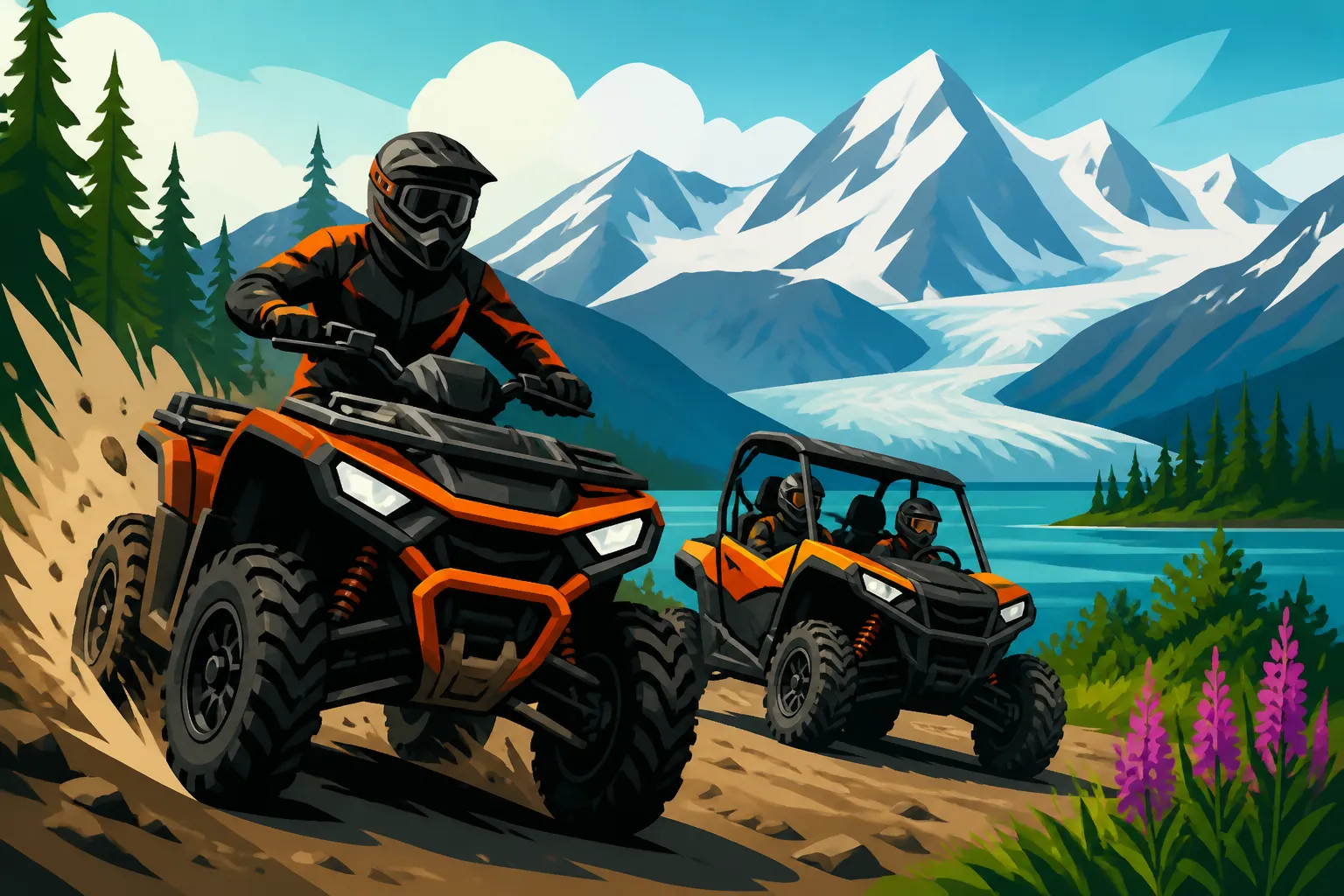
Alaska Poker Runs and Club Rides
An Alaska poker run or club ride can sound like an easy way to spend a day on the trails, until you’re trying to figure out where the group can legally ride, whether everyone’s machine is ready for changing conditions, and what happens if someone gets separated. This guide explains how these rides work, how to prepare, and what to check before you join one.
How Alaska Poker Runs and Club Rides Work
A poker run is a group ride with checkpoints
An ATV poker run usually combines a planned route with a simple game: riders visit designated checkpoints and collect a card, token, or other marker at each stop. At the end, participants compare their completed hands or scores under the organizer’s rules. The ride is generally as much about getting out with a group as it is about winning.
The details can differ from one event to another. One organizer may have a fixed route and staffed checkpoints; another may offer a route with several optional stops. Some rides may be designed for quads, some for side-by-sides, and some for a mix of machines. Before you sign up, ask how the scoring works, whether the route is marked, and what happens if you miss a checkpoint or turn back early.
A poker run is not automatically a race. Unless an organizer explicitly describes a timed or competitive format, treat it as a recreational ride and follow the group’s pace and safety rules. If there is an entry fee, ask what it covers—such as event administration, food, or prizes—rather than assuming every fee goes toward the same things.
Club rides focus on shared trail time
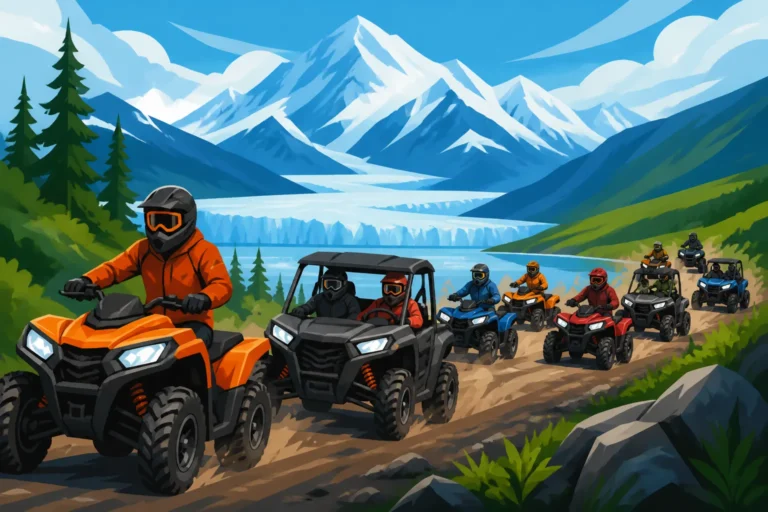
A club ride may be more informal than a poker run. It might be a day trip with a planned meeting place and destination, a beginner-friendly outing, or a longer ride that includes breaks and a lunch stop. Some clubs also organize trail work, social events, or rides for particular machine types. The specific expectations depend on the group, so it’s worth checking before you arrive.
If you’re new to organized riding, a club ride can help you learn how local riders handle trail etiquette and changing conditions. But joining a group does not remove your responsibility to know where you are allowed to ride or to bring suitable gear. Ask whether the group expects you to stay in a single formation, whether riders are grouped by pace, and whether the ride leader plans to wait at intersections.
For a first outing, it’s reasonable to contact the organizer and say plainly that you’re new to group rides. Ask whether the route is suitable for your experience and machine. A helpful organizer should be able to explain the general difficulty, expected riding time, and what to bring without promising that every section will be easy or passable.
Compare event and ride details before committing
A short conversation with the organizer can prevent a long day of surprises. Use the table as a checklist when comparing a poker run with a club ride.
| What to check | Poker run | Club ride |
|---|---|---|
| Main format | Route with checkpoints and a scoring activity | Shared ride with a planned destination or route |
| Route information | Checkpoint locations, route marking, and rules for missed stops | Distance, terrain, meeting points, and expected pace |
| Machine requirements | Whether your ATV or UTV fits the route and event rules | Whether the group accommodates your machine type |
| Support plan | Who to contact if you have a breakdown or need to turn back | Ride leader, sweep rider, regroup locations, and separation plan |
| Costs and inclusions | What the entry fee covers and whether there are optional costs | Any club, trailhead, parking, or shared meal expenses |
| Preparation | Event schedule, required equipment, and scoring instructions | Route notes, fuel plan, weather plan, and communication method |
You can also browse [Alaska Poker Runs and Club Rides] for related riding topics, and [Alaska Group Ride Planning] for practical advice on organizing a group outing. If an event’s details are vague, treat that as a reason to ask more questions—not as a reason to assume the missing information will work itself out on the trail.
Choose a Route and Confirm Access
Match the route to your group and machine
A route that looks manageable on a map can feel very different when it includes mud, loose gravel, ruts, standing water, or a river crossing. Ask the organizer about the type of terrain and whether the route includes narrow sections, steep ground, or areas where riders may need to turn around. A side-by-side also needs enough room to maneuver, and a group with a wide mix of machines may need to travel at the pace of its least experienced rider.
The Knik River Public Use Area and Jim Creek are familiar riding destinations in the Mat-Su region, but the name of a general area is not enough to establish that every track or adjoining parcel is open to your group. Conditions around glacial rivers can change, and a route that was passable earlier may become unsafe as water levels or channels shift. Before following a line on a map, confirm the intended route and the current access rules with the organizer and relevant land manager.
For a route farther from town, such as portions of the Denali Highway area, be deliberate about distance, fuel, communications, and the plan for a breakdown. A long ride can put you well beyond convenient services. The question is not only whether the machine can cover the distance, but whether the group has enough reserve fuel, daylight, and time to return without rushing.
Verify land access and local restrictions
An event invitation or club route is not, by itself, proof that all land along the route is open to riding. Alaska land may be managed by different agencies, communities, Native corporations, or private owners, and permission on one parcel does not automatically carry over to the next. Check land status and the specific access requirements for the entire route, including places where riders might stop or regroup.
Alaska’s statewide general permit is not a blanket authorization for every kind of land. State parks, private land, and land managed by other agencies may have separate rules or require separate permission. Start with [Alaska Land Ownership and Who to Ask] and [Alaska's Statewide General Permit for ATV Use] when you need to understand the difference between a riding permit and permission to enter a particular area.
A mapping tool such as onX Offroad can help you inspect route lines and land boundaries while planning, but a map should be treated as a planning aid, not a substitute for confirming access with the land manager. If a route crosses a boundary you cannot identify, ask the organizer who has checked it and how the group will handle a closed or disputed section. On a club ride, be prepared to turn around rather than follow others onto ground where access is unclear.
Check for local rules before riding near town
A route may connect trails with roads, village streets, or community land. Those transitions matter: rules for operating an ATV or UTV on a road can differ from rules for riding on a trail, and local restrictions may apply even when a route seems familiar. Ask whether the planned ride uses any public roads and confirm the rules for the specific community and road segment.
If the ride is near Anchorage, Wasilla, Palmer, or another populated area, don’t assume that a trail’s proximity to town means road access is allowed. Check [Alaska APV Rules by Community] and [Checking a City Code Before You Ride] for issues that can affect where an APV may be operated. If the route includes a crossing, ask how the group will make it safely and legally rather than improvising once everyone reaches the road.
Prepare Your Machine and Riding Gear
Inspect the machine before the ride
A routine check before departure is less stressful than discovering a loose part at a remote checkpoint. Check tires for damage and suitable pressure, inspect the brakes and throttle, and make sure the steering moves freely. Look for leaks, damaged controls, loose fasteners, and anything that could catch or scrape on the trail. For a UTV, include seat belts, doors or nets, and passenger safety equipment in the inspection.
Alaska riding can expose a machine to mud, water, gravel, and glacial silt. Make sure lights work, the muffler and other required equipment are intact, and the machine is in sound condition for the route. Bring basic tools and any model-specific items you may need for a minor repair. A small problem that is easy to manage near a trailhead can become a major delay when the group is far from help.
Carry the machine’s registration and other relevant documents in a waterproof pouch. If you’re unsure what is required for the machine or the land you’ll use, review [Alaska APV Registration Requirements] and [Alaska Proof of Ownership on the Trail]. Requirements can depend on how and where the machine is operated, so confirm the rules that apply to your situation rather than relying on another rider’s setup.
Pack for Alaska’s changing conditions
A sunny start does not guarantee a dry or warm ride. Pack layers, rain protection, gloves, and clothing appropriate for the expected conditions. Bring water and food even if the organizer mentions a meal stop; delays, route changes, or a breakdown can make the planned stop much later than expected. A first-aid kit should be easy to reach, not buried under luggage.
For longer or more remote outings, think through how the group will communicate if phones lose service. Agree on regroup points and what riders should do if they become separated. A satellite messenger can be useful where ordinary cell service is unreliable, but every rider should understand how to use the device they carry and should not assume another person can always call for help on their behalf.
Keep gear secured so it cannot shift, fall off, or interfere with controls. On a UTV, confirm that passengers have the correct seating and restraints for the machine. For a mixed group, check that everyone knows where to stop, who to contact, and what to do if they need to leave the ride early. These small conversations are especially useful when riders don’t all know one another.
Plan fuel and breakdown support realistically
The organizer’s estimate of ride length is helpful, but your own machine, pace, terrain, and detours affect fuel use. Start with a full tank when practical, and ask whether fuel is available along the route. If the answer is uncertain, plan around the possibility that it is not. Carry fuel only in a properly secured, suitable container and follow safe handling practices.
Ask whether the ride has a sweep rider at the back, a support vehicle, or a specific procedure for mechanical problems. Those arrangements vary, and a sweep rider does not necessarily mean that repairs or towing are guaranteed. If your machine has a known issue, or you lack experience with the expected terrain, tell the organizer before the ride rather than waiting until the group is underway.
Do not let the group’s schedule pressure you into attempting a crossing or obstacle that feels unsafe. In particular, Alaska’s braided rivers can shift, and water conditions can change over the course of a day. If the planned route becomes unsafe, a responsible group should be willing to pause, choose another route, or turn around. [Alaska Braided Glacial River Crossings] and [Turning Back at a Deep Channel] offer useful context for why a cautious decision can be the right decision.
Ride Well With the Group
Agree on communication and regrouping
Before the machines start moving, make sure you know who is leading and who is at the back. Ask how the group will handle intersections, forks, and stops. Some groups wait at every turn until the next rider arrives; others use designated regroup points. Don’t assume everyone follows the same method. If the plan is not clear, ask for it before the ride begins.
A useful separation plan is simple: if you lose sight of the group, stop somewhere safe, avoid taking an unplanned alternate route, and use the agreed communication method. The ride leader should know how to account for riders at stops. If the group is large, a head count at the trailhead and at major regroup points can help avoid confusion about who is still on the route.
Ride at a pace that leaves room to react. Keep a safe following distance, signal hazards when it is practical, and avoid crowding another rider at a crossing or obstacle. On narrow trails, make passing decisions carefully and let the group know if you are stopping. If you’re riding with children or beginners, tell the organizer so the pace and regrouping plan can account for them.
Be courteous at checkpoints and on shared trails
At a poker run checkpoint, follow the organizer’s instructions and keep the stop orderly. Park where directed, leave room for other machines, and avoid blocking the trail. Take the time you need to collect a card or marker, but do not pressure volunteers or other riders to hurry. If you are unsure how scoring works, ask before leaving the checkpoint.
On shared trails, give people, wildlife, and other trail users space. Keep noise and speed reasonable, and avoid riding off the established route to pass a bottleneck. In Alaska, wetland and tundra surfaces can be especially vulnerable to damage. A detour that seems minor to one rider can create lasting tracks or widen a damaged area for everyone who follows.
Be prepared for a ride to change because of weather, a closure, a mechanical issue, or a difficult crossing. The group’s original plan should not take priority over safe, lawful access. If an organizer asks riders to stop or turn around, treat the instruction seriously and avoid splitting off without telling someone.
Ask these questions before you sign up
A few direct questions can tell you whether an event is a good fit. Ask for the meeting location, expected duration, approximate route difficulty, and whether the ride is suitable for your machine. Confirm any required permits, registration, insurance, or protective equipment, and ask what the organizer expects riders to bring.
It also helps to ask how the group handles late arrivals, breakdowns, early departures, and poor weather. If the ride is a poker run, clarify the checkpoint rules, scoring, and whether participation is optional. If it is a club outing, ask whether guests may join and whether there is a ride leader or sweep rider.
Finally, confirm the route’s land access and any local road restrictions instead of relying only on a social post or a line on a map. A well-planned Alaska group ride leaves room for changing conditions, gives participants a clear way to communicate, and respects the people and land along the route. That preparation makes the day more enjoyable for experienced riders and newcomers alike.
Disclaimer
This article is for general informational purposes only and does not constitute professional advice. Laws, prices and regulations vary by location and change over time. Consult a qualified professional for guidance on your specific situation.