Alaska Riding Season Month by Month
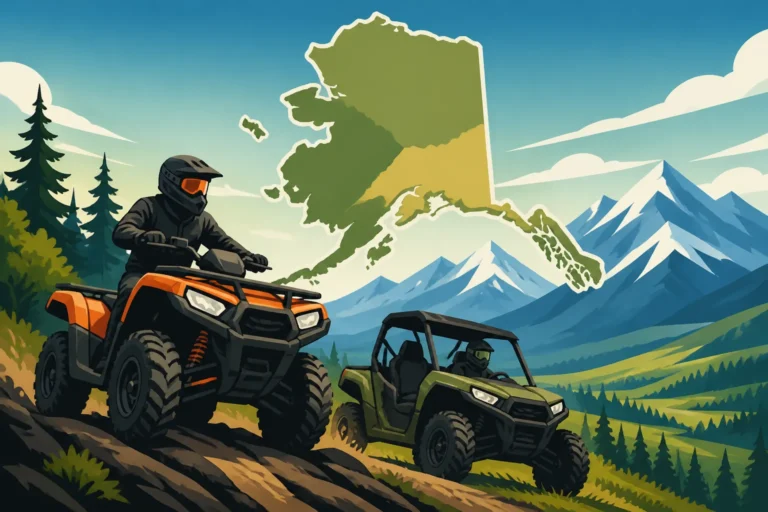
Alaska’s riding season is not one neat stretch of summer: breakup can leave trails soft or impassable, while snow may open different routes for winter machines. That makes planning frustrating, especially when conditions vary between the Mat-Su Valley, the Interior, Southeast Alaska, and the road system. This guide explains what each month can mean for ATV and UTV riding—and what to check before heading out.
Alaska ATV and UTV riding season at a glance
In Alaska, the best month to ride depends on where you are, what kind of machine you’re using, and whether the route is actually open and firm enough to support travel. A trail near Anchorage can be muddy while a higher-elevation route remains snow-covered; a trail that was dry on your last visit can become soft after rain or a warm spell.
The calendar below is a planning guide, not a promise about local access. Conditions vary from year to year, and a route’s land manager may close it even when it looks rideable. Check trail status and land ownership before you leave, and be ready to change plans.
| Month | Typical riding considerations | A useful planning mindset |
|---|---|---|
| January | Winter conditions dominate; snow machines are generally more suited to snow-covered routes than wheeled ATVs | Confirm the route is open and suitable for your machine |
| February | Cold, snow, overflow, and limited daylight can shape the ride | Check weather, ice, and turnaround options |
| March | Longer daylight, but snow and changing surfaces remain | Don’t assume late-winter weather means a route is ready |
| April | Freeze-up gives way to thaw in many areas; soft ground may be vulnerable | Avoid trails that are breaking down under tires |
| May | Breakup and drainage can make many routes muddy or unstable | Prioritize closures and firm ground over an early-season ride |
| June | Conditions often improve, but wet areas and higher elevations may still hold snow | Check recent reports and local access restrictions |
| July | A popular time for summer riding, with long daylight and busy trailheads | Plan for crowds, rain, wildlife, and changing river conditions |
| August | Summer riding continues, but rain, cooler weather, and shorter evenings can matter | Carry layers and allow extra time |
| September | Fall weather arrives, and hunting activity may affect access and trail use | Be visible, respectful, and alert to other land users |
| October | Freeze-up begins in some places, but ground and water conditions can be unpredictable | Treat early snow and ice as hazards, not proof of safe travel |
| November | Winter conditions increasingly shape access and machine choice | Check local rules and current trail conditions |
| December | Snow, cold, and darkness are major planning factors | Keep trips conservative and make a clear trip plan |
Why one Alaska riding calendar does not fit every region
Southcentral Alaska, including Anchorage, the Mat-Su Valley, and the Kenai Peninsula, has a different mix of coastal weather, lowland trails, mountains, and glacial terrain. A low-elevation trail may become muddy during a warm spell while nearby higher ground stays frozen. Conditions can also vary substantially between trailheads only a short drive apart.
The Interior has its own pattern. Areas around Fairbanks can experience deep cold and prolonged winter conditions, followed by a spring thaw that changes the character of trails and low-lying ground. Southeast Alaska brings a wetter climate, so rain and drainage may influence a ride even in the warmer months. Farther north, the short warm season and local ground conditions can make timing especially important.
Rather than relying on a statewide “open season,” identify the specific route, check which agency or landowner manages it, and look for recent local information. A map app such as onX Offroad can help with route planning and locating trails, but a mapped line does not by itself establish that the route is open, legal to ride, or in good condition. Confirm access and restrictions separately.
What conditions matter more than the month
The state of the ground is often a better guide than the date. Mud that seems shallow can conceal soft soil, water, or a damaged trail bed. Repeated tire tracks through wet ground can widen a route and leave ruts that are difficult to repair. If a trail is visibly soft, rutting, or closed, choose a different route rather than trying to power through.
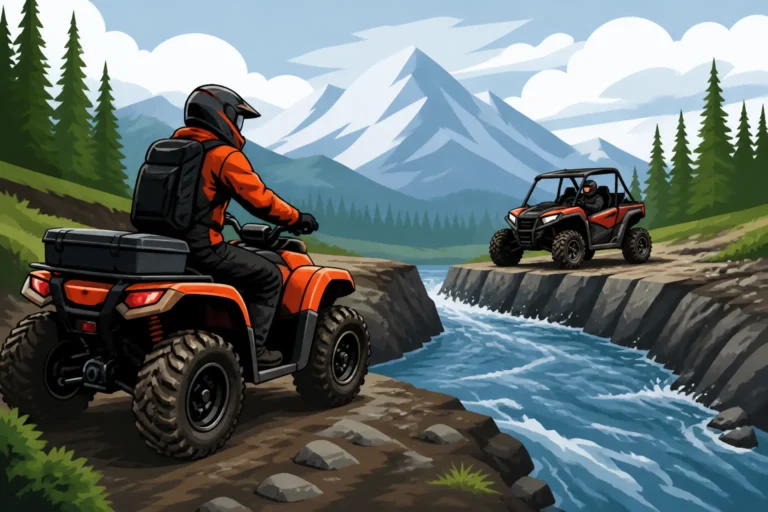
Weather can change conditions quickly. Heavy rain may raise streams, muddy low spots, and make a previously straightforward route difficult. On glacial rivers, channels can shift, and water levels may change during the day. Read [Alaska Riding After Heavy Rain] for more on how wet weather affects a ride, and learn to recognize the limits of a crossing before approaching the water.
Breakup deserves particular caution. Snowmelt and thaw can leave trails fragile even when they appear passable. A route that accepts traffic in midsummer may not be ready in spring. Look for posted closures and current updates, and review [Alaska Trails Closed in Breakup] before planning an early-season outing.
Alaska riding season month by month
The following month-by-month guide describes common planning issues rather than guaranteed conditions. Elevation, recent weather, trail maintenance, local restrictions, and the type of machine all affect what is practical. When in doubt, contact the relevant land manager or a local riding organization before traveling to a trailhead.
January through March
January and February are winter-planning months for much of Alaska. Snow and cold can make some routes inaccessible to wheeled ATVs and UTVs, while snow-machine routes may be more appropriate for machines designed and permitted for those conditions. Do not assume a summer ATV trail is open simply because snow has covered the ground. Rules, grooming, land access, and the machine allowed on a route can all differ.
Cold-weather preparation matters as much as route choice. Check the forecast for the full trip, not just the departure point. A sunny start can give way to wind, blowing snow, or low visibility, especially in exposed areas. Keep essential supplies protected from cold and moisture, and share your route and expected return time with someone who is not riding with you. In remote places, cell service may not be available, so plan for communication accordingly.
March often brings longer daylight, but it does not automatically bring safe spring riding conditions. Snow may remain deep, and freeze-thaw cycles can make surfaces icy in the morning and soft later in the day. On frozen rivers or lakes, visible snow cover does not tell you whether ice is safe or whether overflow is present. If the route depends on crossing ice or a waterway, treat that as a separate hazard assessment—not a routine part of the ride. For more seasonal context, see [Alaska Riding in Winter].
April and May
April is a transition month in many parts of Alaska. A route can be frozen in the morning and soft in the afternoon, with standing water and thawing ground appearing in low spots. These conditions can make travel uncomfortable and can also damage trails. Avoid treating a few days of warm weather as proof that a route has recovered from winter.
May is often the month that tests a rider’s patience. Breakup can mean mud, water, lingering snow, and weak trail surfaces. Some areas will remain closed or unsuitable for motorized use while the ground thaws. If the tires are sinking, leaving deep ruts, or pushing water and soil off the trail, turn around. It is frustrating to postpone the first ride of the year, but waiting for firmer ground can help protect access for everyone.
This is also a good time to prepare rather than push the season. Inspect tires, brakes, lights, winch equipment, and recovery gear. Check the machine for winter damage and make sure you have a route plan that does not depend on crossing a flooded trail or an unstable stream. For a deeper look at how conditions change, see [Alaska Riding in Spring].
June through August
June often marks the return of more dependable summer riding, but it is not a universal green light. Higher elevations may still hold snow, and lowlands may remain wet after spring melt or rain. Check recent conditions for the specific route, and pay attention to local closures. If the route passes through a wetland or sensitive tundra, stay on established routes and respect restrictions; seemingly minor tire tracks can have lasting effects.
July is a popular month for riding, with long daylight giving riders more time to explore. That extra daylight can make it tempting to add another loop or push farther from the trailhead than planned. Set a turnaround time, leave enough fuel for the return trip, and remember that a long day can still end in cold rain. Busy trailheads also mean sharing space with hikers, campers, cyclists, other riders, and local residents.
August can still offer excellent summer riding, but conditions may shift toward cooler, wetter weather. Keep rain gear and warm layers accessible rather than buried under cargo. If your route includes a river crossing, check conditions close to the time of travel: a crossing can change after rain or rising water. Avoid entering fast or unfamiliar water simply because another vehicle has gone through. Read [Alaska Riding in Summer] for more on making the most of the main riding season.
September through December
September brings fall colors and, in many regions, a change in trail use. Hunting activity can overlap with riding, so be alert, keep to routes where motorized travel is allowed, and avoid disturbing other land users. Conditions can shift quickly from mild afternoons to cold, wet weather. Shorter daylight also makes it easier to misjudge how much time remains for the return trip.
October is a transition month rather than a reliable start to winter riding. Some routes may be wet, some may be starting to freeze, and others may have early snow that hides rocks, holes, or water. A thin layer of snow can make a trail look smooth while concealing hazards underneath. Check whether the route is open to your type of machine and whether seasonal restrictions apply.
In November and December, cold and snow increasingly shape access. Choose routes and equipment appropriate to local conditions, and keep trips conservative if weather or daylight is limited. Winter travel can require a different skill set and different safety preparation from summer ATV riding. Review [Alaska Riding in Fall Hunting Season] when planning September trips, and [Alaska Trails Open Year-Round] when looking for routes that may be available beyond the typical summer window. “Year-round” access still depends on local conditions, rules, and the machine you plan to use.
How to choose the right month and route
Choosing a riding date is only one part of planning. Before setting out, confirm that the route is open, that your machine is allowed, and that you have permission to cross every parcel along the way. Public-looking land can have multiple owners or managers, and a trailhead pass is not the same thing as permission to ride everywhere beyond it.
Check access, trail condition, and land status
Start with the trail or riding area you want to visit, not with a broad search for “Alaska ATV trails.” Look up the managing agency or landowner and check for current notices, seasonal restrictions, closures, and permitted uses. A route shown on a map may cross state land, federal land, private property, or Native corporation land, each with different access rules. [Alaska Land Ownership and Who to Ask] offers a useful framework for figuring out whom to contact.
Use mapping tools to orient yourself, but verify what the map cannot tell you. onX Offroad can be useful for reviewing route options and keeping track of planned travel, especially when you are comparing trailheads or working out a turnaround point. Before relying on any mapped route, confirm that it is legal and currently open with the relevant manager. Save important information for offline access when you expect to lose cell service.
Look for recent, local reports rather than assuming that a report from last season still applies. A route may be affected by construction, a washed-out crossing, a wildlife closure, or trail maintenance. If you cannot establish that a route is open and appropriate for your machine, make a backup plan closer to the road system.
Match the trip to your machine and experience
A short day ride near a familiar trailhead calls for different preparation from a long remote outing. Consider the route’s distance, elevation, surface, water crossings, and distance from help. Be honest about the least experienced rider in the group, especially when planning a ride with children or first-time passengers. A challenging route can become stressful quickly if someone is tired, cold, or uncomfortable with a crossing.
Pack for conditions that may be worse than the forecast suggests. Carry basic repair and recovery equipment suited to your machine, food and water, warm and waterproof layers, and a first-aid kit. Check that everyone knows the route and the plan if the group becomes separated. For remote rides, consider how you will communicate when phones have no service, and leave a trip plan with someone at home.
Build flexibility into the schedule. A shorter ride on firm ground is usually a better choice than pressing ahead on a muddy trail or making a risky crossing to reach a planned destination. If the group reaches a closure, worsening weather, or an unfamiliar hazard, turn around. The destination is optional; getting everyone back safely is not.
Share the trail and protect future access
Alaska’s trails and open landscapes are shared by riders, hunters, hikers, cyclists, campers, and communities. Keep to established routes, avoid widening trails to get around mud, and do not ride across sensitive ground simply because it looks open. If a route is closed, respect the closure rather than searching for a way around it.
Be considerate around wildlife and other trail users. Slow down when visibility is limited, give people room, and avoid surprising animals at close range. In fall, hunting activity may increase in some areas, so bright clothing and careful attention to signs and nearby activity are sensible habits. Learn more in [Alaska Wildlife on the Trail] and [Alaska Trail Etiquette Locals Expect].
After the ride, note what you encountered: soft ground, an obstructed route, a washed-out section, or a closure sign. Share that information with the appropriate land manager or local riding group when useful. A practical report can help the next rider choose a safer route and can support better trail stewardship. To understand why seasonal closures deserve respect, see [Alaska Trail Closures After a Storm].
A practical seasonal checklist
Before each ride, take a few minutes to revisit the basics. That small pause can prevent a long drive to a closed trailhead, an avoidable recovery, or damage to a route that is not ready for traffic.
- Confirm the route is open. Check the land manager’s notices and any seasonal restrictions, then verify that your machine is permitted.
- Check recent local conditions. Look for updates about breakup, rain, snow, river crossings, trail work, and closures.
- Check the weather along the route. Conditions at the trailhead may differ from conditions at higher elevations or farther from the road system.
- Plan a turnaround point. Choose a time or condition that will make the group turn back, even if the destination is still ahead.
- Tell someone your plan. Share the route, expected return time, and instructions for what to do if you do not check in.
- Pack for a change in conditions. Bring layers, rain protection, food, water, first aid, and recovery gear suited to the route and machine.
- Use current access information. A map can help you navigate, but it does not replace permission or confirmation that a trail is open.
- Be willing to cancel or reroute. Mud, rising water, a closure, or deteriorating weather are good reasons to choose another day.
Alaska’s riding season is best understood as a moving set of local conditions, not a fixed statewide window. Watch the ground, respect closures, verify access, and plan around the route you actually intend to ride. Those habits make it easier to enjoy the months that are right for your machine and leave the trail in good shape for the next group.
Disclaimer
This article is for general informational purposes only and does not constitute professional advice. Laws, prices and regulations vary by location and change over time. Consult a qualified professional for guidance on your specific situation.