Alaska Self-Closing Throttle Rules
One of the most frustrating things about riding your ATV or UTV in Alaska, especially if you're trying to figure out how to navigate public roads or trails that crisscross them, is the sheer volume of rules and regulations. It’s easy to get lost in the details, and one often-overlooked but crucial safety feature that Alaska law specifically addresses is the self-closing throttle. This guide will dive deep into what this means for you as an Alaskan rider, why it's important, and how to make sure your machine is compliant.
What Exactly Is a Self-Closing Throttle and Why Does Alaska Care?
When you’re out on the trails or crossing a road, the last thing you want is for your machine to behave unexpectedly. A self-closing throttle might sound like a minor detail, but it's a fundamental safety mechanism that prevents runaway vehicles and serious accidents. Alaska's regulators, just like those in many other places, understand the critical role this plays in rider safety.
Understanding the Basic Mechanism
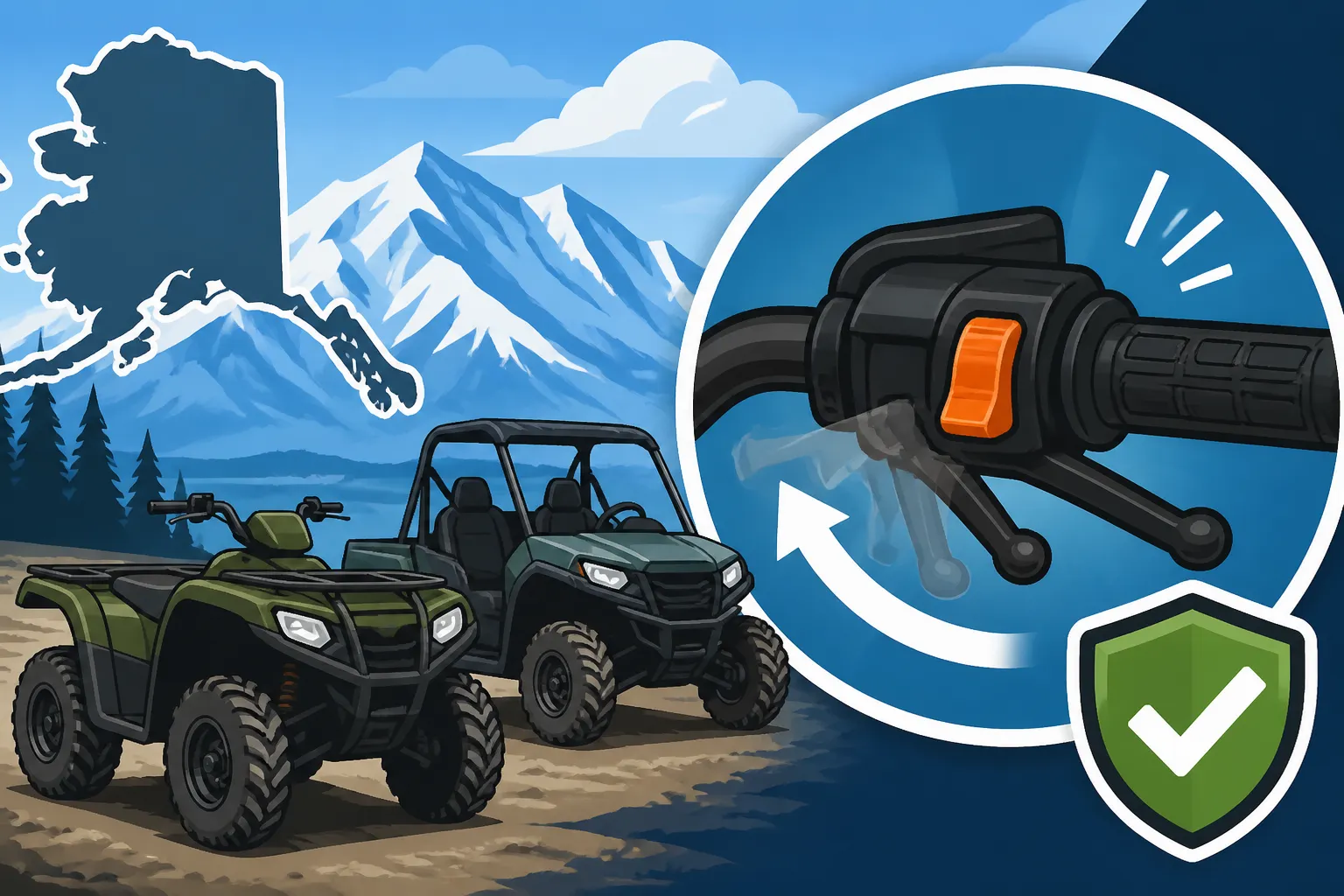
At its core, a self-closing throttle is exactly what it sounds like: a throttle mechanism on your ATV or UTV that automatically returns to the idle position when the rider releases it. This isn't a complex piece of engineering; it's typically achieved through a spring-loaded mechanism within the throttle housing itself. Whether you have a thumb throttle, a twist grip, or a foot pedal on a side-by-side, the expectation is that when you let go, the engine speed immediately drops, and power to the wheels is cut. This immediate response is paramount. It ensures that if you accidentally lose grip, get distracted, or are thrown from the machine, it doesn't continue to accelerate or maintain speed, potentially causing further harm or damage.
The Safety Imperative Behind the Rule
Imagine a scenario: you're navigating a rocky trail, hit a bump unexpectedly, and your thumb slips off the throttle. If that throttle sticks open, even for a second, your machine could lurch forward, sending you into a tree, off a cliff, or into another rider. The self-closing throttle acts as a vital fail-safe, a last line of defense against uncontrolled acceleration. It's a proactive measure designed to minimize the risk of accidents, especially those caused by rider error, fatigue, or unforeseen obstacles. For new riders, in particular, this mechanism provides an extra layer of confidence, knowing that releasing the throttle will always result in a controlled deceleration. In a state like Alaska, where terrain can be unpredictable and conditions can change rapidly, reliable safety features like this are non-negotiable.
How This Differs from a "Sticky" Throttle
A "sticky" throttle is the antithesis of a self-closing one, and it's a dangerous condition. A sticky throttle is one that doesn't return smoothly and quickly to idle when released. This can happen for several reasons: perhaps the throttle cable is frayed, rusted, or kinked; maybe the throttle housing is gunked up with dirt and debris from dusty Alaskan trails; or perhaps the internal spring mechanism is worn out or damaged. Regardless of the cause, a sticky throttle creates an incredibly hazardous situation. It means you have to manually force the throttle back, or worse, the machine continues to apply power even after you've tried to disengage. This lack of immediate response can lead to panic, loss of control, and serious accidents. It’s a mechanical failure that directly undermines the safety design of the vehicle and the intent of regulations like Alaska's self-closing throttle rule. Regularly [Testing a Self-Closing Throttle Before an Alaska Ride] is a simple but critical check to ensure your safety.
Alaska's Legal Framework for Off-Highway Vehicles (OHVs) and Throttles
It's not just a recommendation; in Alaska, the self-closing throttle is a requirement for certain types of riding, particularly if you venture onto public roads where OHVs are permitted. Understanding where this rule originates in the legal code helps clarify its importance and your responsibilities as a rider.
Where the Self-Closing Throttle Rule Appears in Alaska Law
Alaska law, specifically within its regulations concerning All-Purpose Vehicles (APVs), which include most ATVs and UTVs, explicitly outlines equipment requirements. These rules are designed to ensure a basic level of safety for machines operating on public lands or those designated sections of roads where APVs are allowed. The self-closing throttle is listed among other critical safety components. It's not just a suggestion from the manufacturer; it's a legal expectation. This means that if a law enforcement officer, such as an Alaska State Trooper, pulls you over for an inspection, they can and often will check this functionality. Failing this basic check could result in a citation or, at the very least, a stern warning and the requirement to fix it before you can continue riding on regulated areas. This is part of the broader [Alaska OHV Equipment Requirements] that all riders should be familiar with.
Applicability for Street Legal and Public Land Use
The concept of a "street legal" ATV or UTV in Alaska is a nuanced one. While full street legality in the sense of a passenger car is generally limited, Alaska does allow APVs on certain public roads and highways under specific conditions, often posted at 45 mph or less, or for crossing purposes. When you are operating your machine in these contexts – on a public road, even briefly, or on state-managed trails – the self-closing throttle rule applies directly. It's considered a foundational safety feature for any vehicle sharing space, however limited, with other traffic or operating on managed public access. Even if you primarily ride on private land where state regulations might seem less direct, keeping your throttle in top working order is still a wise safety practice. However, once you venture onto public property, whether a road shoulder or a state trail, you are expected to comply with all relevant equipment standards, including this one. For more information, you can review [Alaska APV Road Rules Explained].
The Role of Manufacturer Standards
While Alaska's laws mandate a self-closing throttle, it’s important to remember that most reputable ATV and UTV manufacturers already build their machines with this feature as a standard safety design. They adhere to industry-wide safety standards that often exceed minimum legal requirements, knowing that a malfunctioning throttle is a significant liability and safety risk. When you buy a new machine, you can generally assume it comes equipped with a proper self-closing throttle. The challenge often arises with older machines, those that have seen a lot of hard use, or those that have undergone aftermarket modifications. It's crucial for owners of these machines to actively verify that the throttle still functions as intended, even if it met the standard when it rolled off the assembly line. Relying solely on the original manufacturer's design without periodic checks is a gamble you don't want to take on Alaska's diverse and sometimes challenging terrain.
Checking Your ATV or UTV for Self-Closing Throttle Compliance
It's not enough to assume your throttle is working correctly. Like checking your tire pressure or fluid levels, a quick throttle check should be part of your pre-ride routine. This simple inspection can genuinely be a lifesaver.
Simple Tests to Ensure Your Throttle is Safe
Performing a quick check of your throttle's functionality is straightforward and takes mere seconds. Here’s how you can do it:
- Engine Off Test: With the engine off (and ideally, the key out of the ignition for safety), fully depress or twist your throttle and then quickly release it. Does it snap back to the idle position immediately and smoothly, without any hesitation or sticking? Repeat this a few times. It should feel crisp and consistent.
- Engine On, Stationary Test: Start your machine and let it warm up. While remaining stationary in a safe, open area, briefly apply the throttle, just enough to rev the engine slightly, and then release it. The engine RPMs should drop back to idle instantly. Listen and feel for any lag or sustained revving after you let go. This simulates a real-world response.
- Visual Inspection: Physically inspect the throttle cable from the handle or pedal down to where it connects to the carburetor or throttle body. Look for any kinks, fraying, rust, or obstructions that might impede its smooth movement. Also, check the throttle housing itself for any debris or damage. Make sure the spring inside the throttle mechanism (if visible) isn't broken or weak.
These quick checks are your first line of defense. They confirm that the mechanism is operating as it should, ensuring that when you need it to close, it will.
What to Do If Your Throttle Doesn't Return Properly
If your throttle shows any signs of sticking, slow return, or doesn't snap back with authority, it's not just an inconvenience—it's a serious safety hazard that needs immediate attention. Do not ride the machine on public lands or roads until it's fixed. Here's your action plan:
- Identify the Cause:
- Lubrication: Often, a sticky throttle is simply due to a lack of lubrication in the cable or housing. Try lubricating the throttle cable with a dedicated cable lubricant (you can get a cable luber tool to make this easier). Apply a little grease to pivot points in the throttle housing.
- Debris: Thoroughly clean the throttle housing and surrounding area. Dirt, mud, and grime can easily gum up the works, especially after a particularly muddy ride.
- Cable Condition: Inspect the cable carefully. If it's frayed, bent, or kinked, it needs to be replaced. A damaged cable will never function correctly.
- Springs: If the throttle spring itself is weak or broken, it will need to be replaced. This might require disassembling the throttle housing or even parts of the carburetor/throttle body.
- Professional Help: If you're unsure about diagnosing or fixing the issue yourself, or if the problem persists after your attempts, take your ATV or UTV to a qualified mechanic. Throttle issues are too critical to DIY if you're not confident in your skills. A professional can quickly identify the problem and ensure it's repaired correctly.
Remember, a malfunctioning throttle isn't something to put off. Your safety and the safety of those around you depend on it.
Aftermarket Parts and Maintaining Compliance
Many Alaskan riders love to customize their machines, and the aftermarket is full of fantastic parts that can enhance performance, comfort, or utility. However, when it comes to critical safety features like the throttle, you need to exercise caution. If you're considering an aftermarket throttle assembly, throttle cable, or even handlebar replacements that affect the throttle housing, always ensure that the new components meet or exceed the original equipment's self-closing functionality. Reputable brands, like SuperATV, offer a wide range of parts, but it's your responsibility to ensure that any modification you make maintains legal compliance and, more importantly, safety. Don't sacrifice a self-closing throttle for a performance gain or aesthetic upgrade. Always double-check that your new setup passes the same safety tests as a stock throttle. Cutting corners here could lead to serious consequences, not just legally but physically.
Potential Issues and Common Misconceptions About Throttles
It’s easy to overlook the subtle signs of a failing throttle or to confuse its purpose with other safety features. Understanding these nuances can help you maintain your machine better and ride more safely.
The Difference Between a Self-Closing Throttle and a Throttle Limiter
These two features, while both related to throttle operation, serve distinctly different purposes. A self-closing throttle is a safety mechanism ensuring that the throttle returns to idle when released by the rider. Its function is about response and disengagement. A throttle limiter, on the other hand, is designed to restrict the maximum amount of throttle that can be applied. This is often found on youth ATVs or machines intended for beginner riders, allowing parents or instructors to set a lower top speed and acceleration. It's a control mechanism for power output.
You can have a machine with a throttle limiter that still has a perfectly functional self-closing throttle. Conversely, a machine could have no limiter but a sticky throttle that doesn't self-close, making it dangerous. Alaska's rules specifically address the self-closing nature for safety reasons, while throttle limiters are more about training and preventing excessive speed. Don't confuse the presence of one for the proper function of the other.
Wear and Tear: When Your Throttle Might Fail
Just like any mechanical part on your ATV or UTV, throttles and their associated cables and springs are subject to wear and tear. Over time, constant use, exposure to the elements (dust, mud, water, ice – all common in Alaska!), and general aging can degrade components.
- Cable Fraying/Stretching: Throttle cables are under tension and constant movement. Eventually, the strands can fray, or the cable can stretch, affecting smooth operation.
- Housing Contamination: Mud, dust, sand, and even ice can work their way into the throttle housing or cable sheath, creating friction and causing the throttle to stick or move sluggishly.
- Spring Fatigue: The return spring within the throttle mechanism can lose its tension over years of compression and extension, becoming too weak to snap the throttle back effectively.
- Corrosion: Rust can develop on metal parts of the throttle mechanism, especially if moisture gets trapped, leading to increased friction and resistance.
Regular cleaning, lubrication, and inspection are key to preventing these issues. Think of your throttle as a high-wear item that needs periodic attention, especially if you're putting your machine through its paces on Alaska's rugged trails.
Why Some Riders Overlook This Critical Safety Feature
It’s easy to get caught up in the thrill of riding, the power of your machine, and the beauty of Alaska's landscapes. Because the self-closing throttle works silently in the background most of the time, it's a safety feature that can easily be taken for granted or entirely overlooked during pre-ride checks. Here are a few reasons why riders might neglect it:
- Out of Sight, Out of Mind: Unlike a flat tire or a broken headlight, a slowly failing throttle might not present an obvious symptom until it's too late.
- Focus on Performance: Many riders prioritize engine power, suspension upgrades, or aesthetic modifications. Safety features that don't directly enhance performance can sometimes fall by the wayside.
- Lack of Awareness: New riders, or even experienced ones who haven't read up on specific regulations, might simply not know that this is a legally mandated safety feature in Alaska or how critical it is.
- "It's Always Worked" Mentality: A false sense of security can develop if a machine has never had a throttle issue before. This leads to complacency, where regular checks are skipped.
Breaking this habit and incorporating a thorough throttle check into every pre-ride inspection is crucial. It’s a small investment of time that offers huge returns in terms of safety. For information on other critical checks, see [What a Trooper Can Ask to See].
The Broader Context: Other Alaska OHV Equipment Requirements
The self-closing throttle isn't an isolated requirement; it's part of a comprehensive set of equipment standards designed to keep riders safe and responsible. If you're going to ride on public lands or permitted roads, you need to be aware of the full spectrum of regulations.
Beyond the Throttle: Lights, Brakes, and Mufflers
When you're riding your ATV or UTV in Alaska, especially if you're traveling during dusk, dawn, or simply have an overcast day, proper lighting is non-negotiable. [Alaska Lighting Rules on a Machine] dictate that your machine must have functional headlights visible for a certain distance, and taillights and reflectors visible even further back. This isn't just for you to see; it's so others can see you.
Equally vital are your brakes. A machine that can go fast also needs to stop reliably. Alaska law requires functional braking systems on all APVs. This means checking your brake fluid, pads, and lines regularly. A self-closing throttle helps prevent accidental acceleration, but good brakes are what ultimately bring you to a controlled stop in an emergency.
And then there's the muffler. Noise pollution is a common complaint in recreational riding areas, and Alaska has [Alaska Muffler and Noise Rules] in place to address this. Your machine must be equipped with an effective muffler system to reduce engine noise. Aftermarket exhaust systems might sound cool, but if they don't comply with state noise limits, you could face a citation. Also, most regulations require a spark arrester, an important safety device to prevent wildfires. [What Counts as a Legal Muffler in Alaska] often includes this specific requirement.
Reflectors, Mud Flaps, and Emission Controls
Visibility isn't just about active lights; passive reflectors play a crucial role, especially when your lights might be off or obscured. Alaska mandates specific [Alaska Reflector Requirements] to ensure your machine is visible from multiple angles, particularly from the rear. These are small, inexpensive additions that can make a big difference in avoiding collisions.
Mud flaps might seem like a minor detail, but they serve a practical purpose beyond keeping mud off your back. They help prevent debris, rocks, and mud from being flung up by your tires into the faces of other riders or passing vehicles. [Alaska Mud and Snow Flap Rules] specify their presence, particularly for machines operating on designated trails or roads.
While not always as strictly enforced as other equipment rules, emission controls are part of the broader effort to protect Alaska's pristine environment. Most modern machines come with factory-installed emission systems that need to be maintained. Tampering with these systems, like removing catalytic converters, could lead to non-compliance and environmental damage, even if direct citations are rare for this specific aspect.
The Importance of Regular Machine Inspections
Ultimately, the self-closing throttle, along with all these other equipment requirements, boils down to one critical practice: routine, thorough machine inspections. Before every ride, especially if you're heading out onto public land or roads, you should conduct a comprehensive walk-around and functional check.
This isn't just about avoiding a ticket; it's about personal responsibility and safety. Imagine riding a long distance in the Alaska backcountry, miles from help, only to discover a critical safety component has failed. Taking a few extra minutes to check your lights, brakes, tires, throttle, and [Why Alaska Requires Intact Body Panels] can prevent breakdowns, accidents, and ensure you have a safe and enjoyable experience. Whether you're a seasoned local or a visitor, understanding and adhering to Alaska's OHV equipment rules is key to responsible riding.
Here's a quick overview of some essential equipment checks:
| Equipment Feature | Why It's Important | Quick Check |
|---|---|---|
| Self-Closing Throttle | Prevents runaway vehicle, critical safety fail-safe | Release throttle; must snap back instantly to idle without sticking |
| Headlights & Taillights | Visibility for you and others, especially at night | Turn on lights; check brightness, beam, and ensure all bulbs are working |
| Brakes (Front & Rear) | Essential for controlled stopping and emergencies | Test brake levers/pedal for firm feel; check fluid levels, pad wear |
| Muffler & Spark Arrester | Reduces noise pollution, prevents wildfires | Listen for excessive noise; inspect exhaust for damage or missing arrester |
| Reflectors | Passive visibility, especially from the rear | Ensure all reflectors are clean, intact, and properly positioned |
| Mud Flaps | Prevents debris from being thrown by tires | Verify presence and condition behind tires, especially on rear |
| Tires (Pressure & Tread) | Traction, handling, and preventing flats | Check PSI against manufacturer specs; inspect tread for wear and damage |
| Steering & Suspension | Control and stability | Check for excessive play or looseness; look for leaks or damaged components |
| Horn | Warning signal for other riders/wildlife | Press horn button; ensure it produces a clear, audible sound |
Disclaimer
This article is for general informational purposes only and does not constitute professional advice. Laws, prices and regulations vary by location and change over time. Consult a qualified professional for guidance on your specific situation.