Alaska Trespass Law for Riders
Picture this: you're out enjoying the vast beauty of Alaska on your ATV or UTV, the engine humming, the scenery breathtaking. Then, a nagging thought creeps in: Am I even supposed to be here? Land ownership in Alaska can be a complex patchwork, and inadvertently trespassing is a real concern for many riders, leading to uncomfortable encounters or even legal trouble. This guide is going to walk you through Alaska's trespass laws as they apply to ATV and UTV riders, helping you navigate the trails with confidence and respect for all landowners.
Understanding Alaska's Complex Land Ownership
Alaska's landscape is truly unique, not just in its raw, untamed beauty but also in its intricate mosaic of land ownership. Unlike many other states, you're not just dealing with state and private land; you've got vast tracts of federal ground, borough lands, and significant holdings by Alaska Native Corporations and villages. This complexity is often the root of rider confusion and can make it incredibly challenging to know where you can legally ride your machine.
The Mosaic of State, Federal, Borough, and Private Lands
Imagine a giant, beautiful quilt, but instead of fabric, it's made of different land ownership types. We have immense federal lands, including National Parks, National Forests, and Bureau of Land Management (BLM) areas. Each of these federal entities has its own set of rules regarding off-highway vehicle (OHV) access, and they are not all the same. Then there are state lands, managed by the Alaska Department of Natural Resources (DNR), which generally offer more open access under the statewide general permit, but even here, there are specific exclusions like state parks and designated critical habitat areas. [Alaska State Land Riding Explained]
Beyond the public domains, you have privately owned parcels, ranging from small homesteads to large tracts owned by individuals or companies. And then, a truly Alaskan element: the millions of acres owned by Alaska Native Corporations, established under the Alaska Native Claims Settlement Act (ANCSA). These lands are private property, just like any other private land, and require explicit permission for access. Boroughs, like the Mat-Su Borough, also manage lands, often with specific ordinances for OHV use, sometimes requiring trailhead passes for designated riding areas like Jim Creek. The challenge for riders is that these boundaries aren't always clear on the ground, especially when you're deep in the bush or on an old two-track trail. This patchwork demands a proactive approach from riders to ensure they're always on legal ground.
Recognizing "No Trespassing" Signs and Physical Barriers
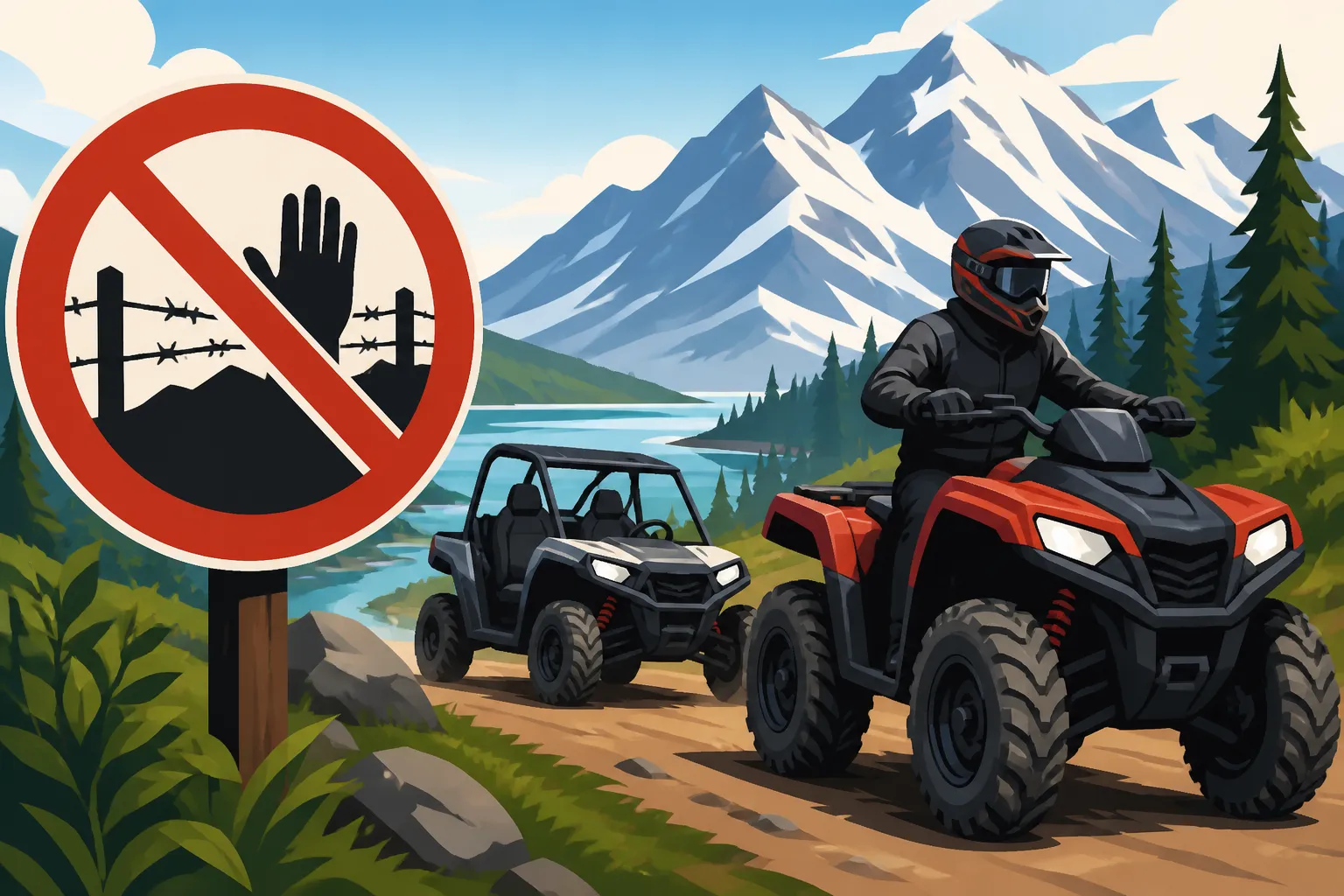
While some areas are obvious—a fence, a gate, or a clearly marked "No Trespassing" sign—many are not. In Alaska, especially in remote areas, you might not encounter a perfectly manicured fence line or a bright red sign every few feet. Sometimes, a simple wooden stake with a painted marker, a flagging tape, or even a change in the vegetation type can signify a boundary. However, the absence of signs does not automatically mean public access. It's a common misconception that if a property isn't posted, it's fair game. This is simply not true under Alaska law. [Alaska Land Ownership Lookups]
Trespass can occur even without a physical barrier if you know, or reasonably should have known, that the land was private. This means riders have a responsibility to know where they are riding. A locked gate or a cable strung across a trail is a definitive no-go. Even if a gate is open, it might still mean private access only. Always err on the side of caution. If there's any doubt about access, or if you encounter any form of barrier or sign that suggests restricted entry, assume it's private and turn around. It's far better to miss out on a section of trail than to face the legal and personal repercussions of trespassing.
The Legal Side of Trespassing for OHV Riders
Nobody wants to find themselves in hot water with the law, especially when you're out trying to enjoy Alaska's incredible outdoors on your ATV or UTV. Understanding what constitutes trespassing and what the potential penalties are is vital for every responsible rider. It's not just about avoiding a ticket; it's about respecting the rights of landowners and maintaining a positive reputation for the riding community as a whole.
What Trespass Means Under Alaska Law
In Alaska, trespass generally means entering or remaining on someone else's property without their permission. For ATV and UTV riders, this often involves driving your machine across private land, whether it's an undeveloped parcel, a residential property, or land owned by a Native Corporation. The key element is the lack of permission. It doesn't matter if you meant to do it or not; if you're on land without the owner's consent, you could be trespassing. This includes traversing land that might look like open, public access but is, in fact, privately owned. [Alaska Penalties for Riding Unregistered]
Alaska Statute 11.46.330, for example, broadly covers criminal trespass in the second degree, which includes entering or remaining in or on premises knowing that one is not licensed or privileged to do so. While some might think this only applies to buildings, "premises" can definitely include open land, especially if it's fenced, visibly posted, or if you've been told previously not to enter. Even if the land is unposted and unfenced, if a reasonable person would have understood it to be private—for instance, an obvious residential yard or a cultivated field—you could still be found to be trespassing. Ignorance of the boundary, while potentially mitigating, is not an automatic excuse. The onus is on the rider to know where they are.
Potential Consequences: Fines, Damages, and Machine Impoundment
The consequences of trespassing on an ATV or UTV in Alaska can range from a stern warning to significant legal and financial penalties. At the very least, you might be asked to leave the property by the landowner or law enforcement. However, depending on the severity and frequency of the trespass, things can escalate quickly. Criminal trespass charges can result in fines, and potentially even jail time for repeated offenses. For instance, repeatedly riding on posted private land after being warned is a much more serious offense than an accidental, momentary deviation onto an unmarked boundary.
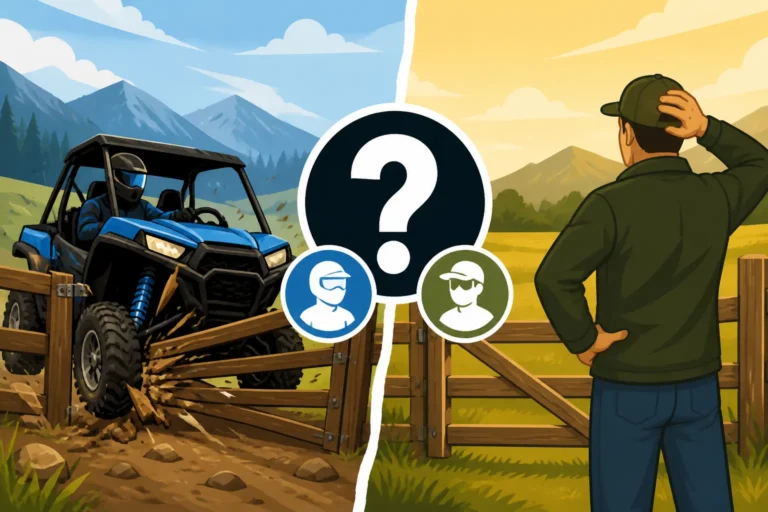
Beyond criminal charges, a landowner can pursue civil action for damages. If your machine causes any damage to their property—whether it's tearing up a field, damaging a fence, or disturbing wildlife—you could be liable for the cost of repairs or restoration. In some cases, particularly if the trespass is egregious or causes substantial damage, your ATV or UTV could even be impounded. [What a Trooper Can Ask to See] This means not only a headache to get it back but also impound fees and potential forfeiture depending on the specifics of the case. Imagine losing your cherished machine just because you weren't sure whose land you were on! It's a stark reminder that a little research goes a very long way in protecting both your wallet and your ride.
Practical Strategies to Ride Legally and Ethically
Navigating Alaska's vast landscapes on your ATV or UTV should be an adventure, not a source of anxiety about accidentally breaking the law. Responsible riding is all about preparation and respect. By taking a few proactive steps, you can ensure your rides are legal, enjoyable, and leave a positive impression on landowners and fellow outdoor enthusiasts.
Pre-Ride Research: Maps, Apps, and Local Knowledge
The absolute best defense against accidental trespassing is thorough preparation. Before you even load your machine onto the trailer, you should be researching your route. This means getting your hands on current maps that clearly delineate land ownership. There are several resources available:
- BLM and DNR Maps: These government agencies often have detailed maps, sometimes available digitally or as paper copies, that show their land boundaries.
- Online Mapping Tools: Websites and apps like OnX Offroad, Gaia GPS, or even Google Earth can be incredibly powerful tools. Many of these allow you to overlay private property boundaries and public land data directly onto your map. Investing in a subscription to one of these services, especially one with strong Alaskan data, is highly recommended for serious riders. Having a sturdy mount for your GPS device from a company like SuperATV can ensure your maps are always visible and secure, even on rough trails.
- Borough GIS Data: Many boroughs in Alaska, especially those with significant OHV use, provide public Geographic Information System (GIS) data online where you can look up specific parcels of land and their ownership. [Checking a Land Status Map]
- Local Knowledge: Don't underestimate the power of talking to locals! Visiting a local ATV club, outdoor outfitter, or even just chatting with folks at a trailhead can provide invaluable insights into popular riding areas, historical access routes, and known private property boundaries. They might even point you to maps specific to the area.
Always download maps for offline use, as cell service is notoriously spotty in many Alaskan riding areas. Cross-referencing multiple sources can also help confirm boundaries, especially in ambiguous areas.
Seeking Explicit Permission and Respecting Boundaries
When you know or suspect you might need to cross private land to access public trails, the only legal and ethical path is to seek explicit permission from the landowner. This might sound like a hassle, but it's a fundamental part of respectful land use.
- Contacting Landowners: If you identify a private parcel on your map, try to find contact information for the owner. Property tax records, borough GIS websites, or even local community directories might help. A polite phone call or letter explaining your intentions and asking for permission goes a long way. Be prepared for a "no," and respect it if that's the answer. [Alaska Native Corporation Land Permissions]
- Native Corporation Lands: Accessing Native Corporation lands almost always requires a permit and often a fee. These corporations manage their lands for the benefit of their shareholders, and unauthorized access is treated seriously. Research which corporation owns the land you wish to cross and inquire about their specific permit processes. [Alaska Regional Corporation Land Rules]
- Sticking to the Agreement: If permission is granted, adhere strictly to any conditions set by the landowner. This might include specific routes, times of day, or limitations on group size. Always close gates behind you, stay on designated paths, and leave no trace. Your good behavior reflects not only on you but on all OHV riders.
Remember, even if you've ridden a certain area for years without issue, land ownership can change, and so can access policies. It's always best to re-verify, especially for major excursions.
Dealing with Ambiguity and Unexpected Situations
Despite your best research, you might occasionally encounter situations on the trail where land ownership is ambiguous, or you suddenly find yourself in an area you didn't anticipate being private.
- When in Doubt, Turn Around: This is the golden rule. If you're unsure whether you're on public or private land, or if you encounter signs or barriers that weren't on your map, turn back. It's much safer to retrace your steps and find a different route than to risk trespassing.
- Encountering a Landowner: If you accidentally ride onto private land and are confronted by a landowner, remain calm, polite, and apologetic. Explain your confusion, offer to turn around immediately, and avoid any confrontational behavior. A respectful attitude can often defuse a tense situation and prevent it from escalating.
- Carrying Identification: Always carry your driver's license and proof of your machine's registration and insurance. If law enforcement gets involved, having your documents in order shows you're a responsible rider. [The Alaska Driver's License an APV Rider Needs] And consider robust storage solutions, perhaps a cargo box from SuperATV, to keep these documents dry and secure on the trail.
Being prepared for ambiguity is just as important as knowing the clear boundaries. Alaska's wilderness often throws curveballs, and a cautious, respectful approach is always the best strategy.
Unique Alaska Challenges and Considerations
Riding in Alaska isn't like riding anywhere else. Our vast distances, diverse cultures, and unique land designations present particular challenges and considerations when it comes to understanding and respecting trespass laws. What might be perfectly acceptable in one part of the state could be a strict no-go in another.
Navigating Native Corporation and Village Lands
As mentioned earlier, Alaska Native Corporations own significant portions of the state. These lands are private property, and accessing them typically requires a land use permit from the specific corporation. The rules and costs for these permits vary widely. Some corporations might have extensive systems for issuing permits, while others might be more difficult to contact or might not offer permits for recreational use at all. [Alaska Corporation Land Use Fees]
Beyond the large regional and village corporations, individual villages often have unique ordinances and customs regarding land use within their traditional areas. Even if a trail leads directly to or through a village, you cannot assume public access. It is crucial to respect the local culture and seek permission from the village council or local tribal authority before riding through. [Alaska Rules for Riding a Village Street] Showing up unannounced with your machine and riding freely can be seen as highly disrespectful and can damage relationships between the riding community and local residents. Building rapport and understanding local customs is key to ethical riding in rural Alaska.
Riding Near Mining Claims, Traplines, and Subsistence Areas
Another layer of complexity in Alaska involves mining claims, traplines, and subsistence use areas.
- Mining Claims: Many areas in Alaska, particularly on public lands, are subject to active mining claims. A valid mining claim grants the claimant certain surface rights, meaning they can restrict access to their claim area, especially if they are actively working it. While the underlying land might be public, the claim itself can act as a temporary private interest. Riders need to be aware of these claims and respect any signs or barriers indicating restricted access. [Mining Claim Access Rules]
- Traplines: Traplines are active commercial or subsistence operations, often marked by signs or even just the presence of traps or snares. Riding through an active trapline area can interfere with a trapper's livelihood, damage equipment, and potentially lead to serious consequences for your machine, pets, or even yourself if you encounter a set trap. Look for indicators like small cabins, trails that branch off into the brush, or actual trap signs.
- Subsistence Areas: Many Alaskans rely on the land for subsistence hunting, fishing, and gathering. While not always legally defined as "no-go" zones, riding through active subsistence areas, especially during critical hunting seasons, can disturb game and interfere with someone's ability to feed their family. This is more of an ethical consideration than a legal trespass issue, but it speaks to the broader need for respectful land use in Alaska. If you see signs of active subsistence use, consider altering your route. [Alaska Subsistence Use and Machines]
Understanding and respecting these unique Alaskan uses of the land is part of being a responsible rider. It helps foster good will and ensures that we can all continue to enjoy Alaska's incredible outdoors for generations to come.
Disclaimer
This article is for general informational purposes only and does not constitute professional advice. Laws, prices and regulations vary by location and change over time. Consult a qualified professional for guidance on your specific situation.